

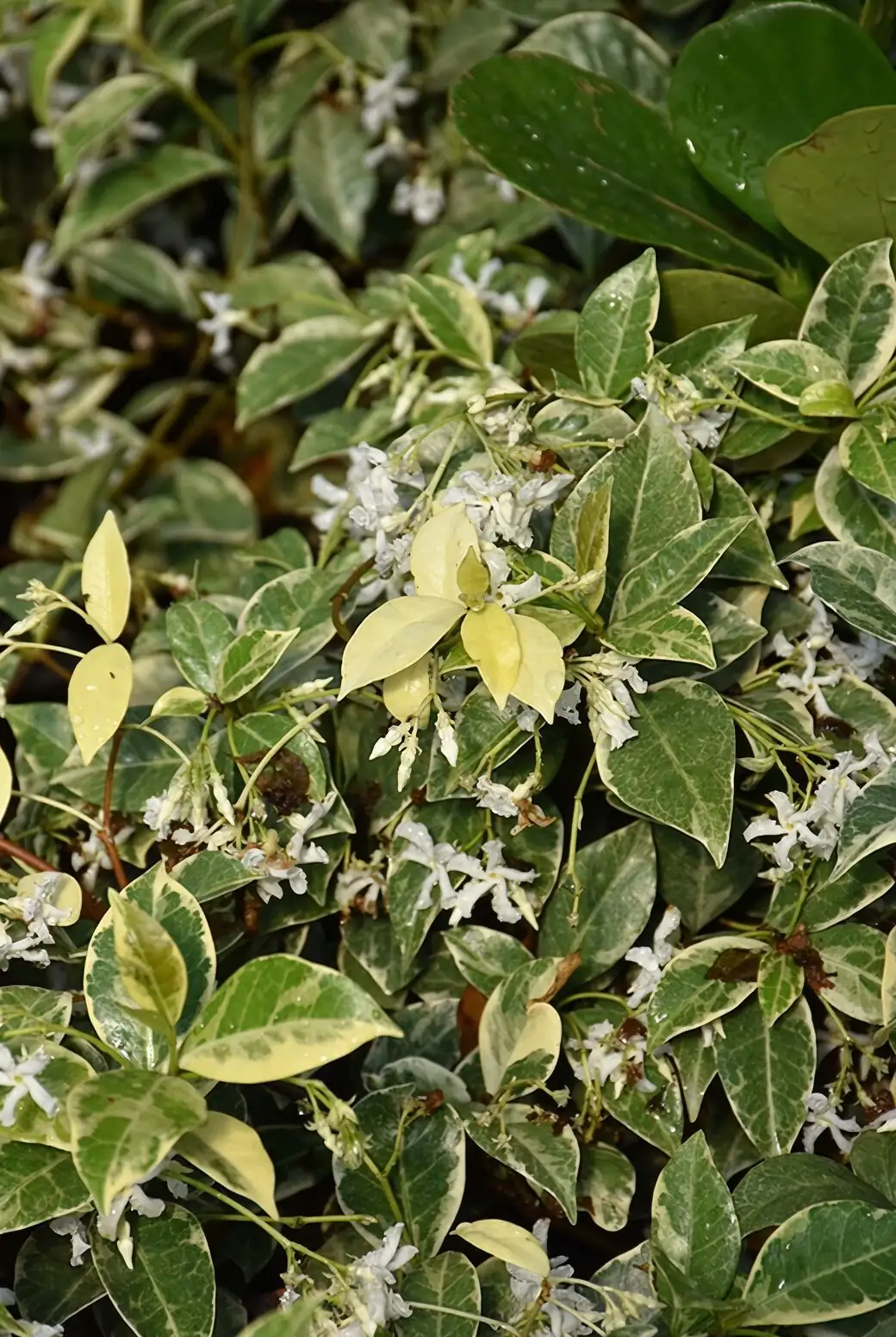
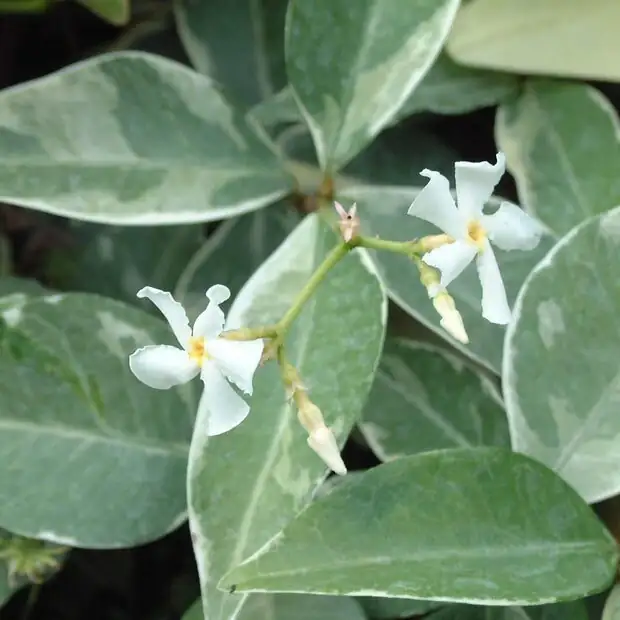
If you like your vines with a bit of drama and a lot of charm, Variegated Star Jasmine (Trachelospermum asiaticum ‘Variegatum’) is your leading actor. Glossy leaves edged in cream, sweetly scented starry flowers in summer, and a personality that’s equal parts minimalist (thrives in water culture!) and maximalist (roots from cuttings in a flash). Here’s a lively tour of its most unusual traits—plus practical tips to help yours look fresh, full, and fabulously variegated.
Meet the plant at a glance
- What it is: An evergreen, twining-to-trailing vine in the dogbane family (Apocynaceae); a cultivated variegated form of Asiatic jasmine.
- Look: Glossy green leaves boldly splashed and edged with cream/white; small, fragrant white flowers may appear in summer (more reliable outdoors).
- Where it shines: Pots, hanging baskets, small trellises, and—surprise—water culture displays.
- Vibe: Cool- and shade-tolerant, drought-tolerant once established, and famously easy to propagate.
Unusual talent #1: It’s a natural in water culture
Minimalist design lovers, rejoice: this vine looks spectacular with bare roots swishing in a glass vase. The variegation pops against clear water, and new white roots gleam like sea glass.
How to set it up
- Start with a cutting or gently wash soil from a small plant’s roots.
- Sit the stems so nodes are submerged but leaves are kept dry.
- Place in bright light (an east- or south-facing window indoors is perfect).
- Top up weekly and change the water regularly; add a suitable hydroponic/houseplant nutrient solution at label rates.
- Keep the water cool-to-room temp and the air moving; clean the container if you see algae.
Pro tip: In water, this plant is tidy but still alive and thirsty—brighter light = faster growth = more frequent water changes.
Unusual talent #2: Cuttings that practically sprint
Variegated Star Jasmine is notorious—in a good way—for speedy, simple propagation.
Your “fast-roots” recipe
- Timing: Early summer.
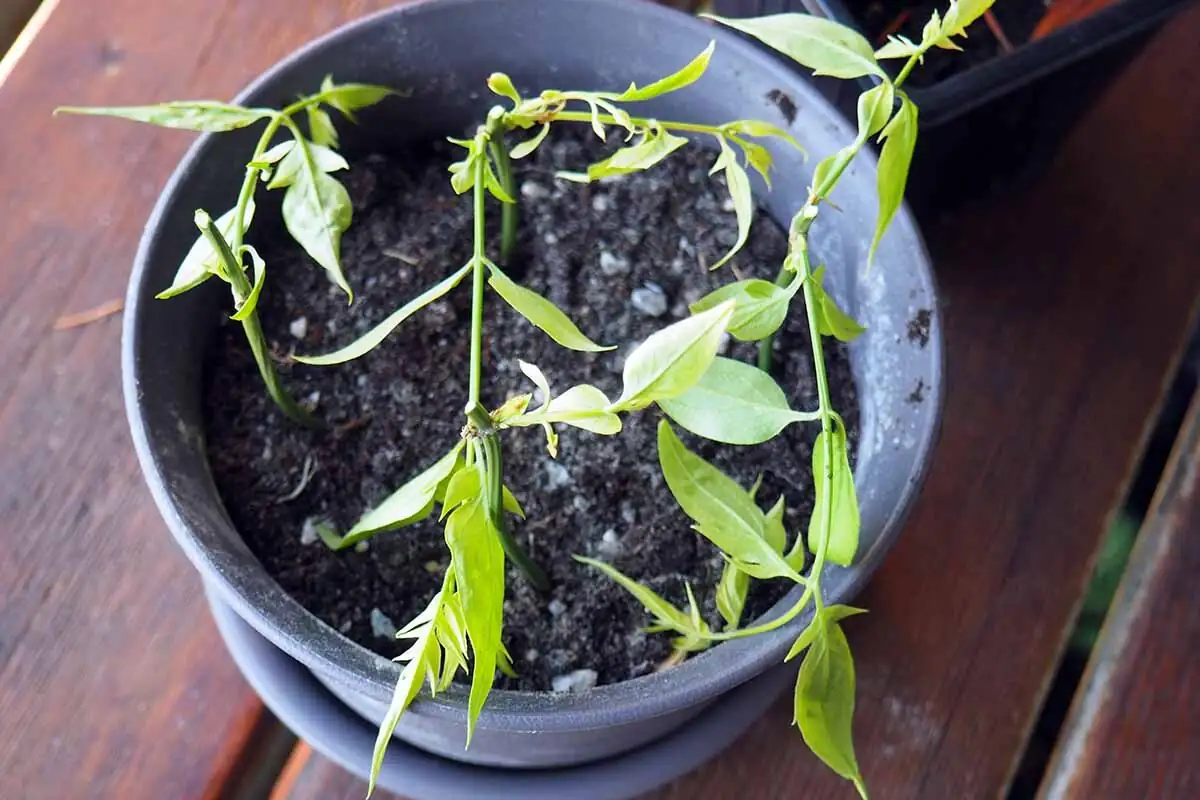
- Cuttings: 10–12 cm (4–5 in) semi-ripe tips.
- Prep: Keep 3–4 leaves, strip the rest, and insert into moist sand or a gritty mix—or root in plain water.
- Speed: Roots usually appear in about 3–4 weeks.
- Bonus methods: Layer long stems during the growing season for near-guaranteed success. Seeds can be sown fresh at 13–16°C (55–61°F), but seedlings may lose variegation.
Unusual trait #3: A cool customer—with limits
This vine tolerates a brief brush with cold but has a hard stop.
- Comfort zone: 20–25°C (68–77°F) for strong growth and vivid patterning.
- Winter target: Keep above 10°C (50°F) to minimize leaf drop.
- Absolute edge: Brief dips near 0°C (32°F) may be survived, but prolonged cold commonly causes defoliation—especially if the soil is wet.
- Important nuance: Cold + soggy = yellowing leaves and drop. Keep it on the drier side in winter and avoid harsh sun when temperatures are low, which can dull the variegation and increase stress.
What if it drops leaves after a chill? Move it to brighter, warmer conditions, water sparingly until growth resumes, and be patient—buds often push again once spring settles in.
Unusual trait #4: Rejuvenation pruning turns back time
Older container plants (around years 3–4) can get woody or sparse. A hard cut transforms them.
How to rejuvenate
- Timing: Late winter to early spring, just before strong growth begins.
- Method: Reduce crowded or leggy stems hard to a tidy framework; keep a few strong, variegated shoots.
- Aftercare: Water lightly at first, resume feeding once new growth appears, and guide new shoots onto a small support when they reach about 30 cm (12 in).
Expect a burst of fresh, crisply variegated foliage—and a neater silhouette.
Unusual twist: The “reversion surprise”
Every so often a stem will ditch its cream margins and go solid green. Those reverted shoots usually grow faster and can swamp the showy patterned parts.

- Spot it: Leaves turn fully green along a shoot while neighbors remain variegated.
- Fix it: Prune that stem out promptly, cutting back to a variegated node or the main stem.
- Keep or compost? You can root the green cutting if you want a separate, vigorous green plant—just don’t let it overtake the variegate.
- Note: Variegation can look duller under stress (e.g., strong sun combined with cold). Restore comfort—bright light, steady warmth, and proper watering—and color typically perks up.
Everyday care (speed round)
- Light: Bright light to sun for best color; also tolerates partial shade. Indoors, an east- or south-facing window is ideal. Avoid harsh sun during cold spells.
- Watering: Growing season—keep evenly moist but never soggy. Autumn—reduce. Winter—slightly dry. Cold + wet invites yellowing and leaf drop. After repotting, water lightly at first.
- Soil: Rich, loose, well-drained potting mix (leaf-mold based or high-quality all-purpose).
- Feeding: About monthly in the growing season; if you’re chasing summer blooms, add 1–2 extra feeds that are higher in phosphorus and potassium before summer.
- Humidity: Prefers moderate humidity. Light misting is fine if paired with good airflow; avoid stagnant, overly humid corners.
- Temperature: Best at 20–25°C (68–77°F); minimize dips below 10°C (50°F).
Styling and training ideas
- Compact trellis: Add a small support when shoots hit ~30 cm (12 in). Pinch tips for branching and a lush, panel-like display.
- Trailing beauty: Let it spill from a hanging basket, pairing cream-edged leaves with darker companions.
- Modern water vignette: A single arching spray in a cylinder vase = instant gallery look.
- Fuller pots: Plant three young vines together in a 15–20 cm (6–8 in) container for instant density.
Quick troubleshooting
- Yellowing/dropping leaves: Most often low light or winter’s cold + overwatering. Move brighter and warmer (ideally >10°C/50°F), let the mix dry a bit more between winter waterings, and resume a light monthly feed in growth season.
- Leaf spot: Improve airflow, avoid wetting foliage late in the day, remove affected leaves; use a broad-spectrum fungicide labeled for ornamental leaf spot if needed.
- Spider mites: Common in dry indoor air. Rinse foliage, raise humidity, and treat with insecticidal soap/horticultural oil or a labeled miticide.
- Water-culture algae: Shield the vase from direct, hot sun, scrub between water changes, or switch to an opaque container.
Propagation playbook
- Potting mix cuttings (most reliable)
1) Take 10–12 cm (4–5 in) semi-ripe tips in early summer.
2) Keep 3–4 leaves; strip lower leaves.
3) Insert into moist sand or a gritty mix; keep bright, indirect light.
4) Roots in ~3–4 weeks.
- Water-rooting cuttings (prettiest)
1) Pop prepped tips into clean water; change regularly.
2) Pot up once roots are ~2–4 cm (1–1.5 in) long to reduce transplant sulk.
- Layering
1) Pin a flexible stem into a neighboring pot of mix.
2) Keep moist; sever and pot once rooted.
- Seed (for the curious)
- Sow fresh at 13–16°C (55–61°F). Be aware: seedlings often revert to solid green.
Flower expectations
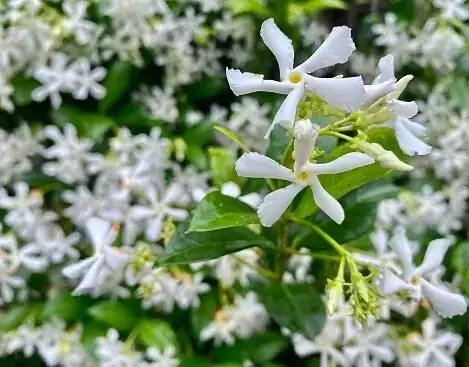
Outdoors in good light, summer brings small, starry white flowers with a sweet fragrance. Indoors, blooms are less reliable—prioritize bright light and the pre-summer bloom feeds if you’re aiming for scent.
Safety note
Specific toxicity data for this exact cultivar isn’t consistent. As a precaution—especially with pets and small children—avoid ingestion and treat any milky sap as potentially irritating. Seek veterinary/medical advice if symptoms occur.
Mini calendar
- Spring: Repot every ~2 years; resume monthly feeding. Add 1–2 bloom-focused feeds before summer.
- Early summer: Take 10–12 cm (4–5 in) semi-ripe cuttings; layer long stems.
- Growing season: Keep lightly moist; provide bright light.
- Autumn: Reduce watering.
- Winter: Keep slightly dry and above 10°C (50°F); protect from cold, wet soil.
- Every 3–4 years: Rejuvenation prune.
Folklore and meaning
With evergreen leaves that cling and twine, Variegated Star Jasmine is often tied to themes of steadfastness and loyalty—the “always-there” companion plant. The association likely grew from its year-round foliage and the way it faithfully grips its support, season after season. In a mixed planting, it’s that reliable friend who quietly keeps the composition together while still bringing a flourish of cream and green.
Fun facts to drop at your next plant swap
- A design darling in water culture—roots as decor.
- Comfort zone: 20–25°C (68–77°F); short chills near 0°C (32°F) can be endured, but extended cold often strips leaves.
- Cuttings root readily in mix or plain water—often in just 3–4 weeks.
- Seedlings commonly lose the cream and go solid green.
- A hard cut every 3–4 years brings back dense, youthful growth.
Careful watering, bright light, and a watchful eye for those enthusiastic green reversion shoots—that’s the whole secret. Treat it well, and Trachelospermum asiaticum ‘Variegatum’ will return the favor with year-round pattern and a whiff of summer stars.