

Imagine a hand-sized rainforest that blushes pink or white at every vein. That’s Fittonia albivenis—the Nerve Plant—thriving where most houseplants would sulk: warm, bright shade with high humidity. In other words, the perfect terrarium star. Below, you’ll build two versions—closed and open—layer by layer. You’ll learn the light it loves, the “weather report” your glass gives you (condensation is a cue!), and which plant companions turn a jar into a stable, humid micro-jungle.
Meet the Nerve Plant, the Terrarium Natural
- Botanical name: Fittonia albivenis (Acanthaceae)
- Native range: Tropical rainforests of western South America (especially Peru; also Colombia, Ecuador, Bolivia)
- Look: Small, soft, oval leaves in green crisscrossed with bold pink, white, or red veins
- Habit & size: A low-growing creeper, typically 10–20 cm tall with a spreading mat; older or unpinched stems can trail 30–60 cm
- Why terrariums? Fittonia loves steady moisture and 60%+ humidity, and it dislikes harsh sun and cold drafts—glass solves all three
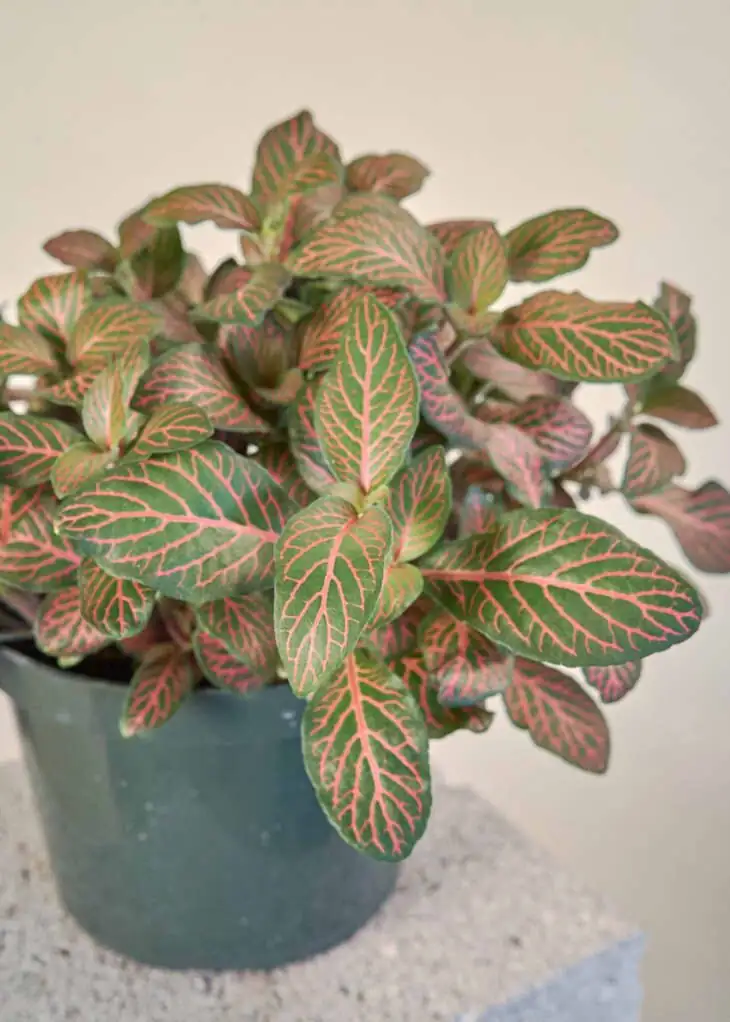
Pro tip: Fittonia can be the showstopper. In many vessels, a single, well-placed plant with space around it reads like living artwork.
Closed vs. Open: Which Terrarium Style Fits Your Space?
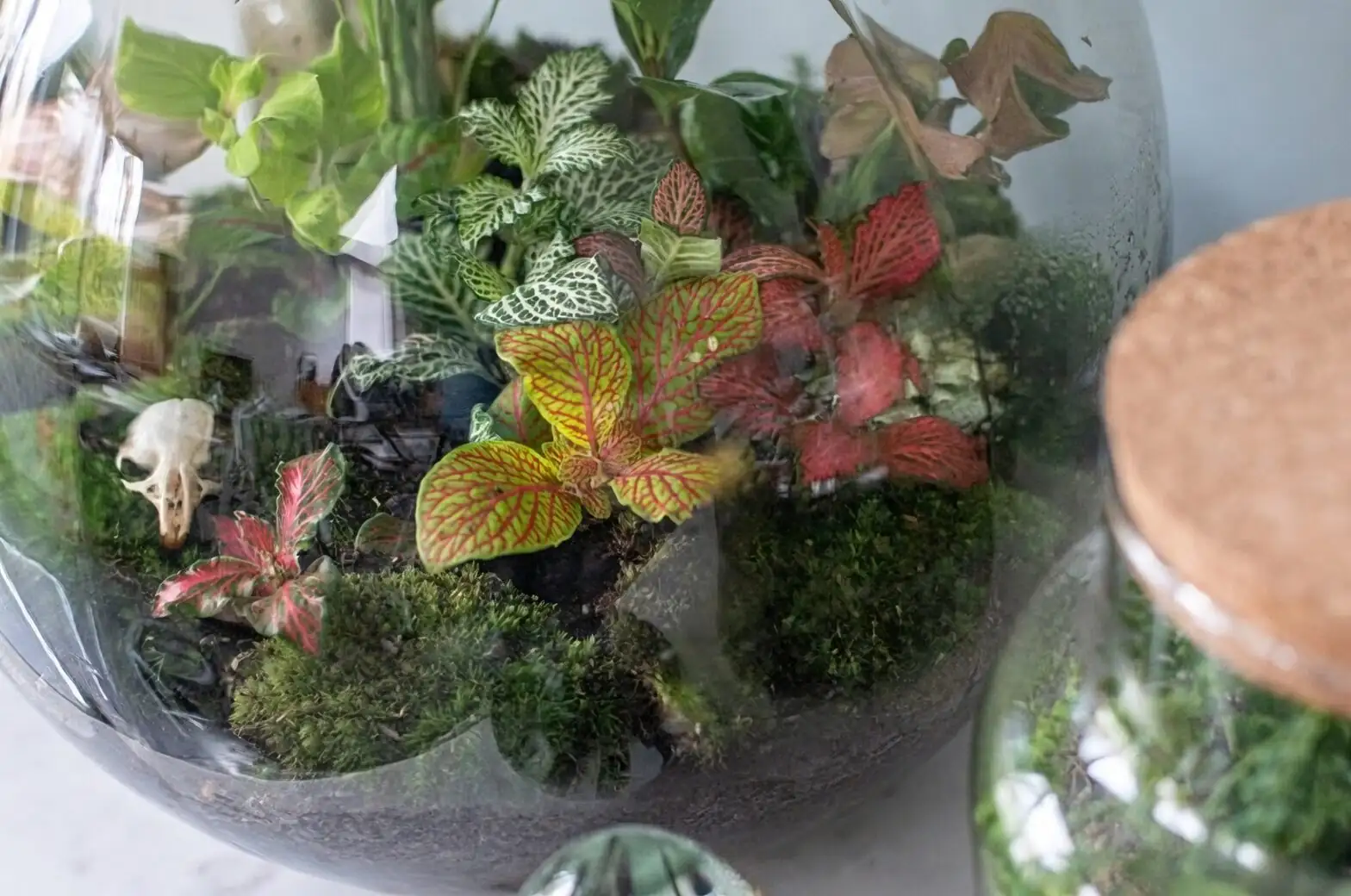
- Closed terrarium
- Best for: Effortless humidity, a self-regulating moisture cycle, and lush mossy looks
- Demands: Occasional “burping” (briefly opening the lid) and careful watering at setup
- Fittonia verdict: Ideal. This species is moisture-loving and truly shines sealed up warm in bright, indirect light
- Open terrarium
- Best for: Easy hands-in access and air exchange; good in naturally humid rooms (bathrooms/kitchens)
- Demands: More frequent watering and attentive placement to avoid drying out
- Fittonia verdict: Possible, but plan for extra humidity support and steady, even moisture
Still undecided? If your home air is dry, go closed. If you prefer a low dome/bowl you can reach into often and you’re home to water more regularly, try open.
Your Core Kit: Containers, Tools, and a Smart Substrate
- Glass container
- Closed: Jar, cloche, bottle garden, or lidded cylinder. No lid? Use cling film as a temporary cap
- Open: A wide bowl or low cylinder for easy planting and airflow
- Tools: Long tweezers, a narrow funnel or paper scoop, soft brush, squeeze bottle or syringe, and a chopstick for gentle tamping
- Drainage base (“false bottom”): Rinsed LECA or small pebbles (1.5–3 cm/0.6–1.2 in)
- Barrier: A piece of mesh or landscape fabric to keep soil off the drainage layer
- Purifying layer: A sprinkling of horticultural charcoal (optional but helpful)
- Main substrate (moisture-retentive yet airy)
- Easy formula: Peat- or coco-based houseplant mix + perlite, with an optional pinch of coarse sand
- Terrarium-boosters (optional): A handful of fine orchid bark and a little chopped sphagnum for extra structure and moisture buffering
- Top-dress: Live moss, decorative gravel, or leaf litter
- Bioactive helpers (optional but excellent): Springtails to snack on mold and detritus
Step-by-Step: Build a Closed Micro-Jungle for Fittonia
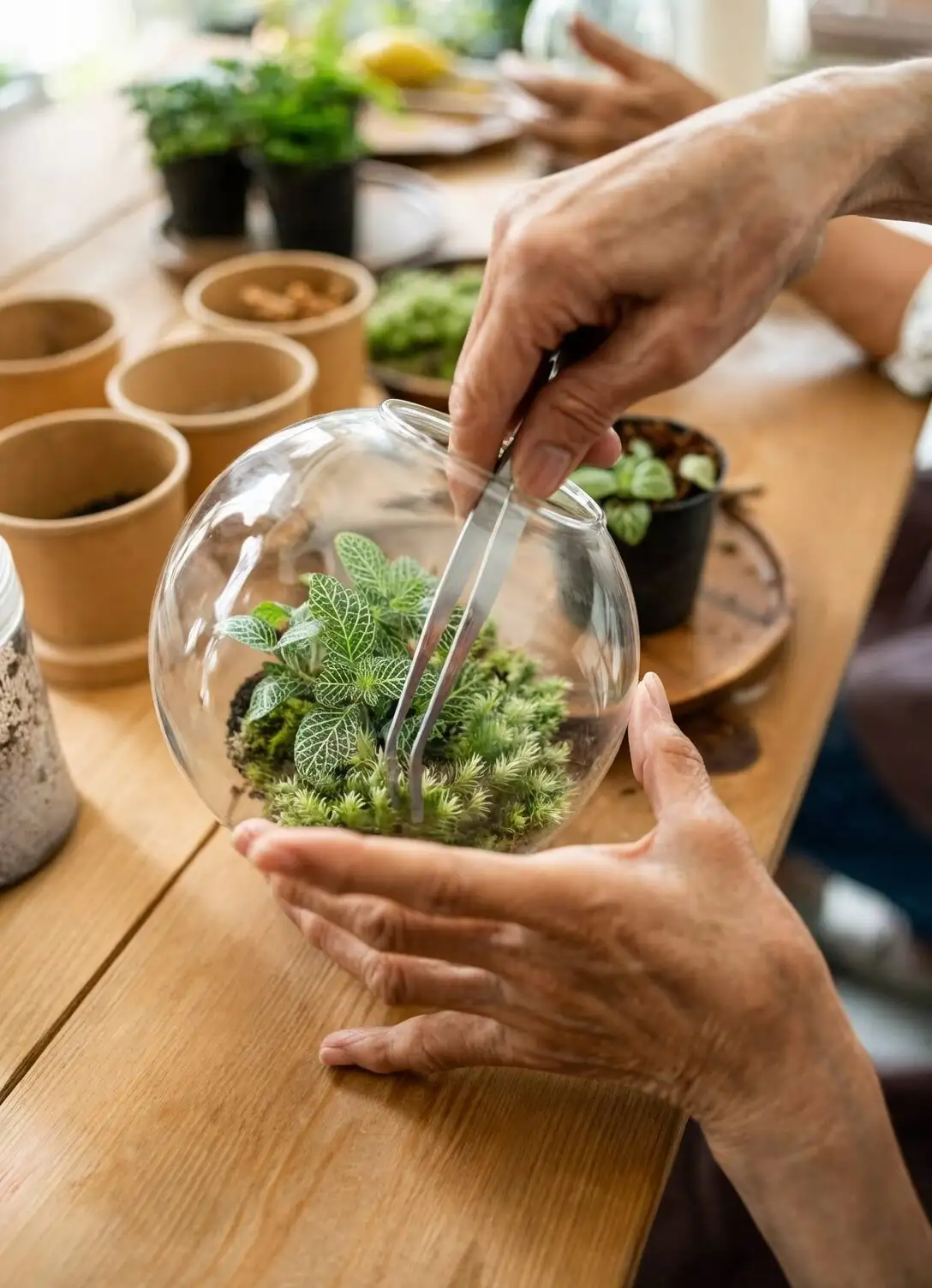
- Clean and pre-plan
- Wash and dry the glass so you can easily read condensation later
- Test-fit hardscape (a small root or stone) and choose a focal point—Fittonia loves center stage
- Layer the base
- Drainage: 1.5–3 cm of LECA/pebbles
- Mesh: Fit snugly over the base to keep soil from sifting down
- Charcoal: A light sprinkle to help with odors and freshness
- Add the substrate (5–8 cm/2–3 in)
- Use your airy, moisture-retentive mix
- Lightly slope from back to front so the scene has depth and air can move
- Plant the Fittonia
- Gently tease roots; plant slightly high (crowns above the soil line) to prevent rot
- Space leaves away from the glass—tight glass contact holds water and can spot or bruise delicate foliage
- Companion touches
- Tuck in small clumps of tropical moss or a single low companion (see picks below)
- Keep it simple—too many fast growers destabilize a closed system
- First watering
- Moisten evenly until the mix is uniformly damp, not soggy; use a squeeze bottle, aiming for the root zone
- Avoid runoff into the drainage layer; in a closed jar, extra free water promotes rot
- Seal and set the scene
- Cap the vessel and place in bright, indirect light—an east window or a spot set back from a south/west window works well
- Target temperature: 18–25°C (64–77°F); protect from drafts and heat/AC blasts
Your “Glass Weather Report”: Ventilation and Water Cues
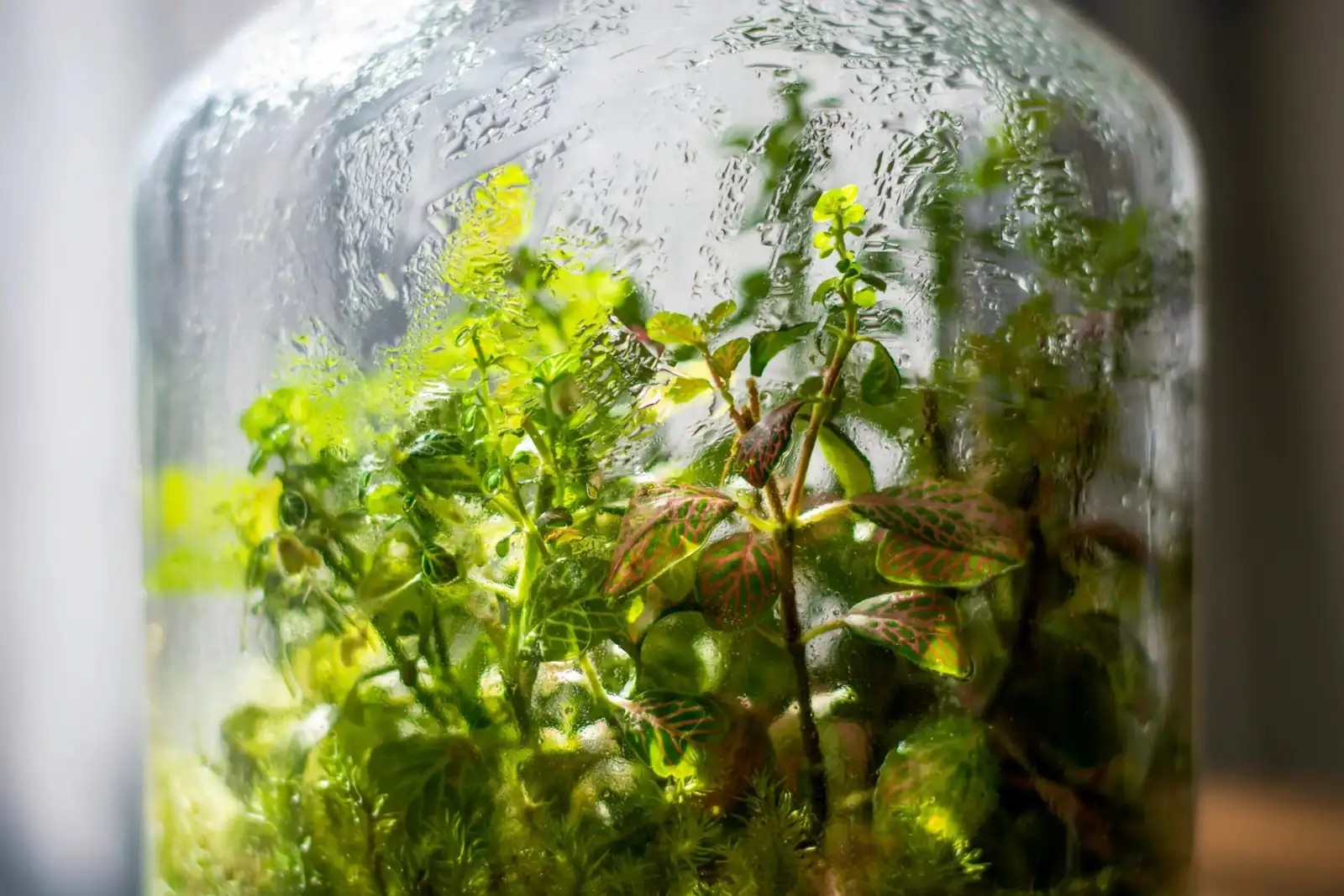
- Fine morning misting on the walls that clears by midday = Just right
- Heavy droplets streaming and staying all day = Too wet; open the lid for 30–60 minutes and/or wick out a little moisture with a paper towel at the soil surface
- Bare, bone-dry glass for days and dull-colored substrate = Time to add small sips (use a syringe, 5–20 ml at a time, then reassess)
- Fog plus limp or yellowing leaves in cool rooms = Risk of rot; increase airflow briefly, keep the root zone airy, and maintain warmth
Step-by-Step: Build an Open Terrarium That Stays Humid Enough
- Choose a wide, easy-access bowl or cylinder
- Layer as above (drainage → mesh → a bit of charcoal → substrate)
- Plant Fittonia slightly high, giving it room to spread and avoiding leaf-on-glass contact
- Companions: Pick slow, humidity-loving minis; avoid desert plants—Fittonia’s watering needs are incompatible with succulents and cacti
- Water-in gently and top-dress with decorative gravel or patches of moss (note: many mosses struggle long-term in very open, dry air)
- Humidity helpers
- Place the terrarium on a pebble tray with water below the glass base (not wicking into the soil)
- Group with other plants or run a small humidifier nearby
- Consider a partial cover (a coaster or plate offset over the opening) on dry days
Watering rhythm in open bowls: Check every few days; water when the top 1–2 cm (0.4–0.8 in) feels slightly dry. Keep evenly moist, never soggy.
Gentle Light, Always
- Bright, indirect light to partial shade is perfect
- Great spots: East-facing window; or a bright place set back from a south/west window
- Avoid strong direct sun through glass—it can scorch and overheat
- LEDs are terrific: a small, full-spectrum grow light 20–40 cm (8–16 in) above on a 10–12 hour timer works well
- Winter tip: Move a little closer to the light, but keep warmth steady (aim above 15°C/59°F)
Companion Picks That Play Nicely With Fittonia
Choose plants that love warmth, steady humidity, and gentle light. Keep growth rates and eventual size in mind—Fittonia appreciates breathing room.
- For closed terrariums
- Tropical mosses (sheet/cushion types) for lush groundcover
- Selaginella (clubmoss) compact forms for a feathery, rainforest texture
- Miniature peperomias (e.g., small-leaved trailing types) for contrast without bulk
- Tiny pileas (e.g., Pilea depressa, P. glauca) as restrained trailers
- Another Fittonia cultivar—mix pink-veined with white-veined for a mosaic effect
- For open terrariums (with humidity support)
- Small peperomias and pileas as above
- Baby’s tears (Soleirolia) sparingly—it can run; great as a soft edge if you prune
- Avoid: Succulents and cacti (too dry), aggressive vines that overwhelm, or ferns that outgrow the space quickly
Feeding, Pruning, and Terrarium Tuning
- Feeding
- Spring–autumn: Light liquid feed at half strength every 2–4 weeks
- Go easy in terrariums—overfeeding fuels algae and leggy growth
- Ease up or pause in winter if growth slows
- Pruning
- Pinch tips regularly to encourage branching and a dense mat
- Remove the occasional flower spike to keep energy in foliage
- Replant trims: 5–10 cm tip cuttings root readily in moist mix or water within 2–3 weeks
- Repot/refresh
- In potted displays: about every 1–3 years
- In terrariums: spot-refresh substrate if you see compaction; you can also restart with cuttings for a tidy reset
Troubleshooting: Quick Diagnoses Inside Glass
- Dramatic wilting (“fainting”): The mix got too dry; water thoroughly and boost humidity—usually perks up fast
- Yellowing leaves: Often overwatering, poor drainage, or cold stress; keep the mix airy and warm, and water only when the top layer is slightly dry
- Scorched or faded veins: Too much direct sun—move to filtered light
- Mold/fuzzy patches: Remove decaying matter, increase airflow briefly, and consider adding springtails
- Pests: Spider mites (especially in dry air), mealybugs, scale, aphids. Treat early with insecticidal soap or horticultural oil and maintain steady humidity and warmth
Pet note: Generally regarded as non-toxic to cats and dogs, though nibbling any plant can upset tummies.
The Stable Micro-Jungle Routine
- Observe condensation daily; it tells you when to vent or water
- Keep leaves off the glass, and avoid wet foliage overnight
- Provide bright, indirect light and stable warmth (18–25°C)
- Maintain an airy, moisture-holding substrate so roots breathe even while evenly moist
A Little Meaning in the Veins
Fittonia’s bold, netted leaves are often seen as “living artwork”—a symbol of vitality and intricacy. The appeal isn’t in big blooms, but in the steady rhythm of its patterned foliage—a reminder that small ecosystems, well-tuned, can be profoundly alive.
Build it once with care, and your Nerve Plant will reward you with a calm, humid glow—your own pocket rainforest thriving behind clear glass.