

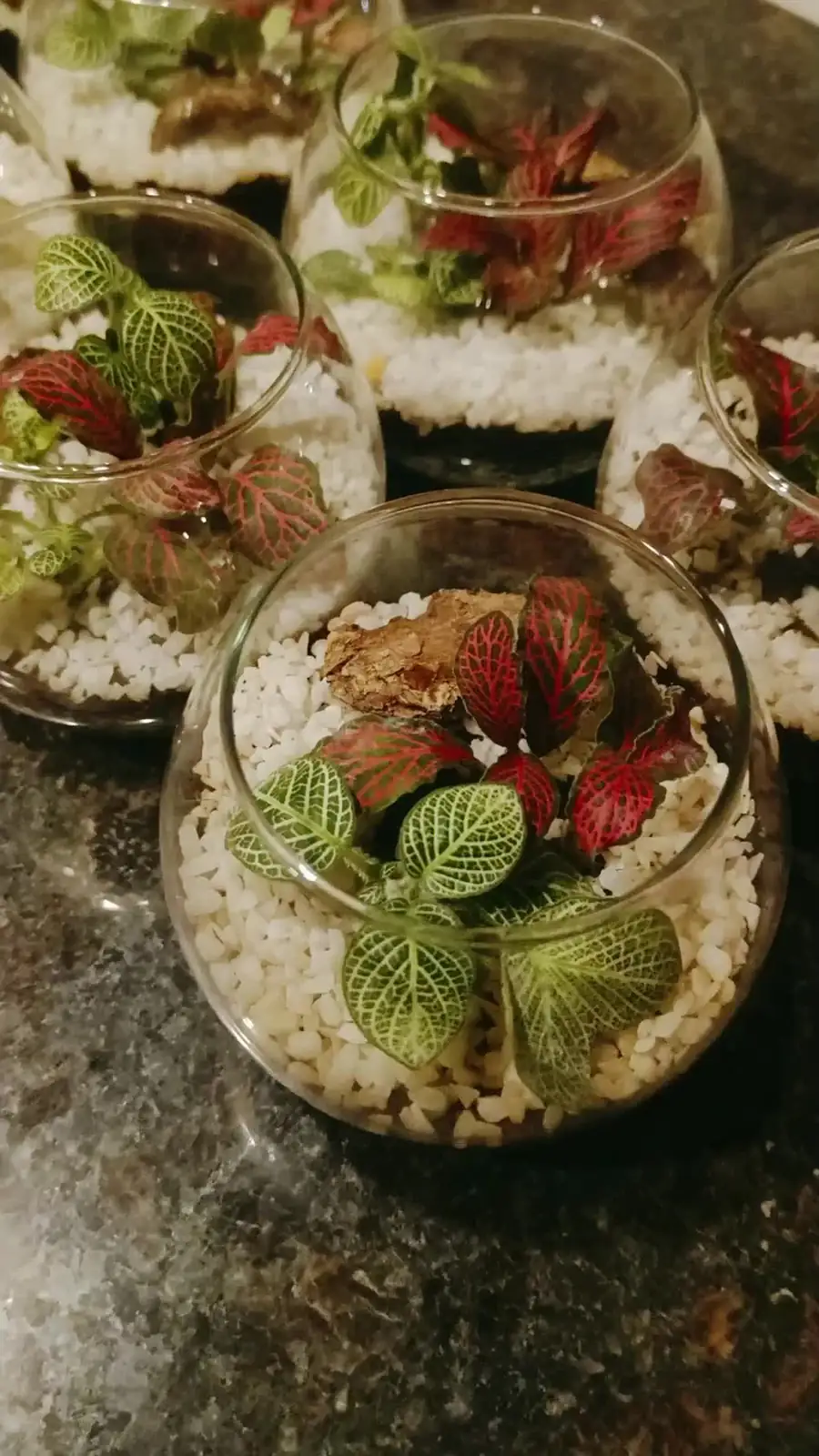
Imagine lifting a fern frond on a dim Peruvian forest floor and finding a living mosaic glowing underneath: small, soft leaves shot through with neon-pink, white, or red veins like lightning under glass. That same understory gem now rides home from the garden center in a coffee cup–sized pot, ready to spill its rainforest charm across a desk, shelf, or—its current runway—inside a misty terrarium. Meet Fittonia albivenis, the nerve plant: a quiet understory creeper turned modern micro-jungle star.
From rainforest floor to living room
Born in the tropical rainforests of western South America—especially Peru, and also Colombia, Ecuador, and Bolivia—Fittonia albivenis lives in the shady understory where light is filtered, temperatures are steady, and the air is deliciously humid. There, its stems creep and root at the nodes, knitting a petite carpet that’s more about fine detail than big gestures.
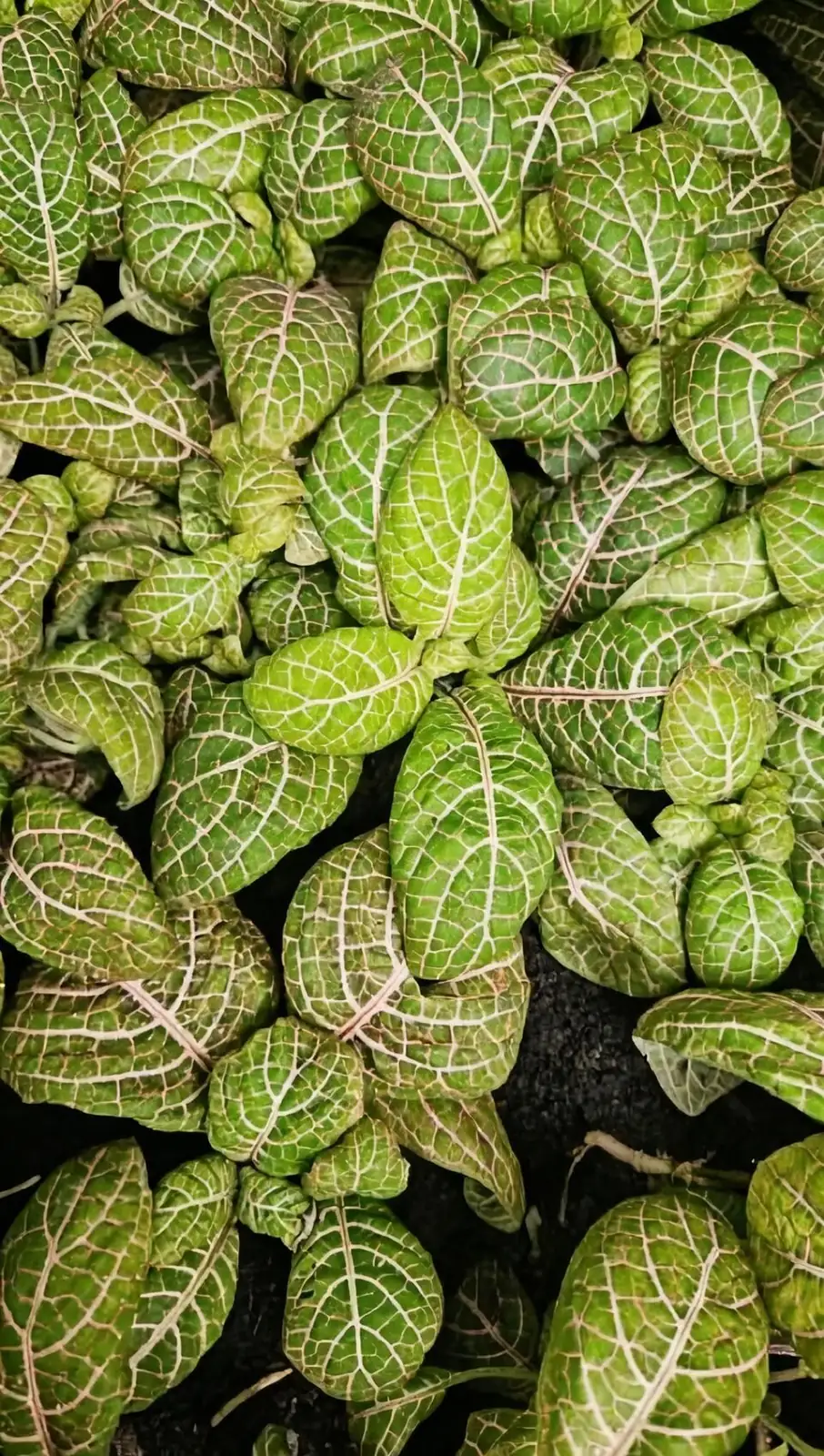
- Habit: low, creeping, and spreading; roots readily at nodes
- Size in pots: typically 10–20 cm (4–8 in) tall and about 20 cm (8 in) across
- With age: trailing stems can stretch 30–60 cm (12–24 in) if not pinched back
- Flowers: small, tubular, pale white to creamy, summer to autumn—easily missed and often pinched off so the plant can focus on foliage
And yes, it’s the “fainting plant.” Miss a watering and Fittonia may stage a dramatic collapse. Give it a drink and humidity, and it usually revives within hours—no Victorian smelling salts required.
What’s in a name? The Fitton sisters and a 19th‑century glow-up
The genus Fittonia was named in 1865 by botanist Eugène Coemans to honor two Irish sisters, Elizabeth and Sarah Mary Fitton, whose influential 1817 book, Conversations on Botany, made plant science accessible through lively, didactic dialogue. Their legacy is fitting: a plant that invites you to lean in and learn.
From the moment plant hunters and nurseries introduced Fittonia to European collections, it fit the taste for jewel-like foliage in wardian cases (Victorian terrariums). Today it’s enjoying a second act—not just as a houseplant that stays pleasingly small, but as a terrarium icon that practically glows in constant humidity.
Look closer: leaves like hand-painted maps
Fittonia’s leaves are soft, ovate, and mesmerizingly veined—a “mosaic” network that can be:
- Pink (the classic “pink nerve plant” look)
- White or silvery (crisp and graphic)
- Red (bolder, with deeper contrast)
Modern selections cover everything from lime-green leaf blades with shocking pink nerves to subtle gray-green with cream, white, or blush. Whatever your palette, the foliage steals the show.
Handle with care: these delicate leaves can bruise or crease if squeezed.
Light, warmth, humidity: the understory recipe
To translate rainforest comfort to your home:
- Light: bright, indirect light to partial shade. Morning sun is fine; harsh midday/afternoon sun can scorch or fade the veining. It also thrives under fluorescent or LED grow lights.
- Temperature: keep it warm—about 17–26°C (63–79°F), ideally 18–25°C (64–77°F). Avoid chills below 15°C (59°F) and protect from drafts or HVAC blasts.
- Humidity: lushest at 60%+. Bathrooms, kitchens, and terrariums are prime real estate. Pebble trays and humidifiers help; if you mist, avoid leaving the leaves wet overnight.
Placement ideas: east windowsills, bright shelves out of direct sun, cozy bathroom ledges, or a terrarium centerpiece.
Water, soil, and the famous “faint”
Think rainforest: evenly moist, never swampy.
- Watering: drench thoroughly when the top 1–2 cm (0.4–0.8 in) of mix feels slightly dry. Avoid repeated bone-dry episodes—the dramatic wilt is a warning, not a lifestyle.
- Soil: moisture-retentive but airy, such as a peat or coco coir–based houseplant mix with perlite (a little coarse sand is optional). Always use a pot with drainage.
- Pot size: small pots (about 7.5–12 cm / 3–4.7 in) suit its shallow roots.
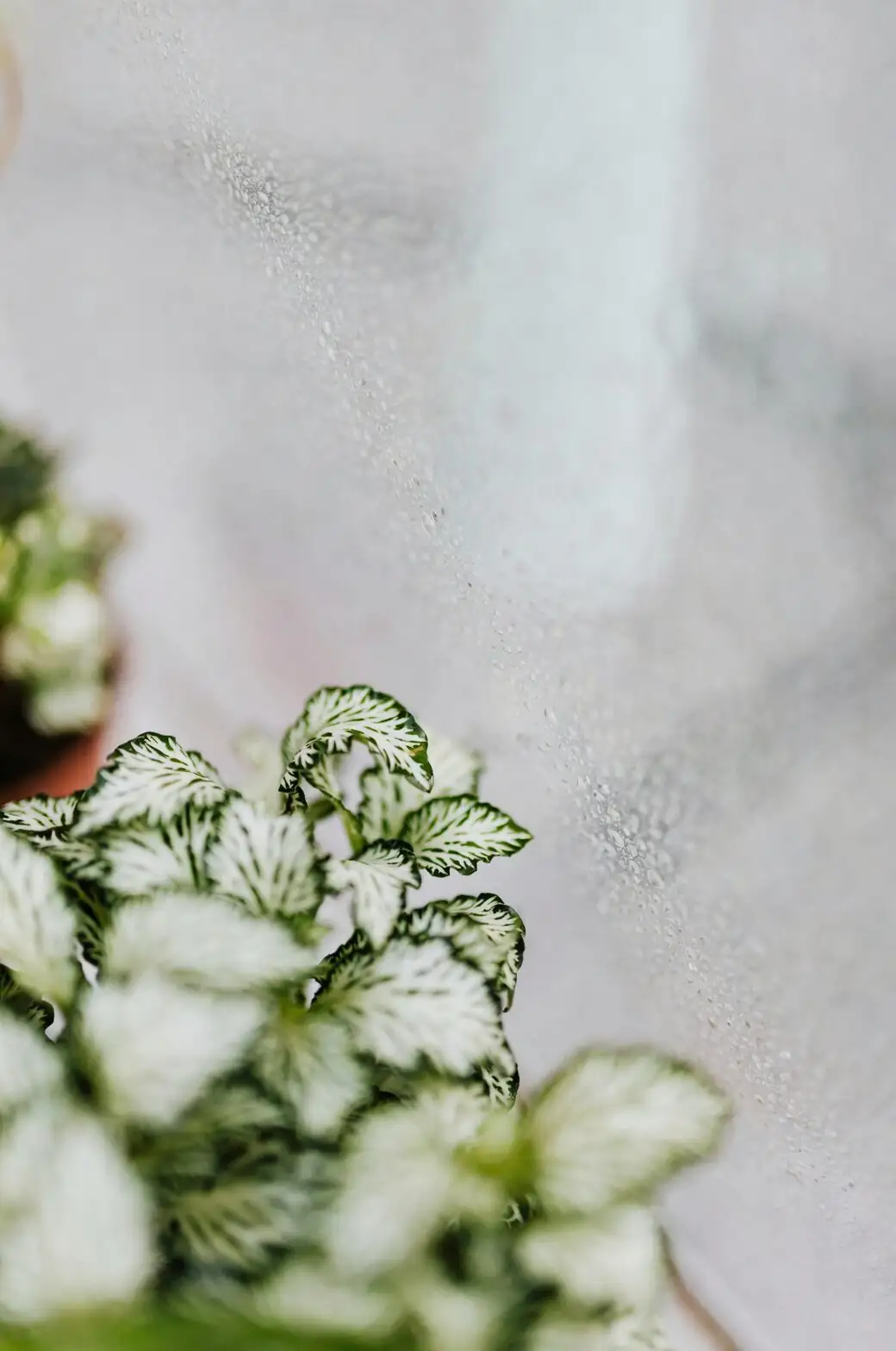
Troubleshooting:
- Yellowing leaves = often overwatering, cold stress, or poor drainage.
- Crispy edges = low humidity or too much sun.
- Fainting = dry mix; water and raise humidity promptly.
Terrarium stardom—and a crystal-clear side hustle in water
- Terrariums: Fittonia is terrarium royalty. Provide a well-draining substrate and a light hand with watering to avoid waterlogging. With consistent humidity, the leaves remain crisp, vivid, and compact.
- Water culture (hydro): It can live happily with its roots in water.
- Start by rinsing all soil from the roots (or begin with water-rooted cuttings).
- Keep in bright, indirect light; change water every 7–10 days.
- During propagation, add a very dilute hydroponic nutrient about every 2 weeks.
- Keep solution off the leaves, ensure some ventilation in summer, and avoid direct sun or stuffy heat.
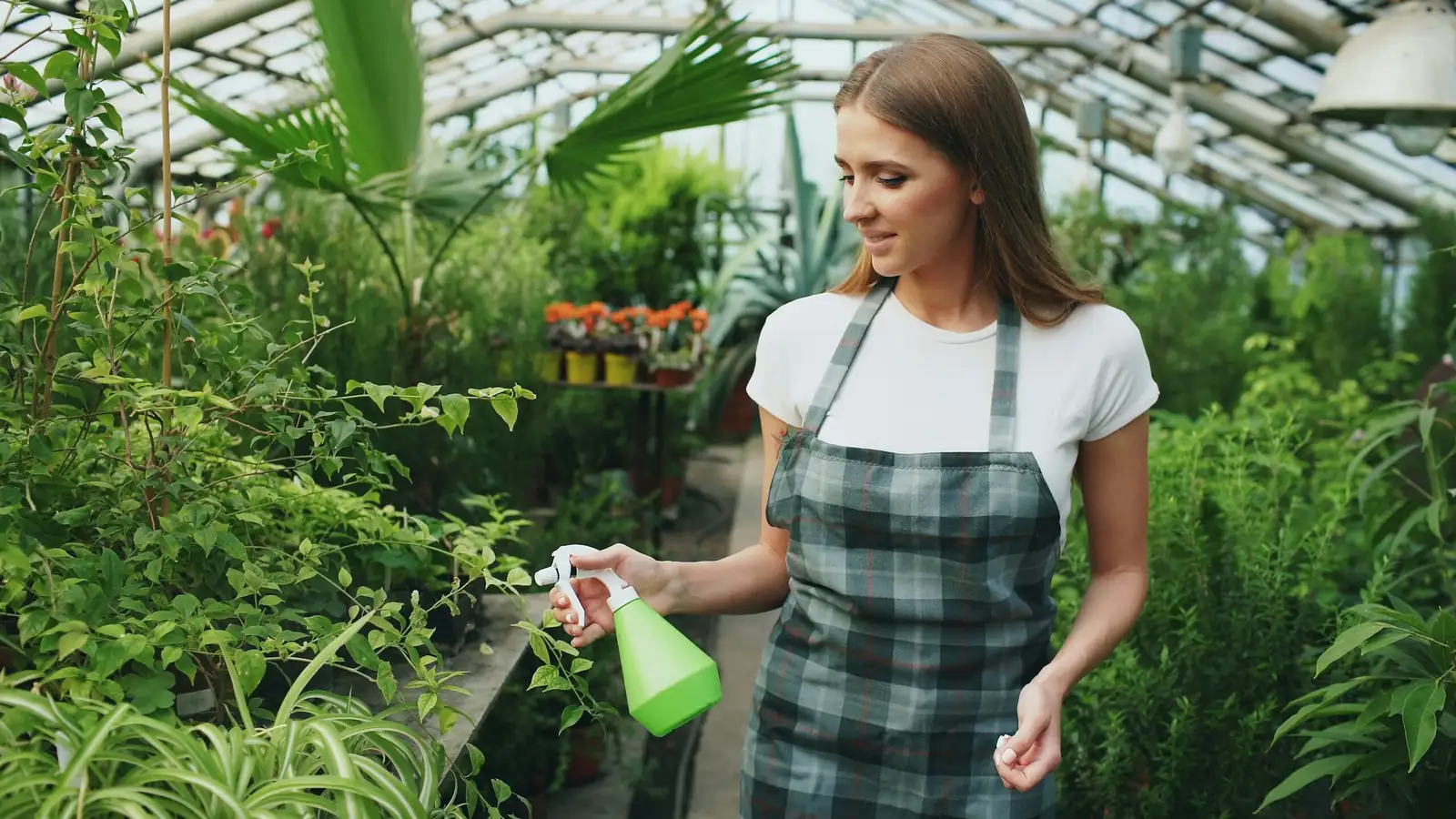
Feeding, pinching, and repotting
- Fertilizer: in spring through autumn, feed lightly with a balanced liquid fertilizer at half strength every 2–4 weeks. Ease off in winter if growth slows.
- Pruning: pinch growing tips regularly for a fuller, bushier mat. Remove yellow or old leaves. If flowers appear, you can pinch them off to keep energy in the foliage.
- Repotting: refresh soil or size up modestly in spring every 1–3 years, or whenever the plant is root-bound. For lush hanging baskets (12–15 cm / 4.7–5.9 in), plant 3–5 small Fittonias together.
Propagation: one sprig, many mosaics
Fittonia is delightfully easy to multiply:
- Stem cuttings: take 5–10 cm (2–4 in) tips with several nodes; remove lower leaves.
- Root in water or a moist, airy mix at 20–24°C (68–75°F).
- Roots often appear in about 2–3 weeks.
- Layering: pin a creeping stem to the surface of moist mix; once it roots, cut and pot up.
A gentle year-round rhythm
- Spring: repot if needed; refresh soil; take cuttings; begin regular light feeding.
- Spring–Summer: fastest growth—keep moisture consistent, maintain humidity, and pinch tips for fullness. In hydro, change water every 7–10 days and add very dilute nutrients about every 2 weeks.
- Summer–Autumn: possible small blooms; continue pinching; avoid harsh sun.
- Winter: provide brighter light and steady warmth; cut back feeding; maintain humidity without wetting leaves overnight.
Pests, problems, and pet safety
- Watch for: spider mites (notorious in dry air), mealybugs, scale, aphids, and fungus gnats (often a sign of soggy soil). Prevent rot with an airy mix, drainage, warm temps, and gentle airflow.
- Treatment: act early with insecticidal soap or horticultural oil and repeat as directed.
- Pet safety: generally regarded as non-toxic to cats and dogs. Still, keep nibble-prone pets at bay—any foliage can upset a sensitive stomach.
Buying guide: pick a plant that pops
Choose Fittonias with:
- Crisp, richly colored leaves and firm, perky stems
- Evenly moist—not waterlogged or bone-dry—soil
- No sour odor from the potting mix
- Clean leaf undersides (check for mites, mealybugs, scale, or aphids)
Common sizes: 9–12 cm (3.5–4.7 in) pots and 12–15 cm (4.7–5.9 in) hanging baskets.
Hardiness and outdoors
Not frost-hardy. It’s strictly an indoor companion unless you live in a reliably warm climate (roughly USDA Zones 11–12). Even then, shade, shelter, and humidity are musts.
Symbolism, “flower language,” and why it resonates
With foliage that looks painted by hand, Fittonia is often linked to vitality and living artwork. If you’re into “flower language” (a Victorian-era pastime that assigned meanings to plants), Fittonia’s message is less about blossoms and more about the quiet vigor of intricate life: resilience in shade, beauty in detail, and the power of small things to transform a space. In modern design terms, it’s a reminder that the understory matters—layers make the forest (and your home) feel alive.
Quick answers
- Why are my nerve plant’s leaves turning yellow?
- Most often overwatering/poor drainage or cold stress. Let the top 1–2 cm dry slightly between waterings, ensure good drainage, and keep temps above about 15°C (59°F).
- Why does my nerve plant wilt so suddenly?
- It’s famous for “fainting” when dry. Water thoroughly and raise humidity; it often perks up within hours. Try to avoid repeated dry-outs.
- Can I grow nerve plant in a terrarium?
- Absolutely. It loves steady warmth and humidity. Use a well-draining mix and avoid waterlogging.
- Can it grow in water?
- Yes. Keep it in bright, indirect light, change water every 7–10 days, add very dilute hydro nutrients during propagation about every 2 weeks, and don’t splash solution on leaves.
From the dim green hush of a Peruvian understory to the soft glow of a glass terrarium, Fittonia albivenis proves that the rainforest’s finest details can thrive on a windowsill—so long as you grant them the shade, warmth, and humidity they’ve loved all along.