

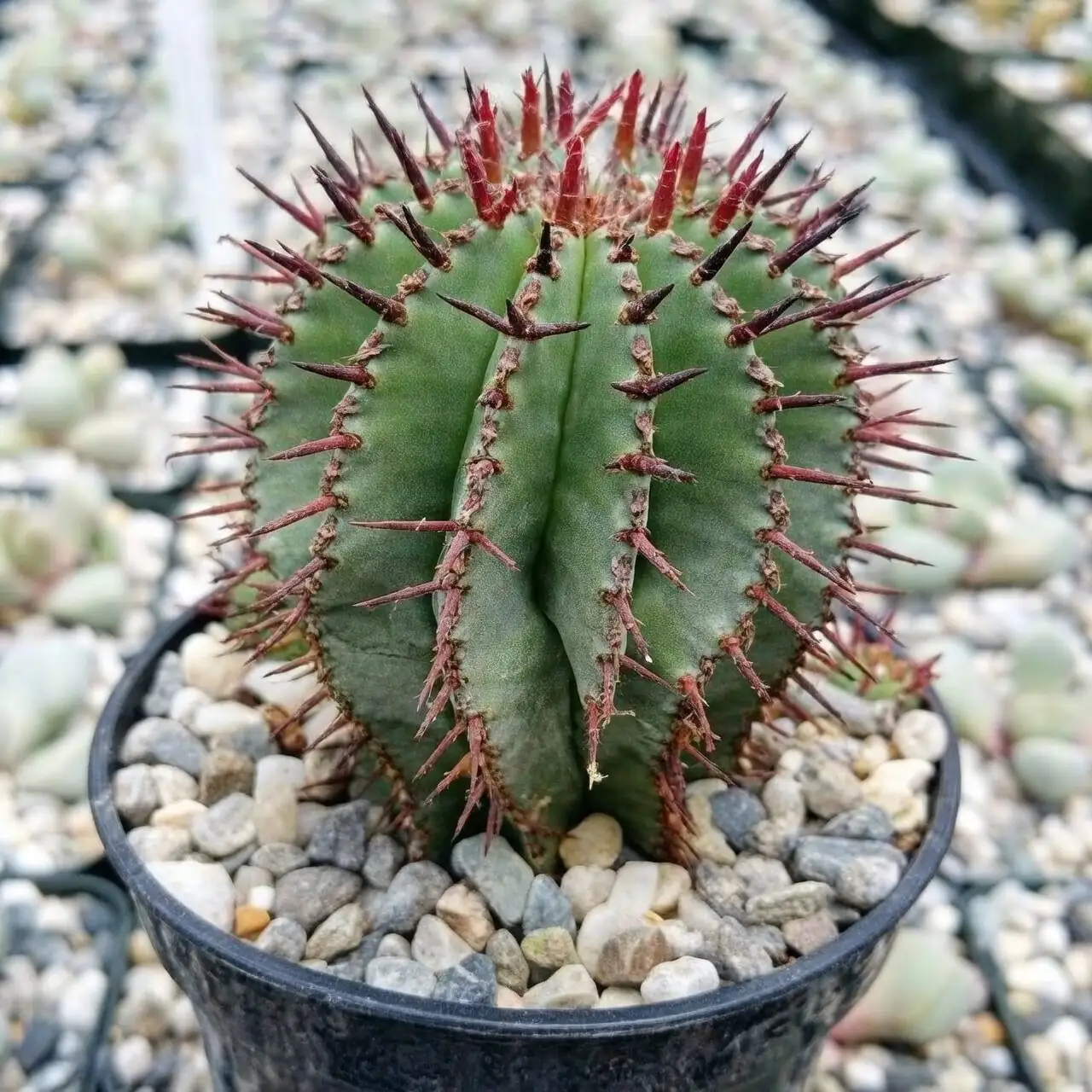
If you’ve ever wished your Corn Cob Euphorbia would flash sharper reds and richer undertones without ending up crispy, this is your playbook. Euphorbia mammillaris (aka Red Coral Spurge) loves light, but it wants a smart ramp-up—like training for a marathon, not a sprint. Here’s how to coax vivid color and bold, architectural poise with zero scorch.
Meet Red Coral Spurge (Euphorbia mammillaris)
- Origin: South Africa (Cape Provinces)
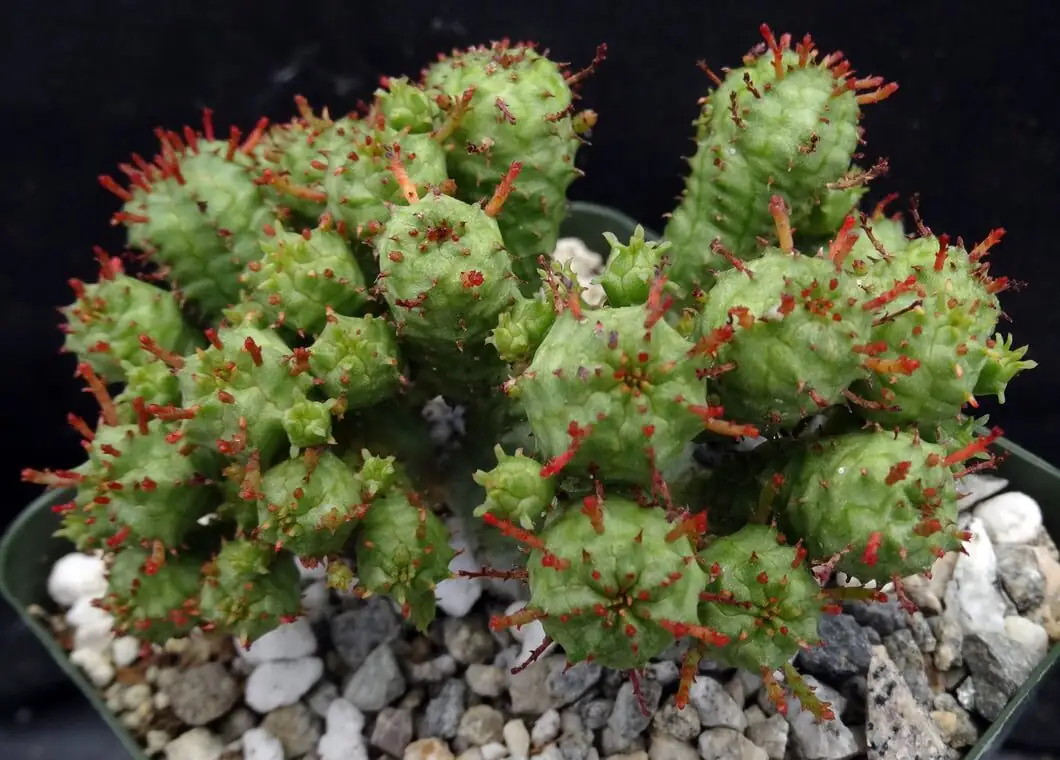
- Look: Compact, upright clumps of ribbed, gray‑green stems that branch over time. Short red to reddish-brown “spines” line the ribs, delivering that coral-cob drama.
- Indoors or out: Perfect on a bright windowsill; can summer outdoors in warm, sheltered spots.
- Growth sweet spot: Warmth (about 18–30°C / 64–86°F), very fast-draining mix, and lots of light.
Goal for color: Under stronger light, the spines intensify and many plants develop a soft blush along the ribs and tips. Think “sun-kissed” more than “neon red”—genetics and season set the ceiling, your care sets the tone.
The Color Equation: Light, Heat, and Protective Pigments
- Why it reddens: High light (especially stronger sun and some UV) can trigger protective anthocyanins—pigments that act like plant sunscreen. You’ll often see the most color at areoles, ribs, and tips.
- Healthy stress vs. damage:
- Healthy stress: Even, gradual pink/red/purple tinge; tissue stays firm.
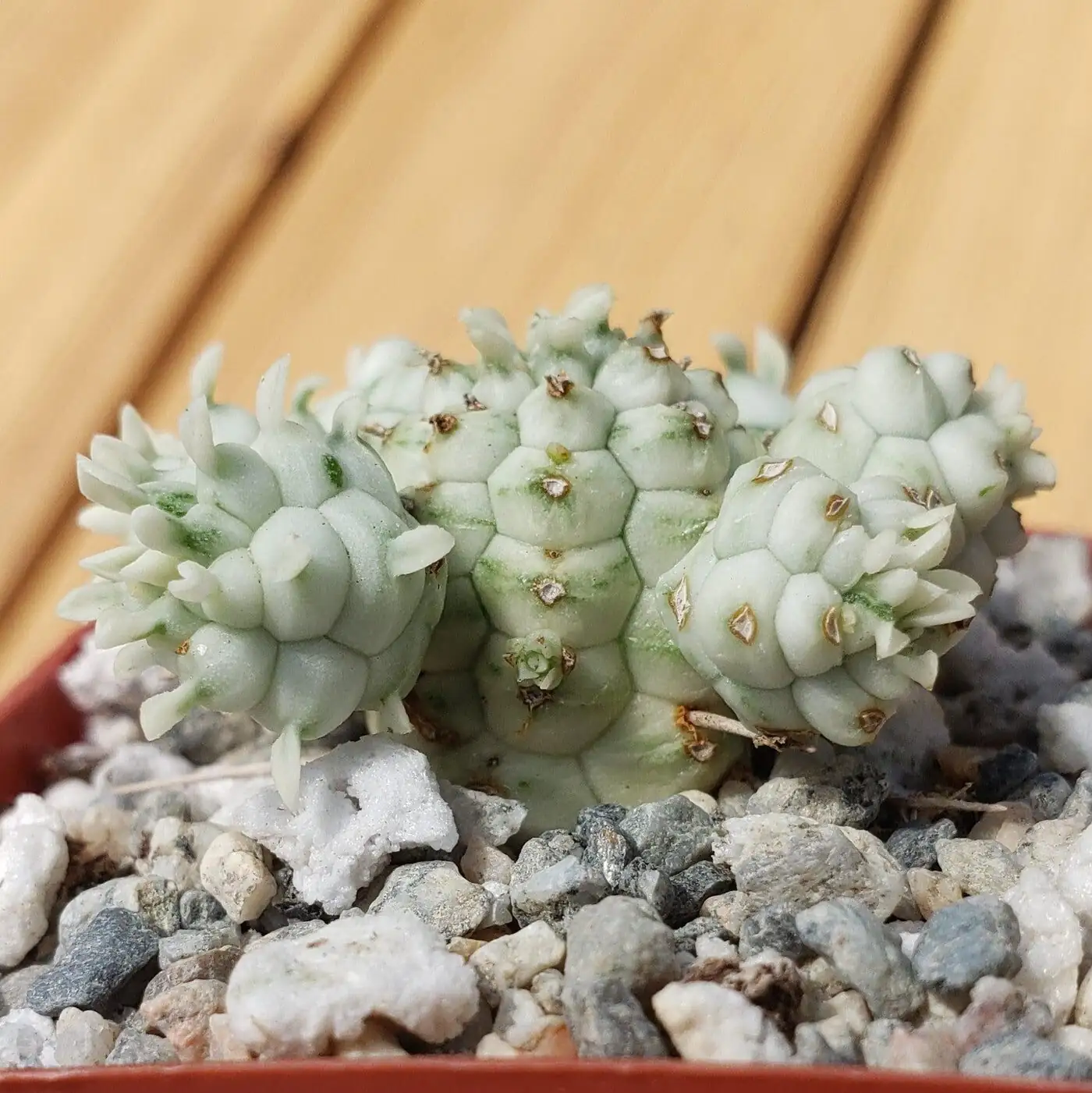
- Sunburn: Sudden bleached or white patches that turn tan/brown and papery.
Your mission: Push light up slowly enough to build pigment without cooking tissue.
Window Orientation Cheat Sheet
Light rules shift with hemisphere. Use this as your indoor map.
- Northern Hemisphere
- South window: Strongest, broadest daily sun. Prime spot after acclimation.
- East window: Gentler morning sun—excellent for early training and for heatwaves.
- West window: Hotter afternoon sun—great color potential, but watch for scorch.
- North window: Usually too dim for peak color; supplement or rotate to brighter spots.
- Southern Hemisphere
- Flip the compass: North is your powerhouse, east is gentle, west is intense, south is lower light.
Micro-tweaks that matter:
- Pull the pot 10–30 cm (4–12 in) back from bare glass to cut magnified heat.
- A sheer curtain = instant “30% shade cloth” for windows.
- Rotate the clump a quarter-turn weekly to color evenly.
A 3‑Week Sun-Acclimation Plan (Indoors to More Sun, or Prepping for Outdoors)
Applies in spring–summer when days are bright and warm. Always start with a healthy, well-rooted plant in a fast-draining succulent mix.
- Week 1: Foundation
- Light: Bright indirect light + 30–60 minutes of direct early morning sun.
- Heat: Keep ambient 18–30°C (64–86°F). Avoid hot glass at midday.
- Water: Drench, then let the mix dry out completely before watering again.
- Week 2: Build
- Light: 2–3 hours of direct morning sun. If using a west window, add just 30–60 minutes late afternoon at first.
- Buffer: Use a sheer curtain on harsh days; add gentle airflow.
- Check: Look daily for uniform blushing vs. patchy pale spots.
- Week 3: Peak
- Light: 4–6+ hours of direct sun if temps are reasonable, or filtered noon sun with full morning sun.
- Outdoor move (optional): Start in bright shade/30–40% shade cloth for 3–4 days, then give 1–2 hours morning sun, increasing every few days. Keep afternoon sun filtered at first.
- Night lows: Bring indoors before nights drop below 10°C (50°F).
Adjust in heatwaves: Hold at your current level, add shade cloth or a sheer, and increase airflow rather than piling on more sun.
Shade Cloth and Heat Management
- Shade cloth: 30% is a succulent grower’s best friend for clean color without scorch; bump to 40–50% during heat spikes or under west sun.
- Leaf-surface heat test: If the stem feels too hot to keep your hand on comfortably, add shade or increase distance from glass.
- Pot choice: Terra cotta breathes and runs cooler than plastic.
- Airflow: A small fan outdoors or cracked window indoors lowers leaf temps dramatically.
Watering While Chasing Color
Color demands light, not extra water.
- Core rule: Water thoroughly, then let the mix dry out completely before watering again.
- Typical rhythm: Every 10–21 days in spring–summer; in winter every 3–6 weeks depending on light and warmth.
- Timing: Water early morning so roots hydrate before the day heats up. Never leave the pot sitting in water.
- Mix: Very fast-draining cactus/succulent substrate; boost with mineral grit or pumice.
Fertilizer: Just Enough, Not Too Much
- Spring–summer: Light feeding every 4–6 weeks at 1/4–1/2 strength cactus fertilizer.
- Autumn–winter: Skip. Cold + nutrients + wet soil = rot risk.
- Tip: Overfeeding can push soft, fast growth that burns more easily.
How to Read the Plant: Healthy Stress vs. Sunburn
- Healthy stress color
- Even blush or deepening spine color
- Tissue firm; no rough texture or collapse
- Develops over days to weeks
- Sunburn
- Bleached white or ghostly patches that turn tan and papery
- Appears within hours to a day after a light/heat jump
- Action: Pull back to bright shade, let damaged areas harden, resume slower acclimation after 7–10 days
Advanced Move (Optional): UV‑B for Indoor Color
Not necessary for success, but some growers use UV‑B to intensify protective pigments.
- What it does: Triggers anthocyanins—the plant’s built-in sunscreen—leading to red/purple tones.
- How to do it safely:
- Use fixtures designed for plants/reptiles (standard LEDs usually lack UV‑B).
- Start with 2–4 hours mid‑day, several days in a row; increase gradually to 6–8 hours if the plant stays firm and evenly colored.
- Distance and shielding matter—for both the plant and you. Protect eyes/skin; don’t overexpose.
- Cycle seasons: Give growth periods with normal strong light (no extra UV‑B) so the plant can put on vigor.
Seasonal Rhythm That Keeps Plants Gorgeous
- Spring: Ramp up light; resume light feeding; repot if rootbound (one pot size up, always with drainage).
- Summer: Maximize light with shade management; water only when fully dry; inspect for mealybugs/scale.
- Autumn: Ease off feeding; start extending dry periods.
- Winter: Keep bright but much drier; warmth above 10°C (50°F); no sitting in cold, wet mix.
Quick Pitfalls (and Easy Fixes)
- Soft, blackening base = likely rot from cold, wet soil. Stop watering, increase warmth and light. If needed, take healthy stem cuttings; let them callus for several days, then root in a gritty, barely damp mix.
- Pests: Mealybugs and scale love ribs and joints. Swab early with isopropyl alcohol or use horticultural soap.
- Crowding at glass: Can cause localized scorch. Give the plant a little standoff distance.
Safety First
Euphorbia sap is milky, irritating, and toxic if ingested. Wear gloves and eye protection when pruning or handling. Keep away from children and pets.
Symbolism, Not Quite “Flower Language”
This species’ compact, spiny fortress of stems has come to symbolize resilience and protection—more a modern houseplant association than a traditional “flower language.” It’s a living emblem of toughness that still rewards care with crisp architecture and confident color.
The Takeaway
- Aim for 4–6+ hours of sun after a gradual build, or filtered midday sun with full morning sun.
- Use sheer curtains or 30–40% shade cloth to smooth over the harshest rays and heat.
- Water deeply but only when bone‑dry; keep it warm and well‑ventilated.
- Watch for even blushing (good) versus sudden pale patches (bad).
- In frosty regions, enjoy it indoors or summer it outside—but always bring it in before nights hit 10°C (50°F).
Do this, and your Red Coral Spurge will glow with confident, saturated color—and never once look like it lost a duel with the sun.