

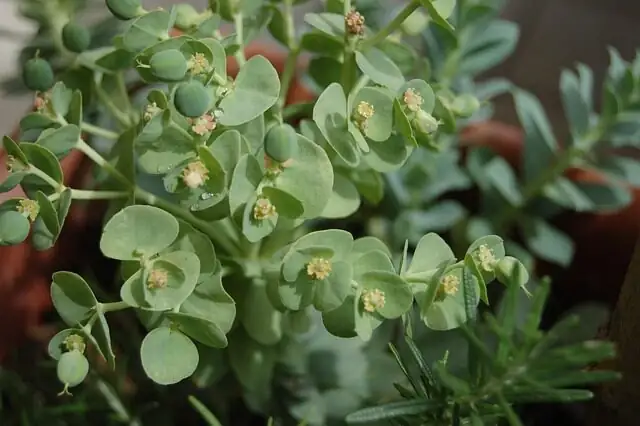
If you’ve ever called this plant a “corn-cob cactus,” you’re in good company—and you’re also a little bit wrong. Euphorbia mammillaris, a.k.a. Red Coral Spurge, only looks like a cactus. This compact, architectural succulent from South Africa grows gray‑green, ribbed columns dotted with short, showy red to reddish‑brown spines and eventually forms a branching clump on a sunny sill. The fun part? Once you learn a few simple cues—sap, areoles, cyathia, ribs, and growth habit—you’ll never mix it up with a true cactus again.
Meet Euphorbia mammillaris at a glance
- Origin: South Africa (Cape Provinces)
- Habit: Upright, cactus‑like columns that branch into a tidy clump
- Size: About 30 cm (12 in) tall; clumps to roughly 20–40 cm (8–16 in) wide over time
- Look: Gray‑green, ribbed stems with short red to reddish‑brown spines along the ribs
- Flowers: Tiny, yellowish‑to‑greenish cyathia in spring–summer (easy to miss)
Myth-busting ID: five cues that instantly separate it from a cactus
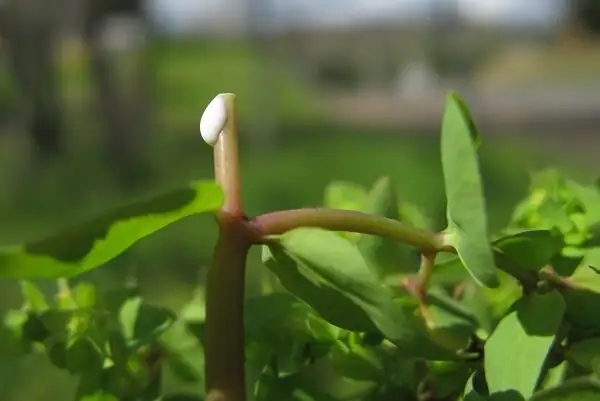
1) Sap test (don’t do it on purpose!)
- Euphorbia mammillaris bleeds milky latex when damaged. That sap is irritating to skin and eyes—handle with gloves and keep it away from kids and pets.
- True cacti don’t produce milky latex.
Tip: You don’t need to break anything to ID it—use the next cues.
2) Areoles vs. spines
- Cacti have areoles: those distinct, fuzzy or padded dots where spines, flowers, and new growth emerge.
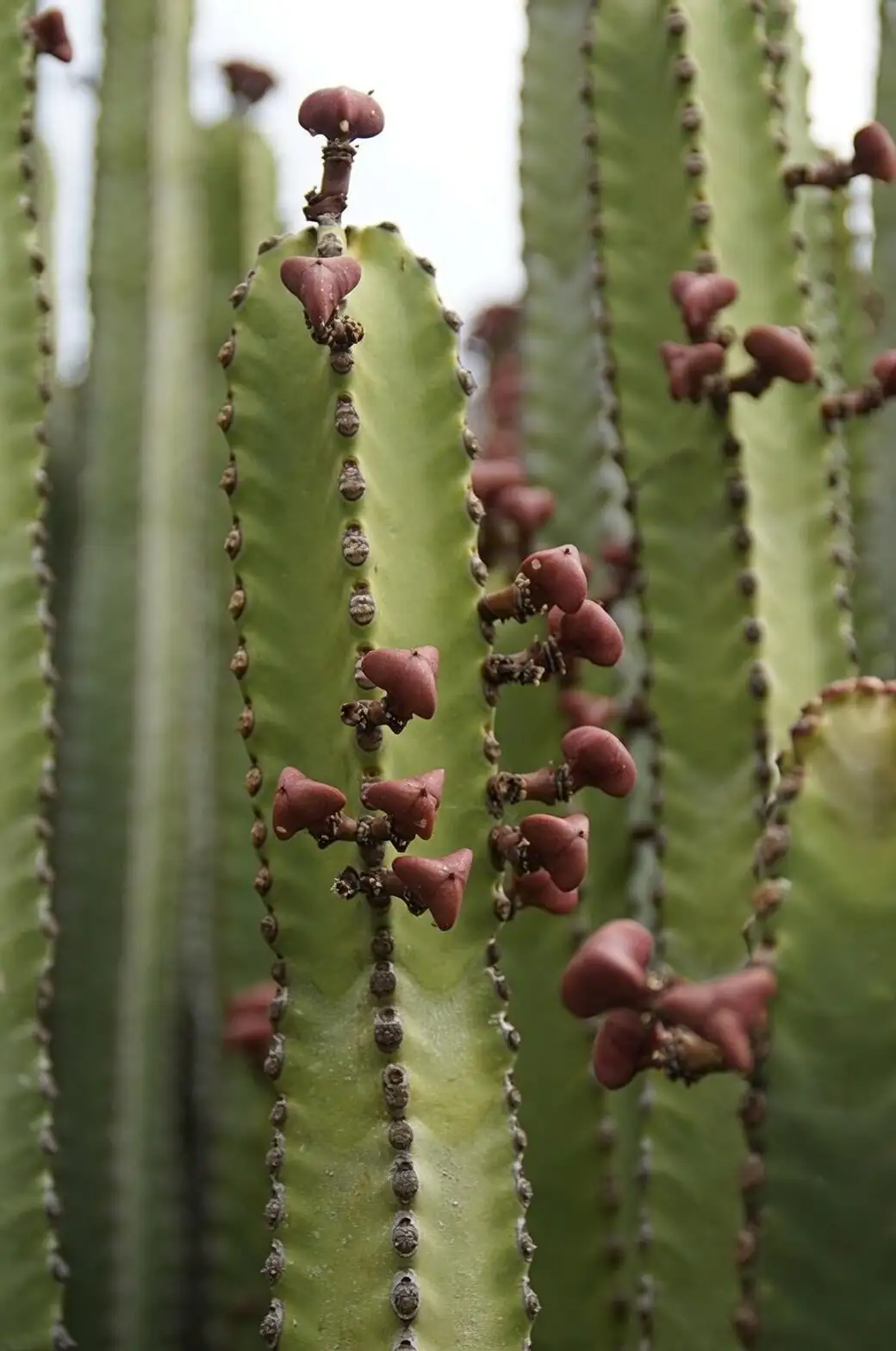
- Euphorbia mammillaris has no areoles. Its short “spines” sit directly on the ribs, not on fuzzy pads. In many euphorbias, spines occur in pairs; here they read as neat, short points marching along each rib.
Spot-check: If you see tidy dots with a tuft or cushion under each spine cluster, you’re looking at a cactus—not this plant.
3) Cyathia, not big blooms
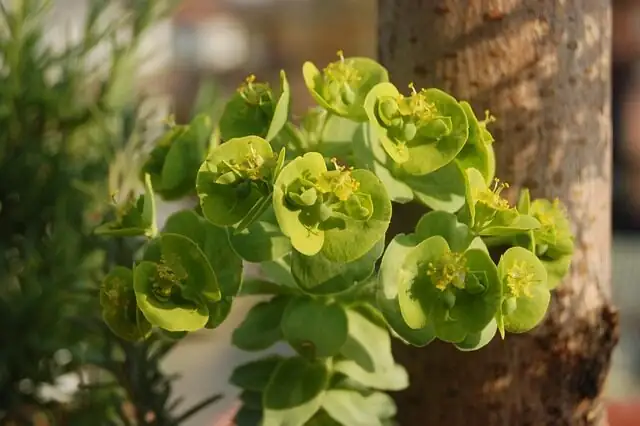
- In Euphorbia mammillaris, the “flowers” are cyathia: small, cup‑like structures, usually yellowish to greenish. They’re subtle and often overlooked.
- Cacti tend to flaunt large, showy flowers with obvious petals. If the bloom looks like a miniature water lily, it isn’t this euphorbia.
4) Ribs and that “corn cob” silhouette
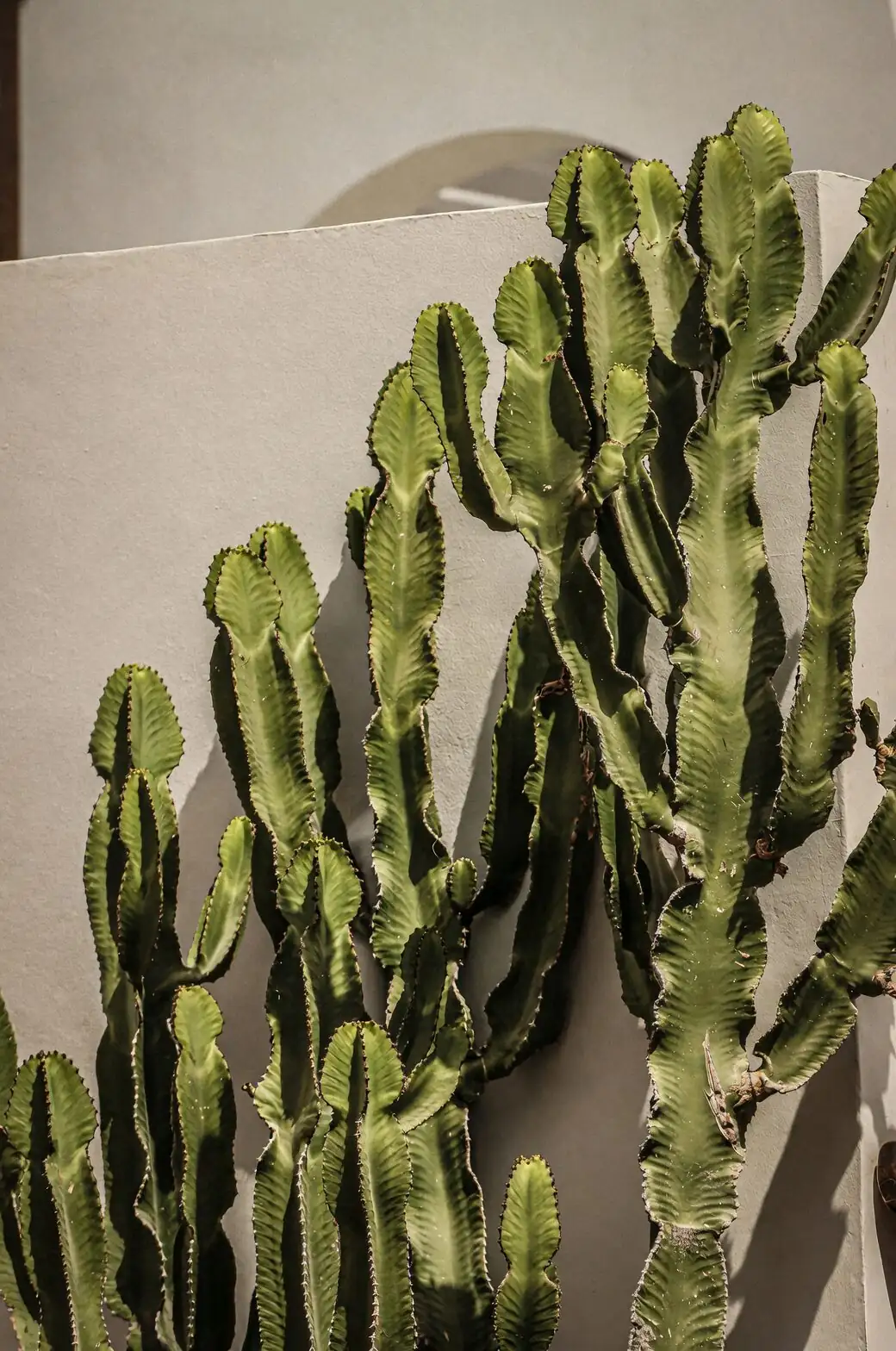
- Expect segmented, gray‑green columns with strong ribs, neatly lined with short, reddish spines—hence the “corn cob” vibe.
- Leaves are absent or fleeting. Any small, temporary leaflets won’t stick around in bright, dry conditions.
5) Growth habit: branching, compact clumps
- Rather than a single towering column, Red Coral Spurge branches and forms a tidy, upright clump—perfect for a bright windowsill.
- Mature clumps stay relatively compact, architectural, and well‑behaved.
Care, minus the myths
Light
- Best with bright light to full sun: aim for 4–6+ hours of direct sun. Acclimate gradually to avoid scorch.
Water
- Soak thoroughly, then let the mix dry out completely before watering again.
- Spring–summer: typically every 10–21 days.
- Winter: go much lighter—about every 3–6 weeks, depending on light and warmth.
- Never leave the pot sitting in water.
Soil and potting
- Use a very fast‑draining cactus/succulent mix, boosted with mineral grit or pumice.
- Choose a pot with drainage; move up only one size when repotting to reduce rot risk.
- Repot every 2–3 years, ideally in spring.
Temperature and humidity
- Warm‑growing: 18–30°C (64–86°F); keep above 10°C (50°F).
- Not frost hardy (USDA 10–11). Indoors, average or low humidity is ideal—avoid damp, stagnant air.
Feeding
- Lightly feed in spring–summer with diluted cactus fertilizer (¼–½ strength) every 4–6 weeks.
- Skip fertilizer in winter.
Pruning and propagation
- Prune to shape or remove damaged stems. Always wear gloves and eye protection; the latex sap is irritating.
- For cuttings: allow cut ends to dry and callus for several days, then set in a dry, gritty mix. Begin very light watering only after roots form.
Pests and pitfalls
- Mealybugs and scale like to hide in ribs and branch points—inspect often. Dab with isopropyl alcohol or use horticultural soap at first sign.
- The big danger is root rot from cold, wet soil. Keep it bright, warm, and on the dry side.
Spot-the-imposter checklist (Euphorbia vs. cactus)
- Sap: Milky latex = euphorbia. Watery sap = likely cactus (or not euphorbia).
- Areoles: Present (tufty pads) = cactus. Absent = euphorbia.
- Flowers: Big and showy = cactus. Tiny cyathia cups (often yellow‑green) = euphorbia.
- Spines: On areoles = cactus. Directly from the stem/ribs (often in neat pairs or rows) = euphorbia.
- Habit: Many euphorbias, including this one, branch into clumps; lots of cacti stay solitary for years (though there are exceptions).
Why they look alike anyway: Convergent evolution. Different plant families, similar dry‑climate solutions—ribs for expansion, spines for protection and shade, water‑storing stems.
Buying smart
- Choose firm, evenly colored stems with no soft spots.
- Avoid blackened bases (rot risk) and mealybug fluff in ribs or crevices.
Placement ideas
- Sunniest windowsill, bright sunroom, or a warm, sheltered patio in summer. Bring indoors before nights dip below 10°C (50°F).
- Pair with pale gravel top‑dressing to spotlight those red spines and emphasize the “architect” vibe.
A quick seasonal cadence
- Spring: Ramp up light and water; repot if needed; start light feeding.
- Summer: Maximize sun; water only when fully dry; scout for pests.
- Autumn: Taper feeding; begin reducing water.
- Winter: Keep bright but much drier; protect from cold drafts.
Safety first
- Toxic/irritant latex sap: can cause skin irritation and serious eye injury; harmful if ingested.
- Use gloves and eye protection when pruning or repotting; keep out of reach of children and pets.
Symbolism and a pinch of lore
- Often associated with resilience and protection—its spiny, drought‑tough silhouette feels like a miniature fortress against tough conditions.
- About “flower language”: Modern succulent “花语” attributions are largely contemporary inventions rather than ancient tradition. For Euphorbia mammillaris, resilience and boundary‑setting make thematic sense—small, steadfast, and guarded—yet these meanings are symbolic poetry, not historical canon.
Fast FAQs
- Is it a cactus? No. It’s a spurge (Euphorbia). Think latex sap and tiny cyathia, not areoles and big blooms.
- Why is the base going soft? Likely rot from overwatering or cold, wet soil. Stop watering, increase light and warmth, and—if needed—take healthy cuttings to re‑root in a dry, gritty mix.
- Can I touch the red spines? Best not. They can prick, and any break can release irritating sap. Handle with gloves.
Learn these simple cues—sap, areoles, cyathia, ribs, and clumping habit—and Red Coral Spurge will never fool you as a cactus again. Instead, you’ll enjoy it for what it is: a compact, sun‑loving, design‑forward euphorbia that thrives on bright light, fast drainage, and restraint with the watering can.