

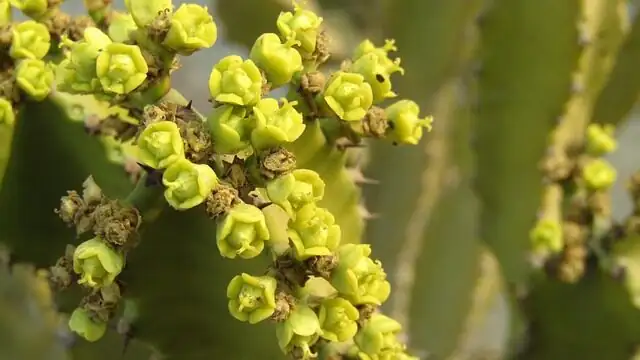
Meet Euphorbia mammillaris, the Red Coral Spurge—an architectural, cactus‑like succulent with gray‑green ribs and showy red “spines.” It’s compact, doubles down on drama in a sunny window, and asks for very little water. But there’s one non‑negotiable: respect the milky latex. Like many spurges, this plant’s sap can irritate skin, seriously injure eyes, and upset stomachs if ingested. With a few smart habits—gloves on, goggles up—you can enjoy its bold silhouette safely.
Know your plant, know its risks
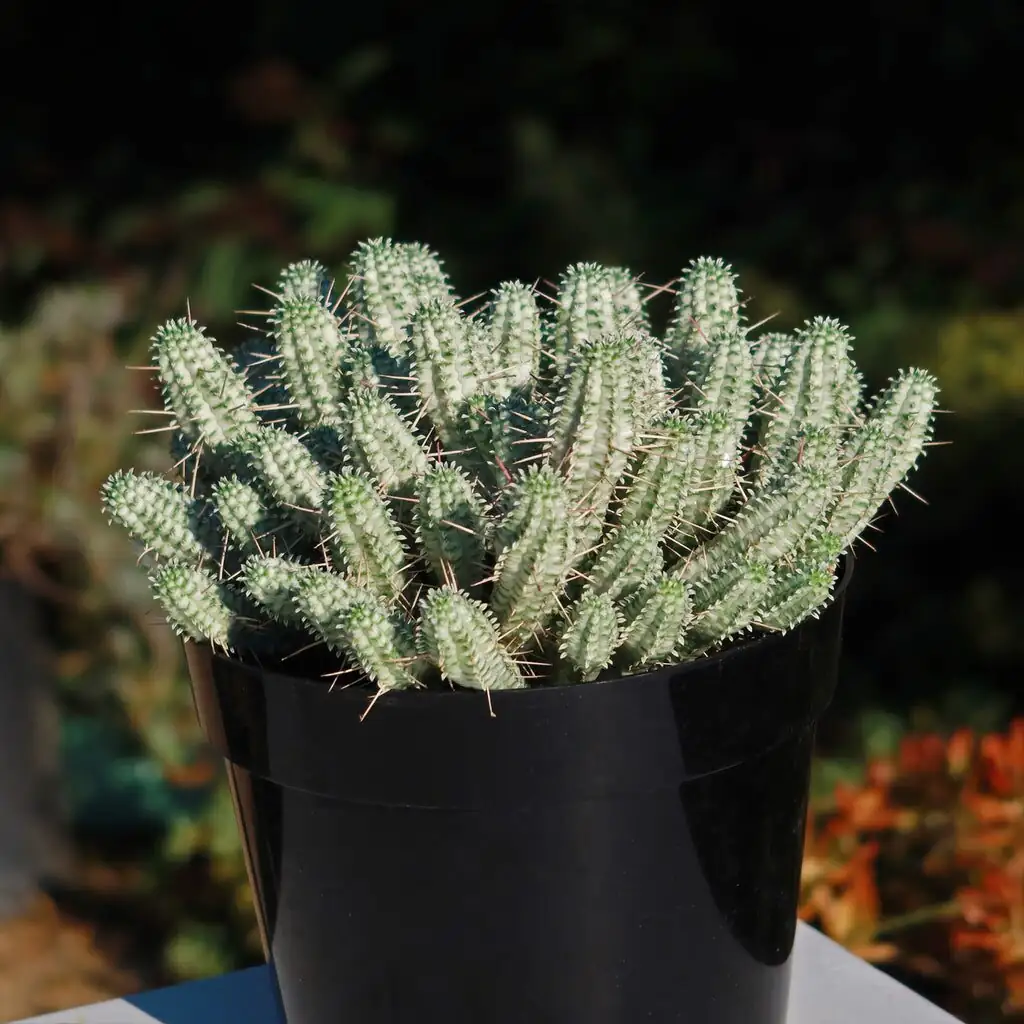
- What it looks like: Upright, segmented, ribbed stems (often to about 30 cm/12 in) with short red to reddish‑brown spines. Flowers are tiny, yellow‑green cyathia—easy to miss.
- Not a cactus: It only looks like one. Break a stem and you’ll see milky latex—classic Euphorbia.
- Why the confusion matters: People handle cacti bare‑handed; with Red Coral Spurge, the sap makes protection essential.
The latex: small drips, big consequences
- Skin: Can cause redness, stinging, and rash.
- Eyes: A true emergency. Euphorbia sap is notorious for causing corneal irritation and inflammation; prompt rinsing is crucial to protect vision.
- Mouth/GI: Numbing or burning in the mouth, drooling, nausea, vomiting, or stomach upset if chewed or swallowed.
- Pets and kids: Toxic/irritant. Keep out of reach; curious nibblers are most at risk.
Tip: Think of the latex like wet paint you never want on skin or in eyes—set up before you start so you never have to rush mid‑task.
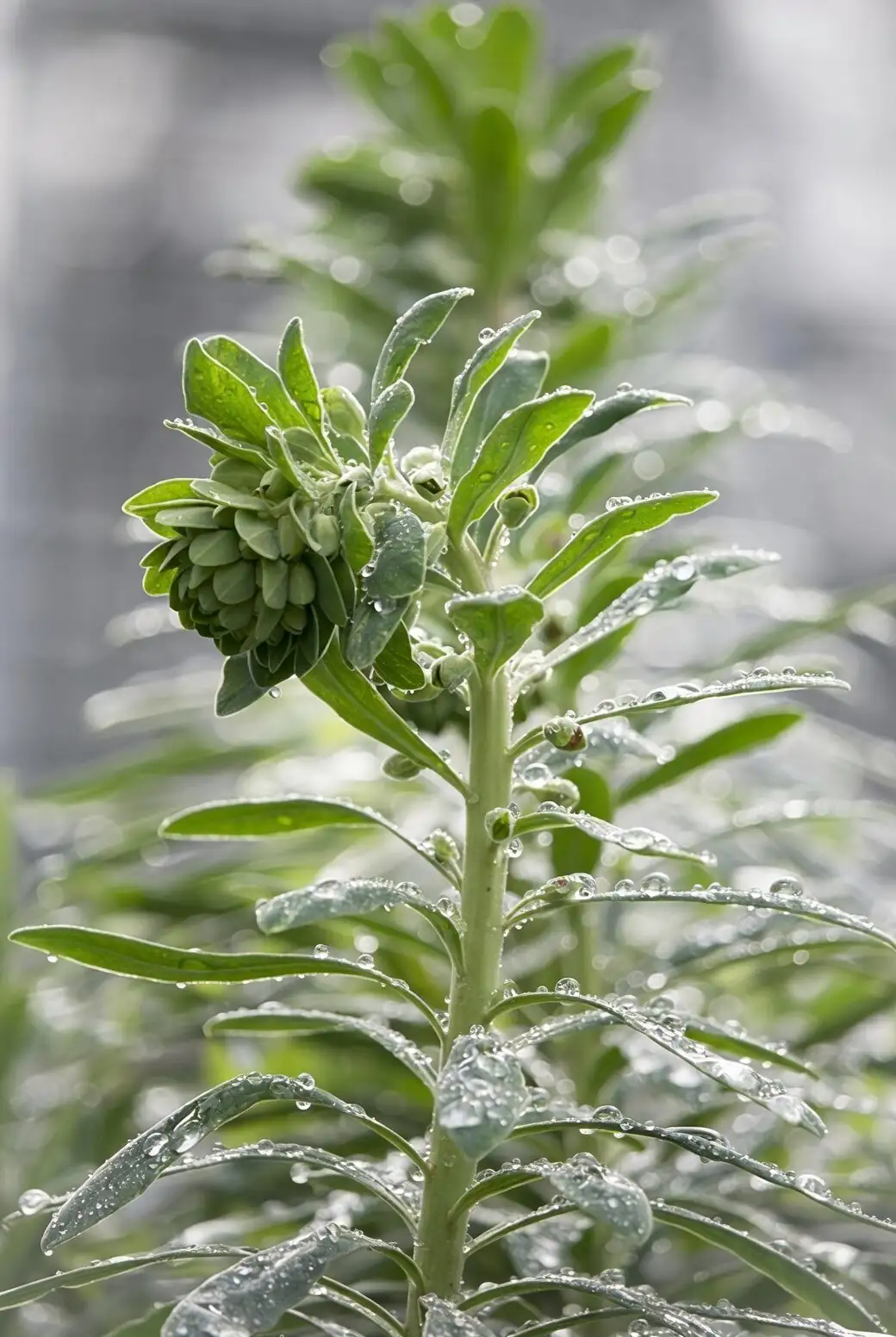
Suit up before you touch it
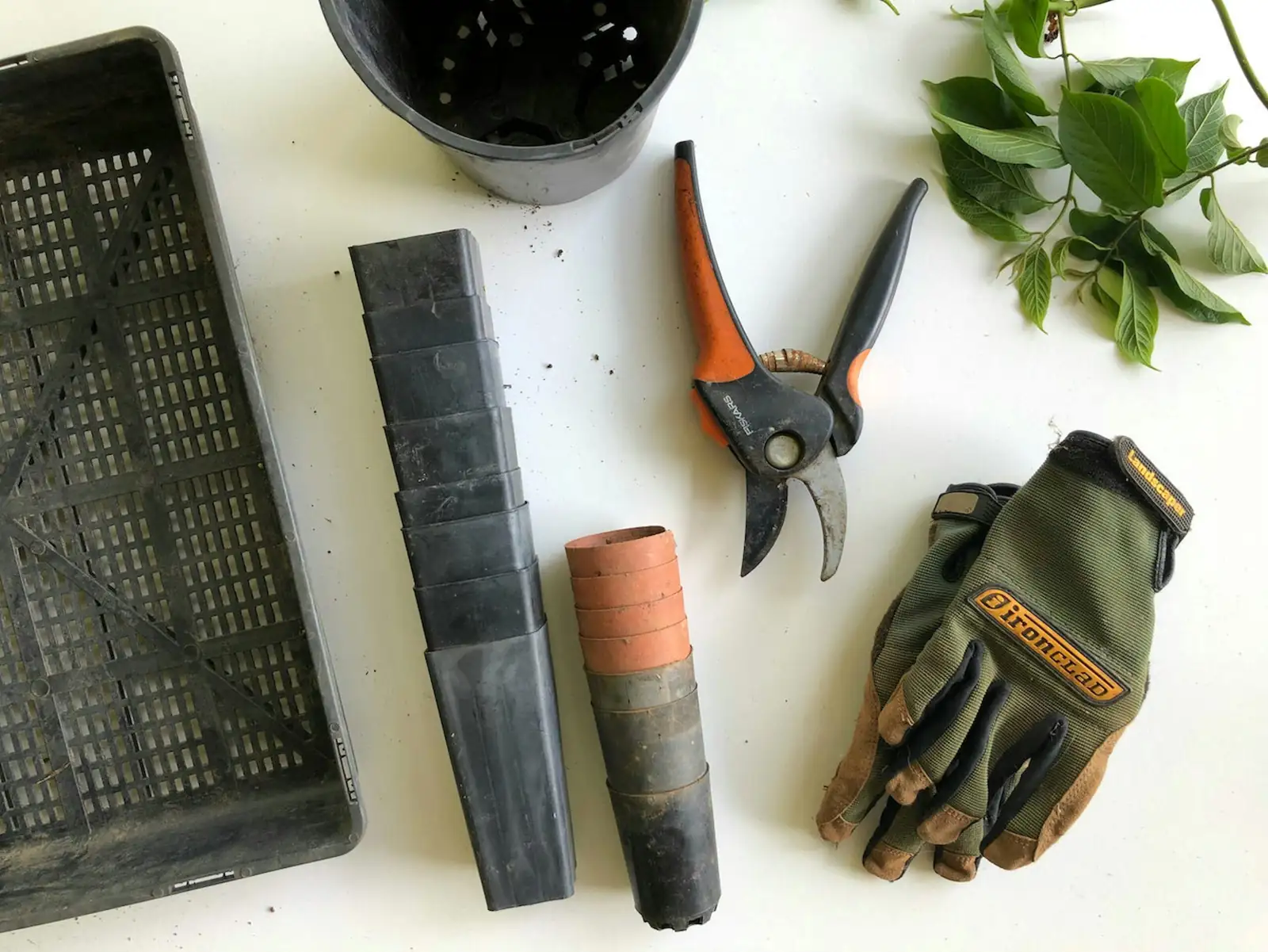
- Gloves: Nitrile or other waterproof gloves; avoid porous garden gloves.
- Eye protection: Safety glasses or goggles whenever cutting, repotting, or moving tight clumps.
- Clothing: Long sleeves you can wash right away.
- Tools and setup:
- Sharp pruners or a sterile knife
- Paper towels or disposable cloths to blot sap
- A lined tray or newspaper under the plant to catch drips
- A trash bag ready for contaminated waste
- Household safety: Close doors or crate pets; keep children out of the room until cleanup is complete.
Safe workflow for pruning, repotting, and propagation
- Stage the area: Bright, well‑ventilated spot out of traffic. Lay a washable mat or newspaper.
- Move with care: Use tongs or a towel to hold the clump; avoid grabbing stems bare‑handed.
- Cutting:
- Make clean cuts; expect sap to bead and drip briefly.
- Immediately blot beads with paper towel; do not blow on or touch your face.
- Callusing:
- For any cut stem (on the plant or a cutting), place in a dry, shaded, airy spot for several days to let cuts dry and callus.
- Only after callus forms should you set cuttings on a dry, gritty mix; begin very light watering once roots develop.
- Aftercare: Keep the plant bright but out of harsh midday sun until wounds seal to reduce stress.
Cleanup that actually works
- Skin contact:
- Wipe off sap quickly with a dry paper towel, then wash with soap and cool water; repeat.
- Avoid hot water at first—it can spread oils. Rinse thoroughly.
- Eyes (see “If exposed,” below): Flush immediately.
- Surfaces and tools:
- Wipe up drips right away with disposable towels.
- Wash tools with hot, soapy water; finish with 70% isopropyl alcohol. Rinse and dry.
- Laundry:
- Remove contaminated clothing promptly.
- Wash separately in warm water with detergent.
- Waste:
- Double‑bag used towels, prunings, and soil‑stained liners. Do not compost.
If exposure happens: quick, calm, and thorough
- Eyes:
- Immediately flush with clean, lukewarm water for at least 15–20 minutes. Hold lids open; remove contact lenses after the first few minutes of rinsing.
- Seek urgent medical care or an eye specialist. Bring the plant name (Euphorbia mammillaris).
- Skin:
- Wipe off, then wash with soap and cool water.
- Apply a bland moisturizer; avoid topical steroids unless advised by a clinician. Seek care if a rash worsens or spreads.
- Mouth/ingestion:
- Spit out plant material. Rinse mouth and wipe lips; take small sips of water.
- Do not induce vomiting. Contact poison control or a healthcare provider.
- Pricks from spines:
- Wash the area with soap and water, then apply a clean bandage. Monitor for redness or swelling.
- Pets:
- If chewed or sap contacts eyes/skin, rinse the affected area with lukewarm water (eyes: a gentle, steady stream) and call your veterinarian. Watch for drooling, pawing at the mouth/eyes, vomiting, or lethargy.
Note: When in doubt, call your local poison control center or healthcare provider right away.
Pet- and child‑safe placement
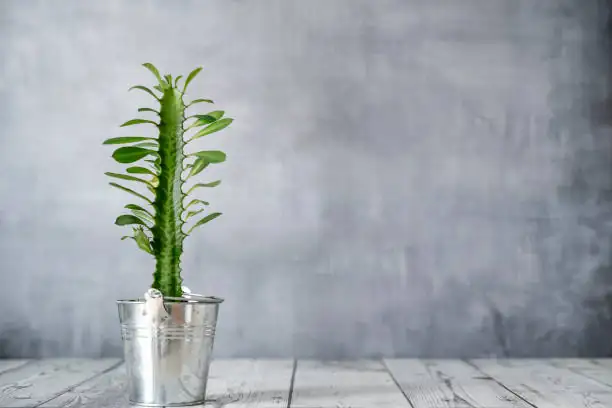
- Where it thrives and stays safe:
- Sunniest windowsill or bright conservatory with 4–6+ hours of direct sun; acclimate gradually to strong sun.
- High shelves, plant pedestals with saucers, or behind a barrier; avoid floor placement in busy rooms.
- Keep it out of reach:
- Use wall‑mounted shelves, window boxes behind glass, or closed sunrooms.
- Teach older children not to touch the “red‑spined plant.” Supervise play in rooms with plants.
- After any pruning or repotting:
- Keep the area off‑limits until you’ve cleaned thoroughly and cuts have stopped weeping.
Everyday care with a safety lens
- Light: Bright light to full sun. Acclimate to prevent scorch.
- Water: Soak, then let the mix dry completely. Spring–summer: roughly every 10–21 days. Winter: go much drier—about every 3–6 weeks, depending on light and warmth. Never leave the pot sitting in water.
- Soil and pot: Very fast‑draining cactus/succulent mix with added mineral grit or pumice; pot with drainage.
- Temperature: Prefers 18–30°C (64–86°F). Keep above 10°C (50°F); no frost.
- Feeding: Light, diluted cactus fertilizer in spring–summer every 4–6 weeks; skip in winter.
- Pruning: Shape as needed—but always with gloves and eye protection. Let all cuts dry and callus.
- Pests: Check ribs and crevices for mealybugs or scale; spot‑treat early with cotton swabs dipped in isopropyl alcohol or use horticultural soap.
- Rot watch: Soft, blackened bases usually mean rot from cold, wet soil. Stop watering, warm it up, increase light, and salvage healthy stems to re‑root after callusing if needed.
Quick safety FAQs
- Is it a cactus? No. It’s a Euphorbia (spurge) with milky sap and specialized “flowers” called cyathia.
- Can I touch the red spines? Best not. They can prick, and any broken stem releases irritating latex.
- Is dried sap safe? Treat all sap—fresh or dried—as irritating. Clean tools and surfaces promptly and wash hands after handling.
- Can I propagate it safely? Yes—if you allow cut ends to callus for several days, use gloves and eye protection, and start cuttings in a dry, gritty mix.
Symbolism, with a wink
Red Coral Spurge is often linked with resilience and protection—a small fortress of ribs and spines that shrugs off drought. If you see “flower language” assigned to it, take it as modern, playful symbolism rather than an ancient code: the plant’s real story is one of convergent evolution, having independently adopted cactus‑like armor to thrive in South Africa’s dry habitats.
At‑a‑glance safety checklist
- Before: Gloves, eye protection, covered workspace, pets and kids out.
- During: Cut cleanly, blot sap, don’t touch your face, let wounds callus.
- After: Wash hands and tools, bag waste, launder clothes, check floors and handles for stray sap.
- If exposed: Eyes—flush 15–20 minutes and seek urgent care. Skin—wash with soap and water. Mouth—rinse, small sips of water, call poison control. Pets—rinse and call the vet.
Handled with care, Euphorbia mammillaris gives you bold, compact architecture and minimal fuss—while your eyes, skin, and household stay safe.