

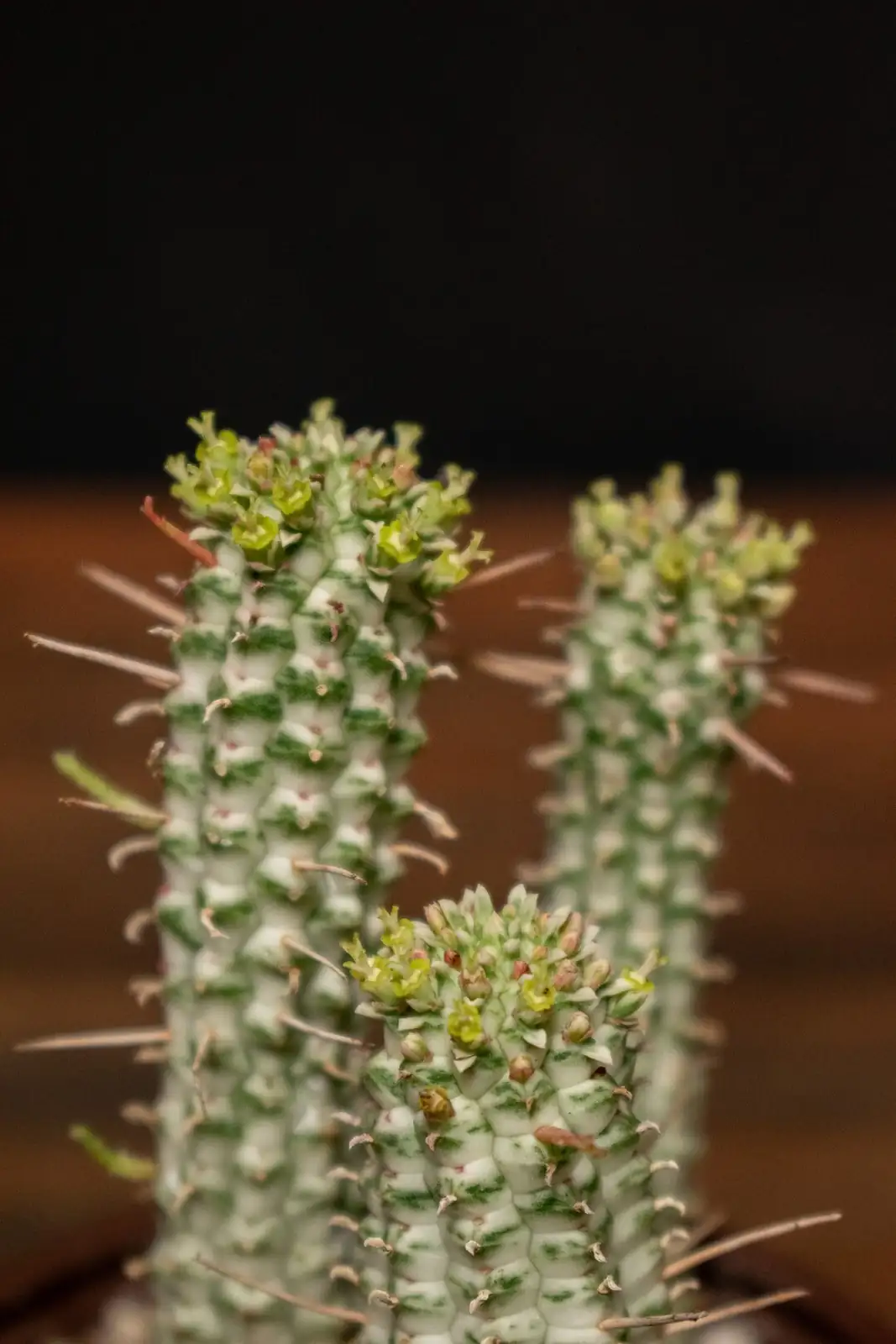
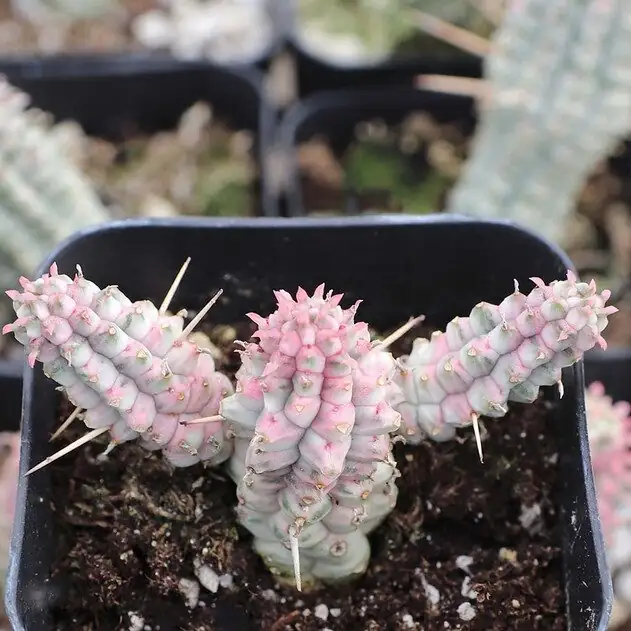
If a cactus and coral reef dreamed up a tiny totem for your windowsill, it would look a lot like Euphorbia mammillaris. Known as Red Coral Spurge (红彩阁) and nicknamed Corn Cob Euphorbia, this South African succulent stands like a miniature citadel—ribbed gray‑green columns studded with short red to reddish‑brown “spines.” No wonder people read it as a symbol of grit and guardianship. But how did that meaning take root, and where does it fit in cultural traditions like hanakotoba and feng shui? Let’s take a thoughtful, engaging tour.
Meet Red Coral Spurge, the “little living fortress”
- Scientific name: Euphorbia mammillaris
- Origin: South Africa (Cape Provinces)
- Look: Compact, upright clumps of ribbed, gray‑green stems lined with short, showy red to reddish‑brown spines; branches over time
- Flowers: Tiny Euphorbia cyathia—yellowish to greenish and easily overlooked—usually in spring to summer (variable indoors)
Fun fact: It’s often mistaken for a cactus, but it’s actually a spurge (Euphorbia). That cactus look-alike act is a classic case of convergent evolution.
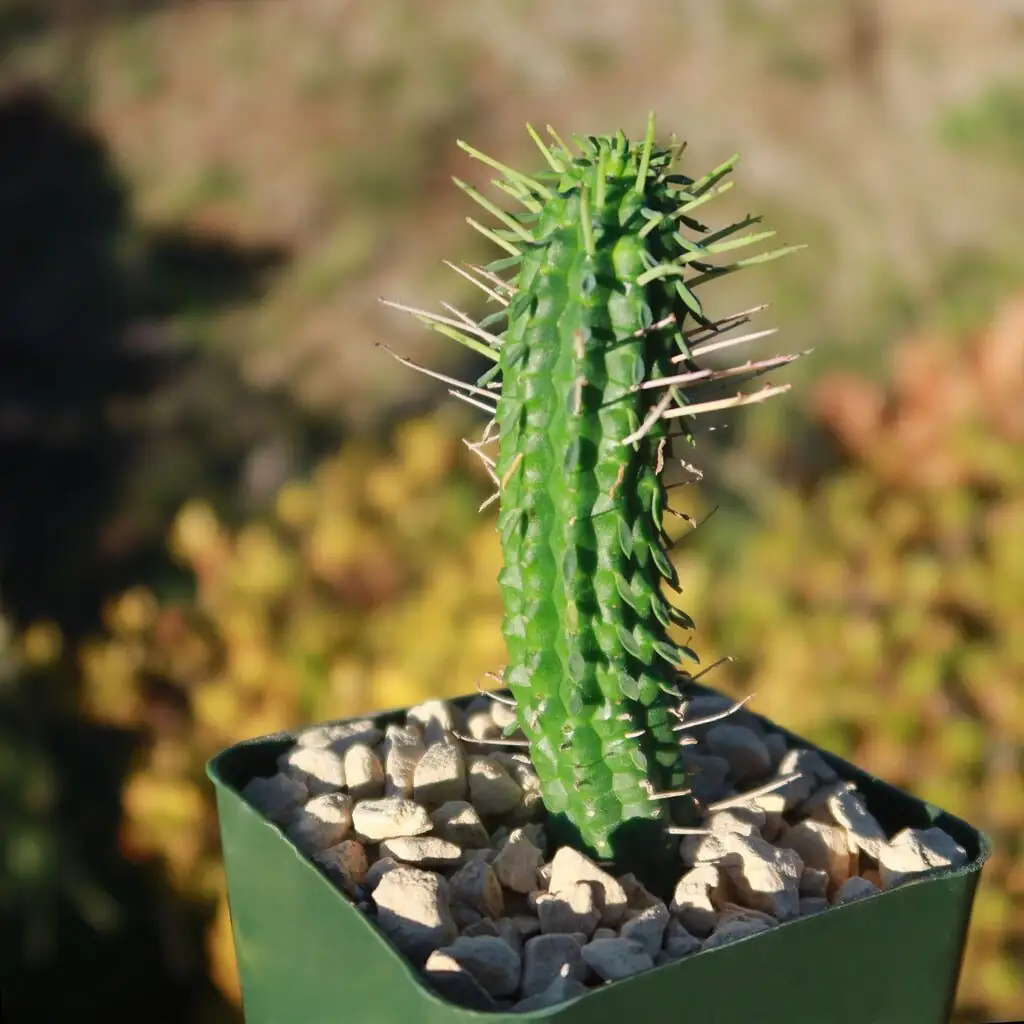
Not a cactus—and why that matters for meaning
Euphorbias evolved in the Old World; cacti evolved in the New. Both adapted to tough, dry places and ended up with similar silhouettes. Red Coral Spurge’s ribbing, compact stature, and drought tolerance speak to endurance. Its short, toothpick-like spines read as armor. Put those together and you get the modern association so many plant lovers feel instantly: resilience and protection.
Flower language (花语) and symbolism
There’s no classical hanakotoba entry
Hanakotoba (the traditional Japanese “language of flowers”) focuses on flowers culturally prominent in Japan. Euphorbia mammillaris isn’t among them, and there’s no classical hanakotoba meaning attached to this species.
Where modern meanings come from
- Resilience: It thrives with bright light, lean soil, and lengthy dry-downs. In design and houseplant culture, that drought-tough nature stands for stamina and self-sufficiency.
- Protection: The red, bristling spines and fortress-like clumps suggest boundaries and warding off harm. People intuitively read it as a guardian plant—compact, bold, and unflinching.
- Minimal blossoms, maximal backbone: Because its flowers are small and unshowy, the plant’s architectural body becomes the message—strength over ornament.
Think of it as a quiet talisman: not flashy with petals, but unmissable in presence.
Feng shui readings: protective energy with a modern twist
While Red Coral Spurge isn’t a classic feng shui staple, many contemporary practitioners interpret spiky, upright succulents as carriers of protective, boundary-setting qi. Used thoughtfully, they can help you draw a clear line between your space and the outside world.
How its form “reads” in feng shui
- Upright, architectural stems: Signal clarity, focus, and resolve.
- Spines: Evoke protection and healthy boundaries; too many in the wrong place can feel like prickly “sha qi” (aggressive energy).
- Red accents: Those reddish spines suggest a subtle spark of Fire energy—vital, activating, but best balanced.
Where it can help
- Entry or mudroom with strong sun: As a symbolic doorkeeper that “filters” what you bring in—ideas, objects, energies. Place it off to the side of the threshold (not directly in the path of movement) and only if the spot is bright enough.
- Home office or studio: On a bright, sunny shelf behind you or to the side of your desk to reinforce focus, boundaries, and follow-through.
- South sector (Fame/Reputation) in bright rooms: For those who work with the Bagua, some like to place spiky, fire-tinged forms here to support visibility and clear personal branding—again, only if conditions provide abundant light.
Where to be cautious
- Bedroom: Sharp, activating silhouettes can be too stimulating where you want softness and rest.
- Relationship/partnership corners: If you’re following a very gentle, yin approach, you may prefer round-leaved, trailing, or flowering plants here.
- Narrow hallways or child/pet zones: The spines can prick, and all Euphorbia sap is irritating.
Styling cues to “soften” the edge
- Pair with rounded ceramics or a smooth pebble mulch.
- Use warm, matte textures to temper the plant’s armor-like look.
- If you want to echo its protective/Fire vibe, consider a subtle red or terracotta pot—balanced by gentle lines rather than sharp, aggressive shapes.
Placement tips that honor both energy and biology
Symbolism only thrives when the plant thrives. Red Coral Spurge is happiest as a sun-seeker.
- Light: Bright light to full sun—aim for 4–6+ hours of direct sun daily. A south or west window is ideal; acclimate gradually to stronger sun.
- Temperature: Warm-loving (about 18–30°C / 64–86°F). Keep above 10°C (50°F). No frost.
- Humidity: Low to average; it prefers drier air.
- Soil and watering: Very fast-draining cactus/succulent mix. Water thoroughly, then let the mix dry out completely before watering again. In winter, water very sparingly.
- Best rooms: Sun-drenched entry alcove, bright office, or a luminous kitchen window ledge. Avoid persistently damp bathrooms and dim corners.
Seasonal note: If you summer it outdoors, choose a warm, sheltered patio and bring it in before nights dip below 10°C (50°F).
A simple intention ritual
- Place it mindfully: Choose a bright spot aligned with your goal—focus, boundaries, or a sense of safety at home.
- State your purpose: When you first water it, speak or write your intention: “May this space be strong, clear, and well-guarded.”
- Maintain the symbol: A thriving plant sustains the message. Trim thoughtfully, dust the ribs, and keep the silhouette crisp.
Cultural echoes and the story they tell
- Convergent evolution: Across the world, unrelated plants solved the same problem—how to survive with almost no water—by growing armored, water-storing bodies. That global story of adaptation reinforces Red Coral Spurge’s modern emblem of fortitude.
- The “living fortress” on the sill: Compact, branching, and bristled, it projects a boundary without bluster—protection through presence, not through spectacle.
Safety first
All Euphorbias have milky latex sap that is irritating and toxic if ingested.
- Handle with gloves and eye protection when pruning or repotting.
- Keep out of reach of children and pets.
- If a stem is damaged, let the cut dry and callus before replanting cuttings.
Quick FAQ
- Is it a cactus? No. It’s a Euphorbia (spurge) with specialized cyathia instead of typical flowers and a milky sap—distinct from true cacti.
- Will it bloom? Yes, but modestly. Expect small yellowish‑green cyathia in spring to summer, especially with strong light.
- What’s the biggest care mistake? Overwatering in cool conditions. Let the soil dry completely between drinks.
In short: Euphorbia mammillaris embodies a modern symbolism of resilience and protection drawn directly from its form and way of life. Treat it well—give it sun, space, and respect—and it can stand as a quietly powerful guardian of your bright places.