

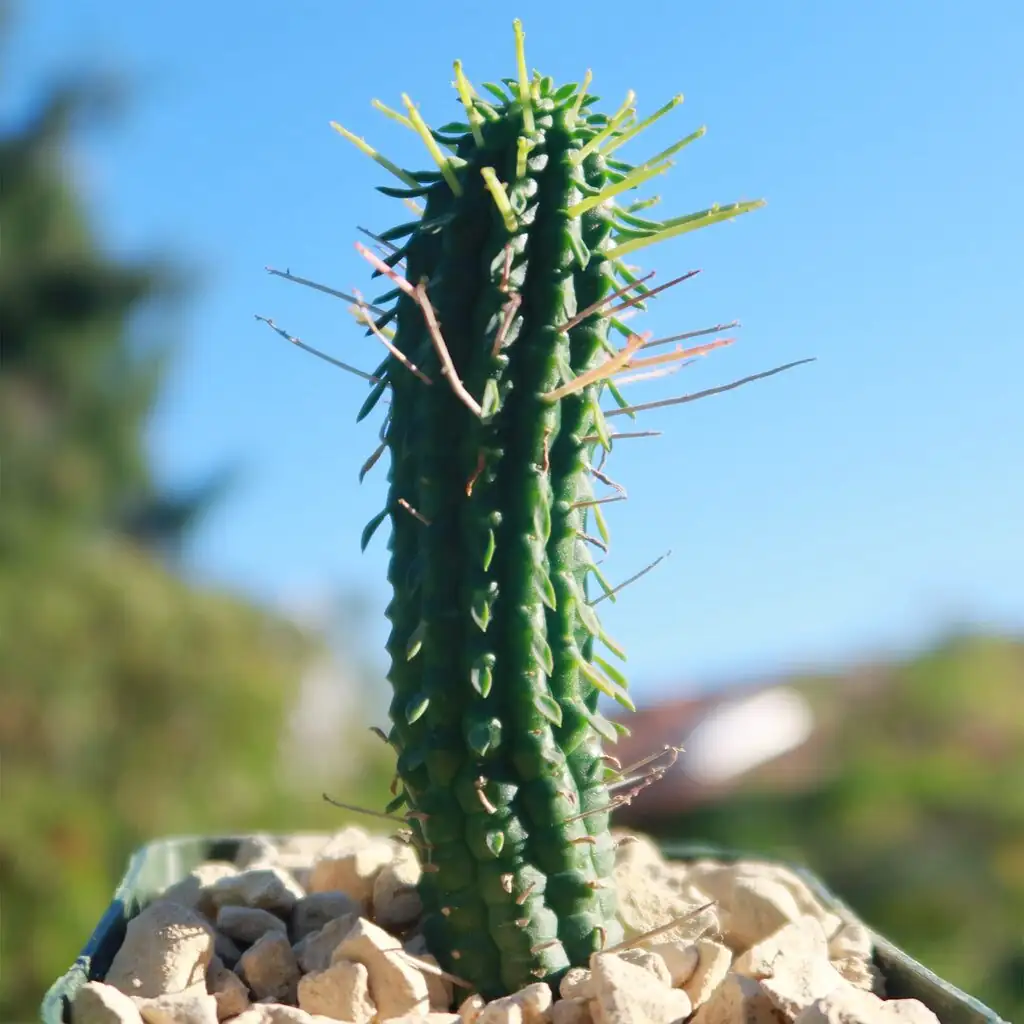
Imagine walking the wind-bright ridges of South Africa’s Cape Provinces at first light. The quartzite outcrops are cold underfoot, the air is pared-down and clean, and tucked among stones is a miniature fortress: a tight clump of gray‑green columns ringed with short, coral-red spines. It looks like a cactus that lost its desert map and crossed oceans—but this is a spurge, Euphorbia mammillaris, crafting the same survival suit in a faraway workshop.
A Cape original that dresses like a cactus
Red Coral Spurge (Euphorbia mammillaris) is native to South Africa’s Cape Provinces, a patchwork of rocky slopes and open scrub where rain often falls in cool seasons and summers slide toward drought. In places like these, water doesn’t politely linger; it rushes through mineral soils, sun is a daily constant, and winds nip moisture from any leaf that dares to linger. So the plant keeps things simple: mostly leafless, water-storing stems, and a compact, armored silhouette.
Those field lessons translate directly to your windowsill:
- Lots of light
- Fast-draining, mineral-rich soil
- Deep drinks spaced by real drought
- Warmth and moving air, not muggy stillness
Convergent evolution: when strangers converge on the same look
Why does a spurge look like a cactus? Convergent evolution. Unrelated plant lineages facing the same brutal math—intense sun, scarce water, hungry herbivores—often arrive at similar solutions. Euphorbia mammillaris and New World cacti both became green pillars that store water and wear spines like armor.
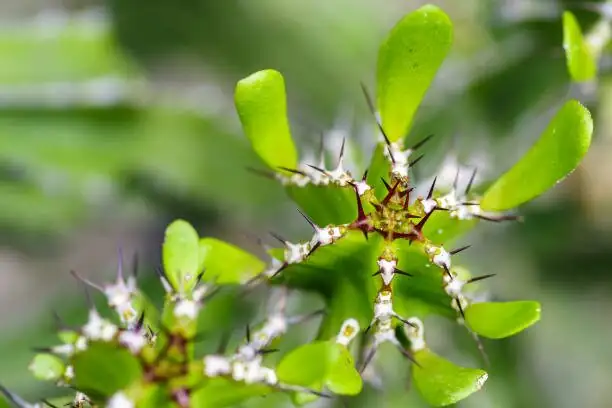
But under the hood, they’re different:
- Sap: Euphorbias bleed milky, irritant latex; cacti don’t.
- “Flowers”: Euphorbia blooms are cyathia—small, specialized structures—rather than the typical cactus flowers.
- Spines: On euphorbias, they arise from different tissues than cactus areoles. To the eye they look comparable; anatomically, they tell different stories.
Meet Euphorbia mammillaris up close
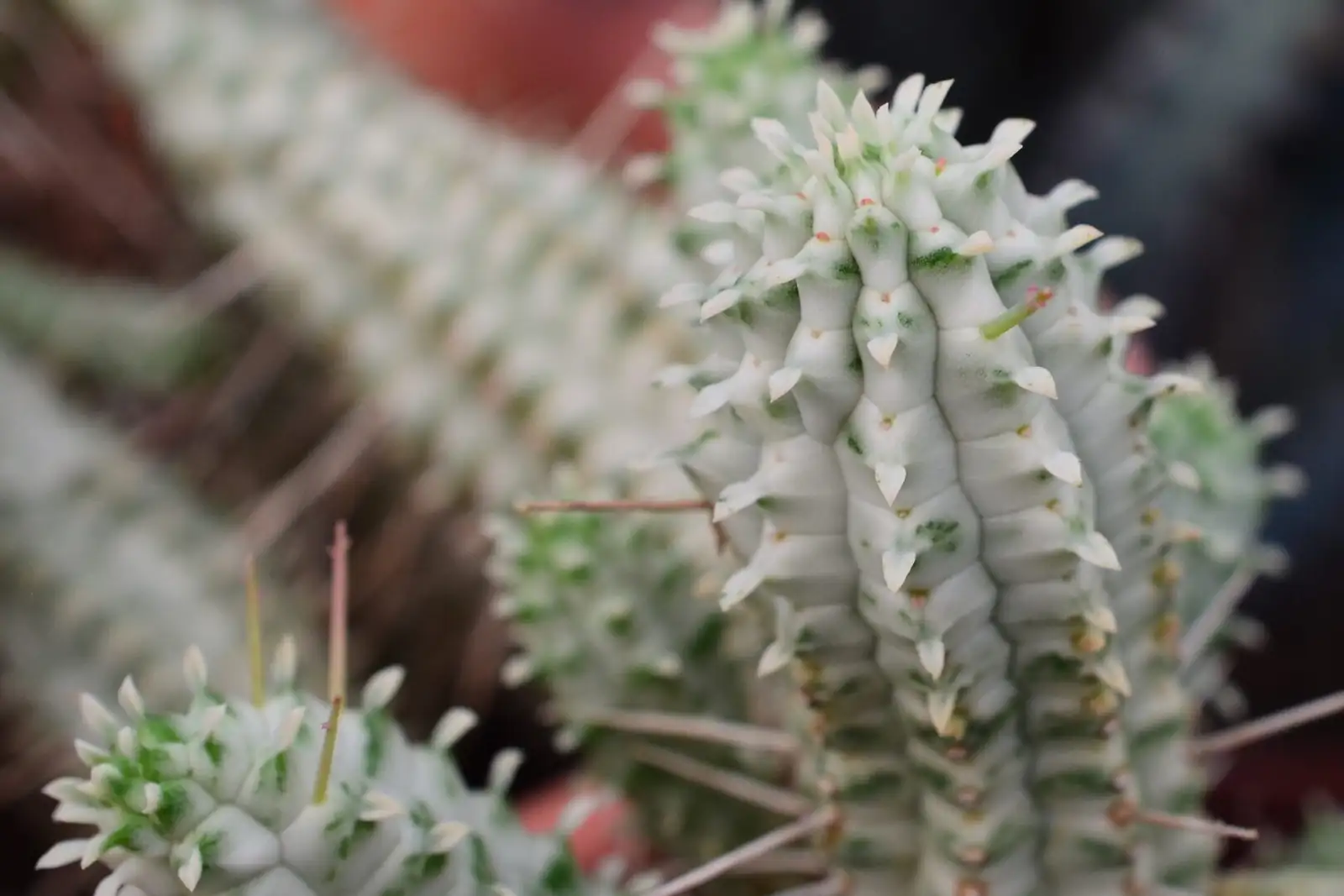
- Form and size: A compact, upright, branching succulent to about 30 cm (12 in) tall; clumps widen with time to roughly 20–40 cm (8–16 in).
- Stems: Gray‑green, ribbed, and segmented; the architectural, corn‑cob rhythm that gives rise to its nicknames.
- Spines: Short, red to reddish‑brown “spines” arrayed along the ribs—striking against the cool stem color.
- Leaves: Essentially leafless or briefly present and soon shed.
- Flowers: Small, easily overlooked cyathia, yellowish to greenish; typically in spring to summer, timing indoors can be variable.
Aliases you may see: Corn Cob Euphorbia, Indian Corn Cob Euphorbia. Don’t be fooled by “cactus” in some trade names—this one’s firmly in Euphorbiaceae.
Field notes turned house rules: how to grow it beautifully
Light
- Aim for bright light to full sun: about 4–6+ hours of direct sun daily.
- Acclimate gradually when moving to stronger sun to avoid scorch.
- Indoors, a south- or west-facing windowsill is prime. In summer, a warm, sheltered patio is perfect—bring it in before nights dip below 10°C (50°F).

Water
- Soak, then let it go bone-dry. Water thoroughly, then wait until the mix is completely dry before the next drink.
- Spring–summer: often every 10–21 days, depending on light, heat, and pot size.
- Winter: much sparser—about every 3–6 weeks. Err on the dry side in cool, short days.
- Never leave the pot sitting in a saucer of water.
Soil
- Use a very fast-draining cactus/succulent mix.
- Improve further with mineral grit or pumice for a rocky, Cape-inspired substrate.
Temperature and humidity
- Loves warmth: 18–30°C (64–86°F) is ideal.
- Keep above 10°C (50°F); not frost hardy (USDA 10–11).
- Prefers low to average indoor humidity and good air movement. Damp, stagnant air invites trouble.
Feeding
- Light feeder. In spring and summer, apply diluted cactus fertilizer (about 1/4–1/2 strength) every 4–6 weeks.
- Skip feeding in winter.
Potting and repotting
- Choose a pot with a drainage hole; unglazed clay helps the mix dry faster.
- Repot every 2–3 years or when rootbound, ideally in spring. Step up only one size to reduce rot risk.
Pruning and propagation
- Prune to tidy or shape clumps; the plant will branch over time.
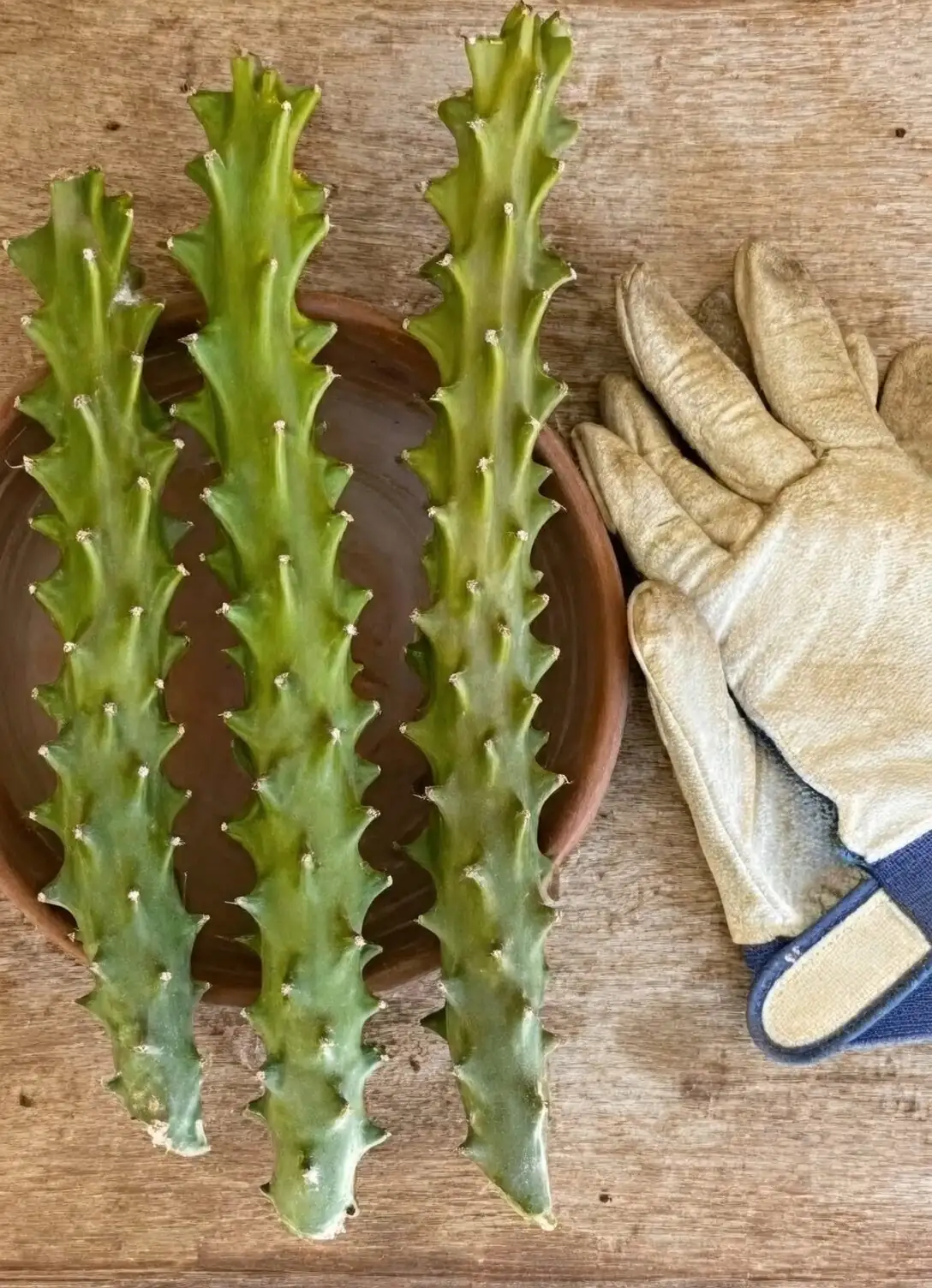
- Propagate by stem cuttings:
- Wear gloves and eye protection—milky latex sap is irritating.
- Allow cut ends to dry and callus for several days.
- Set into a dry, gritty mix; introduce very light watering only after roots form.
Seasonal rhythm (quick calendar)
- Spring: Increase light and watering; repot if needed; begin light feeding.
- Summer: Maximum light; water only when fully dry; check for pests.
- Autumn: Taper feeding and reduce water as days shorten.
- Winter: Keep bright but much drier; protect from cold drafts.
Where to place it—and what to pick at the nursery
- Placement: The sunniest sill or a bright conservatory. Outdoors in warm weather, give it a sheltered, high-light spot protected from heavy rain.
- Buying guide:
- Choose plants with firm, unwrinkled stems and even color.
- Avoid soft spots or blackened bases (rot risk).
- Inspect ribs and crevices for mealybugs; skip plants with cottony residue.
Troubleshooting from the veld
- Soft base or collapsing stems: Usually rot from overwatering or cold, wet soil. Act fast—stop watering, increase light and warmth. If needed, cut healthy tips, let them callus, and re-root in a dry, gritty mix.
- Pests: Mealybugs and scale like to tuck into ribs and joints. Dab early infestations with cotton swabs dipped in isopropyl alcohol or use horticultural soap. Keep the plant in brisk light and on the dry side to discourage outbreaks.
- Big picture: Most failures trace back to water plus cold. Keep it warm, bright, and dry between drinks.
Safety briefing
This species contains toxic/irritant latex sap. It can cause skin irritation and serious eye injury, and it’s harmful if ingested.
- Handle with gloves; avoid touching your face.
- Keep away from children and pets.
- If sap gets on skin, wash promptly; if in eyes, seek medical attention.
Symbolism and “flower language”
Euphorbia mammillaris is often linked with resilience and protection—an easy leap when you see its compact, spiny, drought-proof form holding ground against heat and wind. As for formal “flower language” traditions, many modern attributions are retrospective or ornamental rather than rooted in historical Cape lore. Still, the metaphor lands: a living bastion that stores strength quietly and wears its boundaries openly. It’s a small sculpture of endurance on your windowsill.
Quick FAQ
- Is it a cactus?
- No. It’s a Euphorbia (spurge). It only looks cactus-like; it has milky sap and tiny cyathia rather than typical cactus flowers.
- Why is my plant turning soft at the base?
- Most often rot from overwatering or cold, wet soil. Stop watering, boost light and warmth, and if necessary, take healthy cuttings, let them callus, and re-root in a dry, gritty mix.
- Can I touch the red spines safely?
- Best not. They can prick, and any break can release irritating sap. Use gloves and tools when moving or pruning.
Fun field facts
- Euphorbias and cacti evolved their armored columns on different continents—convergent evolution at its most convincing.
- Those “flowers” you squint to see are cyathia: specialized structures unique to Euphorbia, subtle but botanically fascinating.
Bring home Red Coral Spurge, give it the Cape conditions it expects—sun, stone, and space between sips—and watch a pocket-sized fortress thrive.