

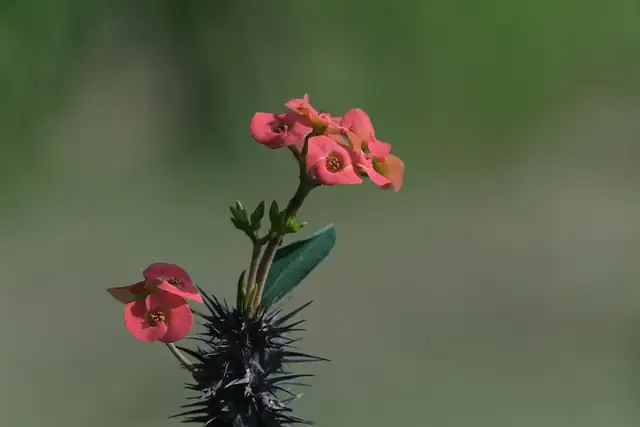
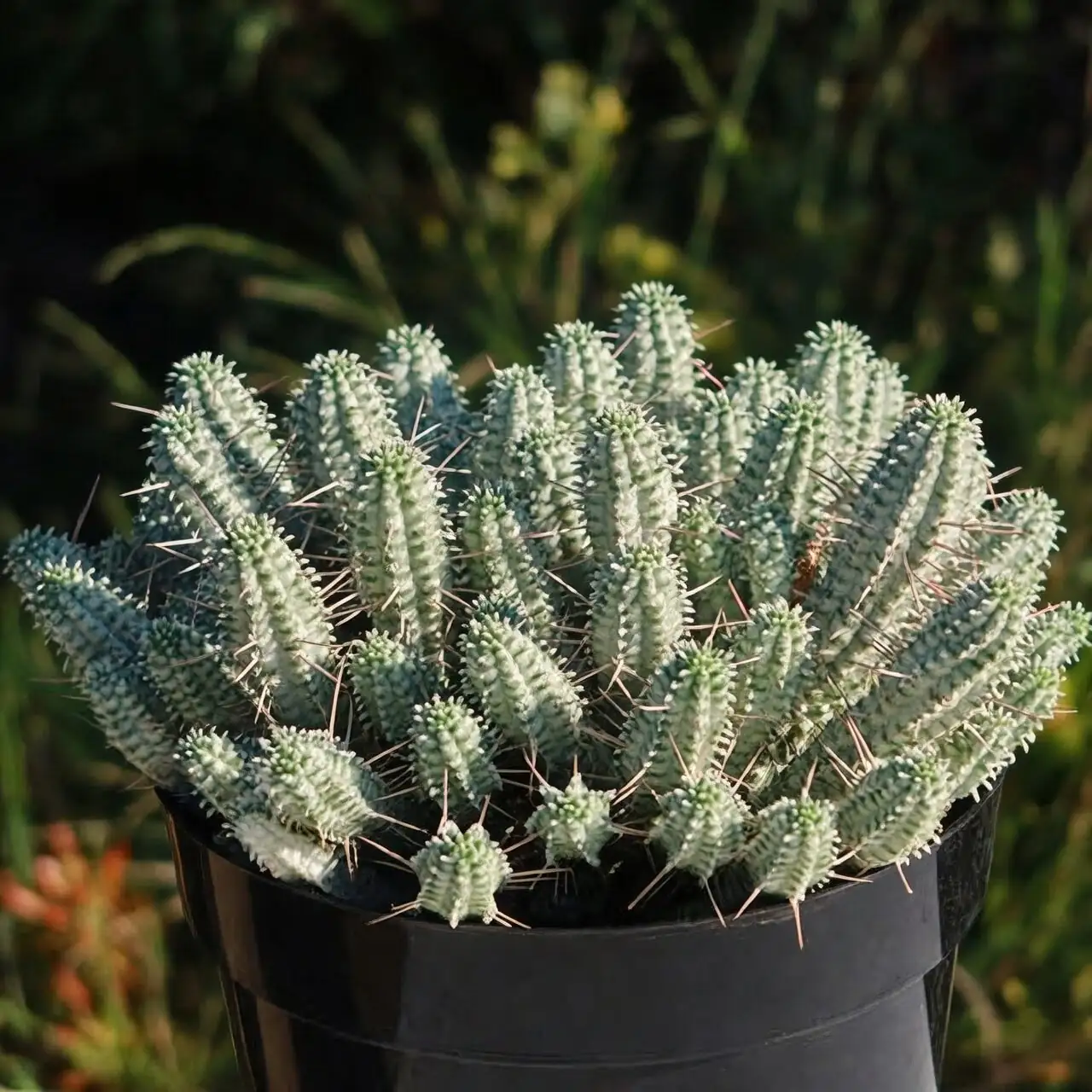
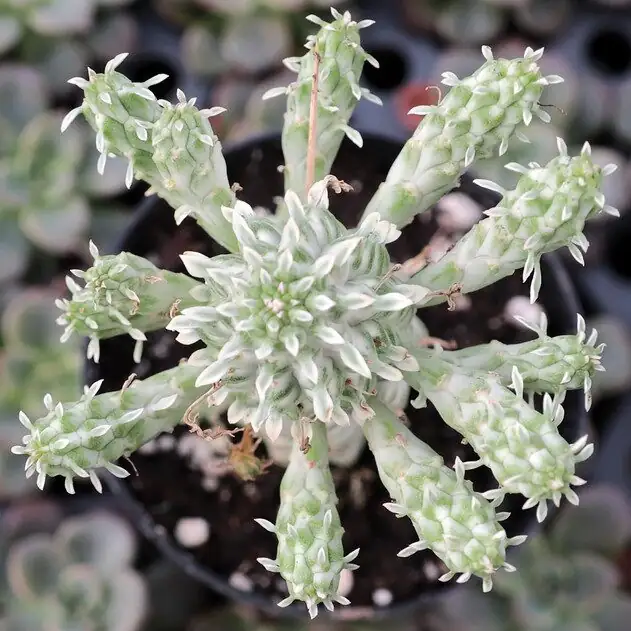
Meet Red Coral Spurge (Euphorbia mammillaris): a compact, cactus‑like Euphorbia with gray‑green, ribbed stems bristling with short red to reddish‑brown “spines.” It’s tough, architectural, and happiest when you give it sun, lean soil, and a good dry spell between drinks. If you’ve ever overwatered a succulent, this plant is your chance to reset the habit—with a simple watering‑by‑weight method that’s nearly foolproof.
Quick‑Start Blueprint (for indoor windowsills and warm patios)
- Light: Bright light to full sun; aim for 4–6+ hours of direct sun. Acclimate slowly to stronger rays.
- Water: Drench, then let the mix dry out completely. Typically every 10–21 days in spring–summer; every 3–6 weeks in winter, depending on light and warmth.
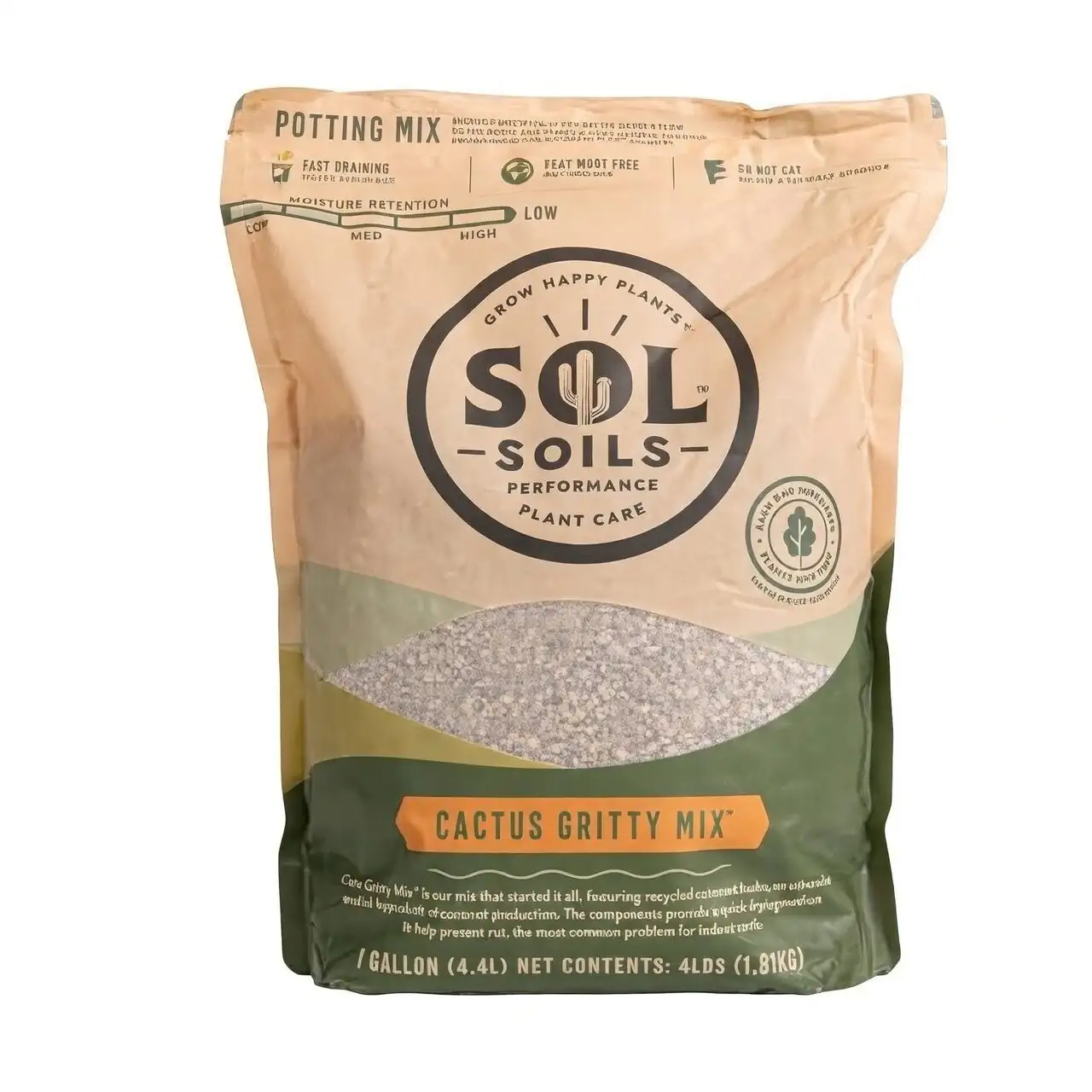
- Soil: Very fast‑draining cactus/succulent mix boosted with mineral grit or pumice.
- Pot: Always a drainage hole; size up only one step at repotting (every 2–3 years).
- Temperature: 18–30°C (64–86°F) preferred; never below 10°C (50°F).
- Humidity: Low to average; drier air is better.
- Feeding: Lightly in spring–summer with diluted cactus fertilizer (1/4–1/2 strength) every 4–6 weeks. Skip winter.
- Safety: Milky sap is irritating and toxic if ingested. Wear gloves/eye protection when pruning; keep away from kids and pets.
About the plant (what you’ll see and how it grows)
- Origin: South Africa (Cape Provinces).
- Look: Upright, clumping columns to about 30 cm (12 in) tall; clumps can spread 20–40 cm (8–16 in) wide over time.
- Flowers: Tiny, yellowish‑green cyathia in spring–summer (often sporadic indoors).
- Nicknames: Corn Cob Euphorbia, Indian Corn Cob; not a true cactus.
Light: where it shines
- Indoors
- Best spots: South‑ or west‑facing windows with several hours of direct sun. East windows can work if very bright.
- Acclimation: Increase direct sun over 1–2 weeks to prevent scorch.
- Signals: Pale, stretched stems = too little light. Brown patches after a sudden move = sunburn from skipping acclimation.
- Patio/Conservatory (warm seasons)
- Give it bright, sheltered sun. Start with morning sun and filtered afternoon light for a week, then graduate to fuller sun.
- Bring it indoors before nights dip below 10°C (50°F).
- Shield from battering winds; scuffed stems can scar.
Watering by weight: a beginner‑proof routine
Why it works: Succulents like this want a full soak followed by a true dry‑out. Your hands can lie; a scale won’t.
- What you need:
- A small kitchen scale (grams/ounces), a pot with drainage, and a saucer.
- Step 1. Set your “dry weight” baseline
- Let the plant dry fully, then weigh the entire pot and note the weight (sticky note under the pot works great).
- Step 2. Saturate and set your “wet weight”
- Water thoroughly until excess runs out. Let drain 10–15 minutes. Weigh again and note.
- Step 3. When to water next
- Wait until the pot returns to its dry weight (or within a few grams/ounces of it). That’s your green light to water.
- Typical rhythm:
- Spring–summer: every 10–21 days.
- Winter: every 3–6 weeks (brighter, warmer rooms = a bit more often; dim/cool rooms = much less).
- Always: Never leave the pot standing in water.
- How to water
- Drench thoroughly, then drain completely. If your room is cool, err on the dry side.
- Visual cue: The plant’s “corn cob” ribs may look a touch slimmer when dry and plump up after watering.
- Common mistakes to avoid
- Soft, darkening base = rot risk from cold or constant moisture. Stop watering, warm it up, maximize light, and consider taking healthy stem cuttings to save the plant.
- “A little sip” watering = chronic dampness in the top layer while roots stay wet. Always water deeply, then fully dry.
Soil and pot: build a tiny desert
- Mix recipe (fast and forgiving)
- 50–70% high‑quality cactus/succulent mix
- 30–50% mineral amendment (pumice, coarse perlite, or 3–5 mm grit)
- Optional: a thin mineral top‑dress to keep necks dry and reduce fungus gnat interest.
- Pot choice
- Must have a drainage hole.
- Terracotta breathes and speeds dry‑down; plastic retains moisture longer.
- Size: snug is safer. When repotting, move up just one pot size.
- Repotting
- Every 2–3 years in spring, or when clearly rootbound.
- Handle with gloves; rinse tools afterward.
- Let any damaged spots on roots/stems dry and callus before the first post‑repot watering.
Seasonal adjustments: indoor and patio playbook
- Spring
- Increase light exposure gradually.
- Resume feeding (lightly, every 4–6 weeks).
- Repot if needed.
- Summer
- Give maximum light and warmth.
- Water only when fully dry; excellent drainage is crucial.
- Inspect regularly for pests in ribs and crevices.
- Autumn
- Taper off feeding by late season.
- Space out waterings as daylight wanes.
- Move patio plants in before nights <10°C (50°F).
- Winter
- Keep bright (the sunniest window you’ve got).
- Go much drier: often every 3–6 weeks is enough.
- No fertilizer; protect from cold drafts.
Pruning, propagation, and styling
- Pruning
- Wear gloves and eye protection—milky sap can irritate skin and seriously harm eyes.
- Trim to shape or remove damaged stems. Let cuts dry and callus before replanting or rooting.
- Propagation (easy by stem cuttings)
- Take a healthy stem, let the cut end callus for several days.
- Set into a dry, gritty mix; provide bright light.
- Wait to water until you feel resistance (new roots) or after 1–2 weeks—then start with very light sips.
- Styling tips
- Group with other architectural succulents; keep a little breathing room so each stem’s silhouette stands out.
- Rotate the pot monthly for even sun and symmetrical clumping.
Pests, diseases, and how to respond
- Most common: Mealybugs and scale. Check ribs, joints, and hidden crevices.
- Spot‑treat early with cotton swabs dipped in isopropyl alcohol.
- Follow up with horticultural soap if needed; repeat weekly until clear.
- Root rot: The main threat. Prevent with fast drainage, warm temps, and infrequent watering.
Safety first: spurges have sap
- Toxic/irritant latex sap; harmful if ingested. Keep away from children and pets.
- If sap contacts skin, wash promptly; if it gets in eyes, flush with plenty of water and seek medical attention.
- Gloves and eye protection are wise when pruning or repotting.
Buying guide and what to expect
- Choose plants with:
- Firm, unwrinkled stems and clean, consistent color.
- No soft spots or blackening at the base (rot warning).
- No cottony residue tucked into ribs (mealybugs).
- At home:
- Height to about 30 cm (12 in); clumps widen with age.
- Flowers are tiny, yellowish‑green, and easily missed—this plant is grown for its sculptural stems and red‑tinted spines.
Tiny botany and symbolism
- Not a cactus! It’s a Euphorbia (spurge), and its “flowers” are specialized structures called cyathia.
- Convergent evolution gave many Euphorbias that cactus‑like look—different families, similar dry‑climate solutions.
- Symbolism: Often linked with resilience and protection—its bristling, drought‑tough form reads like a miniature fortress.
- About “flower language”: Traditional floriography rarely covers Euphorbias, and any modern attributions are symbolic rather than historical. Think of this plant’s message as contemporary—strength through restraint and defense.
FAQ
- Is it a cactus?
- No. It’s a Euphorbia. One giveaway: the milky sap.
- Why is the base turning soft?
- Likely rot from overwatering or cold, wet soil. Stop watering, increase light and warmth, and salvage by cutting and rerooting healthy stems if needed.
- Can I handle the red spines safely?
- Avoid direct handling; they can prick, and broken stems release irritating sap. Use gloves and tools.
With bright sun, a mineral‑rich, fast‑draining mix, and a watering‑by‑weight routine, Euphorbia mammillaris becomes one of the lowest‑maintenance, highest‑style plants you can grow—on a windowsill or a warm summer patio.