

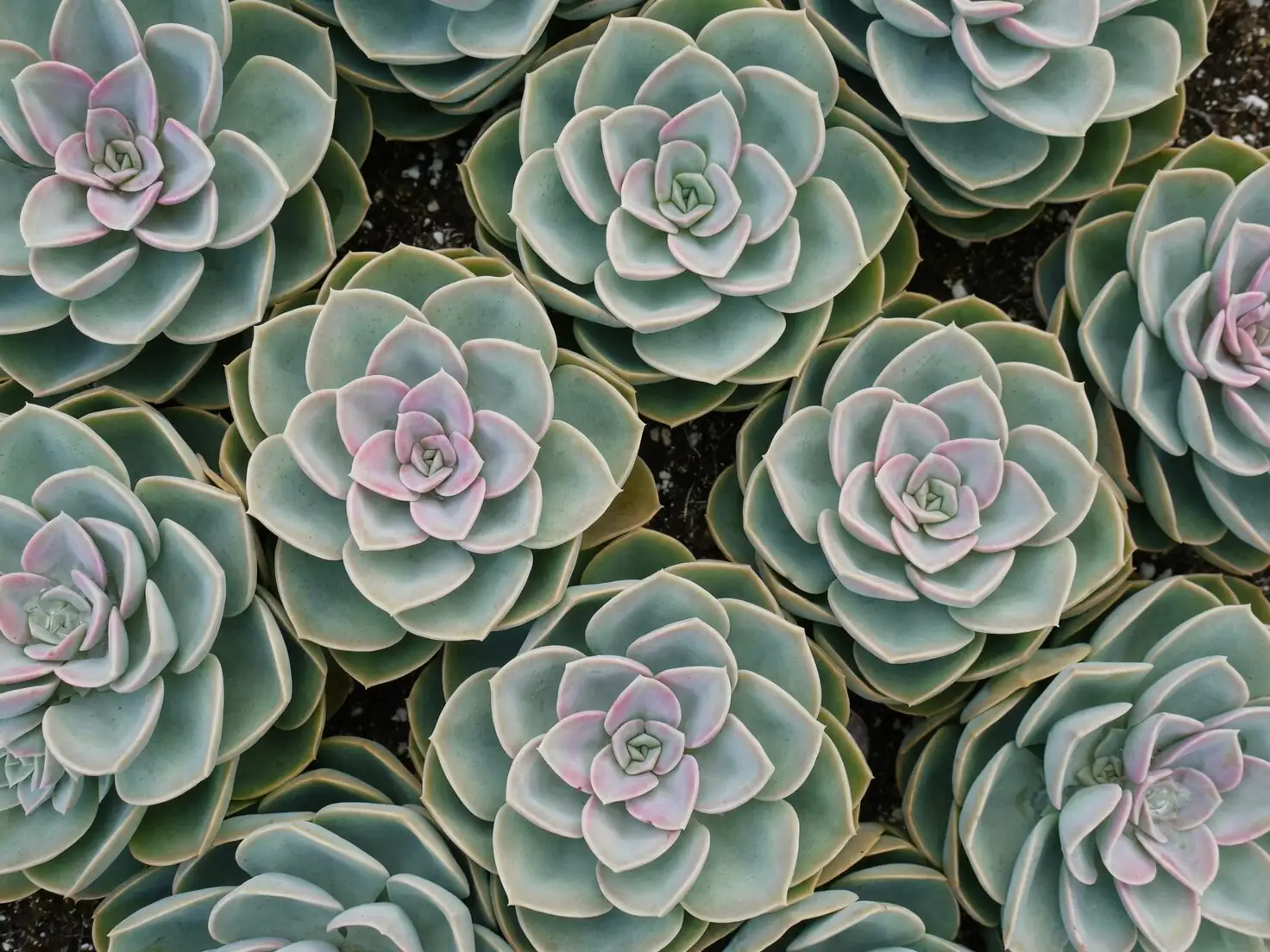
Picture-perfect rosettes don’t happen by accident—they’re the payoff for a few tiny, well-timed habits. Meet Echeveria elegans (Mexican Snowball), the lotus-like succulent whose powdery blue‑gray leaves turn any windowsill into a photo shoot. Use this simple, seasonal checklist to sync light, watering, repotting, feeding, and bloom care so your “stone rose” stays tight, tidy, and camera-ready all year.
Meet the Mexican Snowball (quick ID)
- What it is: Echeveria elegans, a compact rosette succulent from semi‑arid Mexico.
- Look: Symmetrical rosettes of thick, powder-dusted leaves (that soft, chalky farina is natural sunscreen—admire, don’t rub).
- Size: Rosettes typically 8–15 cm wide; flower stalks lift blooms to 10–20 cm tall.
- Flowers: Slender, arching stems with nodding bells—pink/red outside, yellow inside—from spring into summer.
- Habit: Clumps readily via offsets to form a charming colony in pots.
The Photo‑Ready Year: Seasonal Checklist
Spring: Tighten the rosette
- Light
- Aim for 4–6+ hours of bright sun. If moving from weak winter light, harden off gently (a few days behind a sheer curtain, then into stronger sun).
- Rotate the pot weekly for even symmetry.
- Water
- Switch to “active growth” mode: soak the mix thoroughly, then let it dry out completely. Typical rhythm: every 7–14 days, depending on heat, pot size, and airflow.
- Always keep water out of the rosette.
- Feed
- Begin light feeding: cactus/succulent fertilizer at 1/4 strength every 4–8 weeks (about monthly).
- Repot & Groom
- Best time to repot (every 1–2 years) into a gritty, fast-draining mix; step up to a 12–15 cm pot as needed.
- After repotting, let roots callus/dry 1–2 days before watering.
- Remove dried lower leaves; keep that farina pristine by handling at the base.
- Bloom care
- Enjoy the first scapes. If space is tight, you can trim the earliest stalks to keep the rosette compact; otherwise, let them bloom.
- Watch-outs
- Too little light = stretching and a looser, flatter rosette. Brighten immediately.
Summer: Sun-kissed, not sun-scorched
- Light
- Full sun is great, with light afternoon shade in very hot regions to avoid scorch. Outdoors, shelter from prolonged rain.
- Water
- Maintain soak-and-dry. Often every 7–14 days; faster in heat with great airflow.
- Feed
- Continue low-dose monthly feeding; never splash leaves with fertilizer.
- Bloom care
- Peak flowers now. Remove spent bells to keep scapes tidy or wait until the whole stalk finishes and snip at the base.
- Check flower stems for aphids and thrips; spot-treat with insecticidal soap or isopropyl swabs.
- Heat hygiene
- Prioritize airflow and dry leaves. In extreme heat, if you must raise humidity, mist the air around the plant—never the rosette itself.
- Groom
- Keep the skirt neat by removing crisped lower leaves (great for photos and pest prevention).
Autumn: Reset and propagate
- Light
- As days shorten, chase the sun. South/east windows or strong grow lights keep rosettes tight.
- Water
- Begin easing off: many growers water about every 2–3 weeks if growth slows.
- Feed
- Offer one light feeding early in the season, then taper off by late autumn.
- Propagation sweet spot
- Excellent window for offsets, leaf props, and beheaded rosettes (late summer into autumn is famously reliable).
- Let cuttings and leaves callus for several days; roots often appear in ~20 days in warm, bright conditions.
- Groom
- Remove spent flower stalks; clear debris to deter mealybugs.
- Temperature
- As nights cool, ensure containers don’t sit cold and wet. Keep above 5–10°C for safety.
Winter: Bright, dry, and compact
- Light
- Keep it very bright—even a sunny window plus supplemental grow light if needed. Rotate every 1–2 weeks.
- Water
- Go lean. Frequently every 3–5+ weeks indoors, or as little as 1–2 times total if kept cool and bright.
- Only water after the mix is completely dry, and never leave the rosette wet.
- Feed
- Skip fertilizer entirely.
- Air & temperature
- Dry air and good airflow are friends. Protect from frost; cold + wet is the danger combo.
- Hands off
- No repotting unless urgent. Keep grooming minimal to preserve farina.
Light that keeps rosettes tight
- Goal: 4–6+ hours of direct sun for best color and compact form.
- Indoors: South or bright east windowsills are ideal; a strong grow light works too (acclimate to intensity to avoid leaf blush or scorch).
- Signs to act: Stretching, flat/open rosette, and pale color mean “more light, please.”
Watering made foolproof
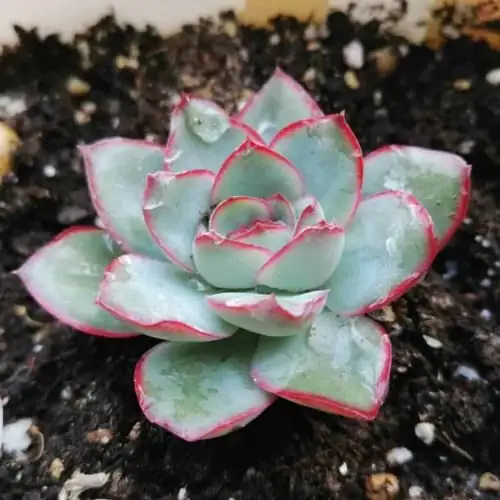
- The rule: Soak and dry. Drench the gritty mix; then wait until it’s bone-dry before watering again.
- Tactics
- Use a pot with drainage holes.
- Water in the morning and at the soil level; keep the rosette dry.
- Smaller pots and strong airflow dry faster; adjust frequency accordingly.
- Optional tip: If your tap water leaves spots, let it sit overnight to off‑gas before use.
The right pot and mix (for sculptural symmetry)
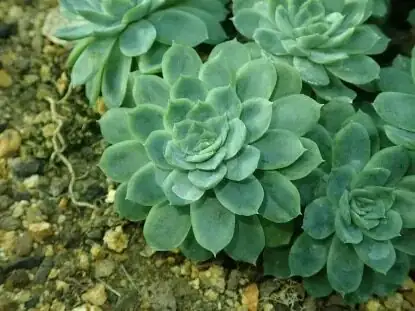
- Pot: Unglazed clay with drainage helps moisture evaporate. Step up one size at repotting, not oversized.
- Mix: A very fast-draining cactus/succulent substrate. Think an organic base lightly used, heavily cut with coarse sand, pumice, or grit.
- Aftercare: Post-repot, hold water 1–2 days so trimmed roots can callus.
Feeding, but lightly
- When: Spring through summer only.
- How: 1/4 strength every 4–8 weeks. A cactus formula works well; some growers use a balanced-to-bloom tone (e.g., 15‑15‑30) at low dilution.
- Don’ts: No winter feeding. Don’t splash fertilizer on leaves.
Bloom calendar and care
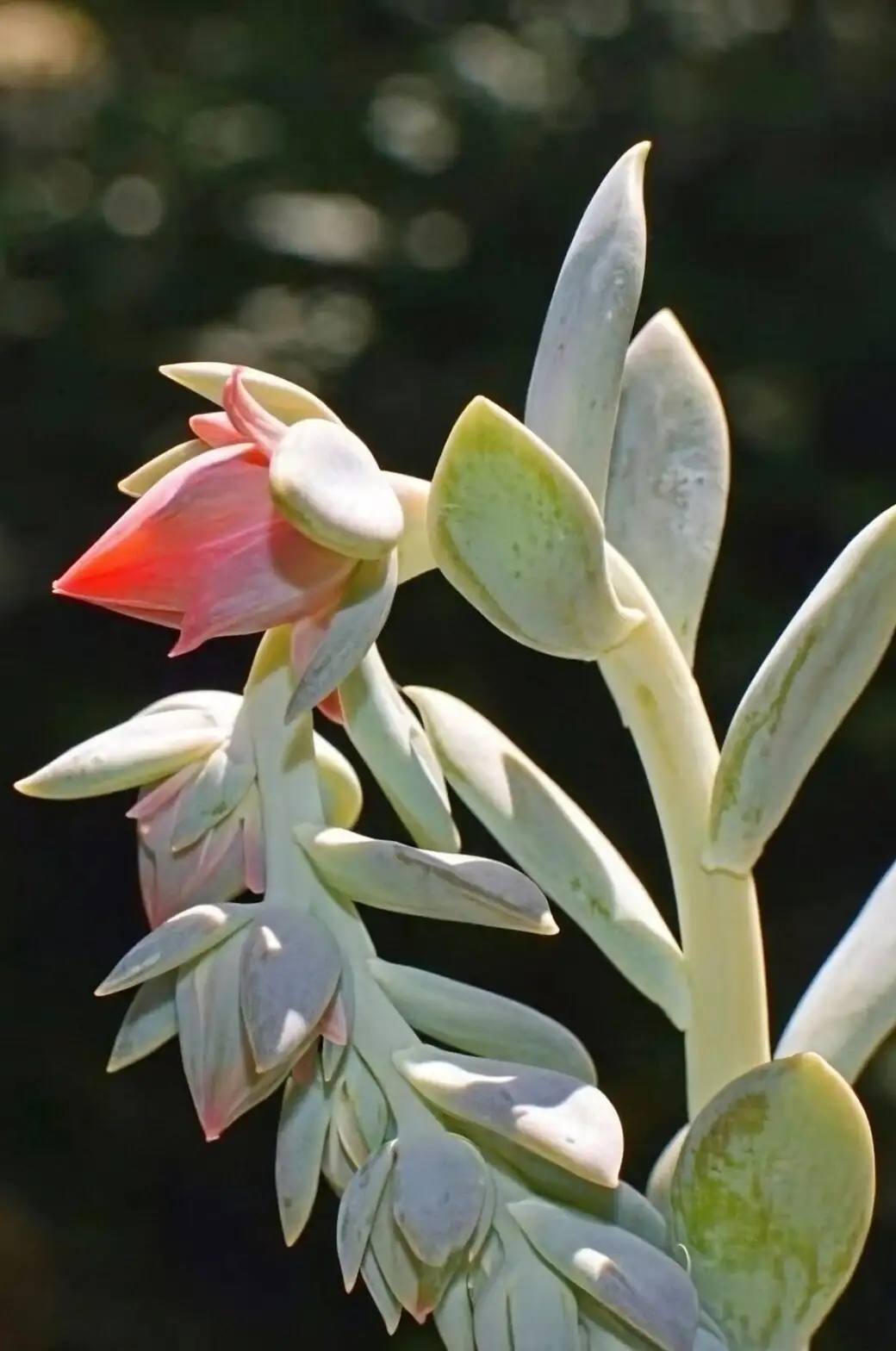
- Season: Late spring into summer.
- Look: Slender, arching stems with coral‑pink exteriors and yellowish interiors—little bells that photograph beautifully.
- To keep blooms and rosettes pristine
- Leave the farina untouched; support stems only if they lean into traffic.
- Patrol for aphids/other sap suckers on scapes; treat early.
- After the display, cut stalks flush with the base to refocus energy on the rosette.
Quick fixes for photo‑ready rosettes
- Stretching? Increase sun immediately; reduce watering; rotate pot weekly.
- Mushy/translucent lower leaves? That’s overwatering or poor drainage—dry out fully and repot into a grittier mix if needed.
- Powdery fingerprints? Farina doesn’t regrow; avoid touching leaves. Handle by the pot or rosette base.
- Pests?
- Mealybugs in leaf axils, aphids on blooms, scale, thrips, and occasional weevils can appear.
- Isolate, remove damaged tissue, dab mealybugs/scale with isopropyl swabs, or use labeled insecticidal soap. Improve light and airflow to prevent reinfestation.
- Disease watch: Root rot in soggy soil is the classic fail; leaf spot/rust can occur in poor conditions. Keep it bright, airy, and dry between waterings.
Propagation made easy
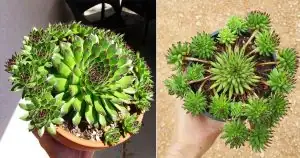
- Offsets (pups): Separate when they have their own roots—fastest method.
- Leaf propagation: Twist off a healthy leaf cleanly, let callus for a few days, then lay on dry grit. Mist very sparingly until roots/pups form.
- Beheading/rerooting: Re-root a rosette if the stem gets leggy; callus first, then plant in gritty medium.
- Timing: Any warm, bright time works; late summer to early autumn is especially reliable.
Placement and climate notes
- Best spots: Sunny windowsills (east/south), bright balconies/patios, or under strong grow lights.
- Outdoors: Protect from prolonged rain; provide light afternoon shade in very hot climates.
- Temperature: Sweet spot 18–25°C; generally fine 15–27°C. Keep above ~5–10°C for safer overwintering.
- Hardiness: Typically suited to USDA Zones 9–11.
- Humidity: Prefers dry air and strong airflow; avoid stagnant humidity—especially when cool.
Safety and a side note
- Toxicity: Generally considered non-toxic to people and pets, though nibbling may cause mild stomach upset.
- Curious method: Some growers experiment with water culture. If you try it, keep only part of the roots in water (never submerge all), refresh regularly, and use nutrients lightly in spring/autumn only. Rot risk is higher than in gritty soil.
Style tips for the perfect shot
- Top-dress with pale grit or gravel to highlight the rosette form and keep leaves clean.
- Group with other airy, sun-loving succulents for contrast—just don’t crowd airflow.
- Wipe the pot, not the plant. The matte farina is the star of the photo.
Flower language and meaning
Across cultures, Echeveria elegans is linked with quiet endurance, loyal love, and resilience—themes born from its life strategy. In the wild, it stores water against long dry spells and keeps its form through adversity. That calm perfection—unruffled by drought, still radiant under a no‑nonsense care routine—is why the “stone rose” has become a symbol of lasting beauty that doesn’t demand attention to shine.
Use this seasonal rhythm—bright light, true dry-downs, gritty soil, and gentle feeding—and your Mexican Snowball will stay compact, powdery, and irresistibly photogenic, season after season.