

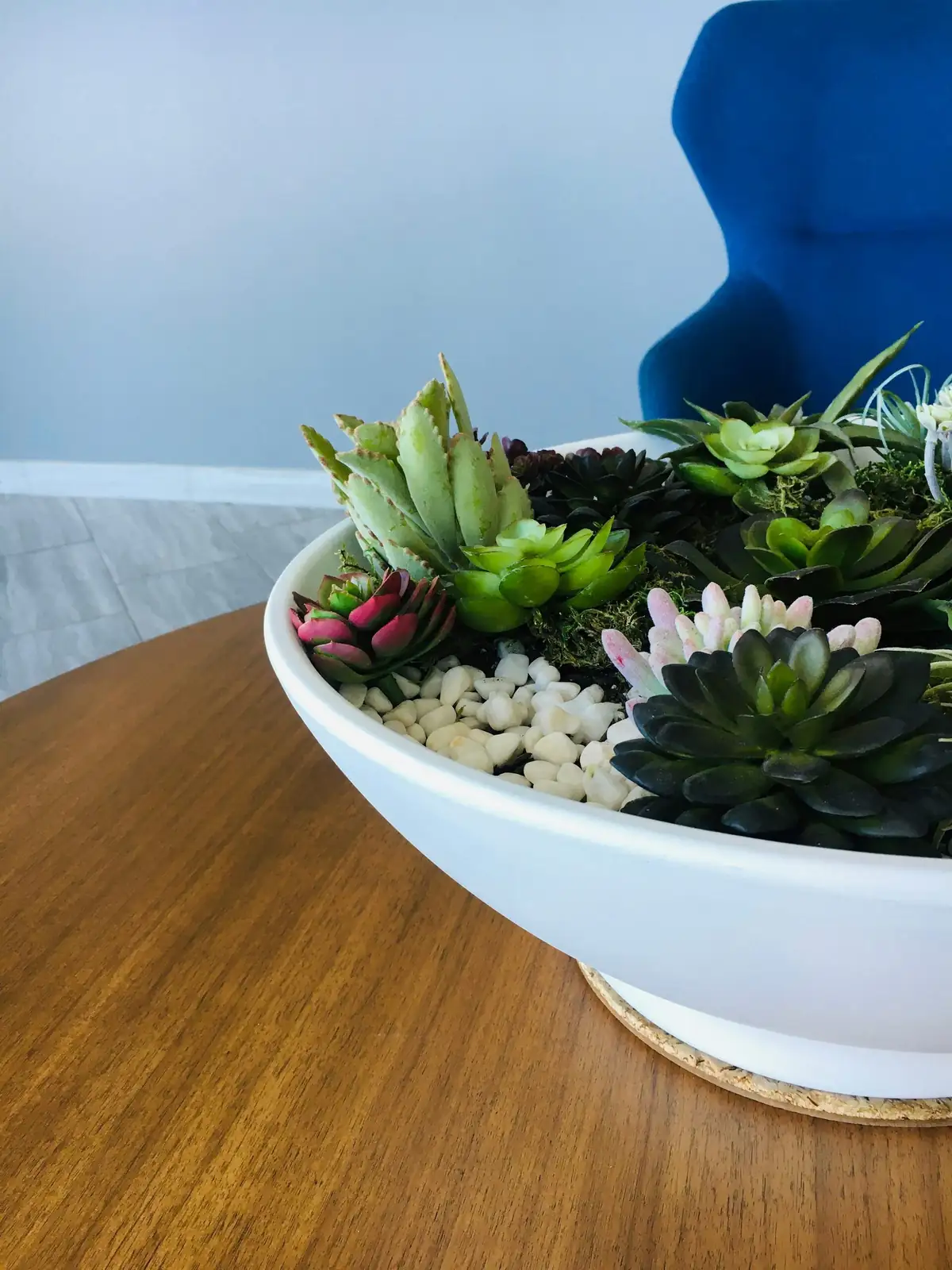
Echeveria elegans brings a hush of glacial calm to a crowded shelf: a compact, lotus-like rosette dusted in soft, chalky blue-gray that reads as both sculpture and plant. In small spaces, you don’t need a jungle—just smart pairing. With the right ceramic, a considered gravel top-dressing, and light set at the perfect angle, this tiny “Mexican snowball” becomes a gallery piece that shifts from serene to showstopping as the sun moves.
Meet the muse: the powdery rosette
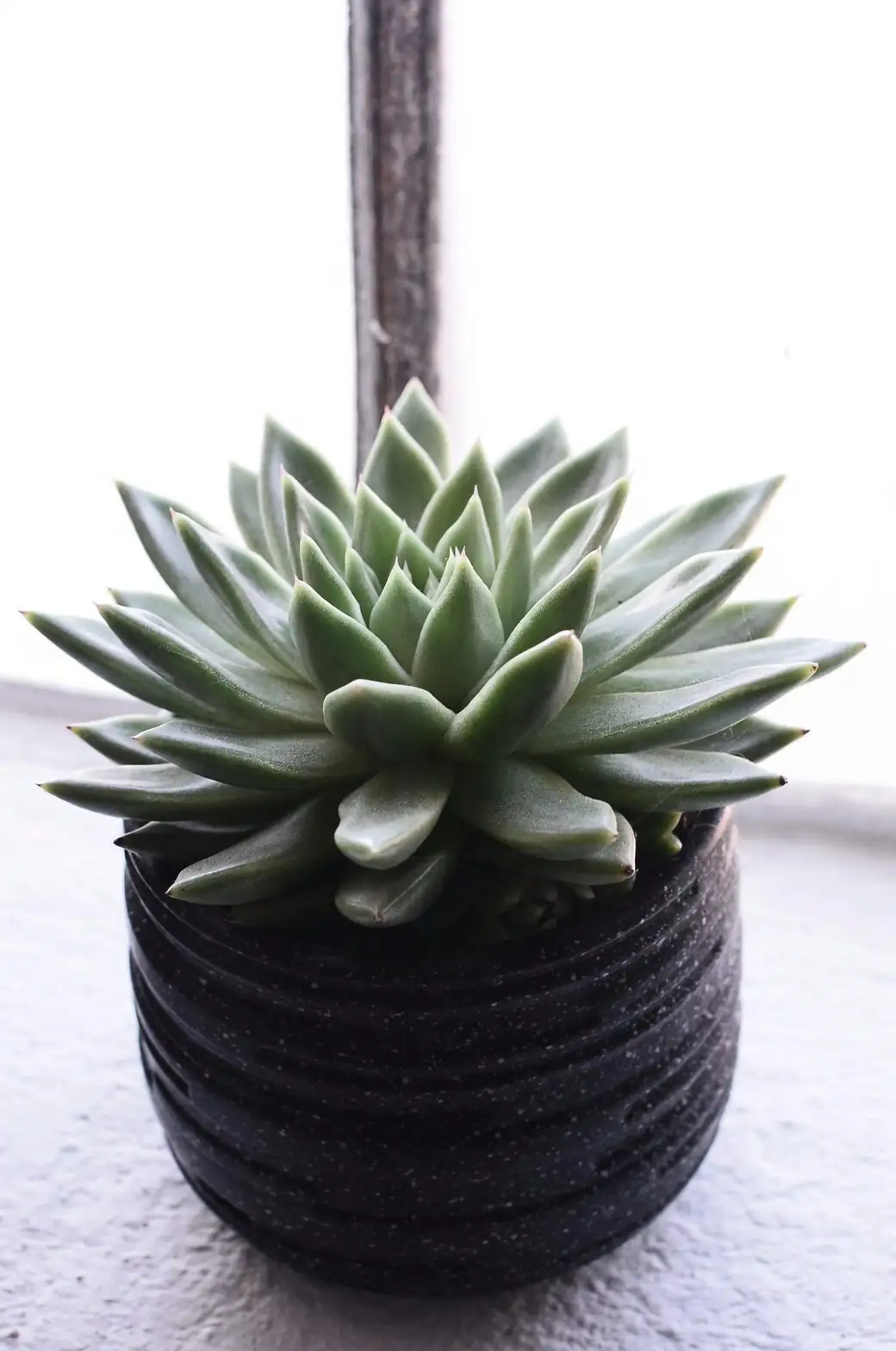
- Form: Dense, symmetrical rosettes, typically 8–15 cm (3–6 in) wide; tight and architectural in bright light.
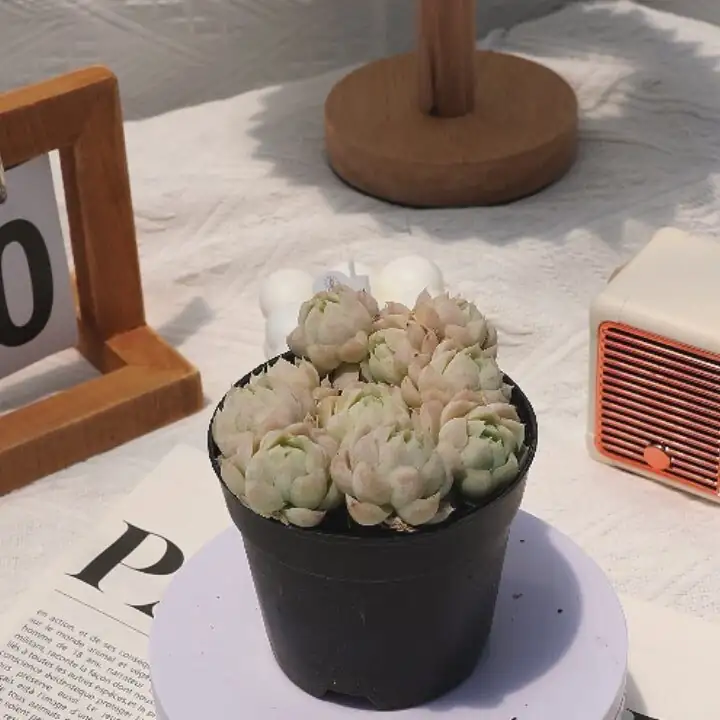
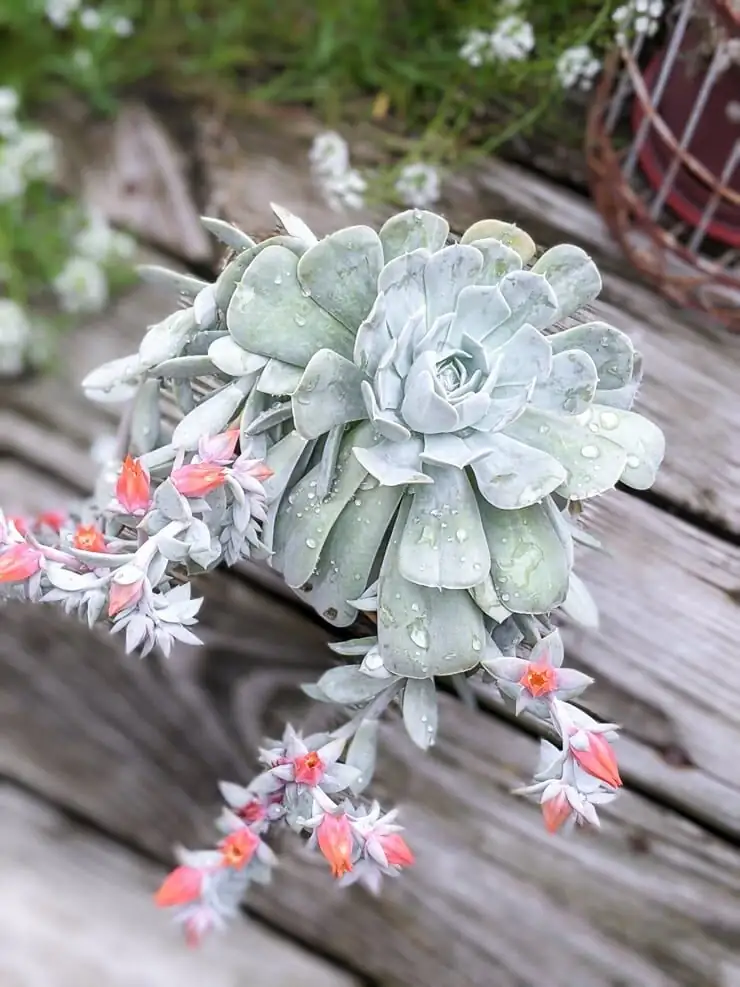
- Color: Powdery blue‑gray to blue‑green leaves with a natural waxy bloom (farina). In the right conditions, the edges can blush faintly pink.
- Flowers: In late spring to summer, slender stalks with nodding, bell-like blooms—coral-pink outside, yellow within.
- Habit: Offsets readily, forming a tidy clump over time—ideal for low bowls and clustered designs.
Note on handling: That dreamy, dusty finish is farina—nature’s sunscreen. Avoid touching the leaves; fingerprints can be permanent. Move the plant by the pot or by the very base.
Ceramics that make the color sing
Think of Echeveria elegans as a cool-toned gem; the pot is your setting. You’re balancing temperature (cool vs. warm), finish (matte vs. glossy), and silhouette (low bowl vs. cylinder).
By color temperature
- Warm terracotta: The classic contrast. Terracotta’s baked-earth warmth intensifies the plant’s icy tone and adds Mediterranean ease. It’s timeless and tactile—perfect on wood shelves or a sunny sill. Note: Terracotta breathes, so your mix may dry faster (a plus for succulents), but check sooner in heat.
- Soft white or bone porcelain: A gallery-white pedestal for a minimalist look. Crisp, clean, and luminous—especially beautiful with a white or pale gravel top-dress.
- Charcoal/ink stoneware: Moody and modern. The plant’s edges glow against dark glazes, especially under backlight.
- Blush or coral glaze: Echoes the flower stalks; a subtle monochrome moment when in bloom.
By silhouette
- Low, wide bowls (12–15 cm/4.7–5.9 in): Showcase a single rosette perfectly, with space for offsets to form a “satellite ring.” Great for coffee tables and window ledges.
- Footed cups or pedestals: Elevation adds airiness in a crowded vignette and helps airflow around the rosette.
- Tiny trios (8 cm/3 in nursery size): Cluster three in varied finishes (terracotta + speckled stoneware + matte white) for texture play in tight quarters.
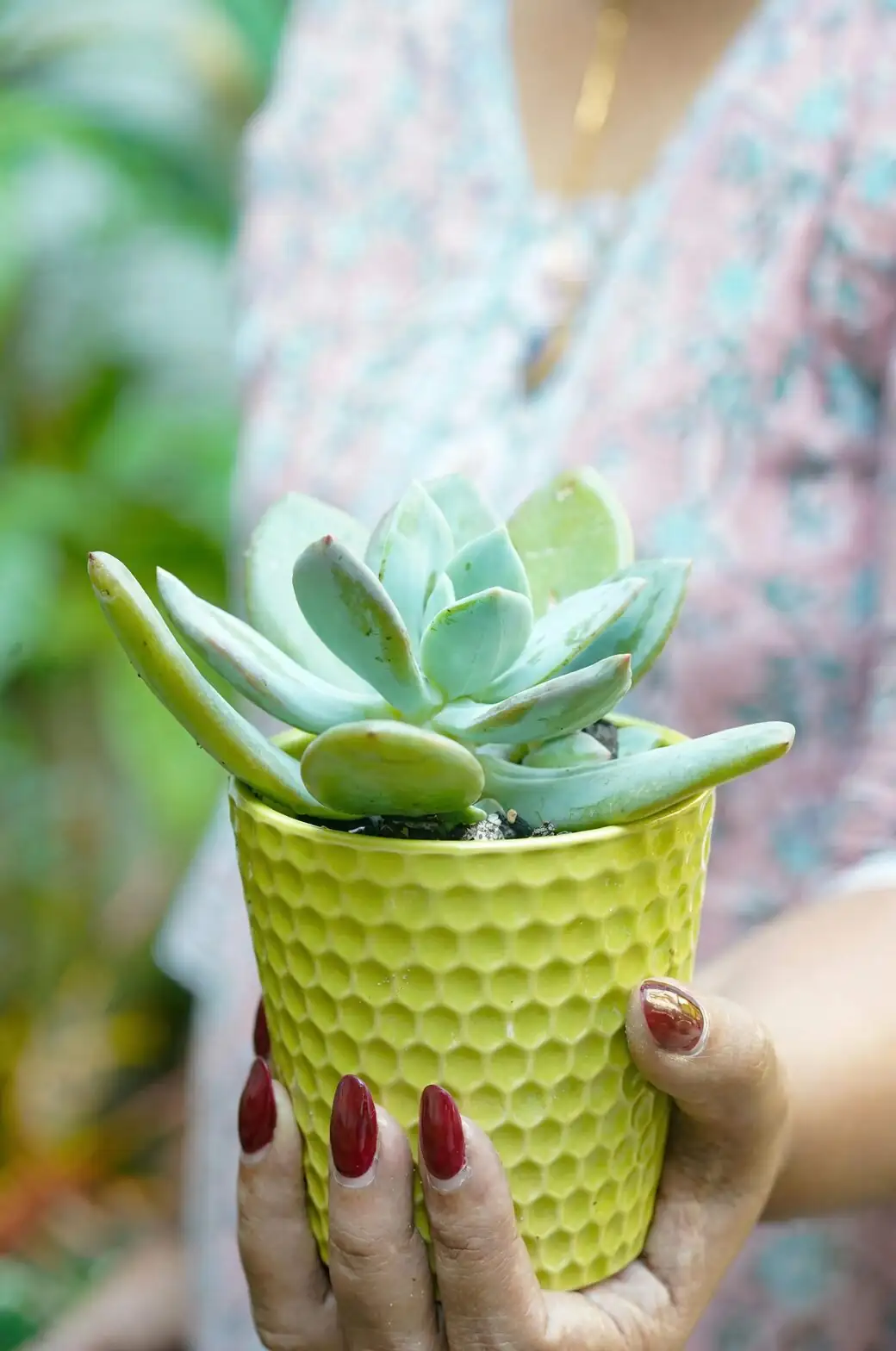
Design rule of thumb: Keep drainage non-negotiable. If you love a closed-bottom cachepot, slip a nursery pot inside and lift it out to water. Echeveria wants fast drainage and dry-down, not soggy soil.
Gravel top-dressings: couture for the soil line
Top-dressing does more than look sharp—it keeps lower leaves dry, prevents soil splash on the farina, deters fungus gnats, and visually “finishes” the piece.
Palette ideas
- White marble or pale quartz (2–5 mm): Ultra-crisp, gallery-grade contrast; brightens dim corners by reflecting light up into the rosette.
- Black lava or basalt: High drama that accentuates the plant’s glow, especially in dark ceramics.
- Desert tan pea gravel: Soft, naturalistic tones that harmonize with terracotta.
- Blushed granite or rose-gold grit: Picks up the rosette’s faint pink edges and the coral tones of flowers.
Pro tips
- Scale matters: For a 10–12 cm rosette, use 3–6 mm gravel so the texture doesn’t overwhelm the plant.
- Depth: Aim for 1–2 cm (0.4–0.8 in) top-dressing—enough to cover mix and stabilize the base.
- Function: A mineral top layer (pumice, granite, lava) keeps the crown drier and the look fresh.
Light is your secret stylist
Light sculpts Echeveria elegans. You’re painting with angles, not just intensity.
- Keep it bright: About 4–6+ hours of sun for the tightest rosette and best color. East or south windows are prime; in very hot climates, give light afternoon shade to avoid harsh scorch.
- Side-light for shadows: Place the plant so morning or late-afternoon light hits at a 30–45° angle from the side. The leaf “petals” cast soft shadows that emphasize symmetry.
- Backlight for a halo: Set the pot in front of a bright window and view from the shaded side; the farina glows, and leaf edges light up.
- Reflect and refine: Pale gravel, white walls, or a simple mirror behind the vignette bounce light back into the rosette—handy for small, darker rooms.
- Grow-light polish: Under strong LEDs, keep the fixture close enough for compact growth (often in the 20–30 cm/8–12 in range for many fixtures) and run 10–12 hours. If the rosette starts to flatten or stretch, increase intensity or proximity gradually.
Rotate the pot weekly so the rosette stays evenly centered. Too little light leads to stretching and a flatter, opened rosette—your cue to upgrade placement.
Small-space vignettes that land big impact
- The single statement: One flawless rosette in a matte-white low bowl with white quartz top-dress on a narrow sill. Negative space does the rest.
- Warm–cool duet: Powdery rosette in unglazed terracotta on a slim oak shelf. Add one dark, matte vessel beside it for balance.
- Trio on a tray: Three mini rosettes in mixed ceramics (terracotta, speckled stoneware, charcoal glaze) corralled on a slim metal or wooden tray—easy to move for watering and angle-play with the sun.
- The footed spotlight: A footed pot elevates the plant above book spines on a narrow ledge; pair with black lava gravel to intensify the glow.
- Balcony micro-garden: A low, wide bowl with the mother plant centered and offsets spaced around it, dressed in tan gravel. Minimal, drought-wise, and sculptural.
Companion choices for the same conditions: similarly sun-loving, drought-tolerant succulents such as small Sedum or compact Crassula make good neighbors. Keep spacing generous so the star rosette reads cleanly.
Keep the look pristine: care that preserves design
- Soil + pot: Use a very fast-draining succulent mix heavily cut with coarse sand, pumice, or grit—always in a pot with drainage. Cold + wet is the danger combo.
- Watering: Soak the mix thoroughly, then let it dry completely before watering again. In bright, warm months, that might be every 7–14 days; in winter, much less (every 3–5+ weeks indoors). Never pour water into the rosette.
- Light and air: Bright light, warm temps (roughly 18–25°C/64–77°F sweet spot), and good airflow. Protect from frost; safer to keep above 5–10°C (41–50°F) in winter.
- Grooming: Remove dried lower leaves and spent flower stalks. Dust the pot and gravel; for the rosette, use a soft blower or gentle brush—don’t wipe the leaves.
- Repotting: Every 1–2 years in early spring. Step up modestly (12–15 cm/4.7–5.9 in is common). Let trimmed roots callus for 1–2 days before watering.
- Fertilizer: Light and occasional during active growth—about quarter-strength every 4–8 weeks. Keep fertilizer off the leaves.
Bloom-time styling
When the coral-and-yellow bells appear in late spring to summer:
- Switch to a taller, narrower vase-like pot or place the bowl on a stack of books to give the arching stalks room to dance.
- Pair with a blush ceramic or a rose-tinted gravel to echo flower tones.
- After the show, snip spent stalks to restore that pure rosette profile.
Multiplying your muse (for layered displays)
- Offsets (pups): Separate once they show roots, then group siblings in a single shallow bowl for a “rosette constellation.”
- Leaf propagation: One cleanly removed, callused leaf can become a new plant. Start on dry gritty mix; mist very sparingly until roots/pups form. Many growers find late summer to early autumn especially reliable.
- Beheading and re-rooting: If a plant gets leggy, take a rosette cutting, let it callus, and root it in a gritty medium—then pot into your chosen ceramic to recenter the design.
Quick troubleshooting for form and finish
- Rosette stretching/opening? Needs more light (and possibly less frequent water). Move to a sunnier spot or strengthen grow light; rotate regularly.
- Mushy, translucent lower leaves? Overwatering or poor drainage. Let the mix dry fully and repot into a grittier blend with a true drainage hole.
- Mealybugs in leaf axils? Isolate, swab with isopropyl alcohol or use insecticidal soap; improve airflow.
- Leaf spots/rust? Remove affected leaves; consider labeled fungicides if needed and keep water off the foliage.
Bonus: Generally considered low-toxicity to people and pets, but nibbling may cause mild stomach upset. A tidy mineral top-dress can help discourage curious diggers.
A note on meaning
Echeveria elegans is often linked with resilience and quiet, enduring beauty—the kind that persists through dry spells. Unlike traditional “flower language,” which arose from Victorian-era symbolism, this meaning stems more from the plant’s poise under bright sun and scarce water, its ability to stay sculptural through lean times, and the way it multiplies steadily into a lasting colony. In small homes, that’s a lovely metaphor: elegance that doesn’t demand excess.
—
When you treat light as your paintbrush, gravel as your textile, and ceramics as your frame, Echeveria elegans transforms from houseplant to objet d’art. One rosette, perfectly styled, is all it takes to make a small space feel intentional—and quietly luminous.