

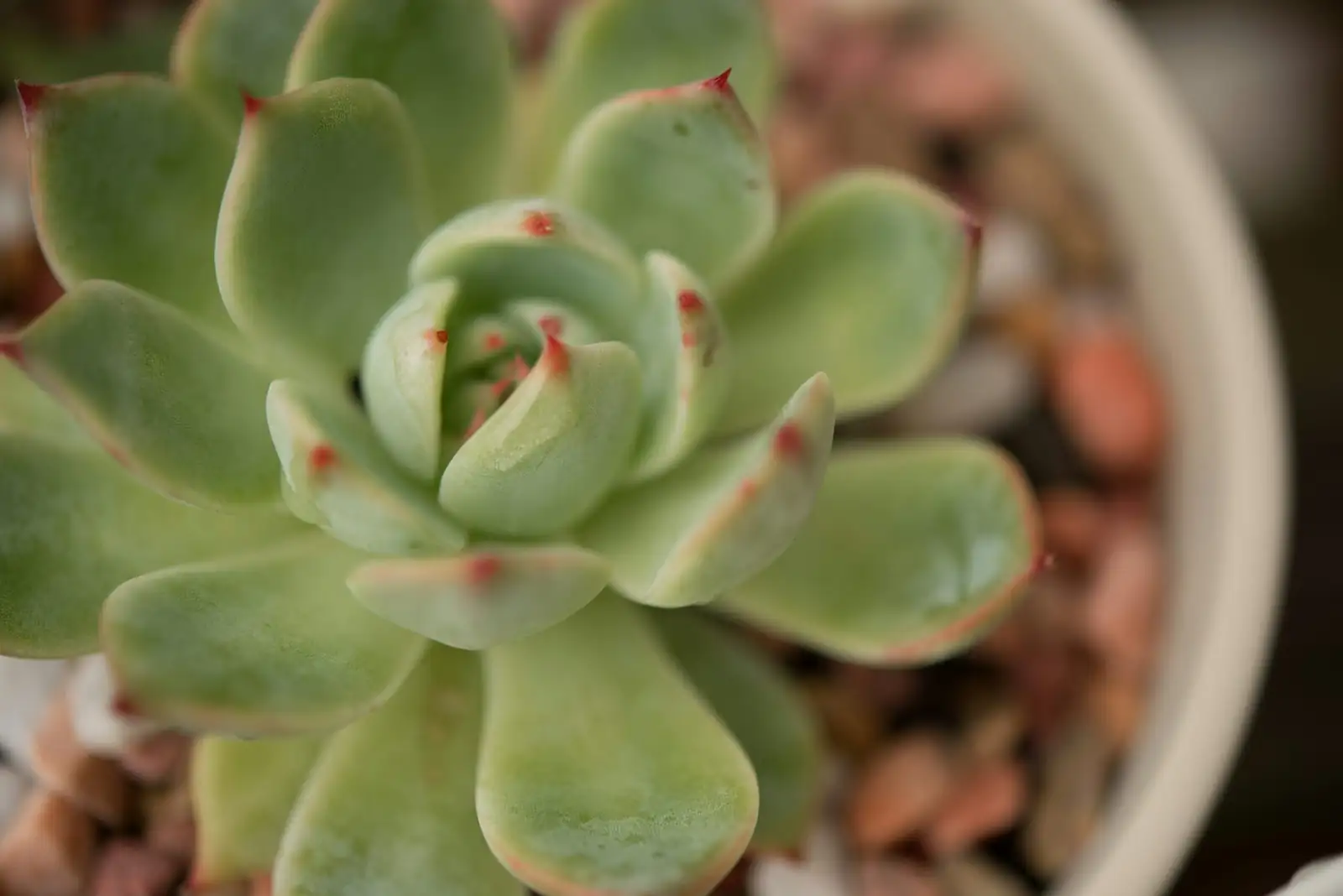
Think of your Mexican Snowball (Echeveria elegans) as a tiny, armored lotus—each leaf a shield wearing that frosty, protective powder called farina. When mealybugs, aphids, or scale show up, the mission is simple: evict the sap-suckers without scuffing the armor. Here’s a field-tested, farina-safe battle plan that keeps your rosette pristine and your plant thriving.
Meet the plant you’re defending
- Rosette succulent native to semi‑arid Mexico, forming tidy, symmetrical “stone rose” rosettes in powdery blue‑gray to blue‑green, often with a faint pink blush.
- That chalky look is farina, a natural wax that reduces sun and water stress—beautiful and functional, but easily marred by fingers, oils, and rough sprays.
- Loves bright light to full sun (about 4–6+ hours), dry air, strong airflow, and a gritty, fast‑draining mix. Protect from frost and keep water out of the rosette.
- Blooms late spring to summer with nodding, bell-shaped flowers on elegant stalks—prime territory for aphids.
The enemy: quick profiles
- Mealybugs: white, cottony clusters tucked in leaf axils and between offsets; they leave sticky honeydew and cause puckered or scarred leaves.
- Aphids: cluster on tender tissue—especially flower stalks and buds—excreting honeydew that can invite mold and ants.
- Scale: small, tan to brown bumps stuck to leaves or stems; often look like part of the plant; they sap vigor quietly.
Ants often “farm” honeydew-producing pests. If you see ant traffic, assume a sap-sucker is nearby.
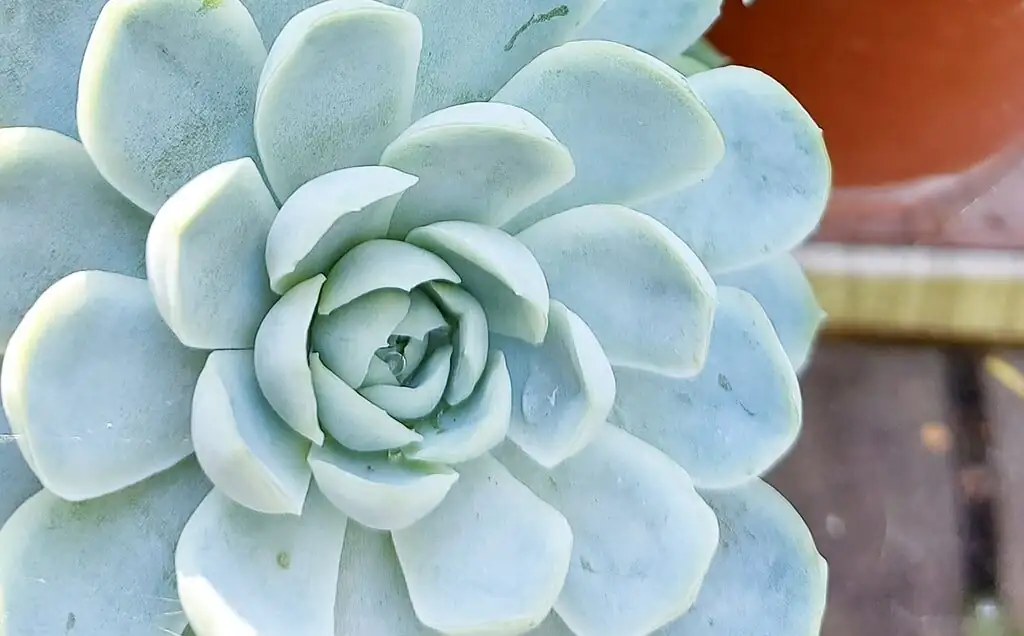
Golden rule: preserve the farina
- Don’t touch the leaves. Hold the pot rim or the very base of the rosette when moving or treating.
- Avoid oily sprays on glaucous Echeverias—oils and some soaps can strip farina and cause lingering smudges.
- If you must use liquids, keep treatment targeted and minimal. Dab, wick, or inject into crevices rather than misting the whole rosette.
- Keep water and sprays out of the rosette; never pressure-wash the crown.
Rapid-response triage (first 24 hours)
- Isolate immediately
- Move the plant to a bright, airy “quarantine” spot away from your collection for 2–3 weeks.
- Set sticky ant baits nearby if you see ants.
- Dry, bright, breezy
- Increase light (ease into more sun if needed) and run gentle airflow. A small fan on low, indirect stream for several hours daily helps.
- Hold watering until the mix is completely dry; pests thrive in still, humid, or damp conditions.
- Strip pest hideouts
- With tweezers, remove spent flower stalks (aphid magnets) and any dry, papery leaves at the base—prime shelters for pests—without rubbing healthy leaves.
Spot-treatment playbook (farina-safe techniques)
Tools
- 70% isopropyl alcohol
- Cotton swabs, wooden toothpicks, and a soft artist’s or makeup brush
- 1–3 mL syringe with a curved irrigation tip (for precision into crevices)
- Insecticidal soap (for targeted swabbing, not broad spraying)
- Paper shields (index cards) to block overspray from leaf surfaces
Mealybugs (leaf axils, offsets)
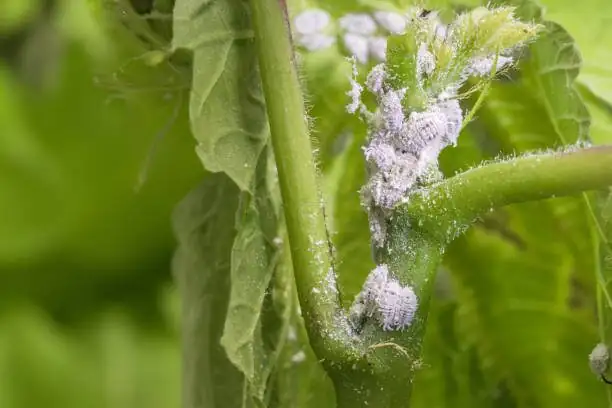
- Precision dab: Dip a cotton swab in 70% isopropyl alcohol and touch only the mealy clusters until they dissolve. Avoid wiping across leaf surfaces.
- Needle the nest: Load a syringe with alcohol and gently inject a few drops into tight axils where cottony masses hide. Blot drips immediately.
- Brush and blot: A soft dry brush loosens dead mealies; catch crumbs with a dry tissue so you’re not dragging liquid over the leaf.
- Stubborn cases: Repeat every 3–5 days for 2–3 cycles to catch hatchlings. If populations persist, unpot and inspect the crown and top inch of soil; refresh with clean, gritty mix.
Aphids (mostly on flower stalks)
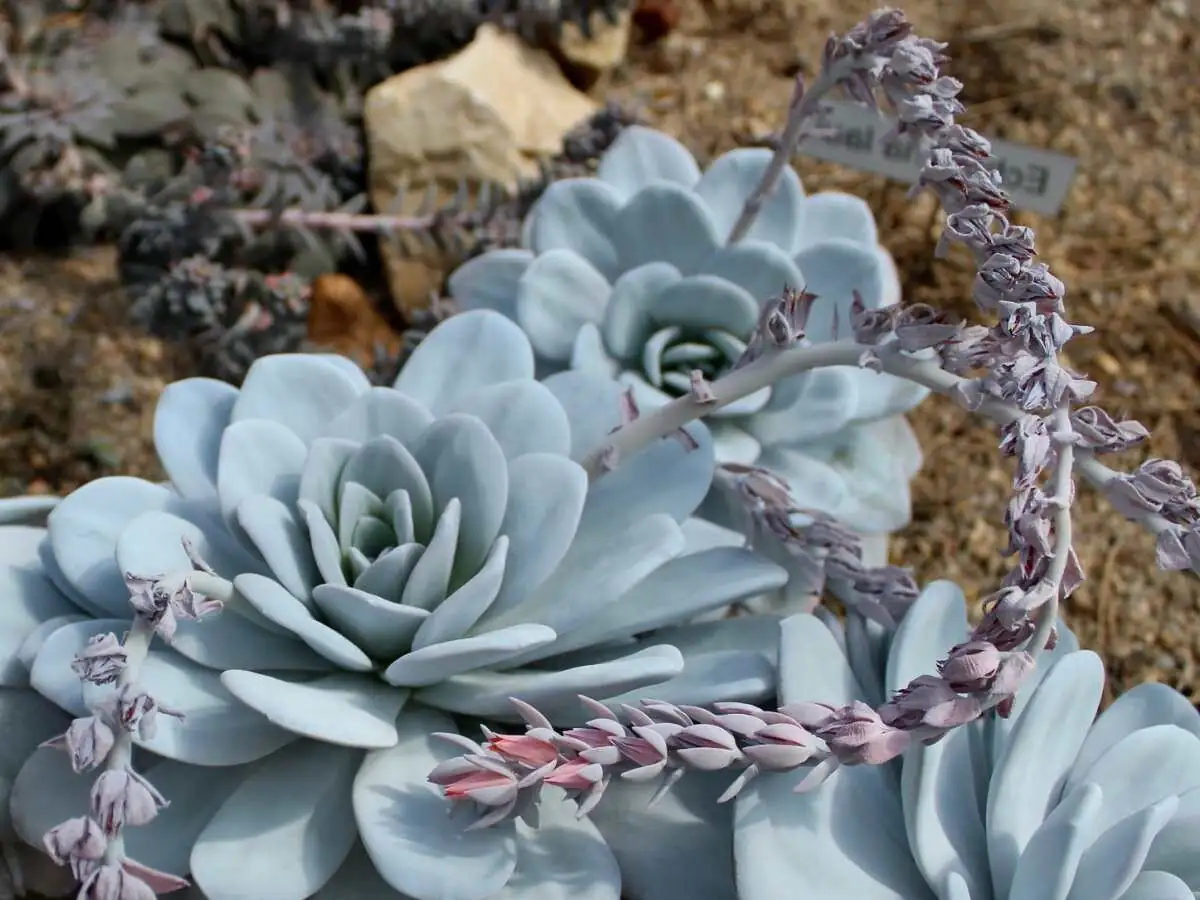
- Cut to the chase: If a stalk is crawling, snip it cleanly at the base and discard sealed in the trash.
- Targeted wipe: For light pressure on buds, dab aphids with alcohol on a swab; shield leaves with a card to protect farina.
- Patrol for ants: Place ant baits near the pot and remove any soil-to-shelf bridges where ants travel.
Scale (those “stuck-on” bumps)
- Pop and spot: Flick off individual scales with a toothpick, then dab the spot with alcohol.
- For clusters: Use a swab barely moistened with insecticidal soap to touch only the pests, then blot dry. Recheck in a week.
- Persistence pays: Repeat weekly until no new bumps appear.
Note: Broad, wet sprays—whether alcohol or soap—risk marring the farina. Keep treatments surgical.
Airflow fixes that starve pests of their edge

- Space the rosettes: Leave a finger’s width or more between plants so air can move and leaves don’t touch.
- Elevate and ventilate: Use mesh pot feet or a trivet; avoid saucers that trap humidity.
- Fan routine: Low, indirect breeze for several hours daily—especially in warm months or in tight windowsill groupings.
- Sunshine smartly: Give 4–6+ hours of sun; in very hot climates, provide light afternoon shade to prevent scorch. Bright, compact growth resists pests better than soft, stretched tissue.
Culture that closes the door on reinfestation
- Light and soil
- Bright light to full sun keeps the rosette tight and sturdy.
- Use a very fast-draining, gritty succulent mix in a pot with drainage. Top-dress with pumice or gravel to keep leaves off damp soil and reduce pest hideouts.
- Watering
- “Soak and dry”: water thoroughly, then let the mix dry completely. In spring–summer, this often means every 7–14 days; far less in winter.
- Never pour water into the rosette.
- Feeding
- Light feeding only in active growth (spring–summer) at about 1/4 strength every 4–8 weeks. Overfertilized, tender growth is a pest magnet.
- Hygiene
- Remove dried lower leaves promptly.
- Sterilize tools with alcohol between plants.
- Quarantine all new arrivals for at least two weeks and inspect axils before they join the display.
A quick seasonal battle calendar
- Spring
- Repot if needed; refresh the gritty mix; begin light feeding.
- Inspect new flower stalks weekly for aphids.
- Summer
- Protect from extreme midday scorch but keep it bright; maintain airflow.
- Check axils for mealybugs every 7–10 days.
- Autumn
- Reduce watering frequency; continue inspections as temperatures fluctuate.
- Winter
- Keep very bright and drier; protect from cold (ideally above 5–10°C/41–50°F).
- Watch for pests on indoor displays where airflow is lower.
When to escalate
- If, after 2–3 precise treatments and improved airflow, pests persist or spread, repeat isolation, refresh the potting mix, and remove offsets to treat separately.
- For heavy, plant-wide scale or mealy outbreaks where spot work isn’t feasible, consider disposing of the most infested tissue (e.g., cutting a clean, uninfested rosette to reroot) and starting fresh in sterile, gritty mix.
Safety notes
- Echeveria elegans is generally considered low-toxicity to people and pets, but nibbling can cause mild stomach upset. Keep it out of reach of curious mouths.
- If fungal leaf spots appear after honeydew issues, remove affected tissue and improve airflow; use labeled fungicides only as directed.
Why this works for Echeveria elegans
This species thrives on bright light, warmth (about 15–27°C/59–81°F), dry air, and rapid drainage—all conditions that make life hard for sap-suckers. Combine that with surgical spot-treatments and a strict isolation routine, and you break pest life cycles without scrubbing away the farina that makes the Mexican Snowball so iconic.
A small, meaningful coda: symbolism without the smudge
Often linked with resilience and enduring love, Echeveria elegans wears its story on its skin. The farina that shields it in harsh sun is a quiet metaphor for boundaries that protect beauty. Keep that armor intact, and your snowball remains a perfect rosette—proof that gentle, precise care beats brute force every time.
Quick kit checklist
- 70% isopropyl alcohol
- Cotton swabs, soft brush, toothpicks
- Curved-tip syringe
- Small fan for airflow
- Gritty succulent mix + mineral top-dressing
- Pruners for flower stalks
- Ant baits (if you see ant traffic)
Fight smart, not sloppy—spot, isolate, and air it out. Your Echeveria will stay powdery, compact, and unbothered, a pristine snowball even in the heat of battle.