

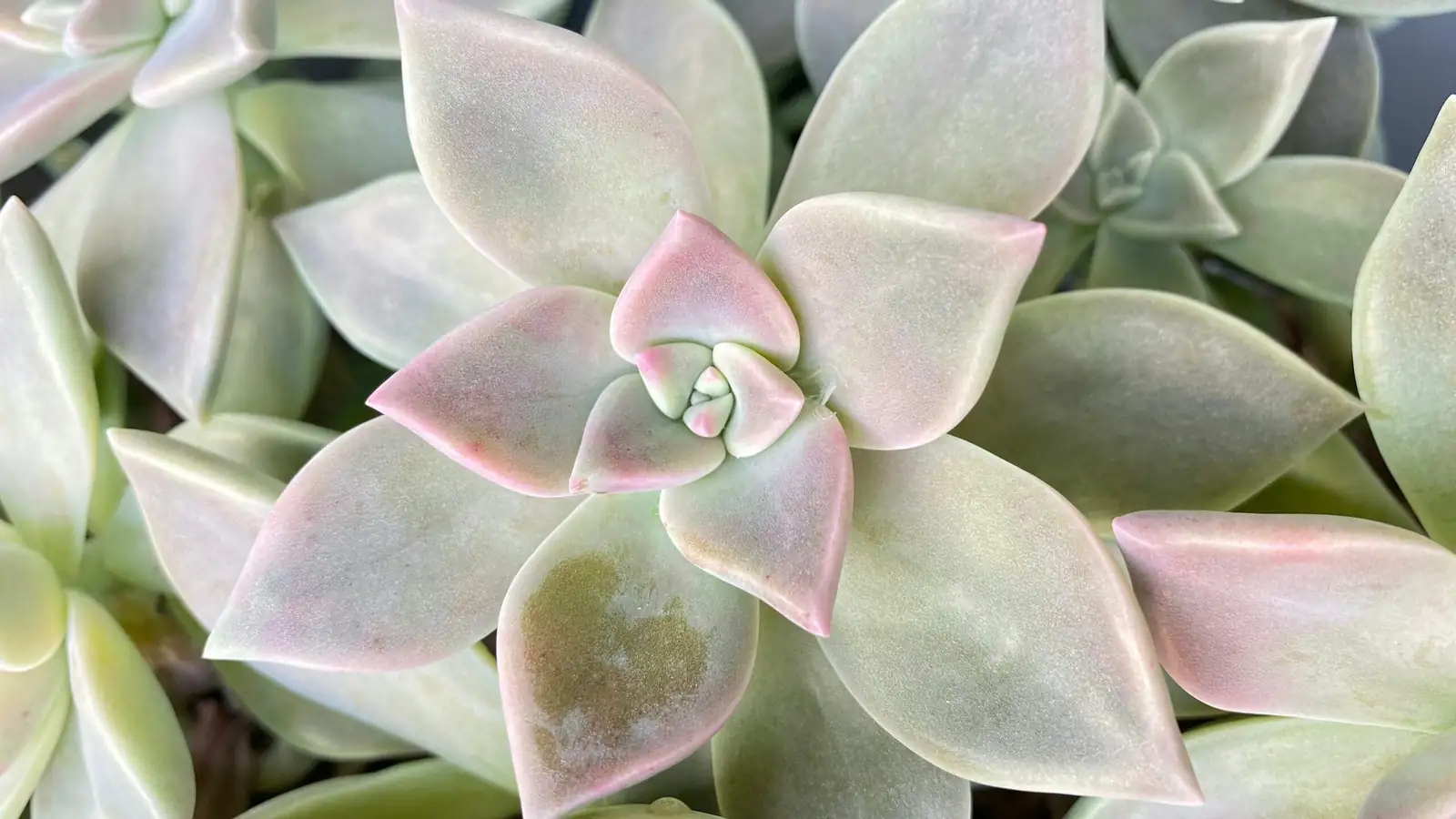
Think a “Mexican Snowball” could live with its toes in water? For Echeveria elegans—the powdery, lotus-like rosette that thrives on bright sun and bone-dry breaks—the idea sounds like heresy. And yet, with a tightly controlled method, it can work. This is your myth-busting guide: how to trial partial root submersion (only), when and how to feed by season, how often to change water, how to spot rot early, and when to call it and move back to a gritty mix.
Why try water at all—with a succulent?
Because curiosity drives better care. Echeveria elegans is a compact Crassulaceae sweetheart from semi‑arid Mexico. In classic culture, it wants:
- A very fast-draining, mineral-rich mix
- Strong light (about 4–6+ hours of sun or strong grow lights)
- Warmth around 15–27°C (59–81°F)
- Dry air and airflow
Soil culture is still the gold standard. But a careful water-culture trial can teach you to read your plant’s signals—and, for some growers, it’s a fun, short-term display technique.
Key truth: if you try water culture, do not dunk the entire root system. Keep part of the roots above the waterline. That air gap is your oxygen lifeline and the number one rot deterrent.
The setup: partial root submersion, never a full soak
Think of the waterline as “ankle-deep,” not “waist-deep.”
- Container: A narrow-necked glass or opaque jar that supports the rosette above the water so the crown stays dry. Always keep water out of the rosette.
- Waterline: Submerge only the bottom 10–30% of the root mass. Leave the rest in humid air.
- Light: Bright light to full sun (ease into stronger sun to avoid scorch). Indoors, south/east windows or strong LEDs. Too little light = stretching and a splayed, loose rosette.
- Temperature and air: 15–27°C is the sweet spot; keep above roughly 5–10°C in winter. Provide airflow and avoid cool, stagnant humidity.
- Hygiene: Clean containers limit biofilm and rot pressure.
Plant prep (day 0)
- Start with a firm, compact rosette with intact farina and no mushy leaves.
- Rinse off any loose potting mix from the roots.
- Trim dead, blackened, or mushy root tips back to firm tissue.
- Let cuts dry 12–24 hours before placing in water to reduce infection risk.
Seasonal nutrient timing (this is the big myth-buster)
Most people assume “feed more in summer.” Not here—timing is counterintuitive in water culture.
- Spring and autumn: Use a very dilute nutrient solution. Aim for about 1/4 strength of a cactus/succulent formula. Keep the waterline partial and stable.
- Summer and winter: Plain water only. In heat, added salts can compound stress and fuel slimy growth; in winter, metabolism slows, and nutrients go unused—both scenarios increase rot risk.
Soil-grown Echeveria elegans is different: in a gritty mix, you can feed lightly during active growth (spring–summer) about monthly at low strength, and skip winter feedings.
Water change rhythm: crisp, predictable, oxygen-smart
- Replace all water every 5–7 days in spring/autumn; every 4–5 days in hot spells or if the water clouds early.
- Top up with plain water between changes to maintain that shallow submersion.
- Rinse the container and swish the roots gently at each full change to remove biofilm.
- Use room‑temperature, low‑mineral water if possible; avoid extremes that shock roots.
Early wins vs. early warnings
Reading the plant beats any calendar.
Signs you’re winning
- Roots: Creamy white to pale tan, firm, with fresh tips. Some “water roots” may be finer—normal.
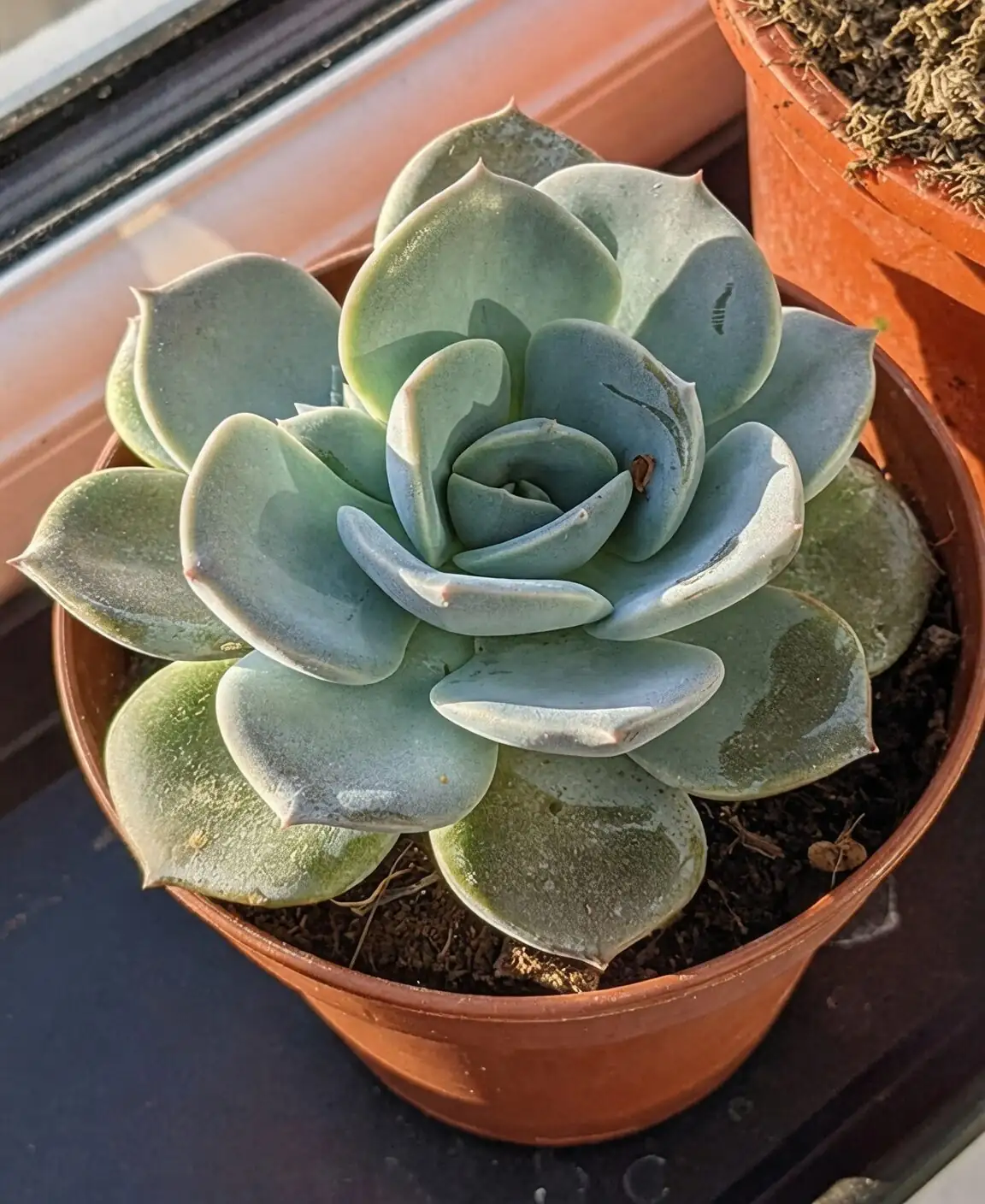
- Leaves: Plump, cool-to-the-touch, with an intact, matte farina. Rosette stays tight and symmetrical.
- Water: Clear to very lightly tinted, neutral smell.
The earliest signs of trouble (act before collapse)
- Lower leaves turn translucent, then mushy at the base—classic overwatered/rot signal.
- Root color shifts from white/tan to browny-gray; outer layers slough off.
- Base/crown looks waterlogged or darkens; any softening there is urgent.
- Cloudy water within 2–3 days, sour or swampy odor, or visible slime.
- Rosette loosens and flattens despite adequate light; growth stalls.
If two or more of these appear, pivot fast.
The decision tree: stay the course or go back to grit?
Stay in partial-water only if:
- New, firm water roots are forming and leaves remain plump.
- Water stays clear between weekly changes.
- Rosette is tight under bright light with no basal softening.
Switch back to a gritty mix if:
- You see repeated clouding/slime or any crown softness.
- Multiple lower leaves go translucent/mushy.
- Growth stalls for 3–4 weeks in good light and temps.
- You can’t keep up with water changes or your space is cool and humid.
- It’s approaching cold/wet season where you live and airflow is poor.
How to switch back safely
- Lift out and gently rinse roots. Trim any mush or blackened tissue to firm, pale interior.
- Air-dry the root system 24–48 hours so cut surfaces callus.
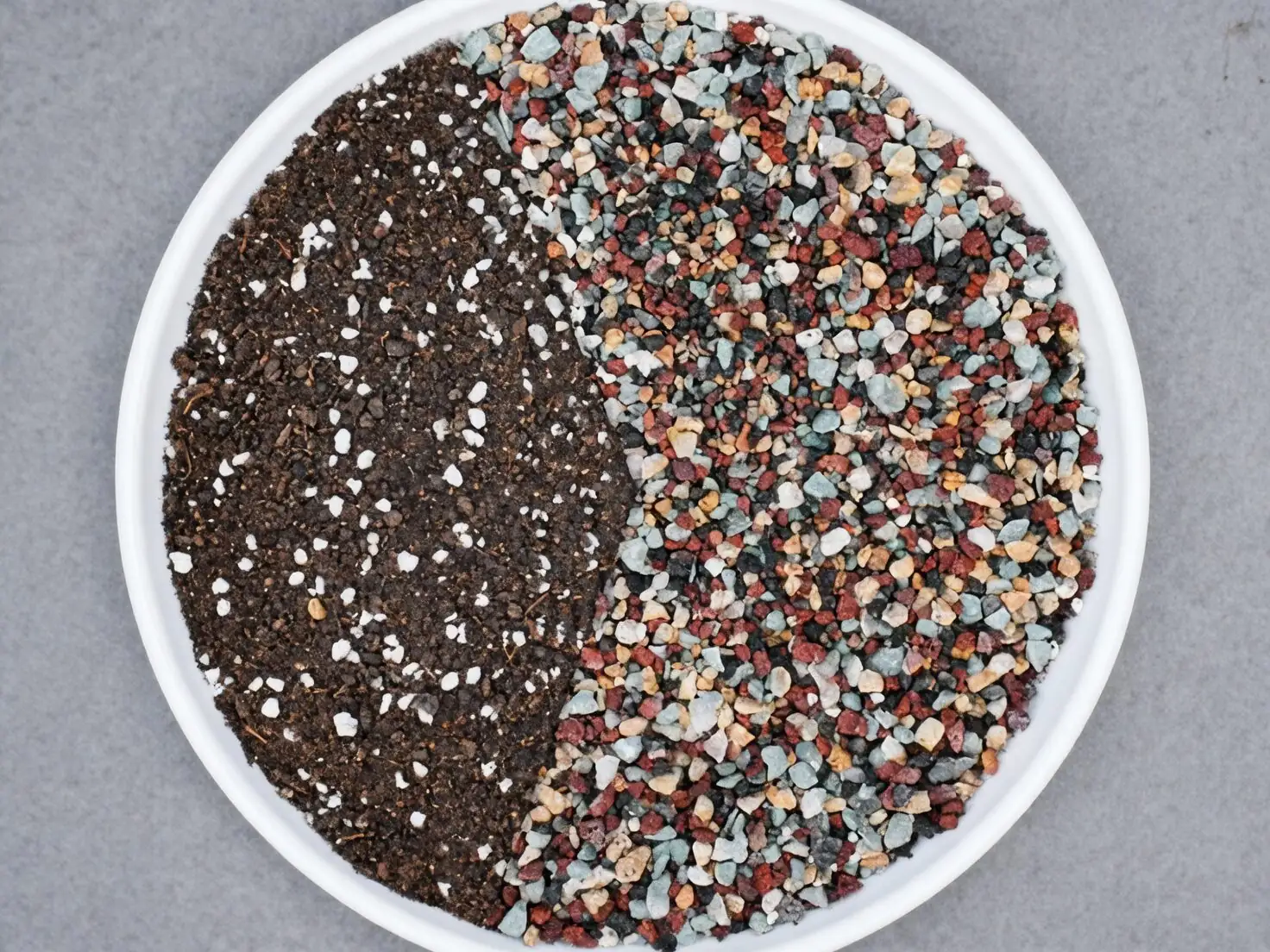
- Pot into a very fast‑draining succulent mix (mineral‑heavy with pumice/grit). Use a pot with drainage holes; size up modestly if needed (commonly 12–15 cm for grown plants).
- After potting, wait 1–2 days before first watering. Then resume a soak‑and‑dry cycle: drench fully, then let the mix dry out completely before watering again.
- Keep very bright light and good airflow. Never pour water into the rosette.
A 6‑week, side‑by‑side trial (if you like data)
- Group A: Partial-root water culture as described. Spring or autumn is ideal; use 1/4‑strength nutrients, weekly changes.
- Group B: Classic gritty mix, soak‑and‑dry; light feeding monthly in spring–summer only.
- Track weekly: rosette tightness (1–5), leaf firmness, root color, water clarity, any scent, and growth of offsets.
- Goal: Learn your conditions. If Group A struggles while Group B thrives, you’ve got your answer without risking the entire plant.
Light, heat, and placement cheatsheet
- Light: 4–6+ hours of sun for the tightest rosette. In very hot regions, give light afternoon shade; harsh midday scorch can spot leaves and strip farina.
- Temperature: Aim for 18–25°C for steady growth; protect from frost. Cold + wet is the worst combo.
- Air: Dry air with airflow. If you must raise humidity during extreme heat, mist the air around—not the rosette.
Flowering and offsets
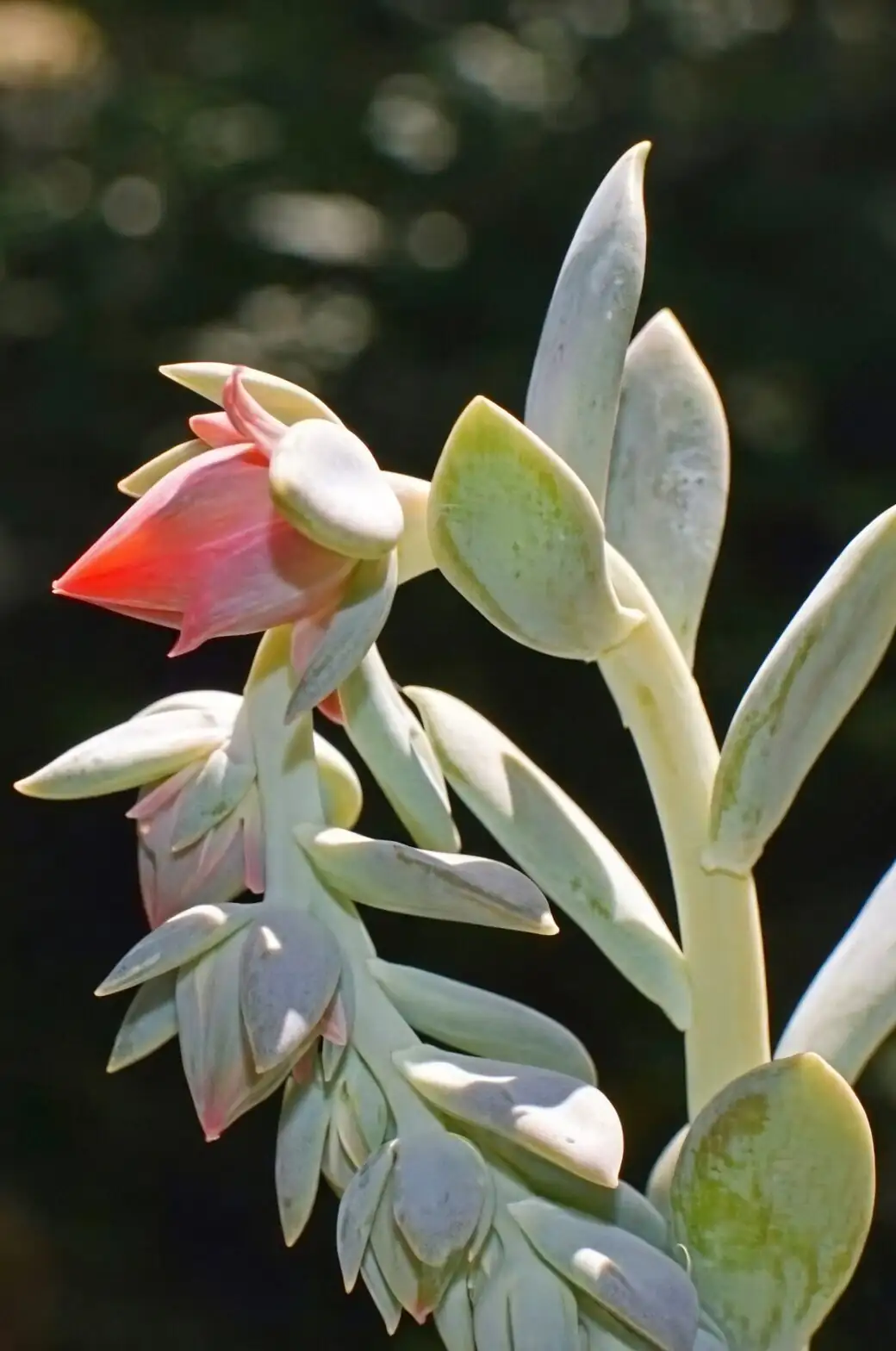
In good conditions, Echeveria elegans sends up slim, arching stalks from late spring to summer with coral‑pink bells flushed yellow. Over time it will offset freely, building a low, sculptural mound—equally striking in a bowl of grit or a row of small clay pots.
Fast fixes to common myths
- “Echeveria can’t grow in water.” Not quite. It can, but only with partial root submersion, frequent water refreshes, bright light, and a conservative nutrient schedule. Rot risk is still higher than in gritty media.
- “Summer is feeding season in water culture.” Flip it. In heat, use plain water; save dilute nutrients for spring and autumn. In winter, also plain water.
- “A little slime is harmless.” It’s an early rot flag. Increase changes, reduce the waterline, and consider moving back to grit.
Safety, pests, and leaf handling
- Generally low‑toxicity, but keep away from nibbling pets and children.
- Mealybugs may hide in leaf axils; aphids love flower stalks. Treat early with isopropyl swabs or insecticidal soap, isolate if needed.
- Farina is the plant’s sunscreen. Handle by the pot or very base—fingerprints can permanently mar the powder.
Symbolism, without the sugarcoat
Echeveria elegans often symbolizes resilience and quiet, enduring beauty—fitting for a rosette that keeps its poise through dry spells. “Flower language” lore is cultural, not botanical, but the takeaway holds: discipline beats drama. In practice, that means bright light, a dry crown, and decisive action at the first hint of rot.
Bottom line
- Curious growers can test partial-root water culture, but the safest long‑term home is still a gritty, fast‑draining mix.
- If you try water: keep only part of the roots submerged, change water weekly, use dilute nutrients only in spring and autumn, and switch to plain water in summer and winter.
- Watch for the earliest rot cues—and be ready to pivot back to grit. Your Mexican Snowball will reward that clearheaded care with a tight, powdery rosette, offsets, and spring‑to‑summer blooms.