

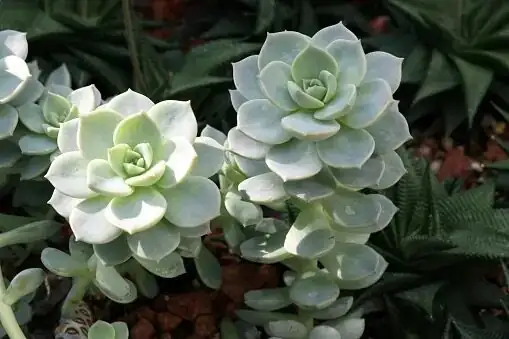
Think of Echeveria elegans—Mexican snowball—as a perfectly folded paper rose sculpted in moonlight. It thrives on bright days, lean soil, and a light touch. If checklists are your love language, this simple, seasonal plan keeps your “stone rose” compact, powdery, and blooming on cue.
Meet Mexican snowball in a minute
- Identity: Echeveria elegans (Crassulaceae), aka Mexican snowball, glaucous echeveria, Mexican gem
- Look: Neat lotus-like rosettes with powdery blue‑gray to blue‑green leaves. The soft chalky coating (farina) is protective—avoid touching it.
- Size: Rosettes about 8–15 cm (3–6 in) wide, ~10 cm (4 in) tall; bloom stalks bring height to 10–20 cm (4–8 in)
- Light: Bright light to full sun (aim for 4–6+ hours)
- Climate: Loves 15–27°C (59–81°F); protect from frost—keep above roughly 5–10°C (41–50°F)
- Soil: Very fast-draining, gritty succulent mix in a pot with drainage
- Safety: Generally low-toxicity for people and pets (nibbling can still upset tummies)
—
The seasonal checklist (repot, prune, feed, propagate—plus weather smarts)
Spring: Wake-up, refresh, and set the stage for bloom
- Light
- Increase light gradually; give 4–6+ hours of sun. In strong sun, acclimate behind a sheer curtain for a few days to avoid scorch.
- Water
- Switch to a “soak and dry” rhythm: water thoroughly, then let the mix dry completely. In active growth this may be every 7–14 days depending on heat, pot size, and airflow.
- Feed
- Start light feeding: cactus/succulent fertilizer at ~¼ strength every 4–8 weeks. Avoid splashing fertilizer onto leaves.
- Repot
- Best time to repot (every 1–2 years). Step up to a 12–15 cm (4.7–5.9 in) pot as needed.
- Use a gritty mix (e.g., a modest organic base heavily cut with coarse sand, pumice, or grit).
- After repotting, let any disturbed roots dry/callus 1–2 days before watering.
- Prune/Groom
- Remove dried lower leaves; cut off last year’s spent bloom stalks cleanly.
- If the plant stretched over winter, beheading and rerooting the rosette is an option.
- Propagate
- Start offsets or clean leaf cuttings now if your conditions are warm and bright.
- Bloom care reminders
- Expect flower stalks from late spring into summer. Keep water out of the rosette and watch for aphids on the blooms.
Summer: Sun, flowers, and careful watering
- Light
- Full sun is great, but in very hot climates provide light afternoon shade to prevent scorch and keep rosettes tight.
- Water
- Still “soak and dry,” often every 7–14 days in heat; excellent airflow helps. Never let water sit in the rosette.
- Feed
- Continue low-strength feeding monthly if actively growing. Skip if growth slows in extreme heat.
- Prune/Groom
- Deadhead spent flowers to keep energy in the rosette. Remove any crispy lower leaves that can harbor pests.
- Propagate
- Offsets detach easily; leaf cuttings and stem cuttings root fast in warm, bright conditions.
- Heatwave handling
- Shift to bright morning sun + dappled afternoon shade.
- Increase airflow; avoid stagnant humidity. If you must raise local humidity in extreme heat, lightly mist the air around (not into) the rosette.
- Water early morning; never leave soil wet + hot overnight.
- Rain strategy
- Move pots under cover. Prolonged rain + cold is risky—especially for powdery rosettes. If rosettes get wet, tip the plant to drain and dry fast.
Autumn: Easy propagation and graceful slowdown
- Light
- Keep it bright—shorter days can trigger stretching. Rotate the pot weekly for even growth.
- Water
- Reduce frequency as days cool, often every 2–3 weeks if still bright and growing.
- Feed
- One last light feed if growth continues, then stop by late autumn.
- Prune/Groom
- Tidy dead leaves; check under the skirt of the rosette for pests before winter.
- Propagate (prime time)
- Late summer to early autumn (about August–October) is especially reliable for offsets, leaf cuttings, and rosette cuttings.
- Let cut surfaces callus for several days; roots often appear in ~20 days in warm, bright conditions. Pot up when roots are ~2–3 cm (0.8–1.2 in).
Winter: Bright, dry, and frost-free
- Light
- Give the brightest possible spot (south/east window or strong grow light). Light prevents flattening and stretch.
- Water
- Keep much drier—often every 3–5+ weeks indoors; if kept cool, some growers water just 1–2 times all winter. Always let the mix go bone-dry between sips.
- Feed
- Do not fertilize in winter.
- Temperature and dormancy
- Protect from frost; aim to keep above 5–10°C (41–50°F). Cold + wet is a dangerous combo.
- Prune/Groom
- Remove only fully dried leaves. Avoid handling the foliage—preserve the protective farina.
—
Perfecting the basics (fast drainage, right light, light hand)
Potting mix and container
- Mix: Very fast-draining, mineral-rich. Think a modest organic base cut heavily with coarse sand, pumice, or grit.
- Container: Always use drainage holes; unglazed clay improves evaporation. Top-dress with gravel to keep leaves off wet mix.
Watering that works
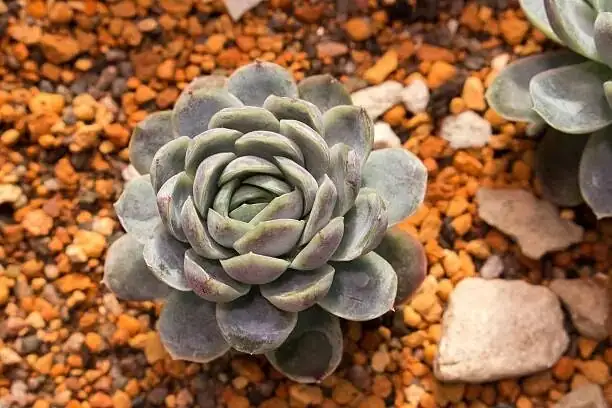
- Method: Thoroughly soak, then let dry out completely before the next watering.
- Seasonal rhythm
- Spring–Summer: commonly every 7–14 days
- Autumn: about every 2–3 weeks if still growing
- Winter: every 3–5+ weeks, or as little as 1–2 times in cool conditions
- Golden rules: Keep water out of the rosette; strong light + airflow are your best friends.
Light that keeps rosettes tight
- Aim for 4–6+ hours of bright light. In very hot regions, give light afternoon shade to prevent scorch.
- Too little light = stretched, open rosette. Move brighter and rotate the pot for symmetry.
—
Repotting, step by step (early spring)
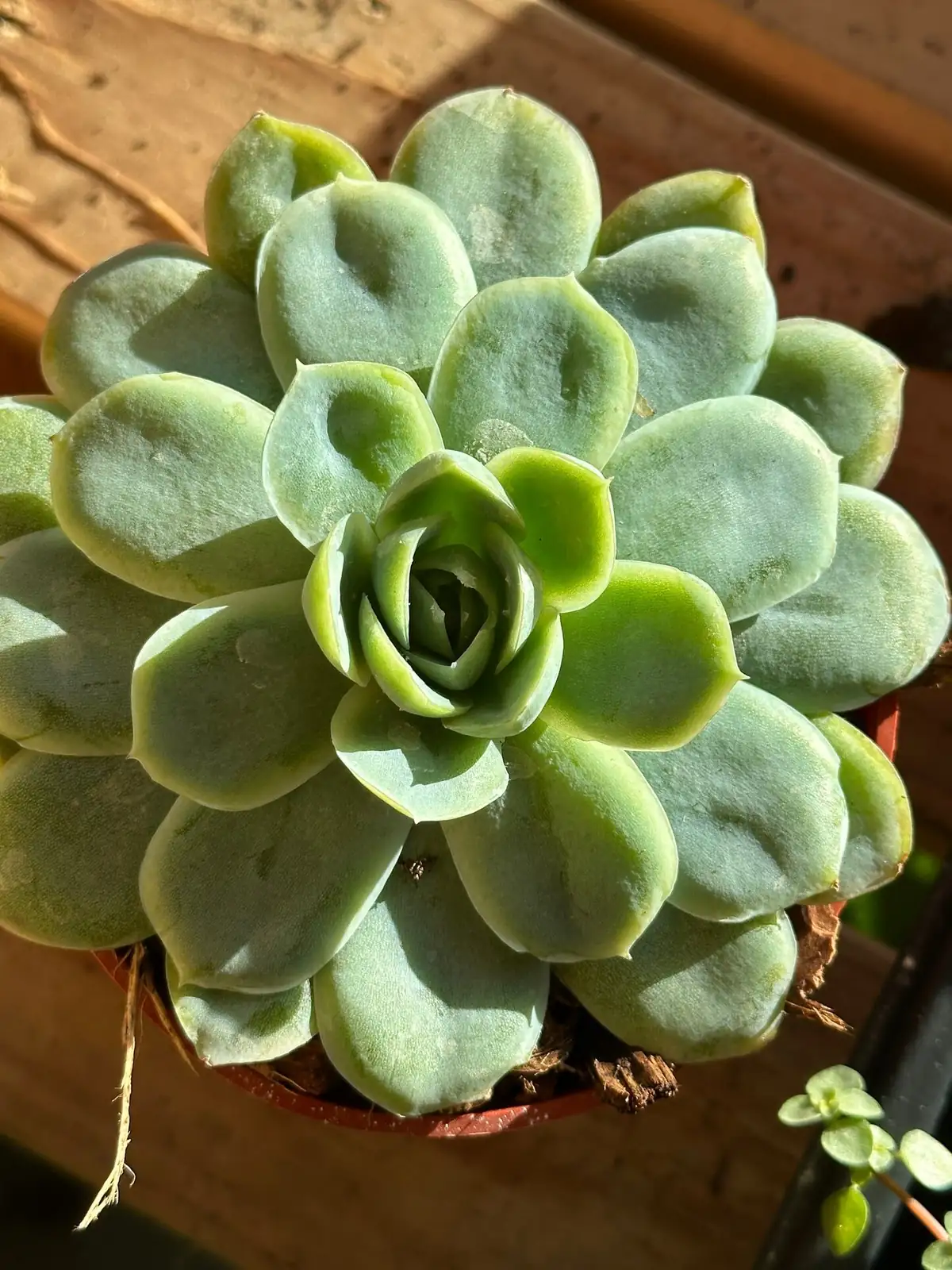
- Wait for longer days and signs of growth.
- Unpot gently; shake off old mix.
- Trim only clearly dead or excessively long fine roots.
- Replant into fresh gritty mix; choose a pot just 1 size up (often ~12–15 cm/4.7–5.9 in for mature rosettes).
- Let roots callus 1–2 days, then water once to settle.
—
Propagation made joyfully simple
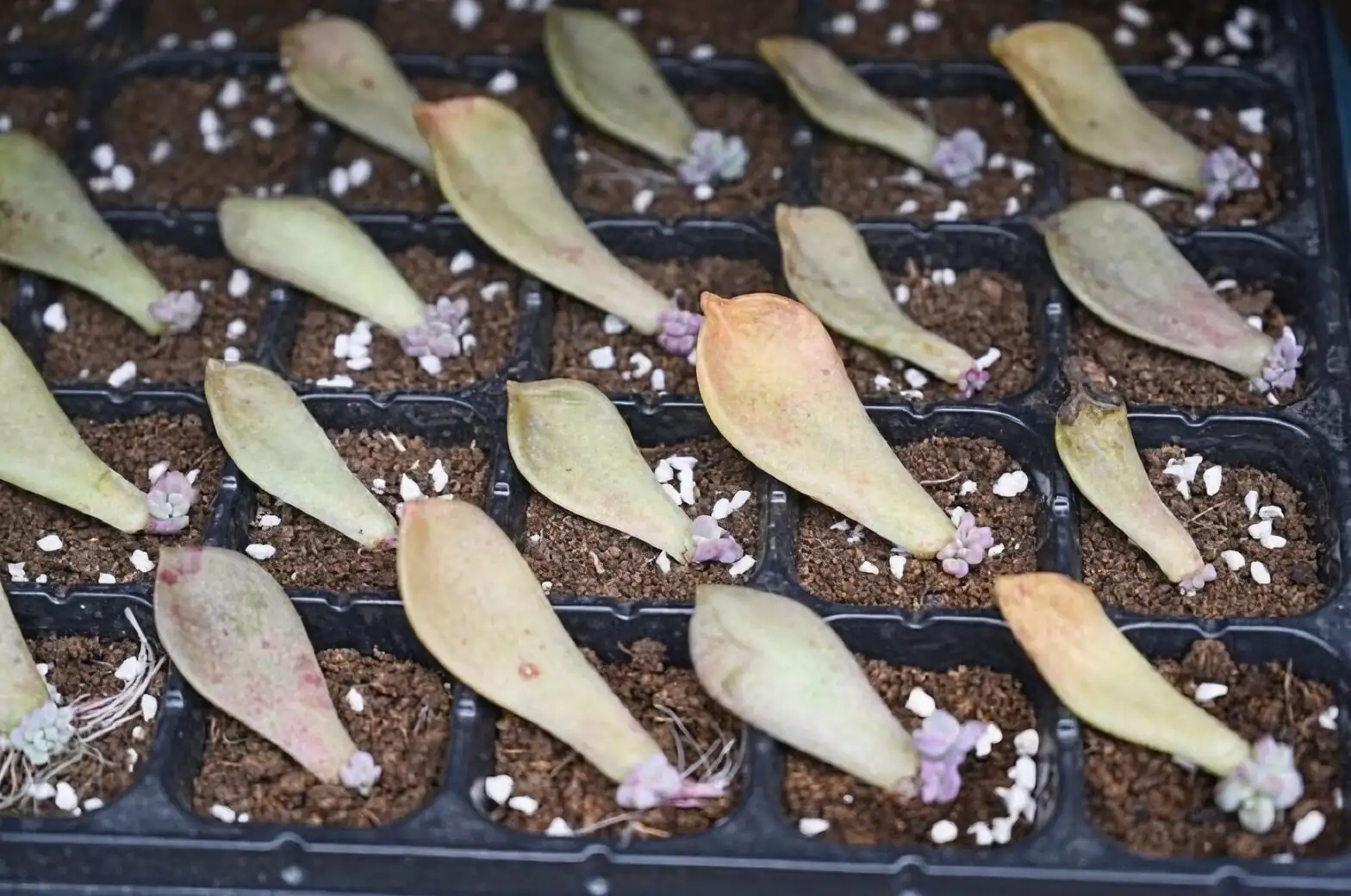
- Offsets (pups)
- Best beginner route. Separate once pups have their own roots; pot in gritty mix; water lightly after a brief callus period.
- Leaf propagation
- Twist off a healthy leaf cleanly. Air-dry several days to callus.
- Lay on dry gritty mix; mist the substrate edge very sparingly until roots and a baby rosette form.
- Rosette/stem cuttings
- Behead a leggy rosette; let cut ends fully callus; root in a bright, warm, gritty medium.
- Timing sweet spot
- Year-round in warm, bright conditions; late summer to early autumn is especially dependable.
Pro tip for tinkerers: Some growers try water culture with echeverias. If you experiment, keep only part of the roots in water (never submerge all), change water regularly, and use very light nutrients only in spring/autumn. Rot risk is higher than in gritty soil.
—
Bloom-time care (late spring to summer)
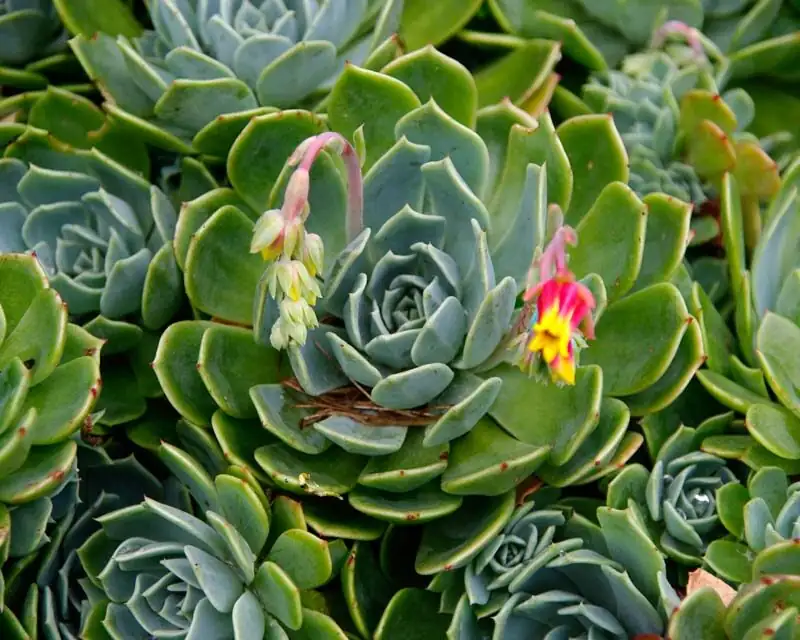
- What to expect
- Slender, arching stalks with nodding bells—pink/red outside, yellowish within.
- To encourage blooms
- Strong light, a bright spring, and light feeding during active growth.
- During bloom
- Inspect for aphids on stalks; remove with a jet of water directed away from the rosette or dab with isopropyl alcohol.
- Keep rosette dry; water the soil only.
- After bloom
- Cut spent stalks cleanly at the base. The rosette continues growing and will offset over time.
—
Weather playbook: heat, rain, and cold
- Heatwaves
- Shift to morning sun + afternoon shade; increase airflow.
- Water early day and only when the mix is fully dry. Avoid wet soil overnight in heat.
- If air is extremely dry and baking, you can mist the air nearby very lightly—never wet the rosette.
- Prolonged rain
- Move under eaves or indoors; avoid water pooling in the rosette.
- Ensure pots drain freely; tip to shed trapped water; dry with strong airflow.
- Winter and cold snaps
- Bring indoors or to a frost-free, very bright spot.
- Keep the mix nearly dry; cold + wet invites rot.
- Maintain temperatures above ~5–10°C (41–50°F) for safer overwintering.
—
Quick troubleshooting
- Rosette stretching and opening up?
- It’s light-starved (often with too-frequent watering). Move to stronger light (4–6+ hours) and return to strict soak-and-dry.
- Lower leaves turning translucent or mushy?
- Classic overwatering/poor drainage. Let it dry fully; repot into gritty mix with proper drainage; keep water out of the rosette.
- Powdery coating getting smudged?
- That’s the protective farina. Handle by the pot or very base of the plant. Fingerprints are permanent.
—
Pests, diseases, and prevention
- Usual suspects: Mealybugs (leaf axils), aphids (flower stalks), scale, thrips; belowground issues can include root-knot nematodes.
- Diseases: Root rot in soggy soil; occasional leaf spots and rust.
- Prevention: Bright light, strong airflow, bone-dry intervals between waterings, gritty soil, and removing dead lower leaves.
- Treatment: Isolate, remove damaged tissue, swab mealy/scale with isopropyl alcohol or use insecticidal soap. Use labeled fungicides where appropriate for fungal leaf diseases.
—
A note on “flower language” and symbolism
While romantic “flower language” is largely a modern cultural layer rather than a botanical doctrine, Mexican snowball is widely associated with resilience, quiet beauty, and enduring love. It’s fitting: a compact rosette that keeps its poise through dry spells, then lifts elegant bells in late spring to summer—grace under pressure, in living form.
—
Pin this: the fridge-friendly checklist
- Spring: Repot; resume soak-and-dry; start light feeding; tidy leaves; acclimate to strong light; prep for blooms.
- Summer: Bright light with afternoon shade in extreme heat; water only when fully dry; deadhead; watch for aphids; shelter from heavy rain.
- Autumn: Reduce watering; last light feed if still growing; prime time to propagate; keep bright.
- Winter: Brightest spot; keep dry; no feed; frost protection above ~5–10°C; avoid cold + wet.
Give Echeveria elegans bright light, fast drainage, and a mindful, minimalist routine—and it will reward you with a sculptural rosette you’ll admire every time you pass the window.