

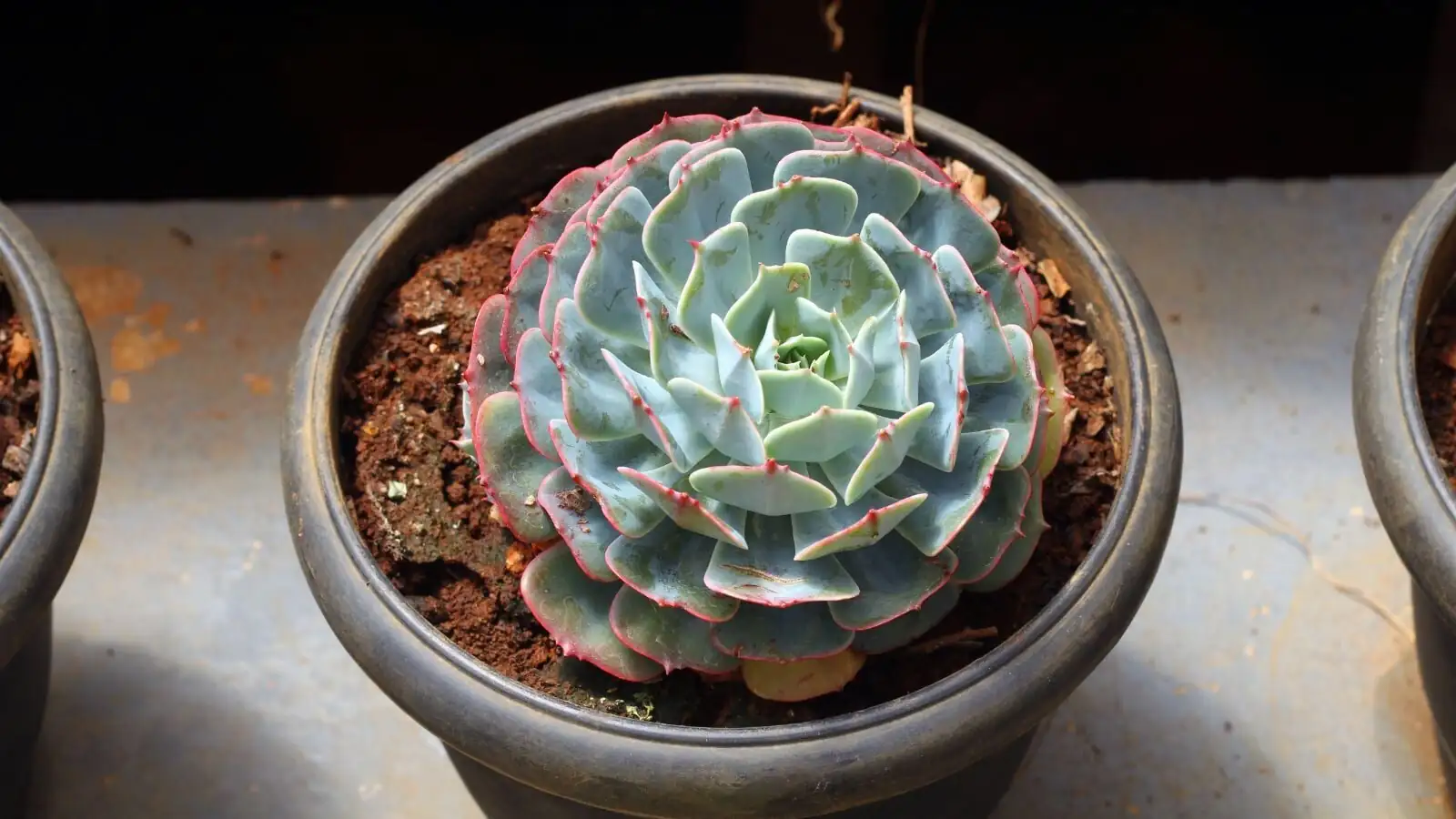
Think of Echeveria elegans—the Mexican Snowball—as the calm, sculptural anchor of a drought‑tolerant stage set. Its powdery, lotus-like rosettes offer a serene focal point; the supporting cast—Graptopetalum, Sedum, and Crassula—add rhythm, texture, and seasonal color without ever stealing too much water or attention. Design meets horticulture when you match their shared needs: bright light, gritty soil, measured watering, and generous airflow. The result? Living gravel‑scapes that stay crisp and gorgeous, season after season.
Meet the star: Echeveria elegans, the Mexican Snowball
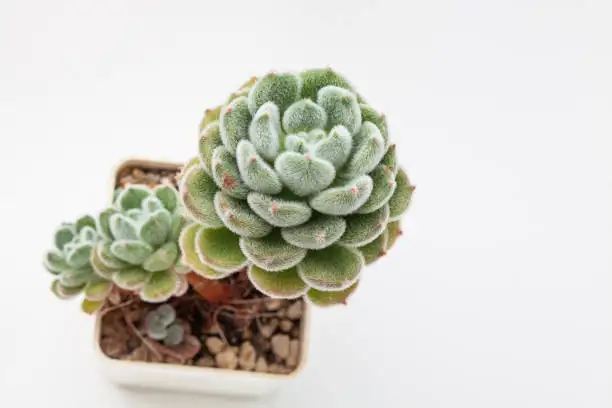
- Look and feel: Tight, symmetrical rosettes of thick leaves dusted in protective farina (that dreamy, chalky bloom). Colors range from blue‑gray to blue‑green, sometimes with a delicate pink edge.
- Size and habit: Rosettes typically 8–15 cm (3–6 in) across; about 10 cm (4 in) tall when not in bloom. It offsets readily, forming clustered mounds over time.
- Flowers: In late spring into summer, it may send up slender stalks, bringing overall height to about 10–20 cm (4–8 in), with nodding bell-shaped blooms—pink to coral outside, yellowish within.
- Origin and family: Mexico; Crassulaceae.
- Tip: The farina is a natural sunscreen—admire, don’t rub. Handle by the pot or very base.
Design principles: light, rhythm, and breath
Great succulent design is 50% art, 50% airflow.
Light: the sculptor
- Give bright light to full sun for 4–6+ hours. This keeps rosettes tight and colors fresh.
- In very hot climates, offer light afternoon shade and avoid prolonged, scorching midday sun.
- Signs to watch: A stretched, open rosette signals low light.
Watering rhythm: one beat for the whole ensemble
All members of this quartet—Echeveria, Graptopetalum, Sedum, Crassula—are drought‑tolerant and thrive on soak‑and‑dry watering in fast‑draining soil.
- Method: Water thoroughly, then wait until the mix is bone‑dry. Always keep water out of the rosette.
- Typical cadence (adjust for heat, pot size, and airflow):
- Spring–Summer: every 7–14 days
- Autumn: every 2–3 weeks if still actively growing
- Winter: much less—every 3–5+ weeks indoors, or sometimes just 1–2 light waterings if kept cool and bright
- Pro move: Use the same gritty soil and pot type (unglazed clay works wonders) across your planting so everyone dries at the same rate.
Airflow and spacing: beauty needs room to breathe
- Prefers dry air and strong airflow; avoid stagnant, humid pockets—especially when cool.
- Spacing guide for crisp rosettes and fewer fungal issues:
- For 8–10 cm (3–4 in) rosettes: plant 15–18 cm (6–7 in) center‑to‑center.
- For 12–15 cm (5–6 in) rosettes: 20–25 cm (8–10 in) center‑to‑center.
- Indoors, a gentle circulating fan on low can make a world of difference.
The companion cast: Graptopetalum, Sedum, Crassula
Pair for shared needs and contrasting forms.
Graptopetalum
- Why it works: Nearly identical cultural needs—gritty soil, bright sun, thorough dry‑downs.
- Design play:
- Graptopetalum paraguayense (ghost plant): cool, opalescent rosettes that echo E. elegans while drifting in looser forms.
- Graptopetalum superbum: broader, lilac‑to‑rose rosettes add soft color blocks beside the blue‑gray Snowball.
- Placement: Cluster a trio around your focal Echeveria; let them “cascade” toward the rim for movement.
Sedum
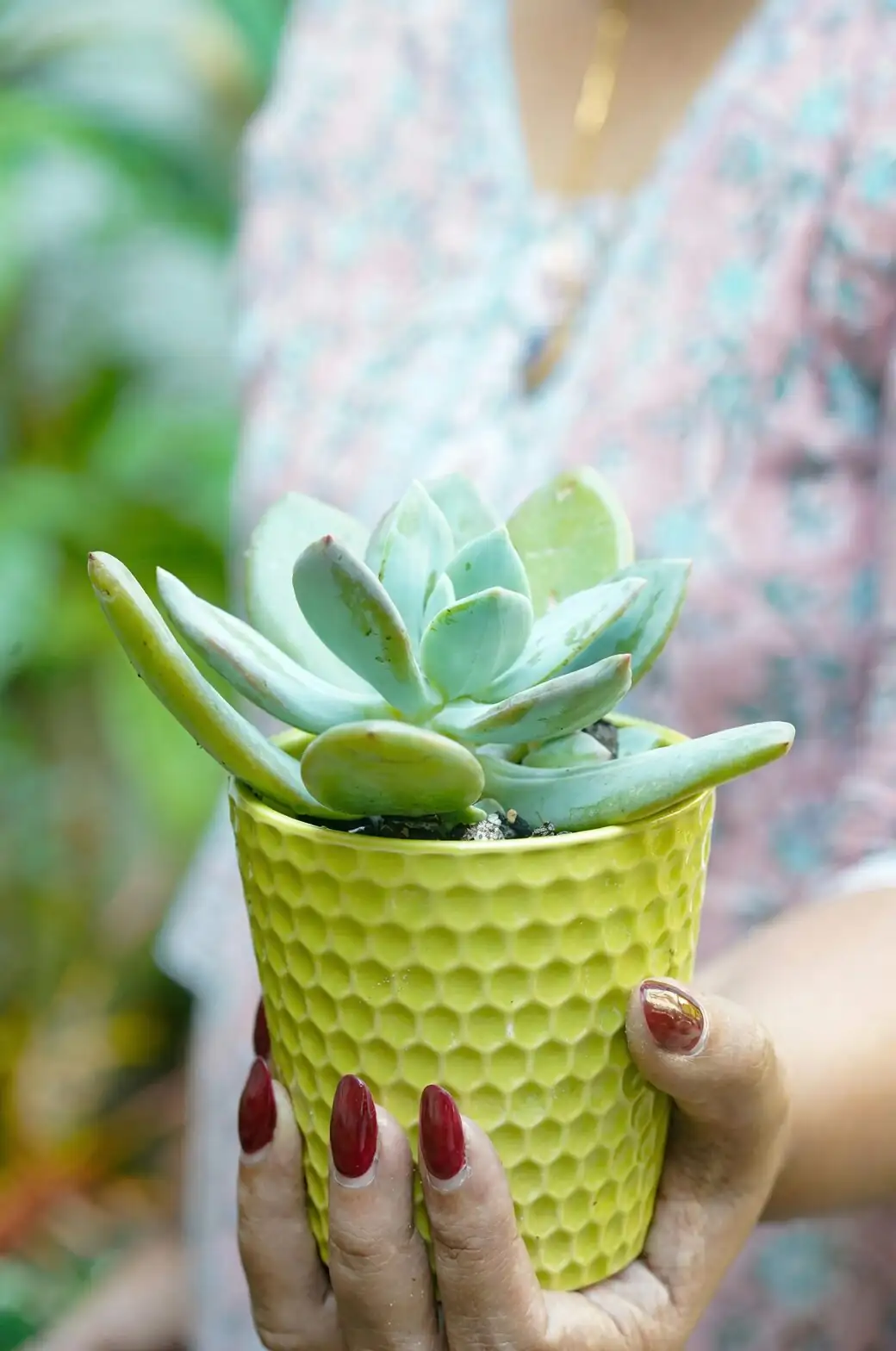
- Why it works: Drought‑ready and textural. Many low‑growing Sedum knit spaces without smothering rosettes.
- Design play:
- Sedum nussbaumerianum: coppery, sun‑kindled tones make E. elegans look colder and more sculptural by contrast.
- Low, mounding or creeping species thread between rosettes, softening edges while keeping the mineral look.
- Note: Choose sun‑loving, summer‑active Sedum to match Echeveria’s rhythm; avoid species that stay too thirsty or shade‑leaning.
Crassula
- Why it works: Similar light and water preferences, huge range of shapes.
- Design play:
- Crassula ovata ‘Hummel’s Sunset’ (small, pruned): vertical punctuation with golden rims.
- Crassula perforata (string of buttons): stacked geometry nods to the Snowball’s symmetry without competing.
- Placement: Use sparingly as uprights or accents so the rosette masses remain the story.
Building a living gravel‑scape that stays crisp
Follow this simple choreography and you’ll keep the “just‑combed” look for months.
1) Choose the stage
- Container: A pot with drainage holes (unglazed clay for breathability) or a shallow, well‑drained bed. Outdoors, shelter from heavy, prolonged rain.
- Climate: Suited to USDA Zones 9–11. Protect from frost; keep above about 5–10°C (41–50°F), especially if soil isn’t bone‑dry.
2) Mix the medium
- Soil: A very fast‑draining cactus/succulent mix—an organic base (leaf mold/peat in moderation) heavily cut with coarse sand, pumice, or grit.
- Aim for a mineral‑rich blend; avoid water‑retentive mixes. Always use a pot with drainage.
3) Plant high, not deep
- Seat rosettes slightly above grade on low mounds so crowns never sit in splash zones.
- Keep leaves clear of soil; never bury the rosette neck.
- After repotting or root trimming, let roots dry/callus 1–2 days before the first watering.
4) Top‑dress for function and finesse
- Add a 1–2 cm layer of clean, angular gravel or pumice (3–8 mm). This:
- Speeds surface dry‑down
- Prevents soil splash (protecting farina)
- Makes colors pop and lines look tidy
5) Compose with space and scale
- Place E. elegans as the focal “snowball,” then ring with Graptopetalum in odd numbers.
- Stitch gaps with low Sedum; drop in a small Crassula accent for verticality.
- Maintain the spacing guidelines so airflow stays strong and rosettes don’t crowd.
6) Water thoughtfully
- First drink: After planting (and any root callusing time), water once at soil level to settle, then allow a full dry‑down.
- Ongoing: Stick to soak‑and‑dry. Never pour into the rosette. Use a narrow‑spout can to target the root zone.
7) Keep the crisp look
- Groom monthly: remove dry lower leaves and spent bloom stalks.
- Dust the gravel and leaves gently with a blower bulb or soft brush—never wipe the farina.
- Fertilize lightly in spring–summer at about 1/4 strength every 4–8 weeks; skip winter feedings.
Seasonal choreography
- Spring: Increase light; repot or refresh top-dress; begin light feeding. Great time to tidy and reset spacing.
- Summer: Bright light; protect from extreme midday scorch. Water only after full dry‑downs; enjoy blooms.
- Autumn: Begin to slow watering; excellent propagation window for offsets and leaf cuttings.
- Winter: Keep very bright and quite dry. Cold + wet is the danger combo.
Propagating to thicken the scene
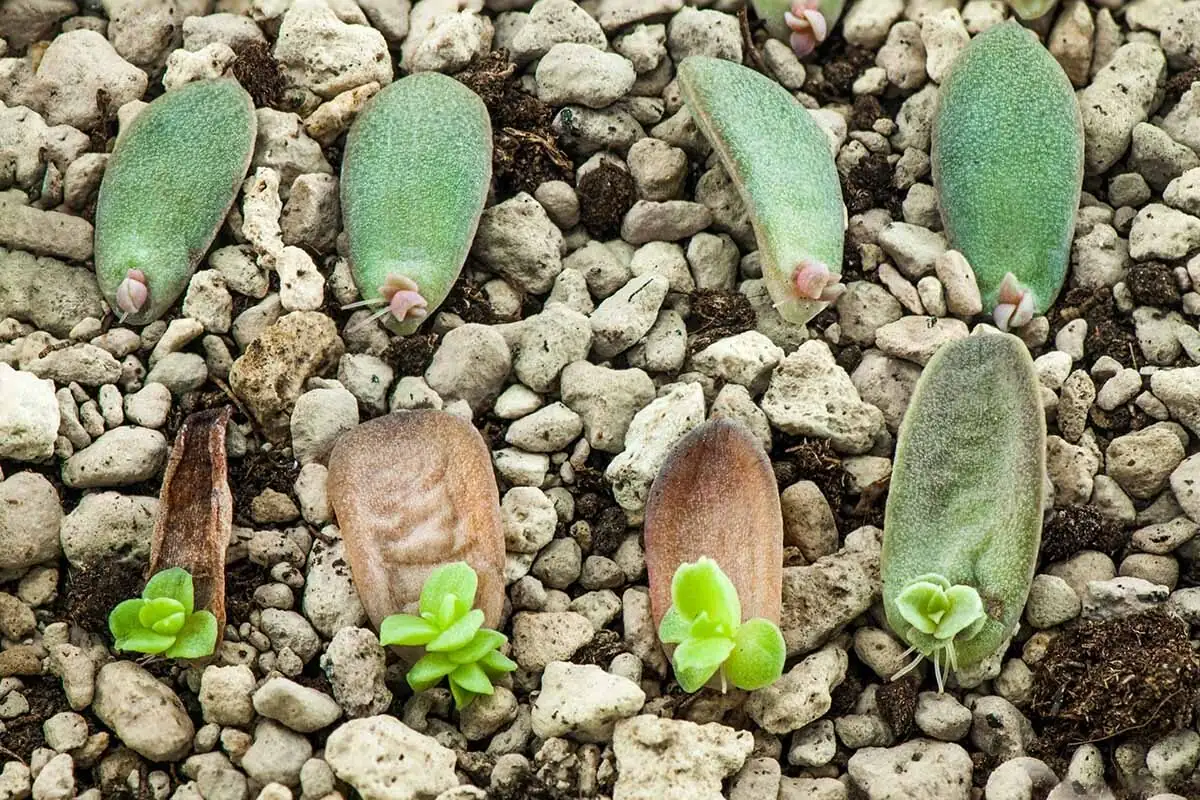
- Offsets: Detach once pups have roots; replant into gritty mix.
- Leaf propagation: Remove a healthy leaf cleanly, let callus for a few days, lay on dry grit; mist very sparingly until roots and pups appear.
- Rosette/stem cuttings: Callus, then root in a gritty medium.
- Timing: Year‑round in warm, bright conditions; many find late summer to early autumn especially reliable. Roots may appear in about 20 days; pot up when 2–3 cm long.
Quick troubleshooting
- Stretched, open rosette: Not enough light (and sometimes too much water). Move to stronger sun and let the soil fully dry between waterings.
- Lower leaves turning translucent or mushy: Overwatering or poor drainage. Switch to a gritty mix, ensure drainage holes, and keep water out of the rosette.
- Pests: Watch for mealybugs, aphids (especially on bloom stalks), scale, and thrips. Isolate, swab with isopropyl alcohol, or use insecticidal soap. Good airflow and dry cycles are your best prevention.
Safety and hardiness
- Toxicity: Generally considered low‑toxicity/non‑toxic for people and pets, though nibbling may cause mild stomach upset.
- Hardiness: Best around 15–27°C (59–81°F); protect from frost. Zone 9–11 outdoors where dry and sheltered; otherwise treat as a bright container plant.
Farina etiquette: how to keep that frosty glow
- Don’t touch the leaf surface; fingerprints permanently mar the bloom.
- Water at the soil line; avoid splashing.
- Use top-dress gravel to reduce bounce‑back and leaf spotting.
The deeper meaning (and why it resonates in design)
The genus name honors Mexican botanical illustrator Atanasio Echeverría y Godoy—fitting for a plant beloved as much for form as for endurance. In the language of symbolism, Echeveria elegans speaks of resilience, quiet strength, and lasting beauty—qualities born from life in sun, wind, and drought. That “flower language” isn’t a single ancient tradition so much as a modern, cross‑cultural shorthand gardeners use to describe what the plant evokes: the calm of symmetry under pressure, and grace that doesn’t wilt when things get dry.
A sample planting: a 30 cm (12 in) bowl that stays neat
- Center: 1 Echeveria elegans, 10–12 cm rosette
- Mid‑ring: 3 Graptopetalum superbum, spaced evenly
- Edge: A necklace of low Sedum nussbaumerianum pods between the Graptopetalum
- Accent: 1 small Crassula perforata near the rim for a vertical note
- Top-dress: 1–2 cm of 3–6 mm angular gravel; a few thumb‑sized stones for micro‑berms
- Care rhythm: Spring–summer water every 7–14 days (full dry‑down); light feed monthly at 1/4 strength; bright sun with light afternoon shade in extreme heat; excellent airflow
Design it for their shared needs—bright light, fast drainage, soak‑and‑dry watering, and breathing room—and your Mexican Snowball will hold court while Graptopetalum, Sedum, and Crassula play in harmony. Crisp, living gravel‑scapes aren’t luck; they’re choreography.