

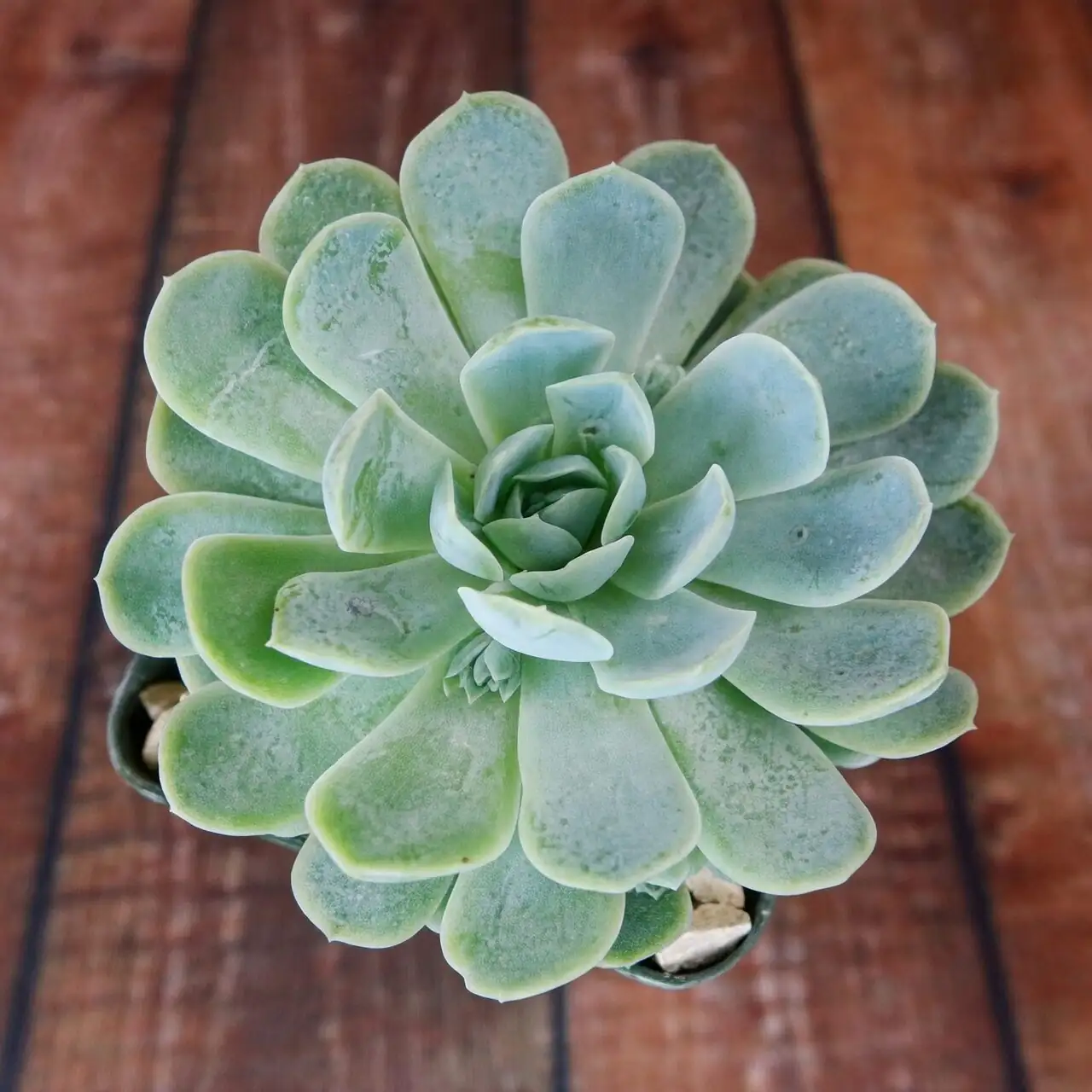
A rosette like a coin, dusted with moonlight, quietly holding its form through bright days and dry spells—Echeveria elegans, known in Chinese horticulture as 玉蝶 (Jade Butterfly), carries a surprisingly rich language of symbols for the modern age. Here’s how this tidy “stone rose” became a shorthand for resilience, enduring love, and quiet beauty across nurseries, e‑commerce listings, social feeds, and feng shui guides.
Meet “Jade Butterfly”: the plant behind the poetry
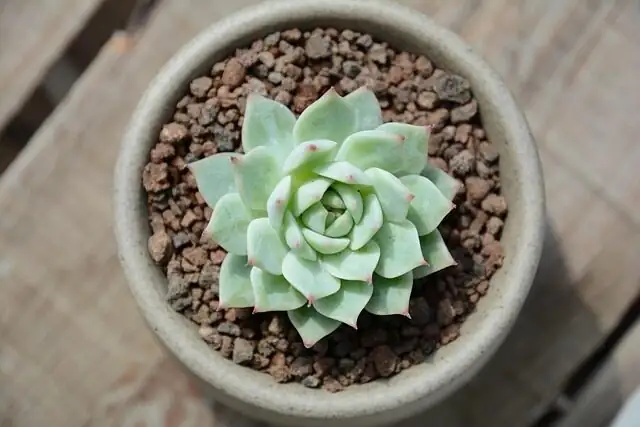
Botanically, Echeveria elegans—often called Mexican snowball—is a compact succulent from semi‑arid Mexico (commonly noted from Hidalgo). It forms symmetrical, lotus‑like rosettes of thick, powdery blue‑gray to blue‑green leaves. That frosted look is a natural wax (farina) that works like sunscreen and a raincoat, so it’s best admired, not rubbed. In late spring to summer, it sends up slender stalks with nodding, bell‑shaped flowers—usually pink or coral outside, with yellow tones within. Over time, it produces offsets, turning one rosette into a small, harmonious colony.
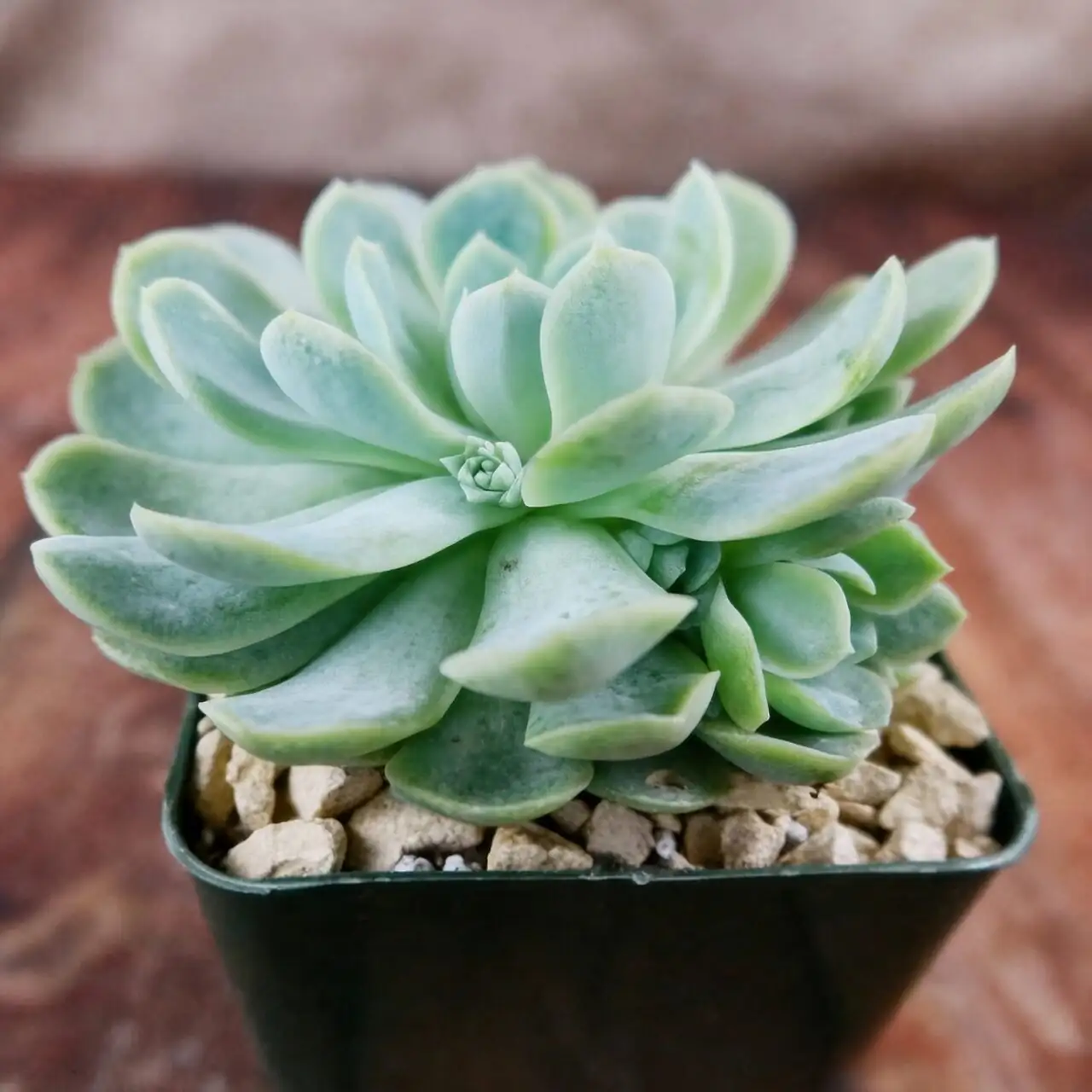
Chinese growers and retailers favor the name 玉蝶—“Jade Butterfly”—for this species. The jade evokes purity and lasting value; the butterfly hints at grace and transformation. You may also see broader umbrella names like 石莲花 used for Echeveria in general, but 玉蝶 is the more species‑specific moniker embraced in horticulture.
How a desert rosette found its Chinese “flower language”
“Flower language” (花语) in the strict sense—a catalog of fixed meanings for specific flowers—blossomed in 19th‑century Europe and later in Japan, then flowed into modern Chinese floristry via magazines, gift shops, and, more recently, online marketplaces and social media. Traditional Chinese symbolism was always present (think plum blossom for perseverance), but the crisp, list‑style “this flower means that” gained speed in the digital era. Succulents arrived just in time.
Nursery tags, Taobao listings, and Xiaohongshu posts distilled the lived traits of 玉蝶 into an approachable message set—easy to share on a card, easier still to remember:
- Resilience
- Enduring love
- Quiet beauty
Why “resilience”?
- Physiological proof: this rosette stays composed through dry spells by storing water in its leaves; the farina shields it from sun and stress.
- Visual psychology: a plant that looks immaculate with so little fuss feels like strength without drama—resilience with good posture.
Why “enduring love”?
- Longevity and stability: a healthy rosette holds its form for years if given bright light and fast drainage.
- Family metaphor: offsets gather around the mother rosette, a gentle emblem of companionship and continuity—love that multiplies without fanfare.
Why “quiet beauty”?
- Aesthetic restraint: matte, pastel leaves and a perfectly centered spiral say “elegant” rather than “loud.”
- Seasonal surprise: the bell flowers appear on delicate stalks—subtle celebration instead of spectacle.
Feng shui readings: coins, metal, and calm qi
While succulents vary in feng shui reputation, Echeveria elegans leans auspicious thanks to its round, soft geometry.
The coin‑rosette
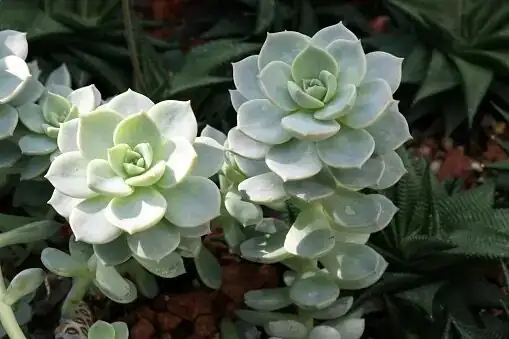
- Many see each rosette as coin‑like; a clump reads as a string of coins. This invites associations with steady wealth and resourcefulness—especially apt for a plant famed for thrift with water and care.
The “metal” element, carried in silver
- The silvery bloom of farina and cool blue‑gray tone align with the Metal element in five‑phase theory, linked to clarity, precision, and completion.
- Placement ideas (common modern practice):
- West or Northwest areas to support creativity, children (West) or helpful people/travel (Northwest)—both governed by Metal.
- Entryways for a gentle “prosperity and protection” nod, provided the spot is bright.
- Workspaces that need focus without spiky “sha qi”; rounded leaves make for calm, agreeable energy.
Tips to keep the energy fresh:
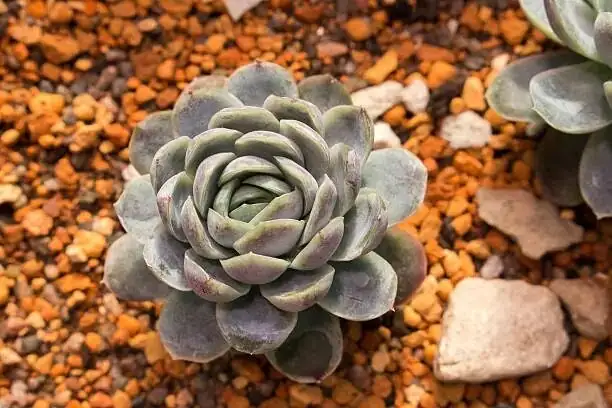
- Choose a healthy, tight rosette (symmetry signals harmony).
- Avoid dusting the leaves; farina is protective and part of the plant’s “silver” signature.
- Bright light keeps the rosette compact—tidy shape, tidy qi.
Gifting etiquette today: who, when, and how
Echeveria elegans has become a darling of modern gifting—compact, photogenic, and surprisingly meaningful.
Perfect occasions
- Housewarming and new offices: signals prosperity, stability, and easy care.
- Weddings and anniversaries: a living emblem of enduring love; also popular as wedding favors and minimalist centerpieces.
- Long‑distance friendships: “I’m here, even quietly”—resilience and quiet beauty travel well.
- Exams and new projects: calm focus, steady growth, “don’t burn out—store your strength.”
Presentation matters
- Size sweet spot: many rosettes are sold in ~8 cm nursery pots; stepping up to a 12–15 cm pot gives presence without crowding a desk.
- Containers: sleek ceramics or softly metallic glazes echo the Metal element and the coin motif.
- Card wording ideas:
- “For resilience that looks effortless.”
- “Quiet beauty, steady love.”
- “A little silver rosette for clear days ahead.”
Cultural cues to keep in mind
- Numbers: sets of 1, 6, or 8 feel auspicious; avoid gifting four identical plants together.
- Formal condolences: living succulents are a contemporary, personal choice rather than a traditional one—consider the family’s preference.
- Pet households: generally considered low‑toxicity, though nibbling any plant can upset stomachs—add a friendly note to display out of reach.
A name that carries meaning
- 玉蝶 (Jade Butterfly): whispers of purity, grace, and a beauty that lasts—jade never hurries to shine.
- English aliases—Mexican Snowball, Mexican Gem, White Mexican Rose—reinforce the coin‑and‑gem imagery that modern gifting leans on.
Mini care notes that honor the symbolism
Let the plant’s habits reinforce its message—resilient, enduring, quietly lovely.
- Light: bright light to full sun (aim for 4–6+ hours); in very hot regions, offer light afternoon shade.
- Water: soak the soil, then let it dry completely before watering again; keep water out of the rosette.
- Soil: gritty, fast‑draining cactus/succulent mix; always use a pot with drainage.
- Temperature: happiest around 18–25°C; protect from frost.
- Hands off the “powder”: the farina is protective—fingerprints are forever.
- Flowers: expect slender stalks with pink‑to‑coral bells, yellow inside, mainly late spring to summer.
- Clumping: offsets arrive in time; share a pup to pass along the meaning.
A modern emblem with ancient echoes
In a culture that has long praised integrity in winter plum and serenity in lotus, 玉蝶 brings those virtues into apartment windows and office ledges. Its coin‑like rosettes nod to prosperity; its silvered leaves breathe Metal’s clarity; its calm, enduring form models a love that doesn’t need to announce itself. Gift one when words feel too loud—or keep one where you make decisions. Either way, Echeveria elegans is the quiet friend that reminds you: stay composed, store your strength, and let your beauty speak softly, every day.