

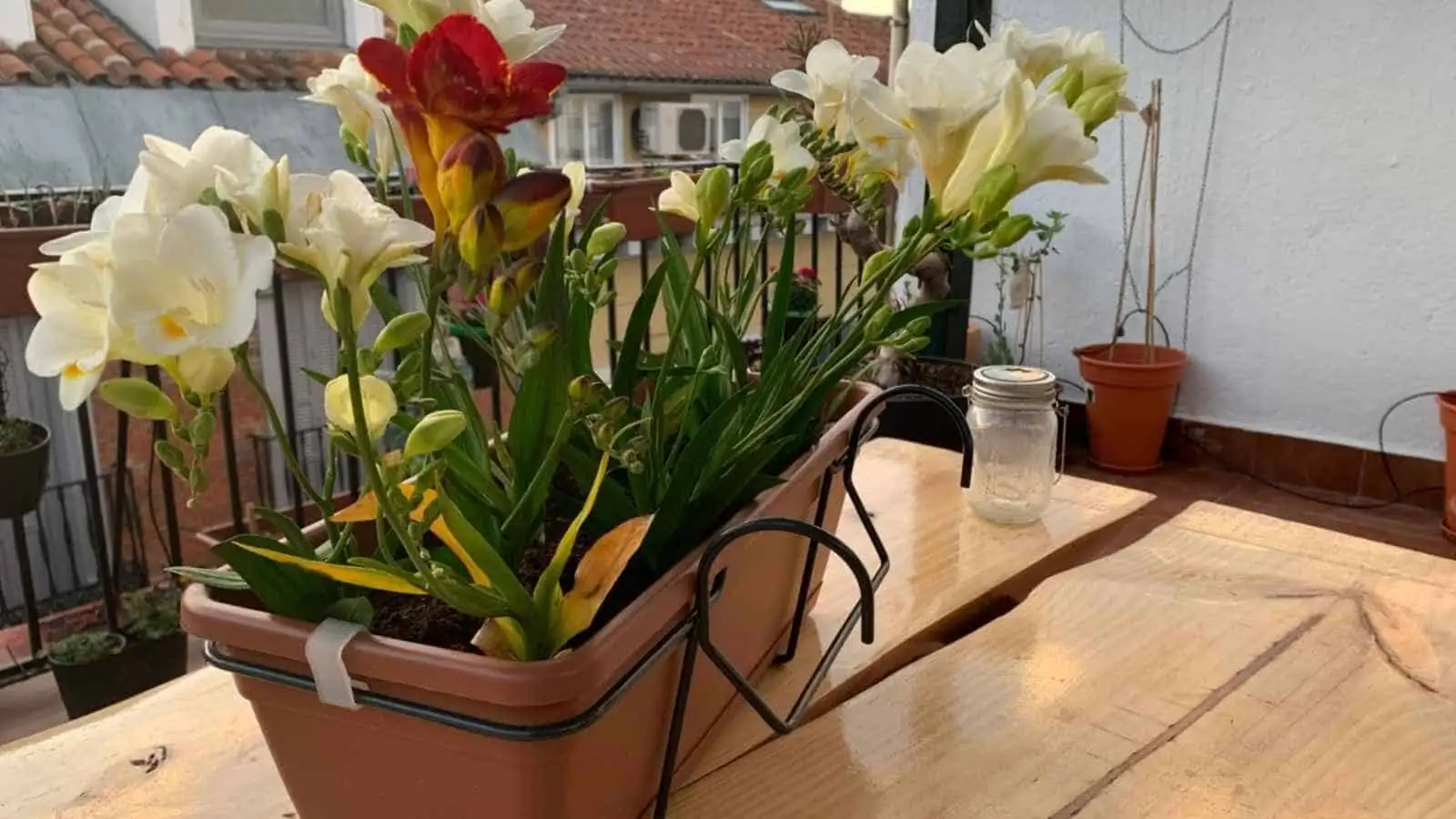
Freesia × hybrida brings the cleanest line of spring into a room: slim, swordy leaves; an elegant, arching stem; and a row of sweetly scented trumpets that open in perfect sequence. Styled well, freesias are an instant mood-lift for late winter to spring—fresh, airy, and beautifully architectural.
The look designers love
- Form: Narrow, upright foliage with one-sided, arched flower spikes—minimalist yet expressive.
- Scale: Typically 20–45 cm (8–18 in) tall in pots—perfect for windowsills, desks, and bedside tables.
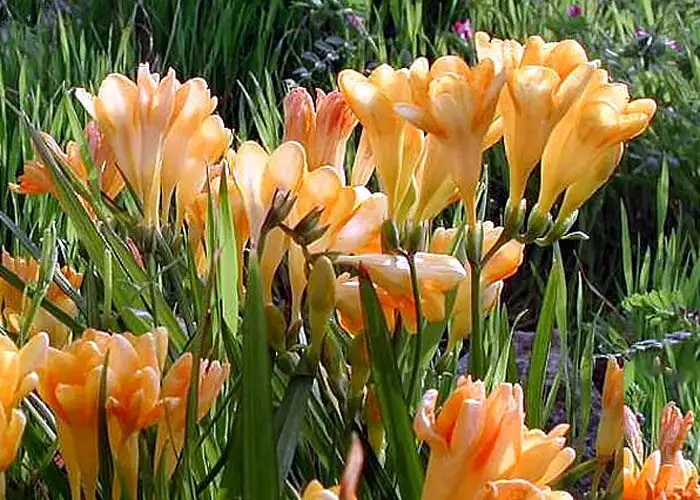
- Color range: White, cream/yellow, orange, pink, red, plus many bicolors.
- Scent: Distinctly fresh and sweet (think “spring in a vase”), best enjoyed in cool, well-ventilated rooms.
Tip: Because buds open one after another, each stem offers a long show—an ideal “slow bloom” accent for interiors.
Choose your palette: hues that flatter interiors
Freesias come in a wide spectrum, so curate by mood and light.
1) Crisp whites and creams
- Best for: Minimalist, Scandinavian, or gallery-like spaces.
- Pair with: Matte white or soft gray ceramic; ash wood; linen textures.
- Why it works: White flowers read luminous against bright windows and echo clean lines.
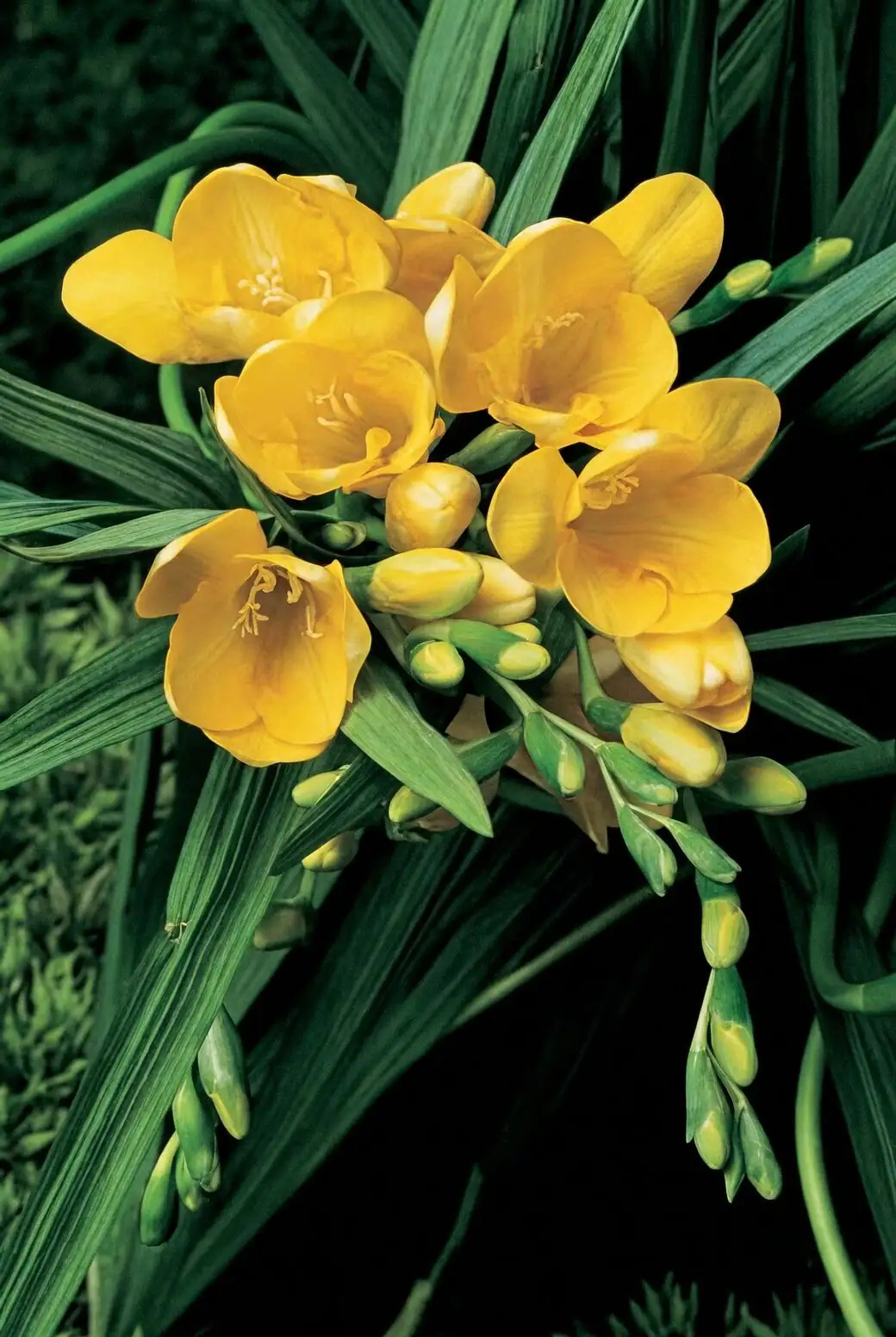
2) Sunshine yellows and warm creams
- Best for: Modern eclectic or mid-century rooms that relish a happy note.
- Pair with: Warm woods, lacquered accents, brass hardware.
- Styling idea: Echo the flower with a golden accent—think a cushion or tray in a freesia-like yellow (designers often cite golden-yellow tones similar to hex #F6C324) and balance with cool blue or violet accessories for contrast.
3) Soft pinks and blush
- Best for: Bedrooms and reading corners where you want gentle warmth.
- Pair with: Blush ceramics, oatmeal textiles, pale oak.
- Tip: Keep the rest of the vignette quiet so the flowers feel like a whisper, not a chorus.
4) Reds and rich bicolors
- Best for: Bold, contemporary spaces or dramatic dining nooks.
- Pair with: Charcoal planters, smoked glass, and burgundy throws.
- Contrast: Deep blues and cool lavenders (even paint shades like cool-lavender “Freesia” tones from decor collections) set off crimson blooms beautifully.
5) Mixed pastels
- Best for: A single low trough on a long sill. Group 5–7 corms together for a lush, florist-like presentation with a gradient of tones.
Where to place them: bright, cool, and airy
Freesias love light and crisp air. Placement makes or breaks their posture and longevity.
East-facing windowsills
- Morning sun is ideal for strong stems and vivid color.
- Cooler early-day light keeps blooms lasting longer.
South-facing windowsills (winter to spring)
- Great for bright light indoors. In stronger sun, add a sheer curtain for midday softness.
- Keep away from radiators and hot vents—prolonged warmth above ~20°C (68°F) weakens stems and shortens bloom time.
Airflow is your secret styling tool
- Crack a window on mild days or run a gentle, oscillating fan nearby.
- Space pots so leaves and spikes aren’t touching; stagnant, humid air encourages gray mold on petals.
- Avoid muggy rooms; aim for “fresh air + moderate humidity,” not a steamy bathroom vibe.

The flop-proof care formula
Think of freesia care as three dials you keep in balance: bright light, cool temps, even moisture.
- Light: Full sun to very bright light indoors. East or south windowsills are prime real estate.
- Temperature: Best around 15–20°C (59–68°F). Cool nights (about 14–16°C / 57–61°F) extend the show. Protect from frost; keep above ~5°C (41°F).
- Watering rhythm:
- During active growth and budding: keep the mix evenly moist, never soggy. Many homes: 2–3 waterings/week at peak bloom.
- As flowering winds down: reduce to about weekly, then taper over a month.
- When foliage yellows naturally: stop watering—this is dormancy.
- Feeding: Lightly feed in leafy growth. Either:
- Use a diluted balanced fertilizer every 10 days, stopping once flower stems are up, or
- Feed every 2 weeks with a bloom-leaning formula, with a very dilute phosphorus/potassium boost as spikes emerge. Avoid heavy feeding during peak bloom—it can trigger bud or flower drop.
- Stems and support: If spikes start to lean, use discreet stakes or a low, clear ring support; flop often means light is too low or temperatures are too warm.
- Air and hygiene: Do not mist open flowers (misting leaves lightly is fine if air is dry). Remove spent blooms promptly.
- Ethylene alert: Keep away from ripening fruit and gas sources; ethylene shortens flower life.
Container styling that elevates the display
- Pot size and density: A 12–15 cm (4.7–5.9 in) pot planted with 5–7 corms gives a boutique, full look.
- Planting depth: In pots, set corms 2–3 cm (0.8–1.2 in) deep in a fertile, fast-draining mix (loam + compost/leaf mold + coarse sand or perlite).
- Materials: Matte porcelain, ribbed stoneware, or terrazzo suit their tailored foliage. Always choose pots with drainage holes; use a footed saucer to keep the silhouette light.
- Color story: Let the planter echo or subtly contrast your chosen bloom hue—charcoal for brights, chalky white for pastels, warm tan for yellows.
A simple seasonal roadmap
- Early autumn (often September): Replant stored corms; start watering lightly as shoots appear.
- Winter: Brightest, coolest spot you have (around 15°C / 59°F). Water when the top of the mix begins to dry. Keep the air moving.
- Late winter to spring: Peak bloom; water evenly (often 2–3 times weekly). Enjoy the fragrance and keep temperatures cool.
- After flowering: Taper watering over ~1 month; allow leaves to yellow fully to recharge the new corm. Then stop watering.
- Dormancy (late spring–summer): Lift, separate offsets if desired, and store dry, ventilated, and warm (around 25°C / 77°F). Replant next season.
Styling freesias in lived-in rooms
- Living room: East window vignette with a stack of art books and a brass tray; keep pot 30–60 cm from heat sources.
- Bedroom: Use soft pink or white cultivars on a cool sill; crack the window for airflow while you’re out.
- Kitchen note: Tempting, but avoid the fruit bowl and oven heat—ethylene and warmth cut the show short. Opt for a cool dining nook instead.
- Workspace: A narrow pot of white freesias on a bright study sill adds pep without visual clutter.
Flower language, thoughtfully considered
Freesias are often linked with purity, trust, and thoughtful affection. In modern gifting:
- Red can suggest admiration.
- White leans romantic and pure.
- Pale yellow fits warm fondness and friendship.
These meanings grew from Victorian floriography and later marketing traditions, so treat them as poetic cues rather than fixed rules—choose the color that suits your recipient and your room.
Buying smart: plants, stems, or corms
- Potted plants: Look for fresh, narrow green leaves and sturdy stems. A spike with ~6–10 total buds/flowers where about half are just starting to open gives the longest display.
- Cut stems: Choose stems with the first flower open and at least two more buds showing color. Keep arrangements cool and away from fruit.
- Corms: Select firm, plump, clean corms with an intact brown tunic and no soft spots. Sizes ≥2 cm (0.8 in) tend to bloom more reliably.
Quick troubleshooting
- Flowers fading fast? Likely too warm. Move to a brighter-but-cooler spot (ideally around 15°C / 59°F), keep soil evenly moist, and ventilate.
- Floppy stems? Increase light (east/south sill), cool the room, and add discreet support. Overfeeding in bloom can also cause issues.
- Gray speckles on petals (Botrytis)? Improve airflow, avoid wetting flowers, space plants, and remove affected blooms.
- Buds aborting or dropping? Check for heat spikes, stale humid air, or heavy feeding mid-bloom.
- Leaves healthy but no flowers next season? Ensure bright, cool growth in winter, correct planting depth, and that corms matured fully before dormancy.
Treat Freesia × hybrida like a fragrance-forward sculptural piece: give it the brightest, coolest seat by the window, circulate fresh air, and keep moisture steady. In return, it delivers weeks of color, perfume, and poise—your windowsill’s most elegant guest.