

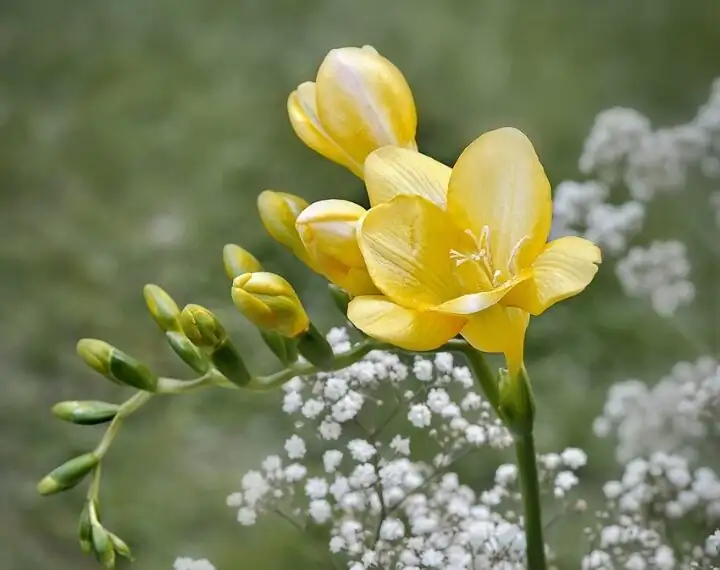
Imagine a perfume that blooms in slow motion. That’s Freesia × hybrida: a cool-season charmer that lines its flowers neatly along one side of a gracefully arching spike, then opens them one by one for a long, elegant show. Keep it cool, give it bright light, and don’t let it mingle with ripening fruit—freesia is fabulous but particular.
Corm, not bulb: why it matters (and how to win with it)
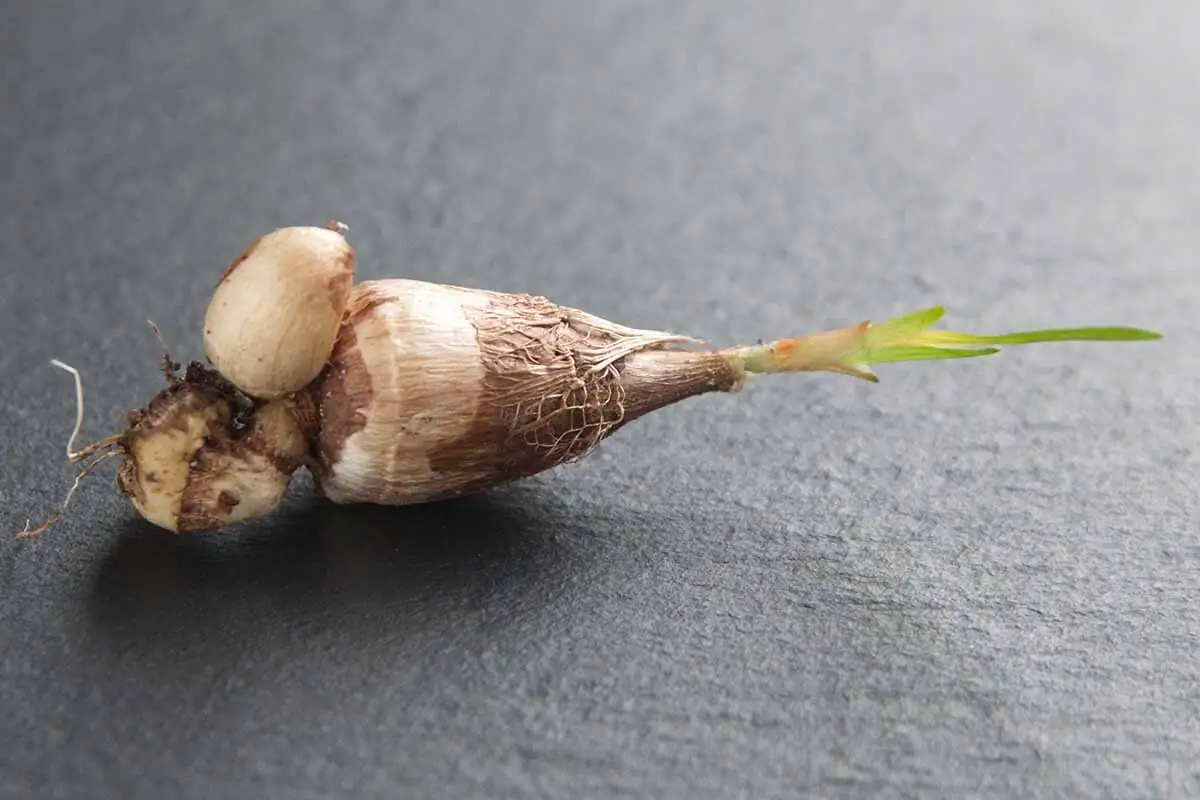
- Freesia grows from a corm—a solid, swollen stem with a papery tunic—not a layered bulb like an onion.
- Each growing season, the “mother” corm makes a fresh replacement corm on top and several baby offsets (often 3–5 cormlets). That’s your built‑in propagation plan.
- Care tip that follows from corm-logic: fast drainage is essential. Soggy soil suffocates corms and invites rot; a rich but airy mix keeps them happy.
The signature look: one-sided, arching, and wonderfully sequential
- Flower spikes carry 6–10 strongly fragrant, funnel-to-trumpet blooms along just one side of the stem—nature’s tidy little queue.
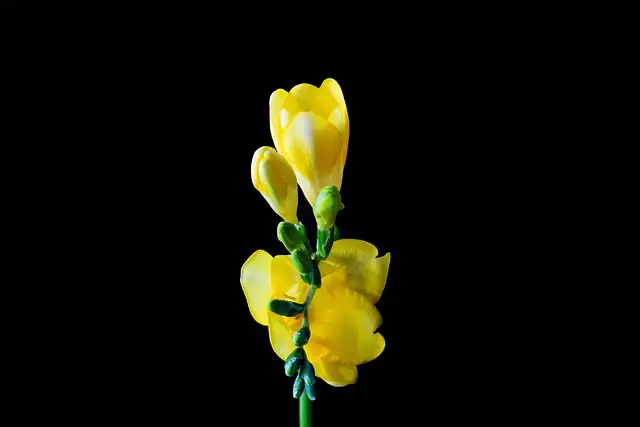
- Buds open in sequence from the base upward, which is why freesia makes such a long-lasting spectacle in pots and vases.
- Colors are a paintbox: white, cream/yellow, orange, pink, red, and bicolors, all set off by slim, swordlike leaves.
Cool-room superpowers: the fast track to better blooms
Freesia loves sweater weather indoors.
- Target temperatures: days around 18–20°C (64–68°F), nights about 14–16°C (57–61°F).
- What you get: sturdier stems, richer perfume, and a longer run of blooms.
- What to avoid: prolonged warmth above ~20°C (68°F) makes stems floppy and the display short. Keep plants away from heaters, hot vents, and muggy, still air.
Ethylene: the invisible gas that changes everything
- During bloom, ethylene is the show-shortener. It can trigger bud drop, petal transparency, and faster fade.
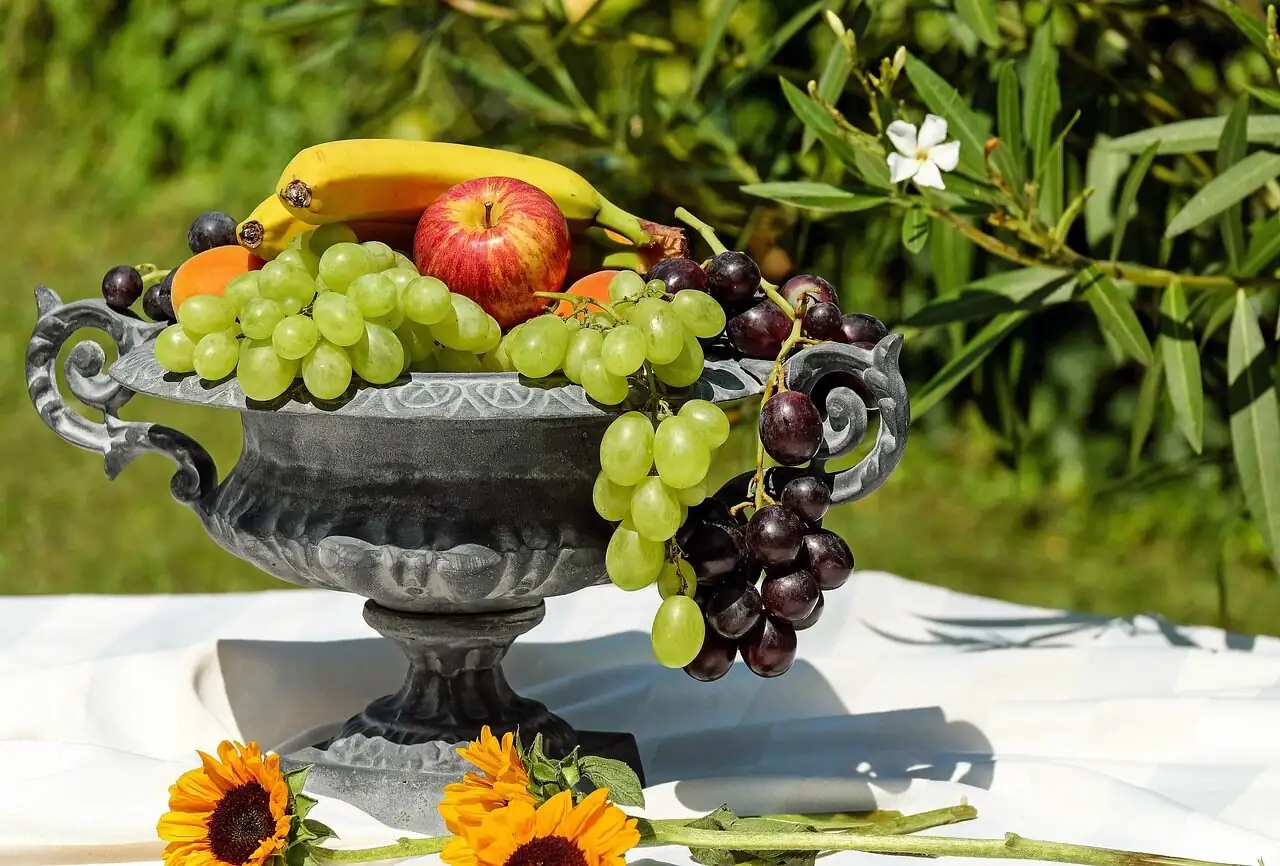
- Everyday sources: ripening fruit (bananas, apples, avocados), aging flowers, and exhaust. Keep freesia away from fruit bowls and crowded bouquets.
- Pro-tip from the forcing world: before planting, specialized ethylene treatments can nudge dormant corms to sprout. That’s a grower’s tool—not something to use near flowering plants.
Quick-start care recipe
- Light: very bright light to full sun. Indoors, an east or south window is ideal. Bright balcony is great if protected from frost and hot, harsh midday sun.
- Temperature: keep it cool (best around 15–20°C / 59–68°F). Protect from frost; for safety, keep above ~5°C (41°F).
- Water: evenly moist during active growth and bud formation—never waterlogged. As flowering winds down, reduce; when foliage yellows, stop and let corms rest.
- Humidity & airflow: moderate humidity with fresh air. Still, muggy rooms encourage gray mold (Botrytis).
- Soil: fertile but fast-draining (loam + compost/leaf mold + coarse sand or perlite). Drainage is nonnegotiable.
- Feeding: lightly during leafy growth.
- Option A: diluted balanced fertilizer about every 10 days, then stop once flower stems are up.
- Option B: every 2 weeks with a bloom‑leaning formula (higher P/K), plus a very light P/K boost as spikes emerge.
- Avoid heavy feeding during peak bloom.
- Support: stake or corral stems early if light is less than ideal—warmth and low light are classic “flop-makers.”
- Hardiness: frost‑tender outdoors; best year‑round in mild climates (roughly USDA 9–11). Elsewhere, use pots or lift and store corms dry during dormancy.
Potting, timing, and multiplying
- Best window-pot: 12–15 cm (4.7–5.9 in) diameter with 5–7 corms planted 2–3 cm (0.8–1.2 in) deep.
- In-ground planting depth: about 3–4 cm (1.2–1.6 in) in well‑drained soil.
- Season rhythm: active growth → bloom (late winter to spring) → dry dormancy.
- After bloom: keep leaves until they naturally yellow—they’re recharging next season’s corm. Then stop watering and let the pot dry.
- Storage: keep dormant corms dry, ventilated, and warm around 25°C (77°F).
- Replant: early autumn (often September). Offsets (cormlets) can be separated and grown on to flowering size in future seasons.
Calendar at a glance
- Winter: brightest, coolest spot you can manage (~15°C / 59°F). Water when the top mix begins to dry.
- Spring: peak bloom; water regularly (often 2–3× weekly), keep cool and airy.
- Late spring to summer: taper, then stop watering as leaves yellow; store corms dry.
- Early autumn: replant, water lightly as shoots appear, then increase as growth accelerates.
Buying better freesias
- Potted plants: look for fresh, narrow green leaves and sturdy stems. A spike with 6–10 buds where about half are just opening gives the longest show.
- Cut stems: choose when the first flower opens and at least two more buds show color.
- Corms: pick firm, plump, clean corms with intact brown tunics, no soft spots. Around 2 cm (0.8 in) wide or larger tends to flower more reliably.
Vase-life hacks for cut spikes
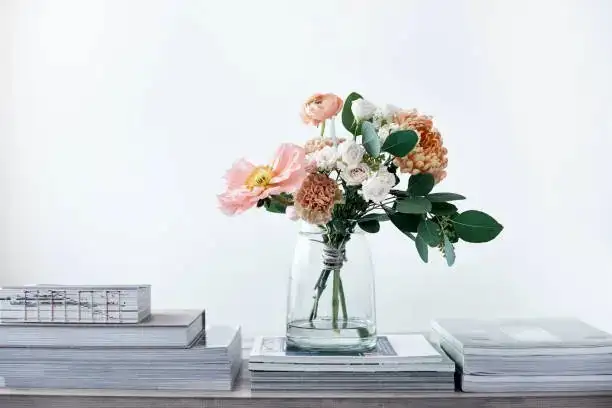
- Display cool and bright, not hot or drafty. Cooler rooms stretch the show.
- Trim stems, use clean vases, and refresh water regularly. Keep away from fruit bowls and wilting flowers.
- Freesia opens from the bottom up—enjoy the sequence and pluck spent blooms to keep things tidy.
Size and styling notes
- In pots: typically 20–45 cm (8–18 in) tall; clumps spread 10–20 cm (4–8 in), depending on planting density and cultivar.
- Pairing ideas: cluster a single color for a crisp, modern look, or mix complementary pastels for a spring‑indoors vibe.
Troubleshooting the usual suspects
- Flowers fading fast or stems flopping? It’s probably too warm. Move to a cooler, brighter perch and keep soil evenly moist (not wet).
- Buds not opening or mold on petals? Improve airflow and avoid overhead misting of open flowers; keep humidity moderate.
- Mushy corms or leaf streaking? Overwatering and poor drainage cause rot; discard badly affected corms. If you suspect virus (mosaic-like mottling), remove the plant promptly.
Symbolism and “flower language”
Freesia is commonly linked with purity, trust, and thoughtful affection—meanings that echo 19th‑century floriography where delicate, sweetly scented flowers signified sincerity and refined sentiment. Modern gifting keeps a color twist:
- Red: admiration
- White: romantic love
- Pale yellow: warm fondness and friendship
As with most “flower language,” these meanings are cultural, not botanical certainties—wonderful for storytelling, but they vary by region and tradition.
Fast, fun facts to wow your plant friends
- Corms, not bulbs: freesias store energy in solid corms and naturally alternate between an active season and a dry rest.
- Sequential bloomers: buds along that one‑sided, arching spike open in order, extending the display.
- Coolness counts: a bright, cool room can double the delight compared with warm conditions.
- Ethylene alert: keep flowering freesias far from ripening fruit—ethylene shortens the show.
- Multipliers: a single mature corm often makes several baby cormlets each year—your future bouquets in miniature.
Quick answers
- Why are my freesia flowers wilting so quickly?
- They’re too warm. Aim for about 15°C (59°F), bright light, even moisture, and good airflow.
- How should I care for a new freesia at home?
- Park it in very bright, cool light; keep the mix evenly moist; avoid wetting open blooms; and keep it away from heaters and ripening fruit.
- How do I pick the best plant or corm?
- Plants: sturdy stems with 6–10 buds, half just opening. Corms: firm, clean, at least ~2 cm wide, no soft spots.
One last hint: think “fresh air, cool sun, quick drainage.” Give Freesia × hybrida that trio, and you’ll get a fragrant, slow‑motion bloom parade that feels like spring—right on your windowsill.