

Freesia × hybrida is the cool-season charmer that perfumes a room and lifts winter spirits—right up until warmth, stale air, or soggy soil team up to flop its stems or fuzz its blooms with gray mold. The good news? A few simple cultural tweaks—sanitation, spacing, fast-draining mixes, and smart watering—solve 90% of problems before they start. Here’s your fast, friendly troubleshoot for rock‑steady spikes and long, fragrant bloom.
Meet your plant (and its sweet spot)
- Who it is: Freesia × hybrida, a corm-forming member of the Iridaceae. Origin traces to southern Africa; most modern varieties are hybrids.
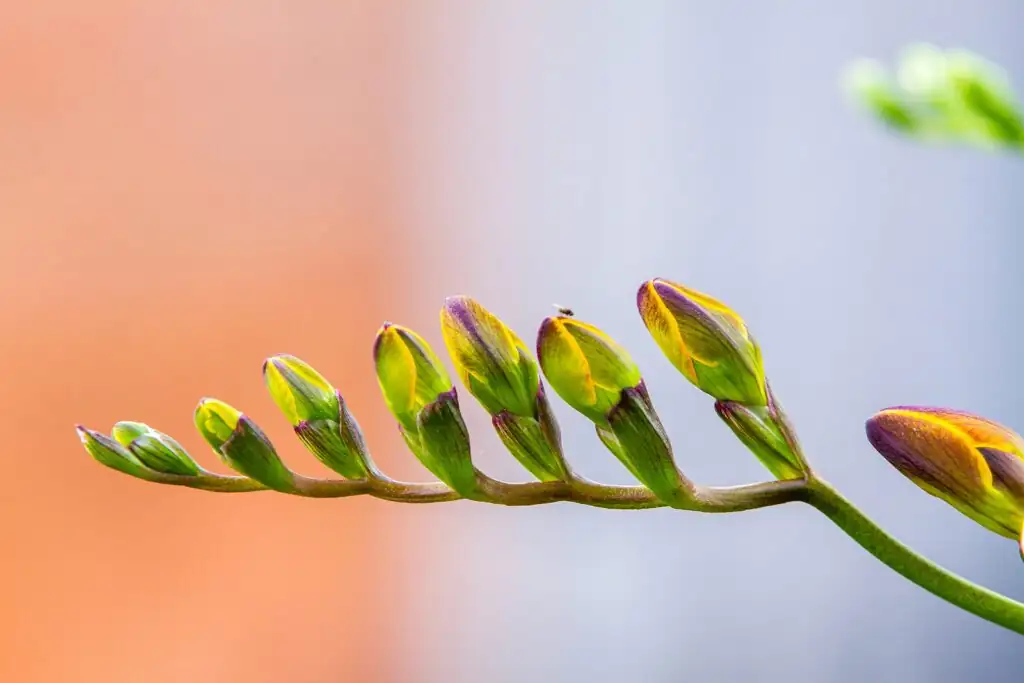
- What it does: Narrow, sword-like leaves and elegant arching spikes bearing 6–10 funnel-shaped, powerfully fragrant blooms in white, yellow, pink, red, and bicolors.
- Size: Typically 20–45 cm (8–18 in) tall in pots.
- Season: A classic cool-season bloomer—late winter into spring.
- Where it thrives:
- Light: Full sun to very bright light. Indoors, a sunny east/south window or bright balcony.
- Temperature: Prefers cool days around 18–20°C (64–68°F) and nights 14–16°C (57–61°F). Prolonged warmth above ~20°C (68°F) leads to weak, floppy growth and shorter bloom.
- Air: Fresh, moving air—stuffy rooms invite gray mold.
- Soil: Fertile but fast-draining. Think loam + leaf mold/compost + coarse sand or perlite.
- Hardiness: Frost-tender; keep above ~5°C (41°F). Brief near‑freezing dips only if well protected.
Quick diagnosis: four common freesia woes
1) Heat-weak, floppy stems
- What you see: Arches losing their spring, buds and blooms that blast or fade too fast.
- Usual trigger: Warm rooms and/or insufficient light; heavy feeding can also push overly soft growth.
2) Botrytis (gray mold) in stuffy rooms
- What you see: Fuzzy gray patches on petals/leaves, browning flowers, mushy spots, and an occasional puff of gray spores when touched.
- Usual trigger: Cool + damp + stagnant air, spent petals left on foliage, and overhead splashing.
3) Corm rots (soft/sclerotium rots)
- What you see: Sudden leaf yellowing, collapse at the base, sour smell; corms feel soft or show tan/brown decay.
- Usual trigger: Waterlogged mix, poor drainage, deep planting, or keeping soil wet during dormancy.
4) Suspected virus (mosaic-type)
- What you see: Streaked or mottled leaves, distorted growth, color breaking on petals; plants lag behind neighbors.
- Usual trigger: Introduced on infected stock; spread by sap on tools (and sometimes insects). No cure.
The prevention playbook: four essentials
Sanitation
- Start clean: Choose firm, plump, unblemished corms with intact brown tunics (≥2 cm wide bloom best).
- Keep tools tidy: Wipe pruners between plants; bag and bin infected debris—don’t compost Botrytis.
- Deadhead promptly: Remove spent blooms before they shatter onto leaves.
- Off-season care: Store dormant corms dry, ventilated, and warm (~25°C / 77°F).
Spacing
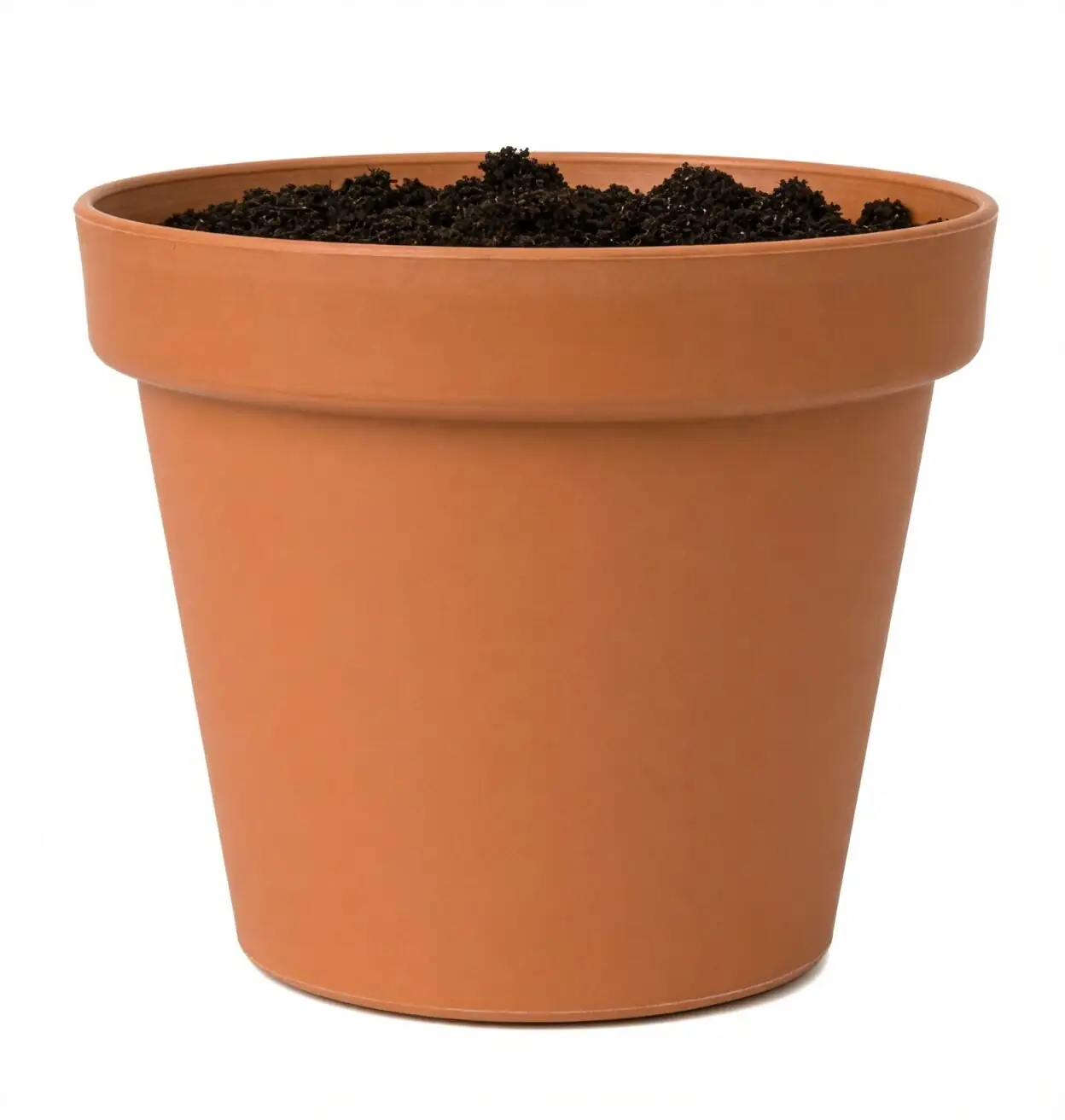
- Don’t cram the pot: In a 12–15 cm (4.7–5.9 in) pot, plant about 5–7 corms, leaving a little breathing room between them so air can move at the base.
- Around the plant: Give your pot a bright, airy perch away from curtains and crowded plant shelves.
Substrate (fast-draining mix)
- Blend for drainage: ~50–60% quality potting loam, 20–30% leaf mold/compost, 20–30% coarse sand or perlite.
- Depth matters: Plant corms 2–3 cm (0.8–1.2 in) deep in pots; ensure pots have open drain holes and a free-draining saucer.
Smart watering
- During active growth/budding: Keep evenly moist, never soggy. Many homes need watering 2–3× weekly near peak bloom.
- After flowering: Taper over ~1 month; then stop when leaves naturally yellow and dry.
- Dormant: Keep completely dry.
- Re‑start (autumn shoots): Water lightly about weekly, increasing as growth accelerates.
- Tactics: Water the mix, not the flowers; aim for morning; empty saucers; avoid overhead splashing that lingers on petals and leaves.
Fix it fast: targeted remedies
Heat‑weak stems
- Act now
- Move cooler: Aim for ~15–18°C (59–64°F) with the brightest light you can provide.
- Add airflow: Open a window or run a gentle fan to firm tissues.
- Support: Stake lightly; rotate the pot so spikes grow straight.
- Ease off fertilizer: Heavy feeding can soften growth.
- Prevent next time
- Grow cool from the start; keep away from heaters and hot vents.
- Plant in a bright, sun-washed window and avoid ethylene sources (ripening fruit) that shorten bloom life.
Botrytis (gray mold)
- Spot it early
- Fuzzy gray growth on aging petals/leaves; brown flecks that rapidly blur with mold; soft rot on tender tissues.
- Act now
- Isolate the pot. Prune off affected parts back to healthy tissue; bag and trash.
- Improve conditions: More light, gentle airflow, and let the top layer of mix dry slightly between waterings.
- Clean up: Remove fallen petals/leaves daily; sterilize tools after use.
- Prevent next time
- Avoid overhead watering and misting flowers; if air is dry, lightly mist foliage only, not blooms.
- Maintain “fresh air + moderate humidity,” not muggy rooms.
- If you routinely battle gray mold, preventative fungicides exist; use only as labeled and primarily as prevention, not cure.
Corm rots
- Spot it early
- Wilting despite wet soil; base collapse; foul smell; corms feel mushy or show brown lesions.
- Act now
- Unpot to inspect. Discard badly rotted corms and any sour, waterlogged mix.
- Repot survivors into a fresh, fast-draining blend; replant at proper depth.
- Reset watering to “evenly moist, never wet,” and improve drainage (pot feet, airy spot, bright light).
- Prevent next time
- Use coarse aeration (perlite/sand), free-flowing pots, and water by need, not routine.
- Keep completely dry in dormancy; store corms warm and ventilated.
Suspected virus (mosaic)
- Spot it
- Irregular mottling, streaks, distorted leaves, or odd petal color breaks that persist while neighbors are normal.
- Act now
- Rogue the plant: Bag and discard the entire plant and its corms. Sanitize nearby surfaces and tools.
- Prevent next time
- Start with reputable stock; sanitize blades between plants; keep pests in check and avoid sap transfer.
Planting for sturdy spikes
- Pot size: A 12–15 cm pot suits a cheerful cluster; plant 5–7 corms 2–3 cm deep.
- Orientation: Place corms slightly apart rather than shoulder-to-shoulder.
- Support: Insert discreet stakes early; tie loosely as stems elongate.
- Placement: Brightest, coolest indoor spot; protect from midday scorch on hot balconies.
Water and feed, season by season
- Growth to bud set
- Water: Keep evenly moist.
- Feed: Light feeding during leafy growth. Options:
- Diluted balanced fertilizer about every 10 days, then stop once flower stems emerge; or
- Every 2 weeks with a bloom‑leaning formula, with a very dilute phosphorus/potassium boost as spikes appear.
- Peak flowering
- Water: Often 2–3× weekly indoors; never let the mix sour.
- Feed: Go easy—heavy feeding now can prompt bud/flower drop.
- After bloom to dormancy
- Water: Taper over ~1 month; stop when leaves yellow and dry.
- Care: Let the plant redirect energy to forming a new corm and cormlets.
- Dormant to replanting
- Storage: Dry, airy, ~25°C (77°F).
- Replant: Early autumn as shoots stir; resume light watering about weekly, increasing with growth.
- Winter
- Keep cool (~15°C / 59°F), bright, and airy; water when the top mix begins to dry.
Cut-flower and display smarts
- Buying: Choose stems with the first flower open and at least two more buds showing color.
- At home: Keep cool and bright, away from heaters and ripening fruit (ethylene shortens bloom life).
- Watering: Avoid wetting open flowers; if air is dry, mist leaves lightly instead.
Propagation and repotting
- Offsets: Each season, a new replacement corm forms plus 3–5 cormlets. Separate after dormancy; replant in early autumn.
- Refresh the mix every 1–2 years to maintain drainage and vigor.
Safety note
- Not widely listed as highly toxic, but treat corms and foliage as potentially irritating if chewed. Keep out of reach of children and pets; heavy fragrance can bother sensitive folks in closed rooms.
Flower language: the meaning behind the perfume
Freesias are often linked with purity, trust, and thoughtful affection—a legacy of Victorian floriography, where scents and colors carried coded messages. Today:
- Red suggests admiration.
- White suits romantic love.
- Pale yellow fits warm fondness and friendship.
These associations are cultural rather than botanical, but they persist because freesia’s clean scent and luminous colors naturally read as sincere and uplifting.
Handy checklist for trouble‑free freesias
- Light and temp: Bright sun; aim for 18–20°C (64–68°F) days and cooler nights.
- Air: Gentle, consistent airflow; no stuffy corners.
- Mix: Fertile, fast‑draining; plant 2–3 cm deep.
- Water: Evenly moist in growth; never soggy; fully dry in dormancy.
- Feed: Lightly in leafy phase; ease off once spikes rise.
- Hygiene: Remove spent petals, sanitize tools, bin diseased material.
- Spacing: Don’t overpack pots; keep foliage uncrowded.
- Storage: Lift or rest dry and airy around 25°C (77°F).
- Red flags: Floppy stems (too warm/low light), fuzzy gray spots (Botrytis), mushy corms (rot), mottled foliage (virus—discard).
With cool air, bright light, and a crisp, free‑draining root run, Freesia × hybrida rewards you with weeks of perfumed color—and leaves you with a pocketful of baby corms to multiply the show next season.