

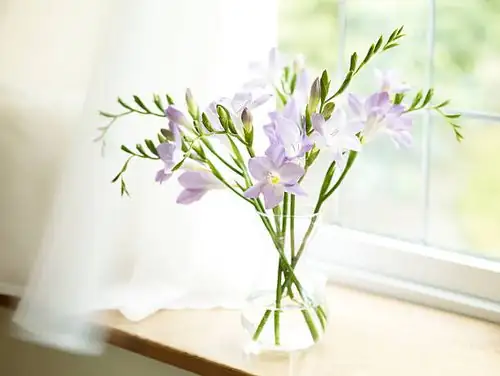
Freesias are drama queens in the best way: sweet perfume, watercolor shades, and elegant, arching spikes that open bloom by bloom. But to get sturdy stems and a long, lingering show, you don’t need drama—you need balance. Think of your care like tuning three dials: bright light, cool temperatures (15–20°C), and even moisture. Add fresh air, gentle support, and smart dormancy timing, and your Freesia × hybrida will reward you with weeks of graceful color.
Here’s your lively, step-by-step playbook.
Meet Freesia × hybrida (the quick tour)
- Origin: Southern Africa (especially South Africa)
- Habit: Corm-forming perennial (not a true bulb); active cool-season grower, then dormant
- Size: Typically 20–45 cm tall in pots, spreading 10–20 cm depending on planting density and cultivar
- Look: Narrow, sword-like leaves; arching flower spikes with 6–10 fragrant, funnel-to-trumpet blooms that open in sequence
- Bloom season: Late winter to spring (often winter to early spring indoors, depending on planting date and temperature)
- Colors: White, cream/yellow, orange, pink, red, plus many bicolors
- Vibe: Loves bright light and cool, airy rooms; heat and sogginess cause flopping and rot
- Bonus: A classic, long-lasting cut flower when kept cool
The core trio for stronger stems and longer bloom
1) Light: bright to full sun, not harsh heat
- Best spots indoors: A sunny east- or south-facing windowsill or bright balcony.
- Why it matters: Low light = stretched, floppy stems. Bright light fuels upright growth and more buds.
- Pro tips:
- Rotate the pot weekly so spikes grow evenly.
- In warm, intense sun, give light midday protection to keep temperatures cool.
2) Temperature: keep it cool (15–20°C)
- Sweet spot: Days around 18–20°C and nights around 14–16°C.
- What to avoid: Prolonged warmth above ~20°C shortens flowering and weakens stems.
- Cold caution: Frost-tender; keep above about 5°C for safety, though brief near-0°C exposure may be tolerated if protected.
- Placement hacks:
- Park away from heaters and hot vents.
- A slightly cracked window or a gentle fan keeps air fresh without chilling.
3) Moisture: even, never soggy
- During active growth and budding: Keep the mix evenly moist.
- Typical indoor rhythm at peak bloom: water about 2–3 times per week.
- As flowers wind down: Reduce to roughly once weekly.
- After flowering: Over about a month, taper off; when foliage yellows and dries, stop watering completely for dormancy.
- Watering finesse:
- Use your finger to check the top 2–3 cm. Water when it’s just beginning to dry.
- Avoid wetting open flowers; if humidity is low, lightly mist leaves instead of blooms.
Air, space, and support = straighter spikes
Fresh airflow keeps petals pristine
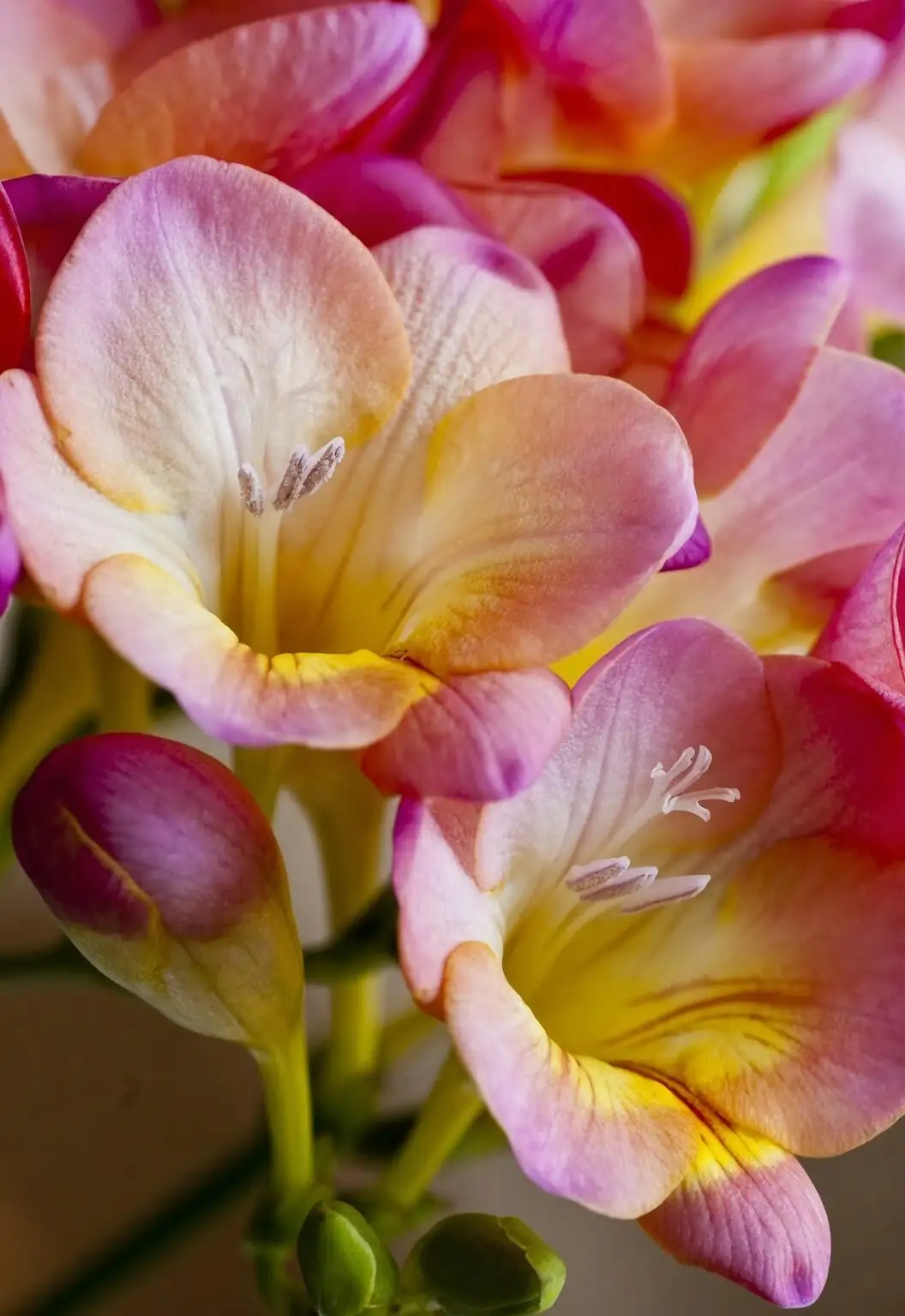
- Freesias like “fresh air + moderate humidity,” not muggy rooms.
- Good airflow discourages gray mold (Botrytis), especially in still, humid air.
- Simple moves:
- Use a small oscillating fan set to low across the room.
- Don’t crowd pots; allow a few centimeters of breathing room.
- Water early in the day so surfaces dry by evening.
Staking: subtle support, not a corset
- When to stake: As stems elongate—don’t wait for a flop.
- How:
- Insert slender bamboo stakes or a ring stake early to avoid root damage.
- Use soft ties (florist tape, twine, or Velcro) and make loose figure‑8 ties to avoid pinching.
- For larger displays, a discreet flower-mesh grid set just above the foliage keeps spikes upright while allowing that signature graceful arch.
Potting mix and planting depth that corms love
- Drainage is everything. Aim for a fertile but fast-draining blend:
- Loam or quality potting mix + leaf mold/compost + coarse sand or perlite.
- Potting recipe:
- Pot size: 12–15 cm diameter with 5–7 corms for a full, floriferous look.
- Depth: In pots, set corms 2–3 cm deep; in the ground, 3–4 cm.
- Spacing: Nestle corms a few centimeters apart, pointed end up.
- After planting: Water lightly to settle; then maintain even moisture as shoots appear.
- Top-dress tip: A thin layer of grit on the surface reduces splash and discourages rot.
Smart feeding builds “muscle,” not flab
- Freesias appreciate light feeding during active leafy growth to strengthen stems and prep for bloom.
- Two practical approaches (choose one):
- Option A: Apply a diluted, balanced fertilizer about every 10 days during leafy growth, then stop once flower stems are up.
- Option B: Feed about every 2 weeks with a bloom-leaning formula (higher phosphorus and potassium), with a very dilute P/K boost (e.g., monopotassium phosphate) as spikes start to emerge.
- Avoid heavy feeding during peak flowering, which can encourage bud or flower drop.
The season playbook (timed for sturdier stems and longer bloom)
Early autumn (often September): reset and start
- Replant last season’s corms (or new ones) into fresh, free-draining mix.
- Water lightly as shoots appear (about weekly).
- Place in the brightest, coolest spot you have.
Winter: cool and bright is your superpower
- Aim for ~15°C with maximum indoor light.
- Keep airflow active; avoid heaters and hot, dry blasts.
- Water when the top mix just begins to dry; feed lightly if following a growth-phase plan.
Late winter to spring: the main show
- Maintain cool temps and strong light to prevent flopping.
- Water evenly, often 2–3 times weekly at peak bloom.
- Stake gently as stems lengthen.
- Deadhead spent flowers to tidy the plant and direct energy into corm development.
- Keep away from ethylene sources (ripening fruit, some gas appliances), which can shorten flower life.
After flowering (about a month): the graceful wind-down
- Gradually reduce watering; keep leaves until they yellow naturally (they’re recharging the new corm).
- When foliage dries, stop watering and let the plant rest.
Late spring to summer: dormancy
- Lift and separate offsets (cormlets) if desired.
- Store corms dry and airy around 25°C with ventilation.
- Label by color/cultivar to plan next season’s display.
Buy right to bloom right
- Potted plants: Look for fresh, narrow green leaves and sturdy stems. A spike with 6–10 buds where about half are just beginning to open offers the longest show.
- Corms: Choose firm, plump, clean corms with an intact brown tunic and no soft spots. Sizes around 2 cm wide or more bloom more reliably.
- Cut stems: For vases, buy when the first flower is opening and at least two more buds show color.
Cut-flower longevity hacks
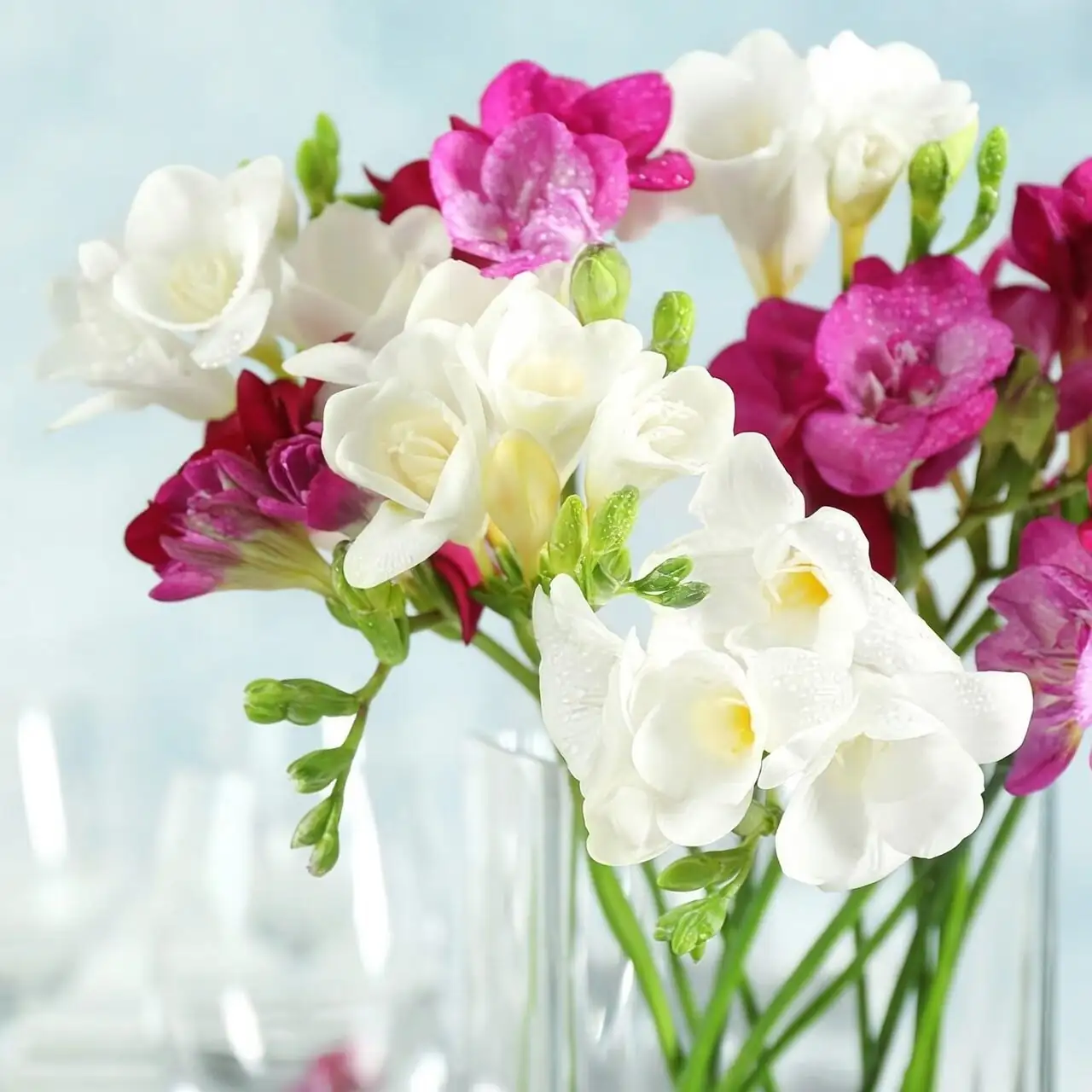
- Recut stems at an angle under water and place in a clean vase.
- Keep cool and bright but out of direct hot sun.
- Change water every 1–2 days; remove spent blooms.
- Keep away from ripening fruit and hot drafts.
Troubleshooting: sturdier stems, longer bloom
- Stems flopping or leaning
- Likely causes: Low light, warmth above ~20°C, overcrowding, or soggy mix.
- Fix: Move to brighter, cooler conditions; improve drainage; add gentle staking; ensure airflow.
- Flowers fading fast or wilting quickly
- Likely causes: Warm temperatures and stale air.
- Fix: Target ~15–20°C with fresh airflow; keep soil evenly moist (not wet); protect from heat sources.
- Buds aborting or dropping
- Likely causes: Heat, erratic watering, heavy feeding during bloom, or ethylene exposure.
- Fix: Cool, even conditions; steady moisture; stop heavy feeding once stems rise; keep away from ripening fruit.
- Gray mold on petals
- Likely causes: Still, humid air and wet surfaces.
- Fix: Increase ventilation, space plants, water at soil level early in the day, remove affected parts promptly.
- Leaves yellowing early or a rotten smell
- Likely causes: Overwatering/poor drainage; corm rot.
- Fix: Let the top mix dry slightly between waterings; repot into faster-draining mix; discard badly rotted corms.
- No blooms this round
- Likely causes: Small/immature corms, insufficient light, too-warm growing temps, or over‑nitrogen feeding.
- Fix: Start with larger corms, maximize brightness, keep cool, and use light, bloom-supportive feeding only during leafy growth.
Placement and hardiness quick notes
- Indoors: Bright, cool rooms like a sunny living room, study, or bedroom; avoid heaters/AC blasts.
- Outdoors in mild climates: Best in frost-free zones roughly USDA 9–11; protect from strong midday heat and ensure good airflow.
- Frost: Keep above about 5°C for safety; freesia is frost-tender.
Safety and sensitivities
- Generally not listed as highly toxic, but treat corms and foliage as potentially irritating if chewed. Keep out of reach of children and pets.
- The strong fragrance can bother scent-sensitive folks; provide ventilation.
Flower language and the story behind it
Freesias carry a long association with purity, trust, and thoughtful affection. Their name honors a friendship: botanist Christian Ecklon named the genus for his friend, Dr. Friedrich Freese—hence the common link to loyalty and fond regard. In gifting traditions, colors are often read this way:
- White: romantic love, purity, and innocence
- Red: admiration
- Pale yellow: warm fondness and friendship
A quick reality check: flower language is cultural poetry, not botany. The plant’s fragrance and clean, elegant form inspired these meanings over time—they’re wonderful for messages, but they won’t change how you grow the plant. For blooming success, stick to the practical triad: bright light, cool temps, even moisture—then layer on airflow, light staking, and dormancy timing.
Quick FAQ
- Why are my freesia flowers wilting so quickly?
- Warmth is the usual culprit. Move to a brighter-but-cooler place (around 15°C if possible), keep the soil evenly moist (not wet), and maintain fresh airflow.
- Do I need to refrigerate corms to get blooms?
- No. Freesias naturally alternate between active growth and a dry dormancy. Store corms warm and dry (~25°C) with ventilation in dormancy, then replant in early autumn.
- Can freesias take frost?
- They’re frost-tender. For safety keep above about 5°C; brief near‑freezing exposure may be tolerated if protected, but don’t risk it with potted displays.
Master the cool-bright-even trifecta, let fresh air flow, give a little support, and time dormancy right—you’ll turn those elegant freesias into a long-running, sweet-scented performance.