

If you’ve ever watched a Dancing Lady Orchid sway on a branch after a summer mist, you already know: Oncidiums were born to be mounted. Their roots want air, their pseudobulbs want a steady rhythm of moisture (not a swamp, not a desert), and their sprays of tiny “dancers” look spectacular lifted off the pot. Here’s a practical, field-tested guide to mounting Oncidium species and hybrids so roots plump up instead of shrivel.
Why mount Oncidiums?
- They’re naturally epiphytic, clumping along branches with exposed, fast-drying roots.
- Mounted culture gives superb airflow and reduces rot risk.
- Spikes display beautifully, and new growths can ramble naturally along a slab.
Caveat: mounted plants dry faster than potted ones. Success comes from choosing the right mount, tying lightly, using minimal moss, and dialing in watering, humidity, and airflow.
Choosing the right mount
Best materials
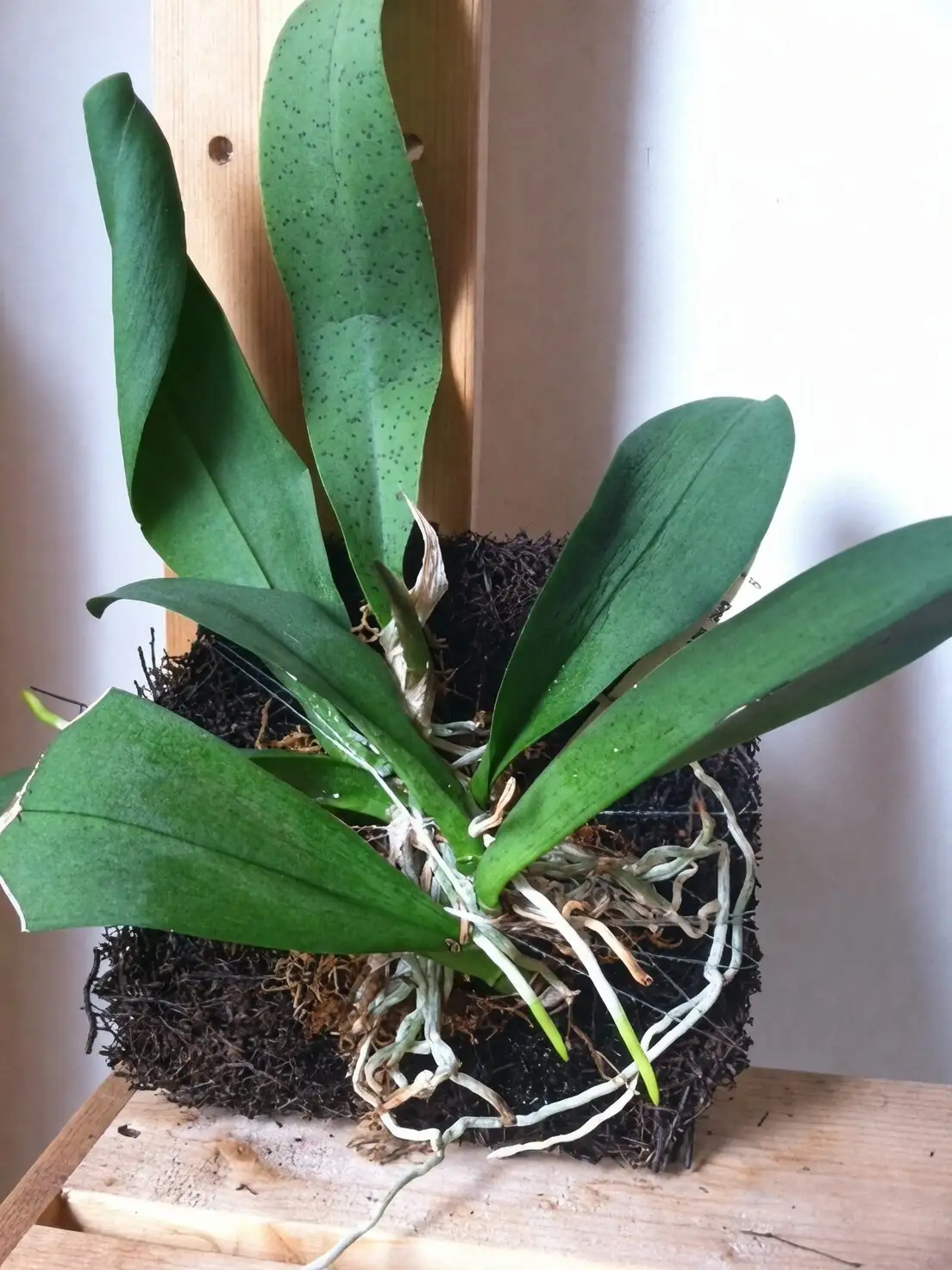
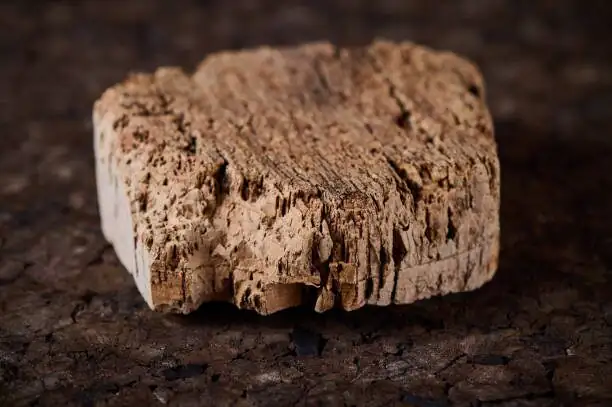
- Cork bark (top pick): Durable, rot-resistant, and textured so roots grip easily. It dries at a moderate pace—ideal for Oncidium’s “moist but airy” preference.
- Hardwood slab (e.g., oak, manzanita): Long-lasting and attractive; dries a bit faster than cork depending on thickness.
- Tree-fern plaque: Excellent root grip and moisture balance; dries faster than cork. Great in moderately humid rooms with good watering habits.
Avoid: Softwoods that shed resin or decay quickly; mystery driftwood that stays soggy or flakes apart.
Size and orientation
- Size up for the future: choose a slab that allows at least 2–3 years of horizontal run for new pseudobulbs.
- Orient for drainage: mount vertically or at a slight tilt so water doesn’t pool in leaf axils.
- Leave “runway” space in front of the newest growth so the rhizome can keep marching forward.
Prepping plant and mount
- Hydrate first: soak the orchid (and the mount) in room‑temperature water for 10–15 minutes so roots are flexible and less prone to cracking.
- Groom gently: remove only dead roots (hollow, mushy, or papery). Keep healthy, firm roots—even if they look wild.
- Mind the growth direction: on sympodial Oncidiums, position the oldest pseudobulbs toward the top/back and the leading growth pointing outward with space to expand.
Tying and the “minimal-moss” wrap
The light-touch method
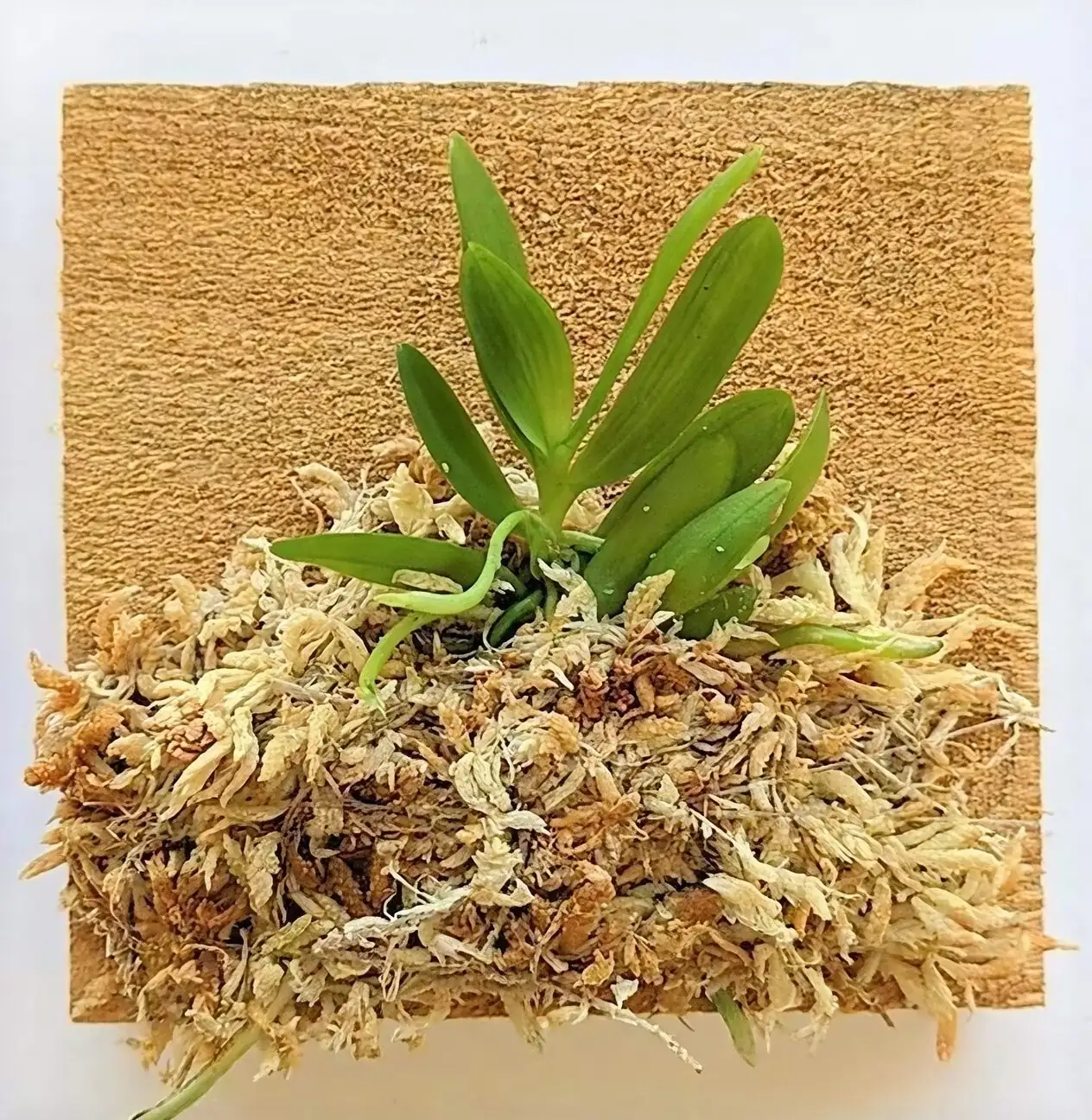
- Moss: use just a wisp of long-fiber sphagnum as a “humidity scarf,” not a blanket. Think thin halo around the root zone, not a tight cocoon. This prevents smothering and lets roots breathe.
- Tie-in: use soft plant ties, waxed cotton, fishing line, or biodegradable jute. Secure firmly enough that the plant doesn’t wobble, but never so tight that ties cut into tissue.
- Anchor points: make two gentle straps—one across the rhizome between bulbs, one lightly over the root pad. If there’s a fresh lead, add a tiny loop to steady it.
- Aftercare: as roots grab the mount (often in 6–12 weeks), snip or loosen ties to avoid girdling.
Pro tip: if your home is very dry, add a second ultra-thin veil of moss only where active root tips are growing. Keep edges open so new roots can explore the bark.
Light, airflow, and placement
Light that fuels blooms without scorch

- Bright, filtered light to gentle part sun is the sweet spot.
- Indoors: an east window is ideal; a bright south/west window with sheer curtains also works.
- Outdoors (warm seasons): provide seasonal shade—about 30% in late spring/early summer, ~50% in midsummer, and 20–30% in autumn. Avoid harsh midday sun.
Airflow that dries in hours, not minutes
- Aim for a soft, constant breeze so foliage dries within a few hours after watering.
- Use an oscillating fan on low; avoid blasting spikes or creating a wind tunnel that desiccates buds.
Watering and humidity for mounted Oncidiums
These orchids have water-storing pseudobulbs—but they’re still sensitive to drought. Mounted roots must not stay bone-dry for long stretches during active growth and budding.
Targets at a glance
- Humidity: moderate is best—about 40–60%, with many homes aiming near 50–60%. If you can keep a steady 60–65% alongside excellent airflow, root tips often stay especially plump.
- Rhythm: thorough wetting, then allow the mount to dry quickly to “just dry” before rewatering. Don’t let it stay crispy-dry for days on end.
How often to water a mounted plant
Frequency depends on light, heat, airflow, and mount thickness. Use these as starting points, then fine-tune:
- Indoors, bright window, spring–summer: water once daily in warm, bright conditions; every 1–2 days if your home is cooler or humidity is steadier.
- Outdoors (warm, frost-free periods): often daily; in hot, breezy weather, you may need a morning soak plus a light late‑afternoon rewet of the mount—not the foliage or blooms—if it’s drying extremely fast.
- Autumn: begin spacing to every 1–3 days as light and temperatures ease.
- Winter (many types slow down): reduce strongly. In a cool-bright room, you might water lightly every 3–7 days—just enough to prevent severe shriveling. If temperatures drop near or below about 10°C (50°F), keep very dry to avoid rot.
Signs you’ve got it right:
- Roots are silvery when dry and turn green on contact with water.
- Pseudobulbs stay mostly smooth, with only slight dimpling between waterings.
- New leaves grow evenly, without “accordion” pleats from irregular drought.
Technique: soak, don’t sprinkle
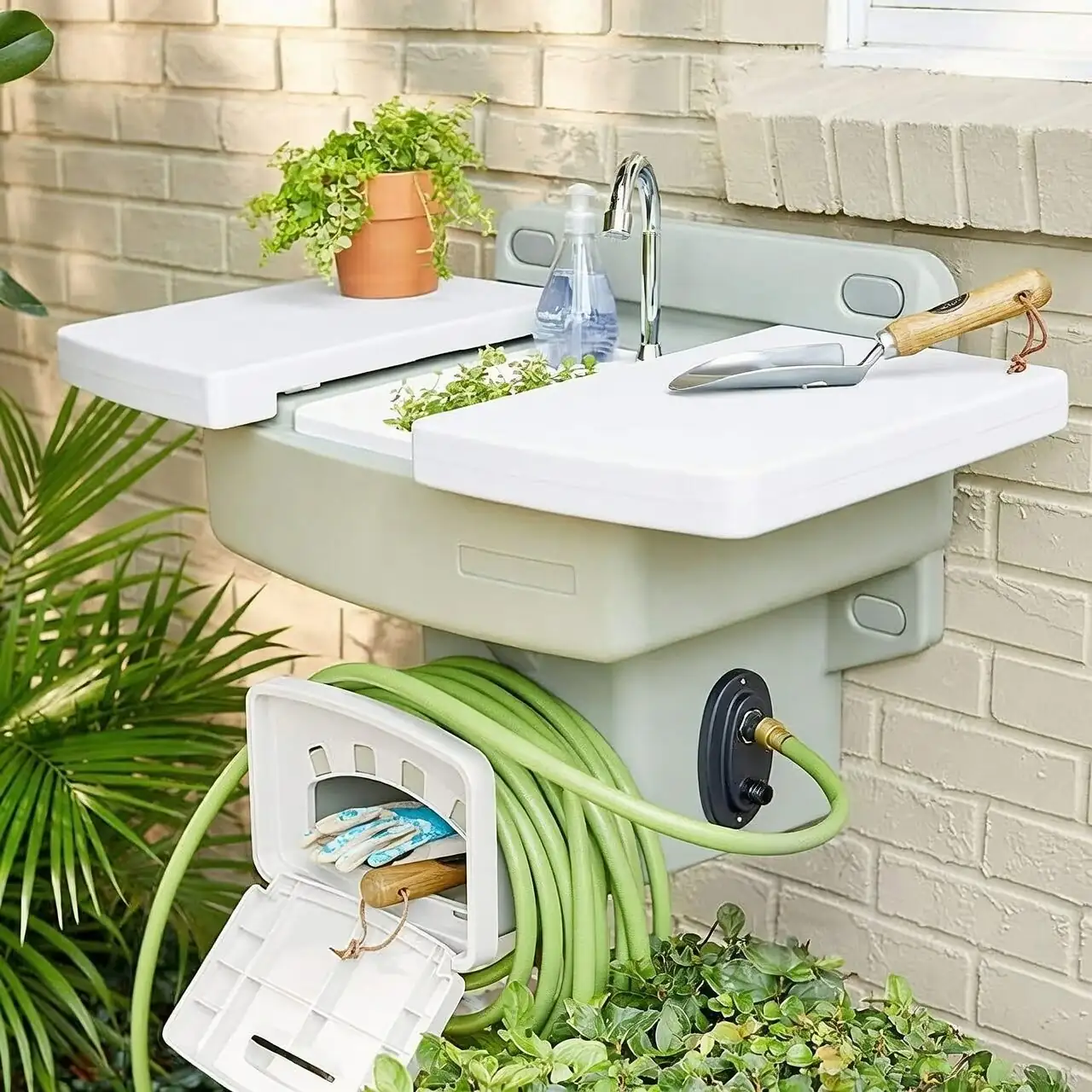
- Morning is best. Drench the root zone until fully hydrated (a slow faucet “shower” or dunk for 1–3 minutes), then let drip dry.
- Avoid keeping blooms and leaf axils wet for long; shake off excess.
- Use rainwater or low‑mineral water if your tap is very hard; flush the mount with plain water regularly to prevent salt buildup.
Humidity helpers that don’t invite rot:
- Group plants on a pebble tray (water below the pot/mount line).
- Run a small humidifier near the display with a fan for airflow.
- Light morning misting on the mount surface (not saturating blooms), only if it dries quickly afterward.
Feeding a mounted Oncidium
- During active growth and bud development (roughly spring to early autumn), feed lightly: a balanced orchid fertilizer at low strength about every 2 weeks, or at roughly 1/4 strength every 2–3 waterings.
- Flush with plain water periodically to prevent salt crusts on the bark.
- Reduce or pause feeding in winter rest and when the plant is in full, open bloom.
Seasonal tuning
- Spring: brighter filtered light returns—resume regular watering, begin light feeding.
- Summer: protect from harsh sun, maximize airflow, and be ready to water more often in heat.
- Autumn: many hybrids bloom—keep moisture steady; don’t let mounts go bone-dry during budding.
- Winter: cooler and brighter (not hot and stagnant). Water sparingly; if nights are chilly, stay on the dry side to prevent rot.
Staking and display on a mount
- As spikes elongate to 30–40 cm (12–16 in), add a slim stake or soft tie to the mount to prevent flopping or snapping.
- Hang mounts where you can easily reach to water—consistent care beats the most artistic but inaccessible display.
Troubleshooting mounted roots
- Wrinkling pseudobulbs: either underwatering, too-low humidity for your airflow, or root damage. Increase watering frequency slightly, check roots, and nudge humidity toward the upper end of moderate (around 50–60%) with ventilation.
- Buds yellowing and dropping: often irregular drought, abrupt environment shifts, or very dry air. Keep a steadier wet/dry rhythm and improve humidity with airflow.
- Black spots or soft rot: usually from water lingering on leaves or staying too wet in cool temps. Water early, boost airflow, and keep much drier if nights are cold.
- Pests (scale, mealybugs, mites): inspect new growths and under leaves. Treat early with orchid‑safe insecticidal soap or horticultural oil, and improve spacing/air movement.
Quick start checklist
- Mount: cork or hardwood slab, large enough for 2–3 years of growth.
- Tie-in: secure firmly; use just a thin veil of sphagnum around the root pad.
- Light: bright filtered; morning sun is welcome, avoid harsh midday scorch.
- Humidity: aim for 50–60% with gentle, continuous airflow.
- Water: soak thoroughly, then let the mount approach dryness—usually daily in warm bright weather, far less in winter.
- Feed: low‑dose, occasional, and flush salts.
- Temperature: comfortable 12–25°C (54–77°F); keep above ~8°C (46°F). If near or below 10°C (50°F), keep very dry.
Grow this way and your Dancing Lady will repay you with plump, silver‑green roots that grab the bark, smooth pseudobulbs, and those irresistible, fluttering sprays that look like a chorus line mid‑twirl.