

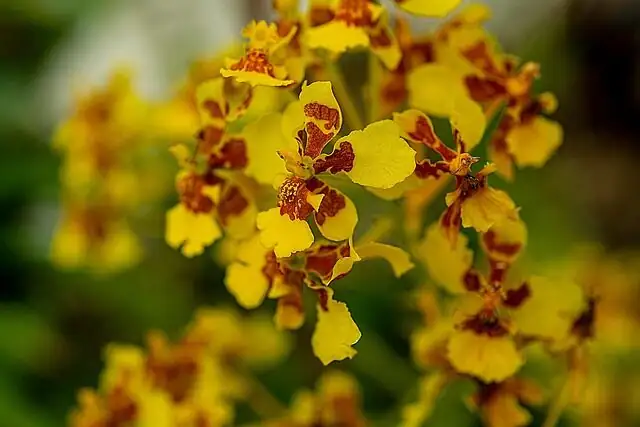
You don’t grow a Dancing Lady Orchid so much as set the stage for it. Give Oncidium bright, filtered light, a steady wet–dry rhythm, and brisk air, and it will answer with arching sprays of tiny dancers that seem to catch their own breeze. Here’s your actionable playbook to get long, showy spikes—season after season.
Quick-start playbook
- Light: Bright, filtered/indirect to gentle part sun. Read the leaves: medium apple green = just right; very dark green = too little light; yellowing or bronzing = too much.
- Seasonal shade (outdoors): ~30% shade in late spring/early summer; ~50% in midsummer; 20–30% in autumn.
- Watering rhythm: Drench, drain, then wait until the mix is just approaching dry. Never soggy; don’t let it go bone-dry for long—especially with buds/spikes.
- Winter rest: Cooler and brighter; reduce watering sharply. If kept below about 10°C/50°F, keep very dry to prevent rot.
- Humidity + airflow: Aim for 40–60% humidity paired with gentle, constant air movement so leaves dry within hours.
- Temperature: Comfortable growth at roughly 12–25°C (54–77°F). Keep above ~8°C (46°F) in winter; many growers target 13–15°C (55–59°F) indoors for winter display.
Light: read the leaves like a gauge
Oncidium and its many hybrids thrive on strong, filtered light; most problems are lighting problems in disguise.
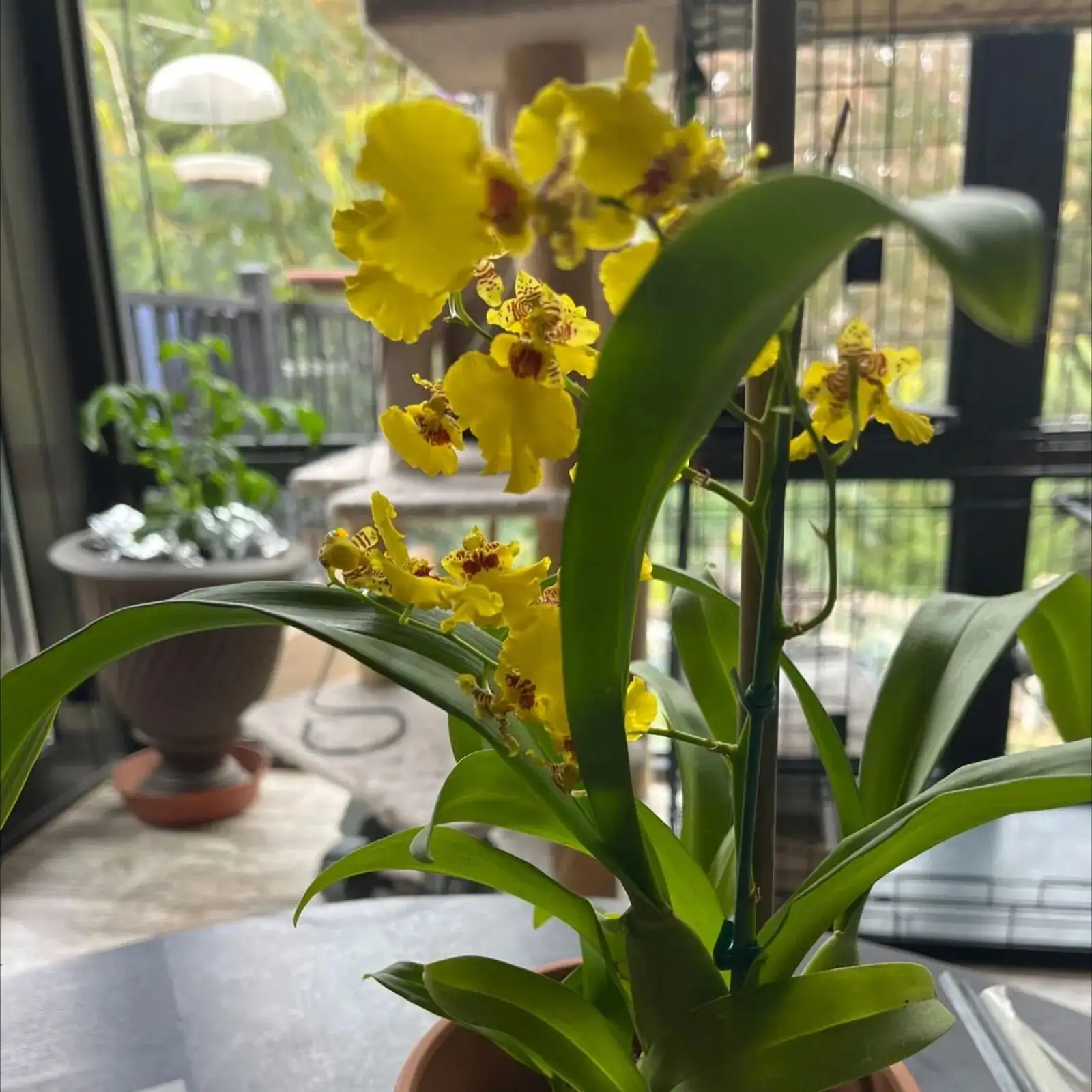
- Leaf-color cues
- Ideal: medium apple green with a satin glow.
- Too little light: lush, very dark green leaves and few or no blooms.
- Too much light: yellowing, bronzing, or bleached patches; crisped edges indicate sunburn.
- Window strategy (indoors)
- Best bet: bright east window with soft morning sun.
- South/west windows: use sheer curtains or set the plant a bit back to avoid harsh midday rays.
- Outdoor strategy (warm, frost-free months)
- Late spring/early summer: ~30% shade.
- Peak midsummer: ~50% shade.
- Autumn: 20–30% shade to maintain brightness as the sun softens.
- Bonus for light-meter users: 2,000–4,000 foot-candles is a practical target for most Oncidium-types. Not mandatory—leaf color and bloom performance are the real compass.
- Note: Thick-leaved “mule-ear” types tolerate a touch more sun, but default to filtered light unless you know your clone.
Watering: master the wet–dry cadence
These orchids store water in pseudobulbs but dislike extremes. Think rhythmic, not rigid.
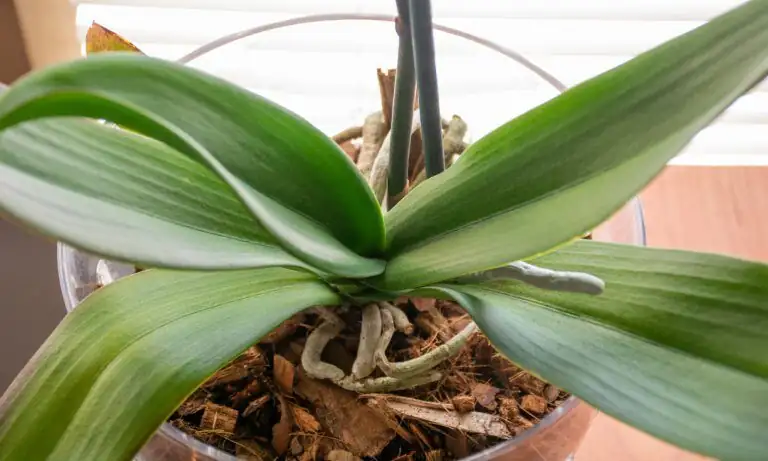
- The basic cycle
- Water thoroughly until the mix is soaked and excess drains freely.
- Let the medium reach “just-about-dry”—the surface feels dry, but deeper layers still faintly cool—then water again.
- Practical frequencies (adjust to your potting mix, pot size, and climate)
- Indoors in active growth: often 2–3 times per week.
- Outdoors in summer heat: about every 2 days is common.
- During budding/flowering: don’t let it go hard-dry; uneven drought causes yellowing buds and bud drop.
- How to know it’s time
- Weight test: lift the pot right after watering, then again daily; rewater when it feels noticeably lighter.
- Skewer test: a wooden skewer left in the mix should come out barely damp, not wet, at watering time.
- Finger test: bark surface may feel dry while the core is still moist—combine methods above for accuracy.
- Water quality and timing
- Use rain, distilled, or low-mineral tap water if your water is very hard.
- Water in the morning so foliage dries by afternoon. Avoid soaking flowers and buds.
Winter rest: the art of “less, not none”
Most Oncidium types slow down in cool, short days.
- If indoors around 13–15°C (55–59°F), bright light:
- Reduce watering strongly; you may water lightly every few weeks, watching pseudobulbs so they don’t severely shrivel.
- If temperatures approach or dip below about 10°C (50°F):
- Keep very dry/stop watering to prevent rot; resume cautiously when warmth returns.
- Exceptions
- Winter-blooming types appreciate slightly steadier moisture while in spike—still never soggy.
Humidity with airflow: always a pair
- Target 40–60% humidity (often 50–60% is perfect).
- How to boost without inviting disease
- Pebble tray with the pot above the waterline.
- Room humidifier on a low, steady setting.
- Light morning misting only—ensure leaves dry within a few hours.
- Gentle, constant airflow via an oscillating fan on low; space plants so leaves don’t touch.
Temperature do’s and don’ts
- Do
- Aim for days in the mild-to-warm range and slightly cooler nights; 12–25°C (54–77°F) suits most hybrids well.
- Keep above ~8°C (46°F) in winter; many growers maintain 13–15°C (55–59°F) for tidy indoor blooming.
- Increase shade, humidity, and airflow during warm spells to keep stress low.
- Don’t
- Don’t park near heaters, radiators, or hot, dry air streams—buds blast, blooms fade, and leaves desiccate.
- Don’t combine chill + wet roots; that’s a fast track to rot.
Potting mix, pots, and repot timing
- Medium
- Use a fast-draining, airy orchid mix: fine-to-medium bark with perlite/charcoal; optionally a little sphagnum to balance moisture; add gritty aeration like pumice or lava rock if you run humid.
- Pots
- Choose a snug pot with generous drainage (slotted orchid pots are great). Clear or opaque both work; many prefer opaque to keep roots cooler and reduce algae.
- Repotting
- Every 1–2 years or when bark breaks down, roots decline, or the pot is crowded.
- Best timing: just before or as new growth starts (often spring, commonly late April to mid-May).
- After repotting: keep slightly shaded; go easy on water 1–2 weeks (light misting only) while cuts heal.
Feeding for flower power
- During active growth and bud development (roughly March–October):
- Use a balanced orchid fertilizer lightly every 2 weeks, or at about 1/4 strength every 2–3 waterings.
- Flush with plain water periodically to prevent salt buildup.
- Reduce or pause feeding in cool winter rest and while flowers are fully open.
Spikes, staking, and after-bloom care
- Staking
- When a spike reaches 30–40 cm (12–16 in) and starts to flop, stake gently to protect the branching spray.
- After flowering
- Once the spike browns, cut it near the base.
- Remove only dead/damaged leaves and truly spent, dried pseudobulbs.
- Rhythm
- Keep light bright and watering steady after bloom to support the next flush of growth.
Propagation by division (when mature)
- Divide only robust clumps.
- Aim for 3–4 healthy pseudobulbs per division for fastest recovery.
- Some growers succeed with two strong growth points in excellent conditions.
- After division, pot into fresh airy mix; keep in bright shade and water sparingly for 1–2 weeks.
Mounting vs. pot culture
- Mounts (cork, bark, slabs) give fabulous airflow and mimic epiphytic life.
- They dry fast—expect more frequent watering/misting than potted plants, especially in warm, dry rooms.
Troubleshooting: quick fixes for long, showy sprays
- Yellowing buds/bud drop
- Usually drought during bud development, abrupt temp/light changes, or very dry air.
- Solution: maintain even moisture (not soggy), keep 40–60% humidity with airflow, and avoid hot/cold drafts.
- Wrinkled pseudobulbs
- Underwatering, root trouble, or very dry air.
- Check roots and mix condition; water more consistently in growth and raise humidity.
- “Accordion” pleating on new leaves
- Irregular watering or low humidity during development.
- Refine your wet–dry rhythm and stabilize humidity with airflow.
- Leaf spots/rot
- Often from water sitting on leaves in still air or media staying too wet.
- Water mornings, improve airflow, refresh the mix if broken down; treat pests/disease with orchid-safe products as needed.
- Pests to watch
- Scale, mealybugs, spider mites, and aphids often target tender growth and spikes. Treat early with insecticidal soap or horticultural oil and improve cultural conditions.
Buying smart: pick a performer
- Look for multiple growths and plump, firm pseudobulbs.
- Leaves should be clean, medium green, and free of mushy spots.
- For a long display, choose a plant with a mix of buds and just-opening blooms (especially in winter).
A note on “flower language” and meaning
Dancing Lady Orchids are commonly gifted as symbols of joy, celebration, and lively elegance—an intuitive match for their fluttering skirts of bloom. This symbolism comes less from ancient lore and more from modern horticulture and floral design: hybridizers created exuberant, branching sprays perfect for festive arrangements and weddings, so the plant picked up meanings tied to cheerfulness and grace. In short: they look like a party, so they came to mean one.
Why they’re easier than you think
Most Oncidium in shops are tough, adaptable hybrids selected for home conditions. Give them:
- Bright, filtered light (watch those leaf cues),
- A breathable mix and snug pot,
- A consistent wet–dry beat (lighter in winter),
- Humidity with airflow, and
- Mild temperatures with cooler nights,
…and your reward is a cloud of tiny dancers that can last and last. Curtain up.