

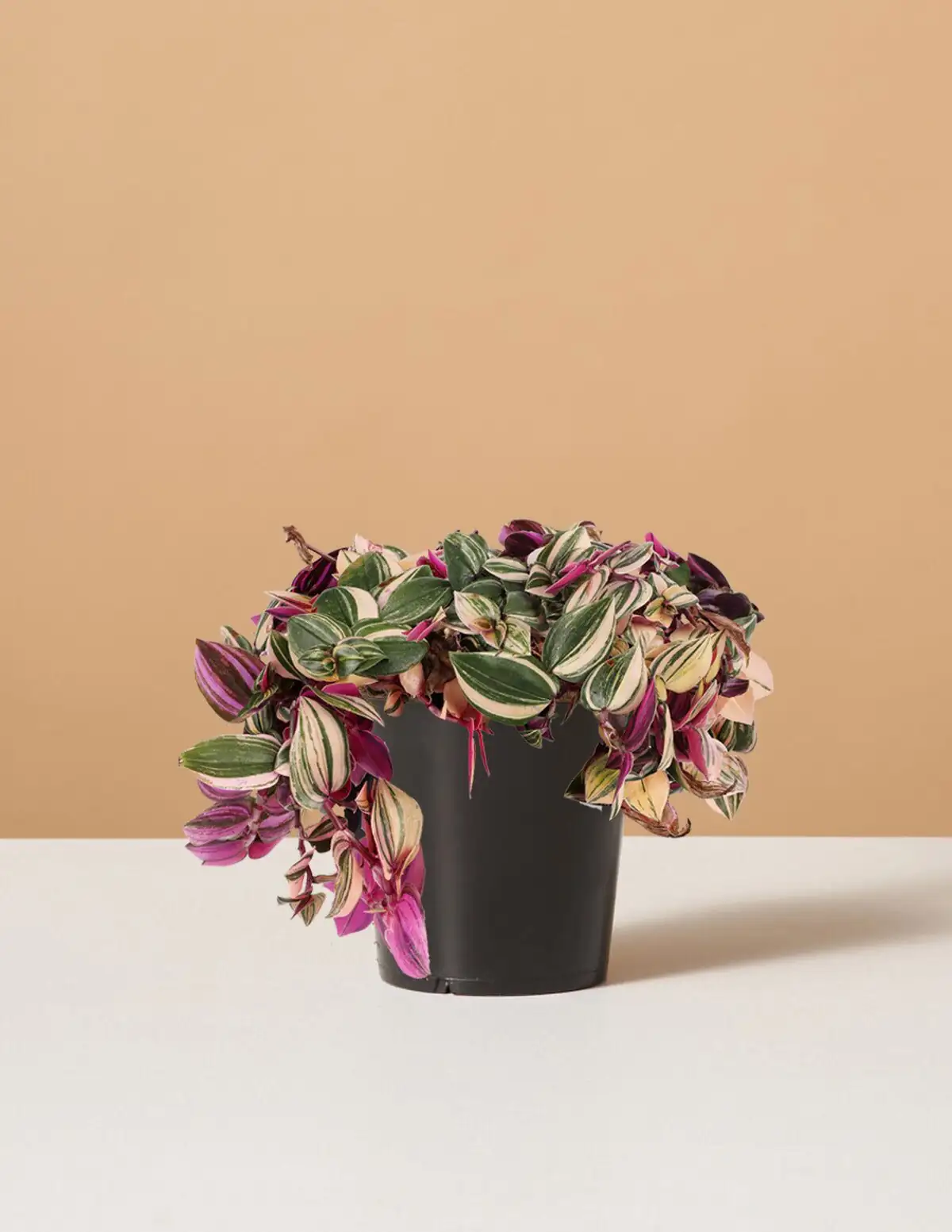
Picture a plant that acts like a living confetti cannon: silver stripes that gleam, purple undersides that pop, and trailing stems that leap to root wherever they touch. That’s Tradescantia zebrina—better known as inch plant—a fast, forgiving, and flamboyant housemate that practically begs to spill over a basket and show off. It’s science-lite magic, with a few diva moments you’ll learn to love and tame.
Meet Tradescantia zebrina (aka Inch Plant)
- Family: Commelinaceae (the spiderwort family)
- Origin: Native to Mexico (often cited with parts of Central America); now widely naturalized in warm regions, including parts of the southern U.S.
- Look: Fleshy, oval-to-lance leaves striped silver and green on top, rich purple beneath; new growth often shows extra purple for a tricolor zing
- Habit: Trailing to creeping; stems commonly 30–90 cm (12–35 in) long
- Perfect for: Hanging baskets and high shelves—anywhere it can cascade and “wander”
- Bonus: Tiny three-petaled pink-to-lavender flowers appear sporadically with good light
Note on names: You’ll see several aliases (Silver Inch Plant, Wandering Dude, etc.). Many growers now prefer neutral names like inch plant.
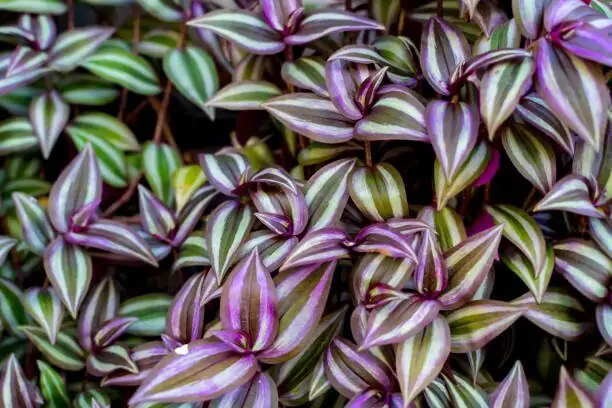
The Rooting-at-Nodes Superpower (and why it’s so easy to propagate)
Those little joints along the stem are nodes—mini command centers with a stash of growth hormones. When a node touches moist soil (or even sits in water), it can pop out adventitious roots in as little as 7–10 days.
Try this:
- Snip 7–12 cm (3–5 in) stem tips, remove the bottom leaf or two.
- Lay or tuck at least 1–2 nodes into moist potting mix (or root in water first).
- Plant several cuttings together for instant fullness.
Science-lite angle: Nodes naturally reroute growth hormones to build roots where they sense moisture—like green Velcro looking for a hook.
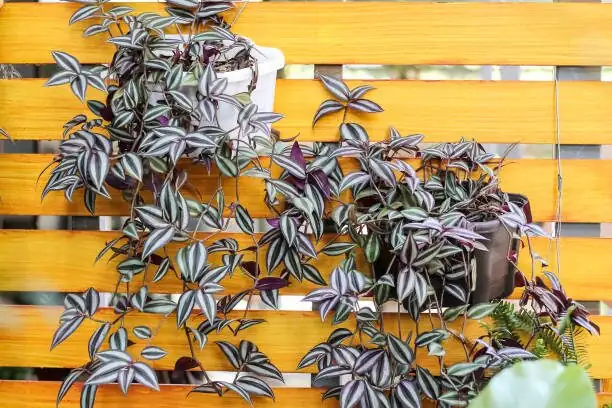
Light makes the stripes: your plant’s mood ring moment
You’ll notice the silver-and-purple drama change with light:
- Brighter, filtered light = richer striping and deeper purple.
- Low light = greener leaves and stretched, lanky stems (the “Where’s the window?” wobble).
Give it bright, indirect light to light shade. Gentle morning sun is usually fine; avoid harsh midday sun in summer, which can scorch or wash out color. Indoors, an east- or north-facing window is a sweet spot.
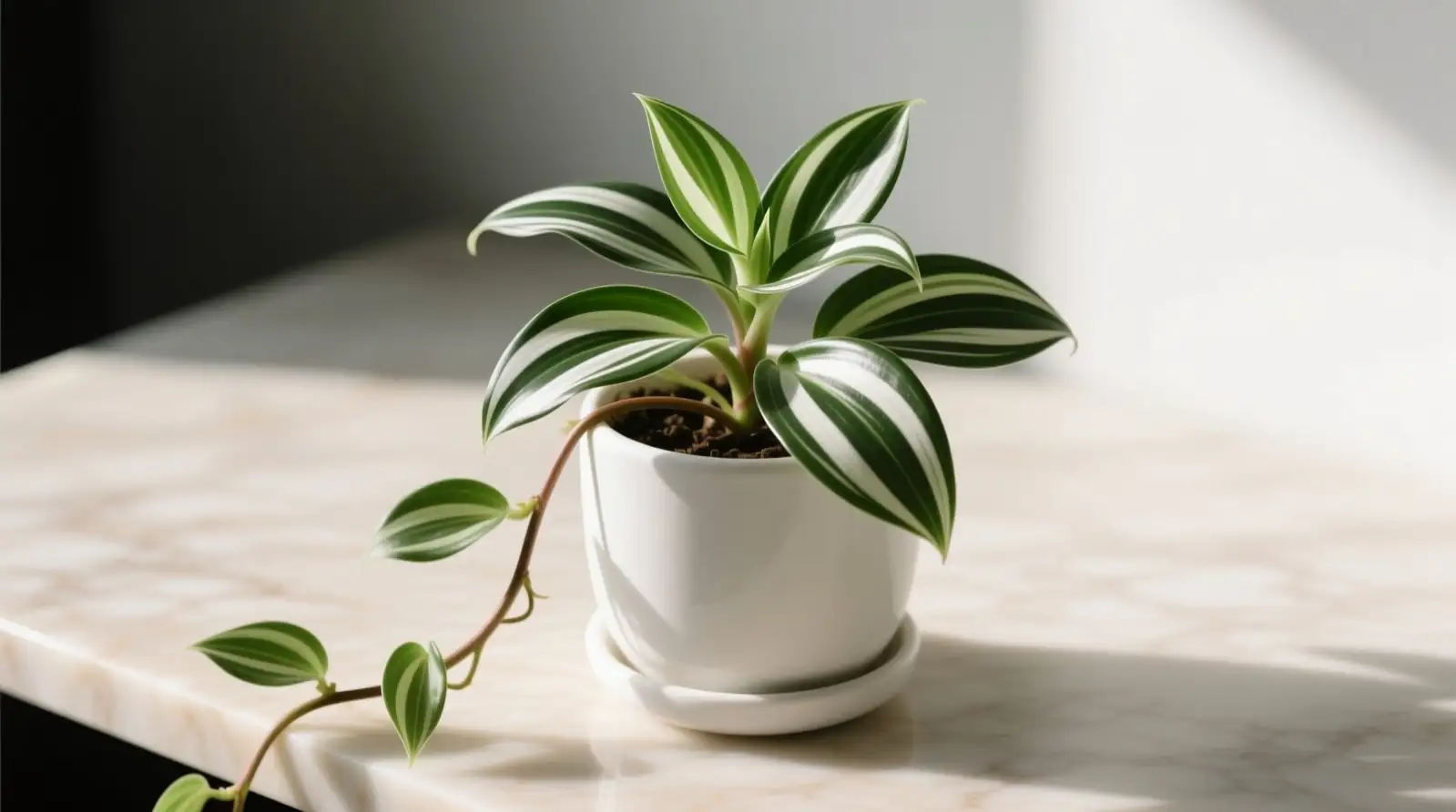
The low-light stretch, explained
In dim conditions, inch plant elongates between leaves to reach for more photons. The fix:
- Move it closer to bright, filtered light.
- Pinch tips regularly to trigger branching.
- When stems reach ~20 cm (8 in), give a haircut to thicken the cascade.
Pink-to-lavender cameos: flowers you might miss
With good light, inch plant will surprise you with small, three-petaled pink-to-lavender blooms that peep from leaf axils, often in spring and summer, and here and there year-round indoors. They’re brief but charming—like little exclamation points after a pruning flush.
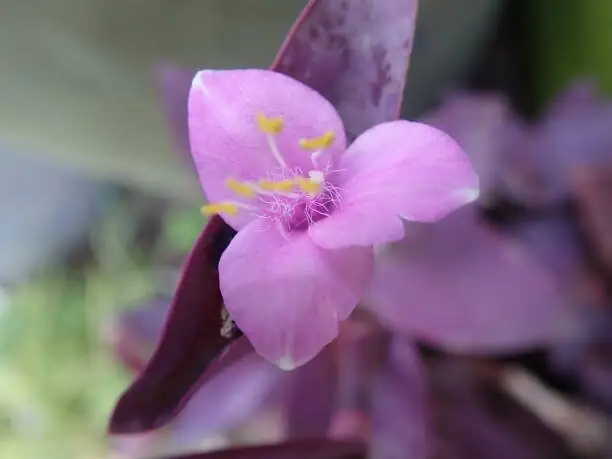
Want more? Occasional bloom-leaning feedings (slightly higher phosphorus/potassium during active growth) can help, as long as you don’t overdo it.
Feeding without fading: the “nitrogen washout” phenomenon
Too much nitrogen = soft, super-green growth that mutes the plant’s silver and purple. It’s like turning up chlorophyll so high it drowns out the other pigments.
- Feed during spring–early autumn with a balanced liquid fertilizer.
- Either every 2 weeks at a diluted rate, or about once a month at label strength—both work.
- Keep an eye on color: if leaves look overly soft or washed out, ease off the nitrogen.
Brown-tip drama in dry air (and how to defuse it)
Crispy tips usually point to dry air and/or underwatering. Inch plant prefers moderate humidity (~50%+), but it adapts well to typical homes.
- Water thoroughly, then let excess drain; water again when the top 2–3 cm (about 1 in) is dry.
- Spring–autumn: lightly and evenly moist, never soggy.
- Winter: scale back; keep just slightly moist.
- Boost humidity with a pebble tray, occasional misting, or a nearby humidifier—always with decent airflow.
Pro tip: Constantly wet soil invites stem/root rot; overly dry soil plus dry air = crunchy tips.
Everyday care cheat sheet
- Light: Bright, indirect light to light shade; morning sun okay, avoid harsh midday summer rays.
- Temperature: Best at 18–22°C (64–72°F); tolerates about 12–24°C (54–75°F). Keep above 10°C (50°F); damage below ~5°C (41°F).
- Soil: Loose, fertile, fast-draining mix—about 3:1 general potting mix to perlite/coarse sand.
- Pot: Always use drainage. A 15–20 cm (6–8 in) hanging basket suits most indoor plants.
- Water: When the top 1 in dries; evenly moist, never soggy.
- Humidity: Moderate preferred; adapts to average. Brown tips? Add humidity and check your watering rhythm.
- Fertilizer: Balanced liquid feed spring–early autumn (biweekly diluted or monthly at label strength). Avoid high nitrogen.
- Pruning: Pinch often for bushiness. If it gets bare at the base, cut back and re-root tip cuttings to reboot the pot. Refresh every 1–2 years.
- Propagation: Stem cuttings root readily in 7–10 days. Plant multiples together for a plush look.
- Hardiness: Frost-tender; outdoors mainly in USDA Zones 10–12. In frost-free climates it can spread—dispose of trimmings responsibly.
Styling and growth habit: let it wander (with guardrails)
Tradescantia zebrina is naturally “wander-y,” branching and rooting at nodes. Lean in:
- Hang it high so stems can cascade.
- Tuck a few stems back onto the soil to self-root and fill the crown.
- If it gets leggy, give a bold trim and replant the best tips—instant makeover.
For a full pot, many growers start with 3–5 cuttings in a 15–20 cm (6–8 in) basket.
Pests, problems, and quick fixes
- Common pests: Spider mites, mealybugs, aphids, scale—especially in dry indoor air. Rinse the plant, then treat with insecticidal soap or horticultural oil; repeat as needed.
- Rot/leaf spots: Usually from overwatering and poor airflow. Improve drainage and ventilation; remove affected leaves. Copper-based products are sometimes used for leaf spots where appropriate.
- Aging foliage: Older basal leaves may yellow and drop—totally normal. Keep pinching and occasionally restart the pot with fresh cuttings.
Safety notes
The sap can irritate sensitive skin; wear gloves if you’re reactive. If chewed, it may cause mild mouth or stomach upset in pets or children. Best kept out of reach.
Seasonal rhythm
- Spring: Increase light and water as growth resumes; pinch often; begin feeding.
- Summer: Bright filtered light, steady watering, support humidity with airflow.
- Autumn: Taper feeding and watering as growth slows.
- Winter: Keep warm (above 10°C/50°F), protect from drafts, water sparingly, light trims only.
Symbolism and the story it tells
Often linked with resilience, adaptability, and hope, inch plant bounces back beautifully after a haircut and roots wherever life gives it a landing spot. It’s a living metaphor for starting fresh and thriving again—one node at a time.
Fast FAQ
- Why is my plant getting leggy and dull?
Likely low light. Move to bright, filtered light and pinch tips to encourage branching; trim back and re-root if stems are bare.
- My leaves are browning at the tips—help!
Air and soil are probably too dry. Water when the top 1 in is dry and bump humidity with a pebble tray or occasional misting plus good airflow.
- Can it handle direct sun?
Gentle morning sun is usually fine. Avoid strong midday sun in summer—it can scorch and fade the leaves.
- How do I make a lush hanging basket?
Plant several cuttings together, keep light bright and indirect, and pinch tips regularly. Re-root fresh tips every 1–2 years for a thick, dramatic cascade.
- Will it flower indoors?
Yes—tiny pink-to-lavender, three-petaled blooms appear intermittently with good light, especially from spring to summer.
If you love a plant that rewards trims with even more glamour, turns up the color with good light, and roots at the drop of a node, Tradescantia zebrina is your effortlessly extra trailing star.