

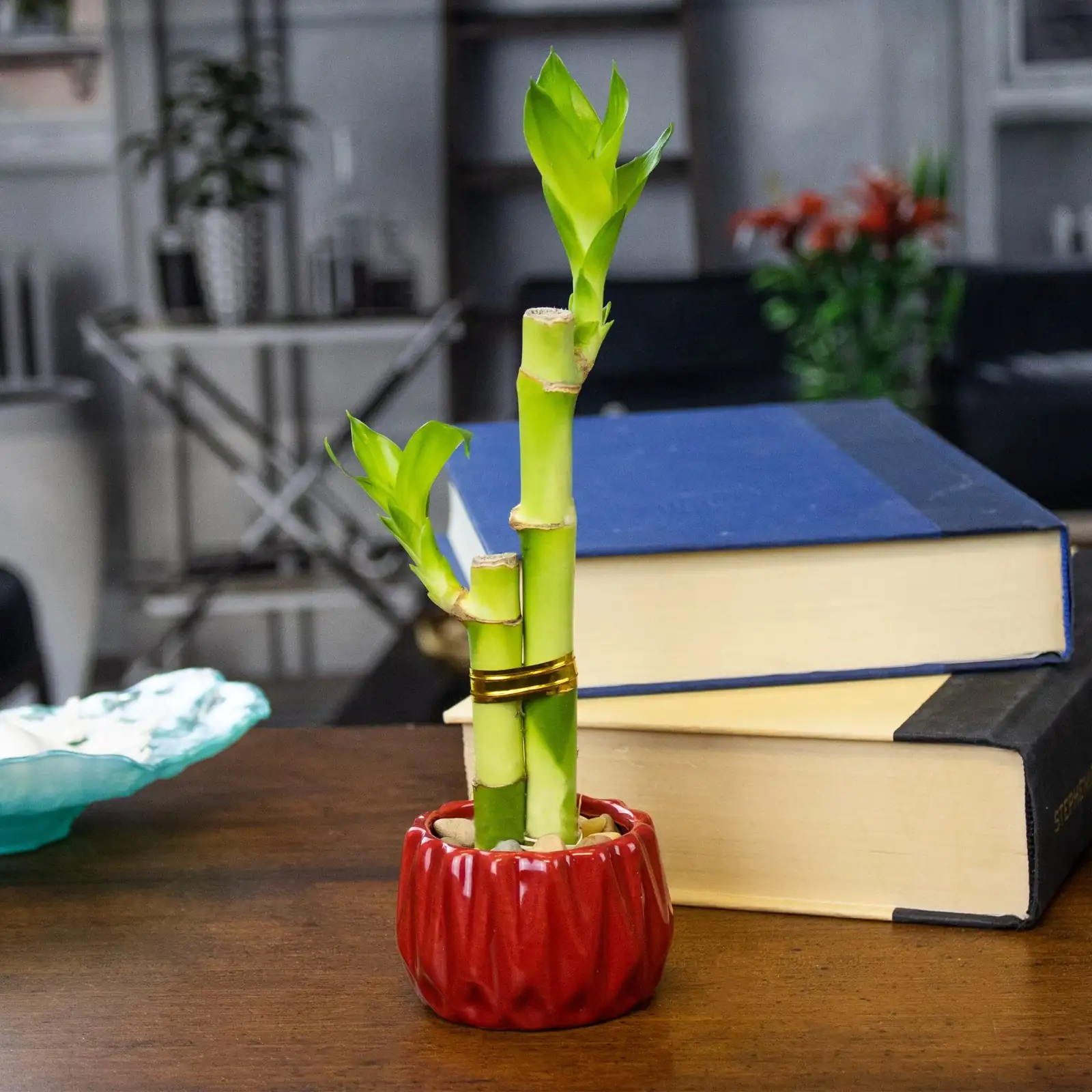
Walk into any new office or freshly warmed home and you’ll spot it: a clean cluster of green canes tied with a red ribbon, standing upright like little exclamation points of good fortune. Lucky Bamboo may not be bamboo at all, but it carries a story—one that rises from classic Chinese bamboo virtues, blends with numerology popularized in late-20th‑century feng shui, and blooms into today’s “flower language” of stalk counts and gifting etiquette.
Meet the plant behind the myth
Dracaena sanderiana—widely sold as Lucky Bamboo (Chinese: 富贵竹, “wealth-and-honor bamboo”)—belongs to the Asparagaceae, not the bamboo tribe. Native to West Africa, it’s an easy indoor dracaena with bamboo-like, ringed canes and glossy leaves. It thrives in bright, indirect light and is famously happy in water-filled vases or bowls, which made it a natural for desks, reception areas, and ceremonial gifts. Spirals and braids? Those are trained over time by rotating stems toward light.
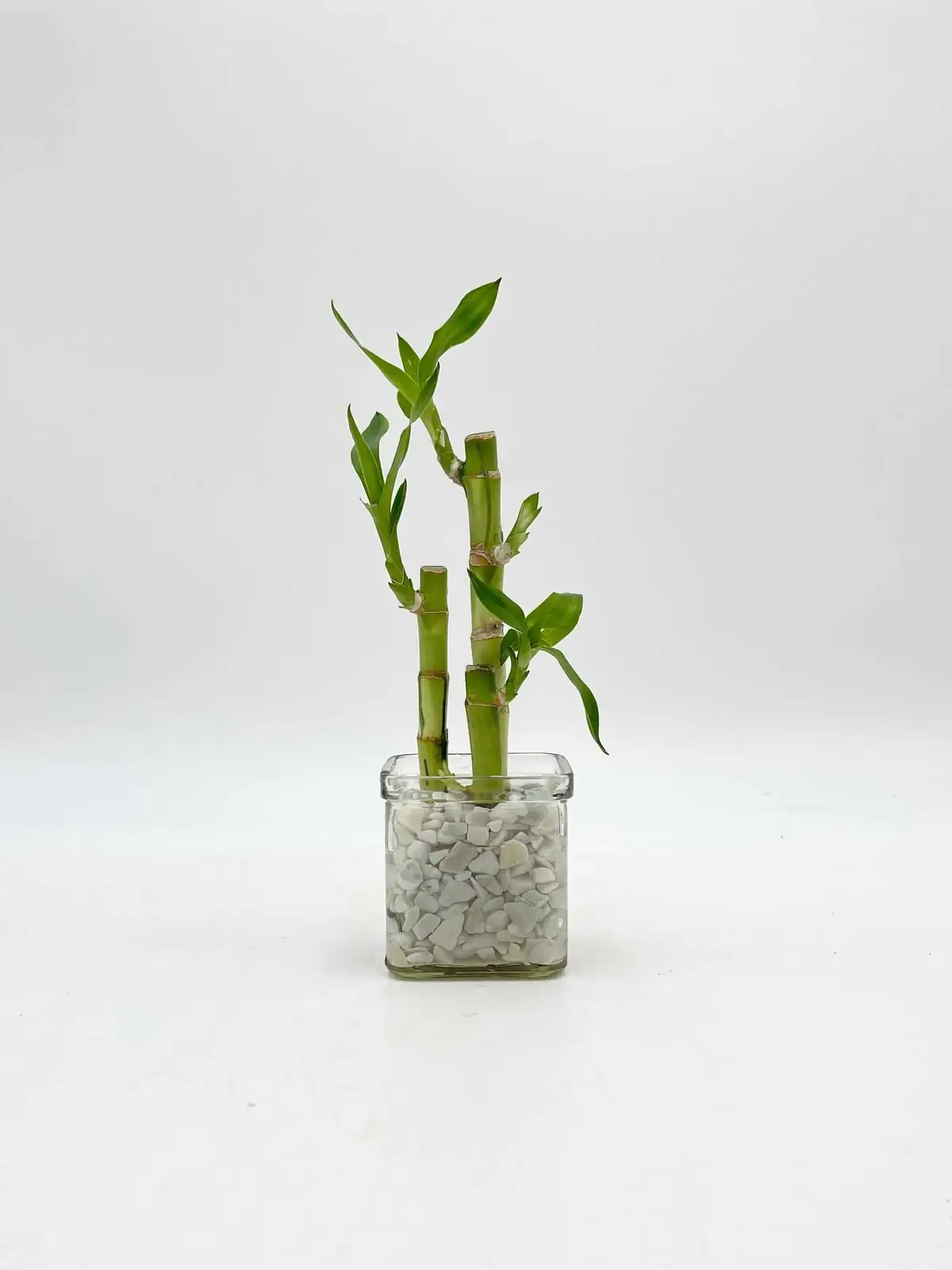
Botanical truth and cultural meaning aren’t at odds here. The plant’s look—upright canes with visible nodes—echoes the classical Chinese image of bamboo: steadfast, jointed, ever-rising. That likeness is exactly where its modern symbolism took root.
How Lucky Bamboo’s “flower language” grew
Think of Lucky Bamboo’s stalk-count meanings as a three‑layered braid: ancient symbolism, modern numerology, and contemporary gifting custom.
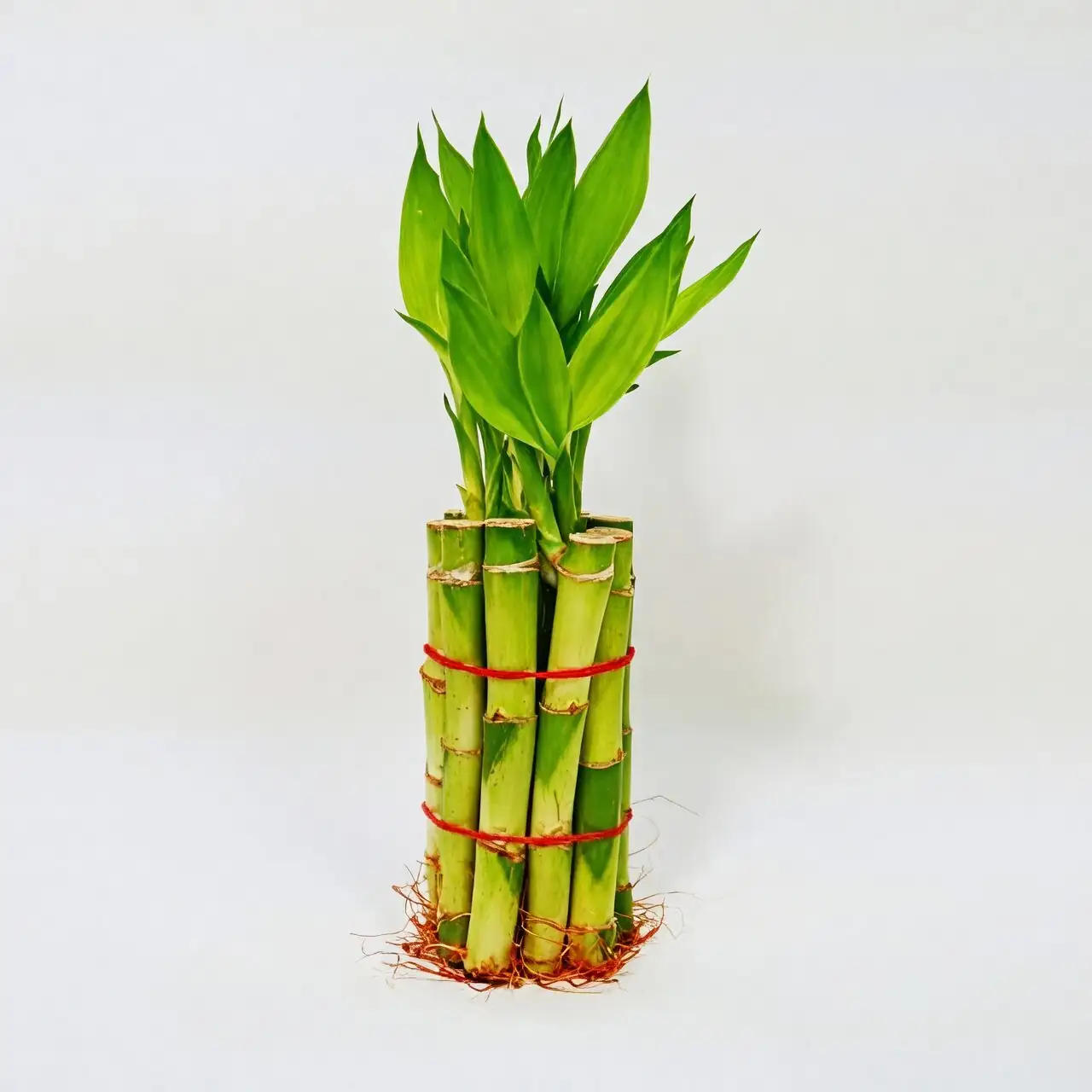
1) Classic bamboo symbolism: uprightness and steady ascent
- Nodes (节, jié) in bamboo are emblems of integrity and “standing tall” through adversity.
- The hollow yet resilient culm suggests humility and strength.
- Bamboo’s steady vertical growth evokes advancement and learning—an elegant match for a cane-forming dracaena that also grows in clear tiers.
2) Numerology meets houseplants in the late 20th century
- As feng shui surged in global popularity from the 1980s–2000s, sellers paired bamboo’s age-old virtues with auspicious numbers.
- Retail-friendly “meaning charts” turned simple bundles of canes into messages—love, wealth, health—using numerology familiar in Chinese culture (think 6, 8, 9 as lucky; 4 as best avoided in Chinese contexts).
- Result: a portable, easy-care “good wishes” gift that fit modern life and corporate lobbies.
3) Gifting customs amplify the message
- Housewarmings, new business openings, first days at a new desk—each occasion invites a tailored stalk count.
- Red ribbons or cords often accent arrangements for a festive, auspicious look; some include coins or pebbles purely as décor.
Important note: there is no single, official canon of stalk meanings. Instead, you’ll find widely shared, overlapping traditions. The intent is the heart of the gift; the numbers simply fine‑tune the wish.
The meanings people use today (and why)
Below are the most common associations you’ll see in shops and gift guides, plus the cultural “why” behind them.
- 1 stalk — Focus, a fresh start, singular good fortune
- Why: Simplicity and strength of purpose.
- 2 stalks — Love, partnership, harmonious pairs
- Why: Pairs symbolize balance and relationship luck.
- 3 stalks — Triple blessing: happiness, wealth, longevity
- Why: Three often stands for “Heaven–Earth–Human” or a trio of blessings.
- 5 stalks — Overall balance and well‑being
- Why: Five elements (wood, fire, earth, metal, water) in harmony.
- 6 stalks — Smooth prosperity
- Why: Six (liù) sounds like “flowing,” implying things go smoothly.
- 7 stalks — Good health and protection
- Why: Commonly marketed as a health blessing in modern feng shui guides.
- 8 stalks — Growth and wealth
- Why: Eight (bā) echoes “to prosper” (fā) in many dialects.
- 9 stalks — Great, enduring luck
- Why: Nine (jiǔ) hints at “long‑lasting.”
- 10 stalks — Perfection, completeness
- Why: A full set, “ten out of ten.”
- 21 stalks — A grand, all‑around blessing
- Why: A celebratory total used for big moments like business openings.
What about 4 stalks? In Chinese contexts, four (sì) can sound like “death” (sǐ), so arrangements with four stalks are customarily avoided. In non‑Chinese settings, some people reinterpret four positively (e.g., four seasons, four directions), but when gifting across Chinese-speaking cultures, it’s best to skip it.
Etiquette: how to choose, give, and display
Picking the right message
- New business, promotion, or office opening: 6, 8, 9, or 21 stalks
- Housewarming: 3, 5, 8, or 9 stalks
- Weddings and anniversaries: 2 or 9 stalks
- Birthdays and longevity wishes: 3, 9, or 21 stalks
- New beginnings (first apartment, solo venture): 1 stalk
Presentation matters
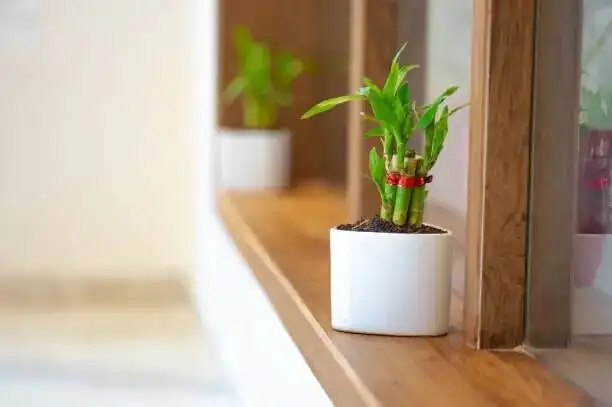
- Tie with a red ribbon or cord for auspicious flair.
- Use a clean glass vase, bowl, or dish; pebbles are fine as décor if kept clean.
- Add a small note explaining the number’s wish—guests love the story.
Cultural do’s and don’ts
- Do avoid four-stalk gifts in Chinese cultural settings.
- Do offer a simple care card so the good-luck message actually thrives.
- Don’t gift obviously weak or yellowing canes; symbolism starts with vitality.
- Do mention pet safety if needed: Dracaena is toxic to cats and dogs if chewed.
Placement tips that respect the symbolism
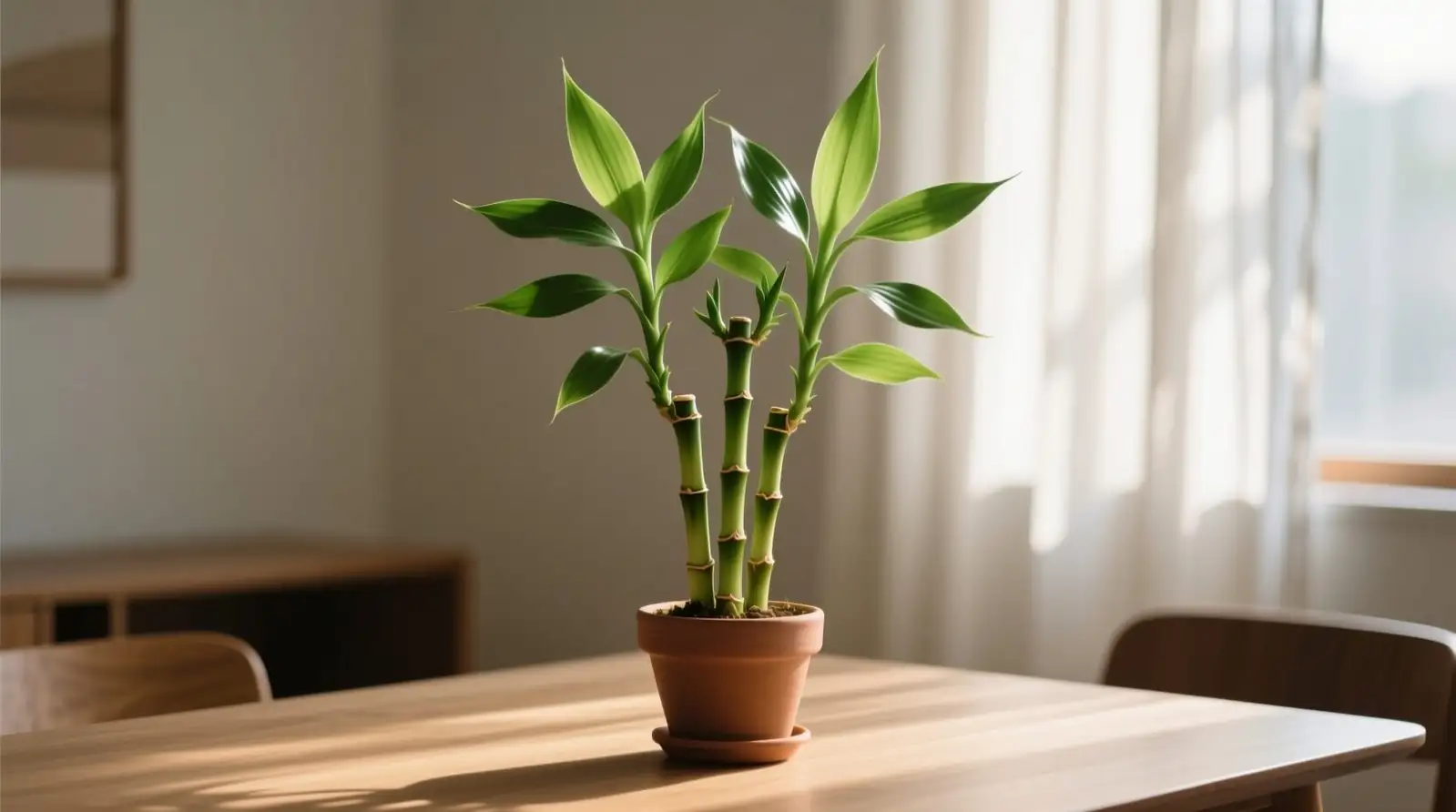
A “lucky” gift should look strong and stand tall. Help it do that with gentle, houseplant‑savvy care:
- Light: Bright, indirect light; avoid harsh, direct sun through glass.
- Warmth: Aim for 18–30°C (64–86°F). Protect from cold drafts; keep well above 10°C (50°F).
- Humidity: Moderate to high is best; in very dry air, occasional misting can reduce crisp tips.
- Water culture: Keep roots submerged in clean, preferably dechlorinated water. Change weekly (every 3–4 days for fresh cuttings). Rinse pebbles and containers regularly.
- Soil culture: Use a well‑drained potting mix; keep evenly moist in spring–summer, a touch drier in winter.
- Feeding: Very light feeding only—overdoing it can cause floppy growth or foul the water.
- Pruning: If stems get top‑heavy, simply cut back; the cane re‑sprouts from nodes, and the top can root as a new plant.
Why these meanings stick
- The look: Those ringed canes read as “bamboo,” so the ancient virtues instantly “click.”
- The numbers: Easy‑to‑remember associations map neatly to everyday wishes—love (2), abundance (8), longevity (9).
- The lifestyle: It’s compact, sculptural, and happy in a simple vase—ideal for modern homes and offices.
- The moment: From housewarmings to ribbon‑cuttings, Lucky Bamboo packages encouragement into living form.
A living bridge between botany and blessing
Lucky Bamboo is a botanical impersonator with a heart of gold. It isn’t a true bamboo; it’s a dracaena with upright canes that invite us to think of integrity, steady ascent, and renewal. Its “flower language” is modern and flexible—less carved in stone than carried by intention. Choose your number, tie the ribbon, keep the water fresh, and let your message grow: prosperity that stands tall, love that doubles, and good fortune that lasts.