

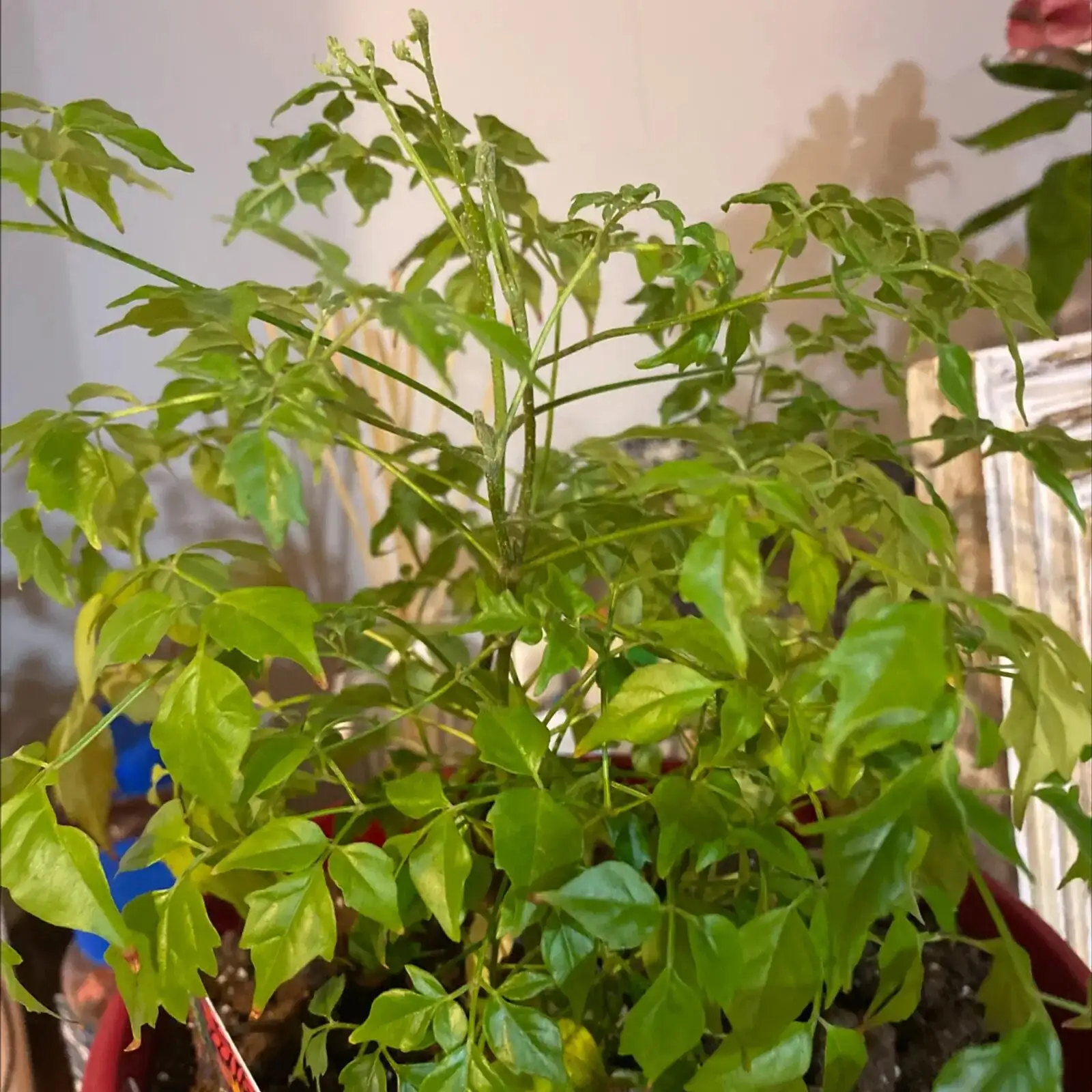
If your China Doll plant (Radermachera sinica) just flung a handful of leaves to the floor, take a breath. This glossy, tiered “mini-tree” is a bit theatrical, but once you learn its simple rules—bright-filtered light, warm steady air, generous humidity, and a consistent watering rhythm—you’ll go from panicked sweeper to confident plant whisperer.
Meet your plant: compact elegance with opinions
- What it is: Radermachera sinica, commonly called China Doll, Chinese Trumpet Tree, Emerald Tree, or Serpent Tree; family Bignoniaceae.
- Where it’s from: Southern China and parts of Southeast Asia.
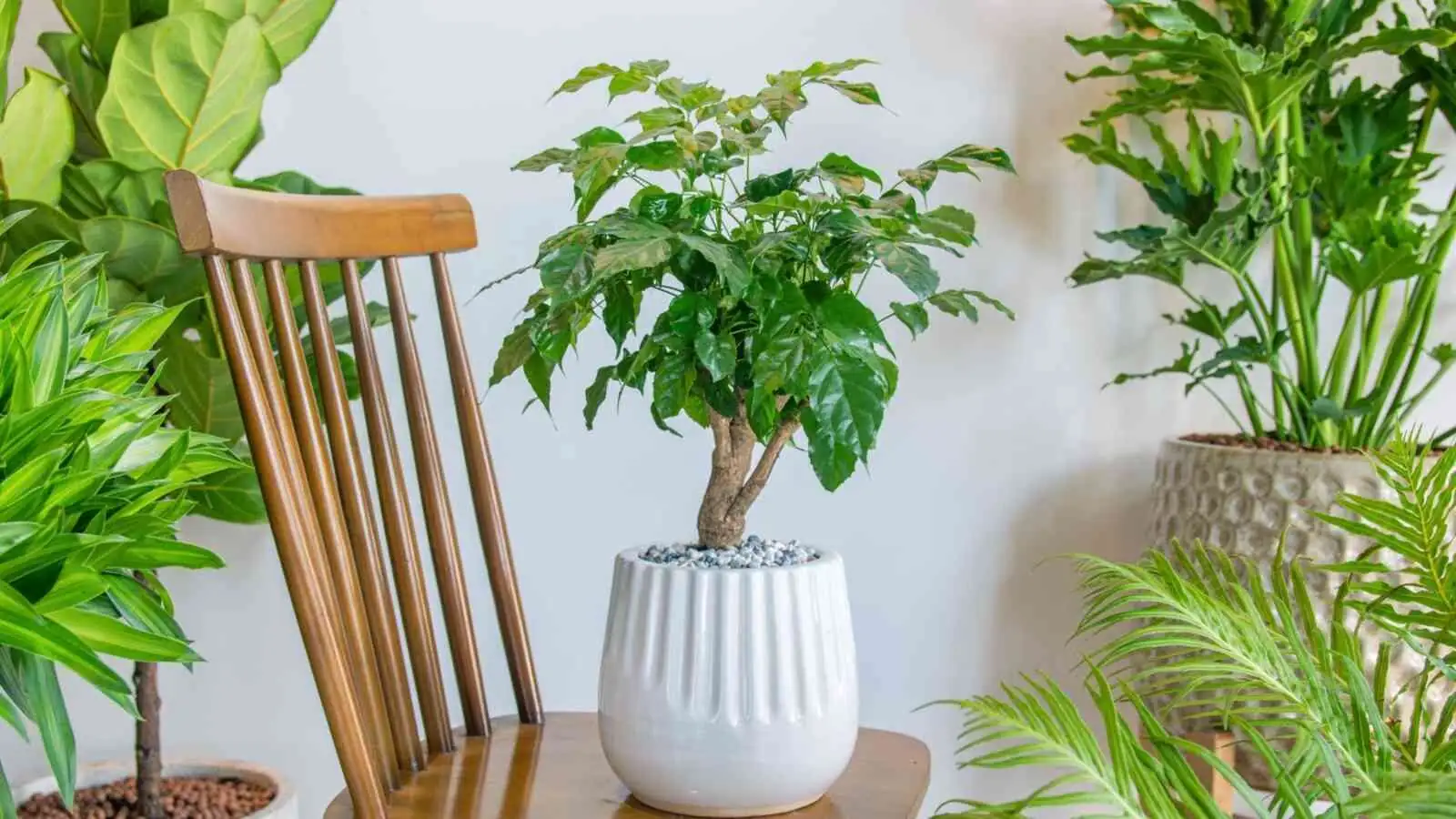
- What it looks like: Dense, layered branches with finely divided, glossy, deep-green leaflets that form neat “tiers.”
- Size: Indoors typically 2–6.5 ft (60–200 cm); in frost-free climates it can become a small tree.
- Flowers: Rare indoors. In warm conservatory/outdoor settings, may produce showy, creamy-white trumpet-shaped blooms in spring–summer.
- Reputation: Gorgeous, but drops leaves when light is low, air is dry, temps swing, or roots are mishandled. Keep conditions steady and it stays lush.
Leaf-drop panic playbook (triage in 6 quick steps)
- Pause watering. Check the soil 2–3 inches (5–7 cm) down. If it’s wet, wait; if it’s bone-dry, see “Watering rhythms” below.
- Upgrade the light today. Move to bright, filtered light (east window or a few feet back from a south window with a sheer curtain).
- Stabilize temperature. Keep 68–86°F (20–30°C). Protect from drafts, heater/AC blasts, and cold window glass.
- Add humidity. Aim near 60%+ with a humidifier or pebble tray. Light morning misting is fine if you also keep air moving.
- Remove only what’s clearly spent. Snip yellow, mushy, or crispy leaves; leave healthy green growth.
- Then be consistent. China Doll values routine more than most houseplants. Within 2–4 weeks, fresh buds usually appear along stems.
Light: bright and filtered, not harsh

- Best spots:
- East-facing window (gentle morning sun).
- South or west window with a sheer for 50–60% shade during harsh midday sun.
- Bright room plus supplemental grow light if windows are limited.
- Signs you nailed it: New leaves are compact and deep green; internodes stay tight. Pale, lanky growth = not enough light; scorched patches = too much direct midday sun.
- Pro tip: Rotate the pot a quarter turn every 1–2 weeks to keep the “tree” straight and evenly full.
Temperature: warm and steady wins
- Sweet spot: 68–86°F (20–30°C).
- Keep above about 54°F (12°C) indoors for best performance; below 41°F (5°C) risks serious leaf drop.
- Avoid: Drafty doors, cold winter glass, and vents (heating/AC). Moving it repeatedly around the home can also stress it—pick a good spot and stick to it.
Humidity hacks that actually help
Target roughly 60%+ relative humidity.
- Humidifier on a timer (simple, effective).
- Pebble tray: A wide tray with water and pebbles under the pot (pot sits on pebbles, not in water).
- Grouping: Cluster with other plants to create a humid microclimate.
- Light, morning misting only if you also ensure airflow so leaves dry by evening (helps prevent leaf spot).
- Clean leaves monthly with a damp cloth to keep pores clear and that emerald sheen glowing.
Watering rhythms: exact, seasonal, and stress-free
China Doll likes “evenly moist, never soggy”—and it hates drying to dust.
Spring–summer (active growth)
- Check soil every 3–5 days.
- Water when the top 1–1.5 inches (2–4 cm) are dry.
- Technique:
- Water slowly until you see a steady drip from the drainage hole.
- Let excess drain; don’t leave standing water in the saucer.
- Aim to keep the whole root ball evenly moist—don’t allow it to swing from dust-dry to drenched.
- Deeper flush: About every 2 weeks, give a thorough soak to wash out salts, then let drain fully. In between, water as needed to maintain that “evenly moist” feel.
- Humidity support: In warm, bright rooms, pair watering with humidity (misting every couple of days can help if airflow is good).
Autumn–winter (resting pace)
- Growth slows; roots drink more slowly.
- Typical rhythm: About once every 2 weeks, but always judge by the soil, not the calendar.
- Goal: “Just moist.” If the top 1.5–2 inches (4–5 cm) are dry, water gently. Avoid waterlogging cool soil.
- Keep warm (above 54°F/12°C), avoid drafts, and stop fertilizing.
Watering red flags:
- Underwatering: Crisping leaflets and sudden shed from inner/lower branches; soil pulls from pot sides.
- Overwatering: Yellowing and soft drop, especially with a musty smell; persistently wet mix.
Soil and potting: airy roots, happy canopy
- Mix: A loose, fertile, well-draining blend—quality potting soil + leaf mold/compost + coarse sand or perlite. Always use a pot with drainage.
- Repot: Spring is ideal. Young, fast growers may need annual step-ups; increase pot size gradually (common indoor diameters 12–25 cm / 4.7–9.8 in).
- Avoid oversized pots; they hold too much cold moisture.
Feeding: steady but light
- Growing season: Feed about once a month with a balanced fertilizer (e.g., 20-20-20) at diluted strength, or an organic liquid feed.
- Pause during extreme summer heat and stop in winter.
Pruning and shaping: that perfect tiered silhouette

- Pinch soft tips regularly to encourage branching and a bushy canopy.
- Prune leggy or over-eager shoots during active growth to maintain layers.
- Clean cuts just above a leaflet node; new shoots will fill out quickly in bright light.
Semi-hydro and water culture option
- Choose a healthy, well-rooted plant. Rinse soil from roots and trim any damaged bits.
- Set into clean decorative stones or a semi-hydro medium. Fill water to just below the root crown.
- Bright filtered light; top up water weekly (adjust to evaporation).
- Add a hydroponic nutrient solution about once a month; change water roughly weekly for pure water culture.
Propagation (for backup plants and fuller pots)
- Tip cuttings (most common): In summer, take 5–8 in (12–20 cm) semi-mature cuttings. Remove lower leaves; keep 2–4 top leaves (halve large ones). Root in sand or a peat-based medium at 72–79°F (22–26°C) with high humidity. Roots form in about 5–6 weeks.
- Seeds: Sow in spring; cover lightly. Germination in about 2–3 weeks at 64–70°F (18–21°C).
Pests, diseases, and stress signals
- Usual suspects: Scale and whiteflies, especially in warm, still rooms. Treat early with horticultural oil or insecticidal soap; repeat as needed and isolate the plant while treating.
- Leaf spot: Improve airflow, avoid leaving foliage wet late in the day, remove affected leaves.
- Environmental stress: Low light, dry air, smoke, and cold drafts often show up as yellowing and leaf drop. Correct the conditions first; pruning alone won’t solve it.
Seasonal care calendar
- Spring: Repot if needed; resume monthly feeding; pinch to shape; sow seeds if desired.
- Summer: Bright filtered light; protect from harsh midday sun; keep evenly moist; raise humidity; pause feeding during extreme heat.
- Autumn: Maintain brightness; keep lightly moist; wipe leaves clean.
- Winter: Warm and stable (ideally above 54°F/12°C), no drafts; water sparingly (often ~every 2 weeks); stop feeding; keep humidity up.
Safety
Generally regarded as non-toxic to people and pets. Still, nibbling any houseplant may cause mild stomach upset—keep it out of reach as a sensible precaution.
Symbolism and story
Often sold as a “happiness” or “good luck” plant (its Chinese name, 幸福树, literally leans into “happiness”). It’s more a modern, feel-good marketing charm than ancient folklore, but the sentiment fits: a well-tended China Doll does project prosperity, diligence, and calm—especially in a study or office.
Quick placement checklist (print-worthy)
- Light: Bright, filtered; east window or sheer-filtered south. Rotate occasionally.
- Temperature: 68–86°F (20–30°C), steady; safeguard from drafts. Keep above ~54°F (12°C), never below 41°F (5°C).
- Humidity: Aim ~60%+. Humidifier or pebble tray + airflow.
- Watering: Spring–summer evenly moist; deep flush about every 2 weeks, with regular top-ups as soil begins to dry. Winter “just moist,” often ~every 2 weeks.
- Soil: Well-draining, airy mix; drainage hole mandatory.
- Care habit: Pinch tips, wipe leaves, and be consistent.
Stick to these steps and your China Doll will stop dramatizing and start thriving—layered, glossy, and gloriously green.