

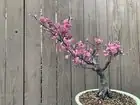
Picture this: a bare-boned bonsai that perfumes winter air with silk-petaled blossoms, then quietly builds next year’s fireworks while you guide every twig with purpose. That’s Prunus mume—Japanese Apricot, also called Mume, Ume, or Chinese Plum—at its best. Below is your bonsai roadmap: the decisive post-bloom cutback, a summer pinching rhythm, wiring that reveals an elegant skeleton, and subtle water-and-feed tweaks that “stack” flower spurs for an even bigger show next year.
Meet Prunus mume, the bonsai that blooms on bare bones
- Origin: China and the Korean Peninsula. Long celebrated across East Asia as winter’s first smile.
- Habit: Woody shrub to small tree with an inherently graceful framework—excellent for bonsai.
- Signature move: Strongly fragrant flowers explode on leafless wood from winter into early spring.
- Culture essentials: Full sun (6+ hours), cool air in bloom, and excellent drainage. It likes steady moisture during the growing and bud-setting seasons, but hates soggy soil.
The roadmap at a glance (season by season)
- Right after flowering
- Hard-prune the spent one-year shoots back to about 1–2 cm, leaving roughly 2–3 buds. This is the single most important step for next year’s bloom.
- Often repot now, before vigorous spring growth takes off. Refresh the soil, trim long/dead roots, and reset structure.
- Spring
- Water deeply, then allow the surface to begin drying between waterings.
- Feed lightly 1–2 times as shoots extend.
- Late spring to early summer (often May–June)
- Let new shoots run to 5–6 leaves, then pinch back to 2 leaves to control length and start building short flowering spurs.
- Slightly reduce watering (gradually, never to wilting) to encourage flower-bud differentiation.
- Summer
- Continue pinching after 5–6 leaves on vigorous shoots; remove unwanted water-sprouts.
- Wire green shoots if needed and avoid overfeeding. Keep the tree just on the drier side of “evenly moist,” never bone-dry.
- Late summer through autumn
- Maintain steady moisture to protect leaf health and finalize bud set.
- Give one light, bloom-supportive feeding in early autumn.
- Winter and bloom time
- Before flowering, you can shorten overly long uprights to balance silhouette.
- For indoor display, keep it bright and cool (about 8–10°C / 46–50°F) to stretch the bloom season, then return outdoors.
Post-bloom hard cutback: the engine of next winter’s flowers
- How far to cut
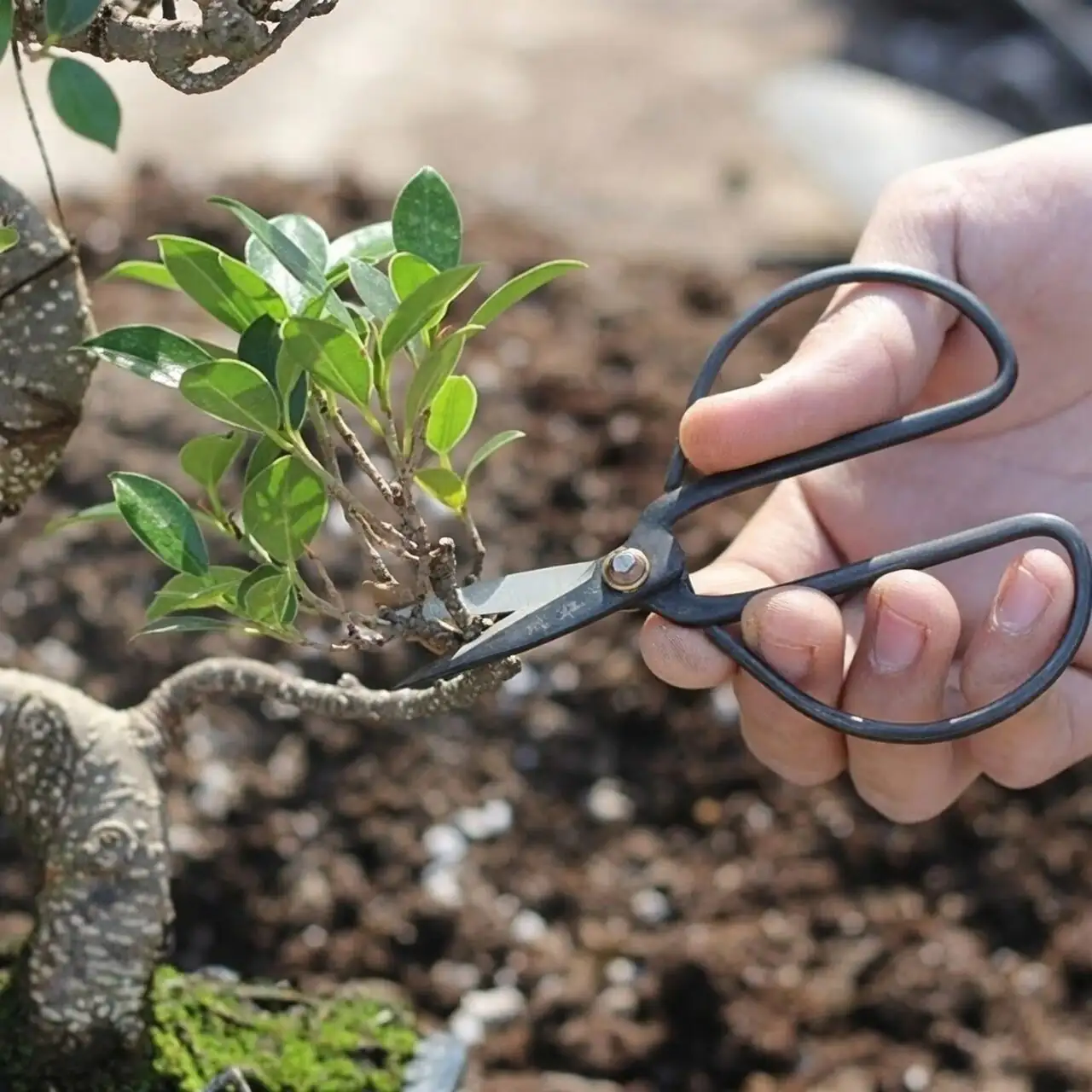
- Immediately after flowering, shorten last year’s shoots to a small stub—about 1–2 cm—or simply count and leave 2–3 buds at the base. Seal larger cuts.
- This concentrates energy where you want ramification and triggers formation of short, flower-bearing spurs.
- Recognizing which buds to keep
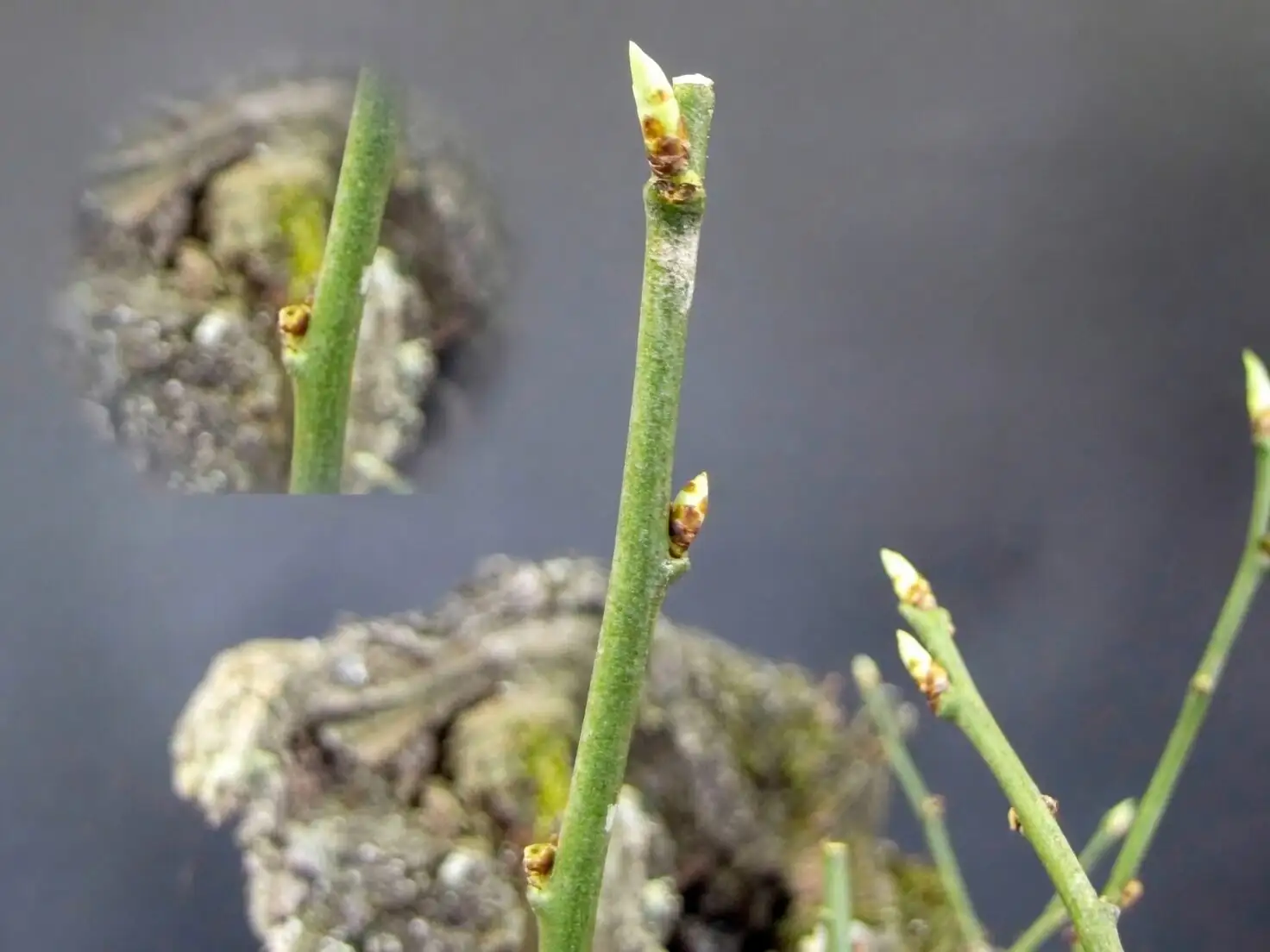
- Plump, rounded buds on short spurs are typically flower buds; slimmer, more pointed buds are leaf/extension buds.
- Tip for summer scouting: shoots that produced smoother, glossier leaves rarely carry flower buds at their bases; slightly rough-textured leaves are more likely to accompany flower buds later.
- Preserve the lowest 2–3 viable buds on each pruned shoot to anchor future spurs and structure.
- Pair pruning with repotting
- The best repotting window is after bloom and before strong spring growth. Trim long, dead, or rotted roots; refresh into a very free-draining, loam-based mix (loam + compost/leaf mold + coarse sand/grit). Avoid heavy, water-retentive soils and never leave the pot standing in water.
Summer pinching after 5–6 leaves: how you stack spurs
- The rhythm
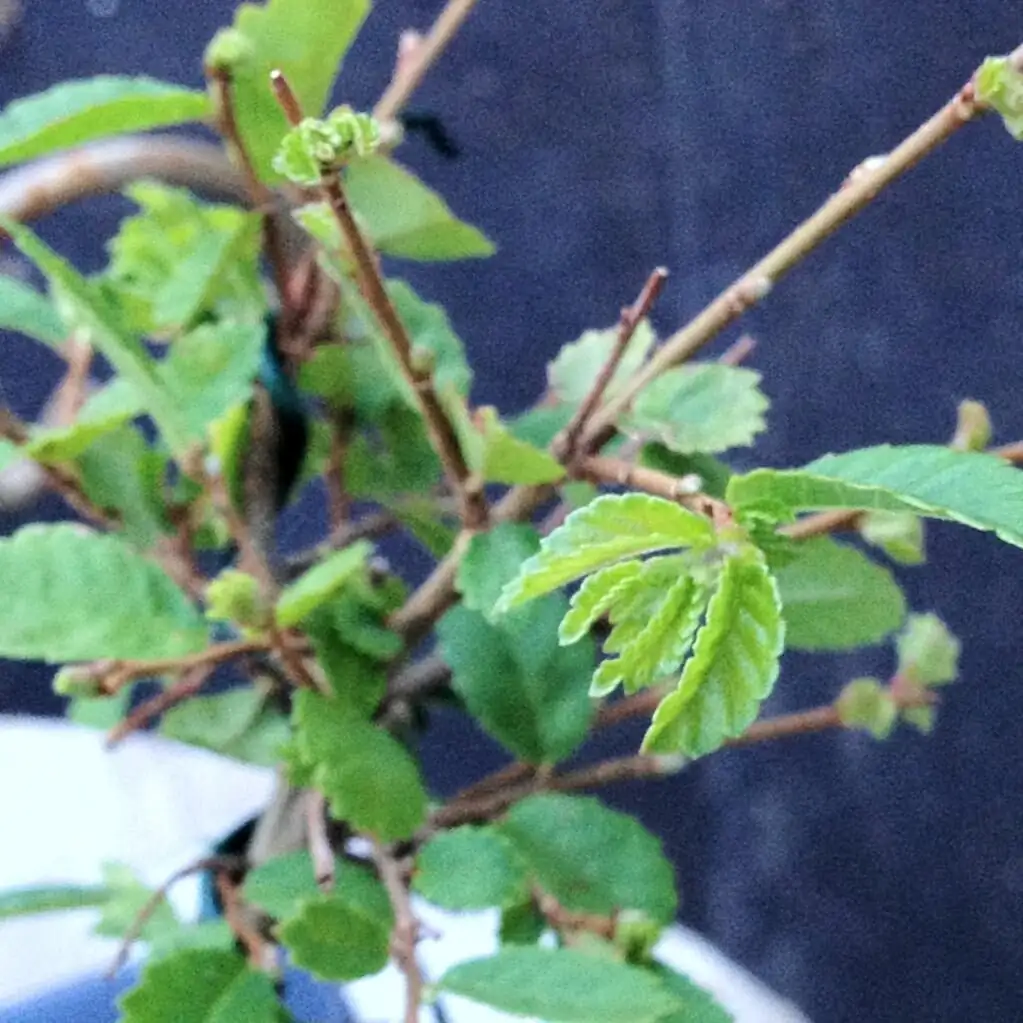
- Allow each new shoot to extend to 5–6 leaves.
- Pinch back to 2 leaves. Repeat this cadence on strong shoots across summer to shorten internodes, increase ramification, and promote spur formation.
- What to remove
- Thin out congested, weak, or inward-crossing twigs; rub off unwanted water-sprouts.
- Avoid heavy pruning in fall to prevent a tender late flush that may not harden before cold arrives.
Wiring to reveal the elegant skeleton
- Timing that works
- Mid-summer: wire green, flexible shoots to set primary directions without heavy cuts.
- Winter (after leaf fall): suitable for refining structure and revealing the bones, but avoid extreme bends on older wood, which can die back in spring.
- Technique tips
- Use aluminum wire to be gentle on bark; check frequently and remove within 1–2 months to prevent wire bite.
- Guy-wires are ideal for moving heavier branches without stressing their bases.
- Open the branch spacing so flowers read clearly along the lines of the tree—think elegant calligraphy rather than dense brushstrokes.
- Downward and slightly outward angles help showcase buds on bare wood; subtle bends feel most natural on this species.
Watering and fertilizing tweaks that bank next year’s bloom
- Watering, tuned to bud differentiation
- Spring: water thoroughly when the top begins to dry.
- Late spring–early summer: a gentle reduction (without wilting) helps signal the tree to set flower buds rather than push coarse, leafy growth.
- Midsummer: keep a touch drier than spring, but never bone-dry.
- Late summer–autumn: shift to steady, even moisture—bud set is finishing and drought now can cause leaf drop and weak bud formation.
- Winter: water less, never let the rootball fully dry, and water around midday on sunny days. Avoid standing water at all times.
- Fertilizing to favor spurs over shoots
- Light feeder in pots. Apply 1–2 gentle feeds during spring extension.
- From late June onward, back off fertilizer to discourage lanky growth and help flower-bud formation.
- In early autumn, give one modest feed with a slightly bloom-leaning balance. Avoid pushing rich nitrogen after late June.
Light, temperature, and airflow: unlock fragrance and vigor
- Sunlight: full sun is best—at least 6 hours daily. Strong light yields tight internodes, sturdy spurs, and abundant buds.
- Temperature: prefers cool to mild (about 8–20°C / 46–68°F). Heat above 30°C (86°F), especially indoors, can prompt premature leaf drop.
- Bloom indoors: a cool, bright placement around 8–10°C (46–50°F) noticeably extends the floral display.
- Airflow: keep the canopy open and breezy to deter powdery mildew.
Soil and potting basics
- Mix: fertile but very free-draining. A loam-based base amended with compost/leaf mold plus coarse sand or grit works beautifully. Some growers like a small phosphorus source such as bone meal in moderation.
- Pot size: many display trees sit comfortably in 20–25 cm (8–10 in) containers; keep the root mass airy and un-compacted.
- Drainage: the number-one health lever—Prunus mume resents waterlogging more than short, thoughtful dry-downs.
Bonsai styling notes that flatter mume
- Silhouette: an open, lightly tiered canopy lets blossoms read along bare branches. Resist crowding.
- Negative space: frame key junctions so winter blooms seem to float in air.
- Deadwood: tasteful deadwood can look striking and often persists well on mume—but use a restrained hand to keep the classical feel.
Pests, diseases, and general health
- Powdery mildew: improve airflow, avoid late-day overhead watering, prune out badly affected growth, and treat early if needed.
- Aphids: common on tender shoots; rinse off or use insecticidal soap/targeted controls.
- Wood-boring beetles: prune out infested wood, keep the tree vigorous, and use locally permitted controls when necessary.
- Safety note: like many Prunus, the seeds/kernels can contain cyanogenic compounds; keep pits away from children and pets.
Symbolism: why this tree carries winter’s brave heart
Prunus mume is a classic emblem of resilience and hope—opening fragrant flowers against lingering cold, it signals that spring is on its way. This association grew from centuries of observation and poetry across East Asia: the tree defies frost with quiet beauty, so it came to stand for steadfast spirit, renewal, and the tasteful austerity prized in classical arts. In bonsai, those meanings deepen; the revealed winter skeleton and sudden bloom dramatize strength through simplicity.
Quick propagation notes (for future projects)
- Hardwood cuttings: late winter to early spring from strong 1–2-year wood, 10–18 cm long, in a sandy medium at about 20–25°C (68–77°F). Rooting often in 30–40 days. A brief IBA dip (~0.5% for 5–10 seconds) can help.
- Softwood cuttings: May–June with frequent misting.
- Air-layering: early spring before bud break or in summer after shoots harden; ring-bark about 1 cm wide, pack with moist leaf mold/compost, wrap, then sever and pot once well-rooted.
- Grafting: commonly mid-March or mid-to-late September onto suitable Prunus rootstocks (apricot, plum, peach types), which influence vigor and resilience.
Your month-by-month cheat sheet
- Spring
- Full sun; deep, even watering as growth starts; 1–2 light feeds.
- Late spring–early summer (May–June)
- Slightly reduce watering; let shoots run to 5–6 leaves, then pinch to 2; start wiring green shoots if needed; begin dialing back fertilizer from late June.
- Summer
- Continue pinching; thin unwanted shoots; avoid overwatering and overfeeding; monitor wires.
- Summer–autumn (July–October)
- Keep moisture steady to protect leaves and bud set; one light bloom-leaning feed in early autumn.
- Autumn–winter
- Water less but don’t let the rootball dry out; brightest light possible; refine structure lightly before bloom if needed.
- Bloom period
- For indoor enjoyment, display in a bright, cool spot around 8–10°C (46–50°F).
- After flowering
- Hard-prune to 2–3 buds on one-year shoots; repot on a mild, bright day into a free-draining mix; trim tired roots and reset the tree’s bones.
If you follow this rhythm—decisive post-bloom cuts, summer pinching at the 5–6-leaf mark, wiring that clarifies the silhouette, and water-and-feed finesse timed to bud differentiation—you’ll watch Prunus mume do what it’s famous for: bloom on bare branches with poetic abundance, year after year.