

Winter looks better with a little mischief in the air, and few plants pull off that trick like Prunus mume—the Japanese apricot whose flowers pop open on bare wood and send a sweet, spicy perfume drifting through crisp, cold days. Here’s the fun, science-y why behind its signature show, plus how to coax the most fragrance and bloom from your plant or a few well-chosen cut branches.
Meet Prunus mume at a glance
- Also called Japanese apricot, Chinese plum, flowering apricot; in English you’ll also see Ume or Mume.
- Origin: China and the Korean Peninsula.
- Family: Rosaceae (the rose family), genus Prunus.
- Habit: A woody shrub to small tree with elegant branching; brilliant as a specimen, potted accent, or bonsai.
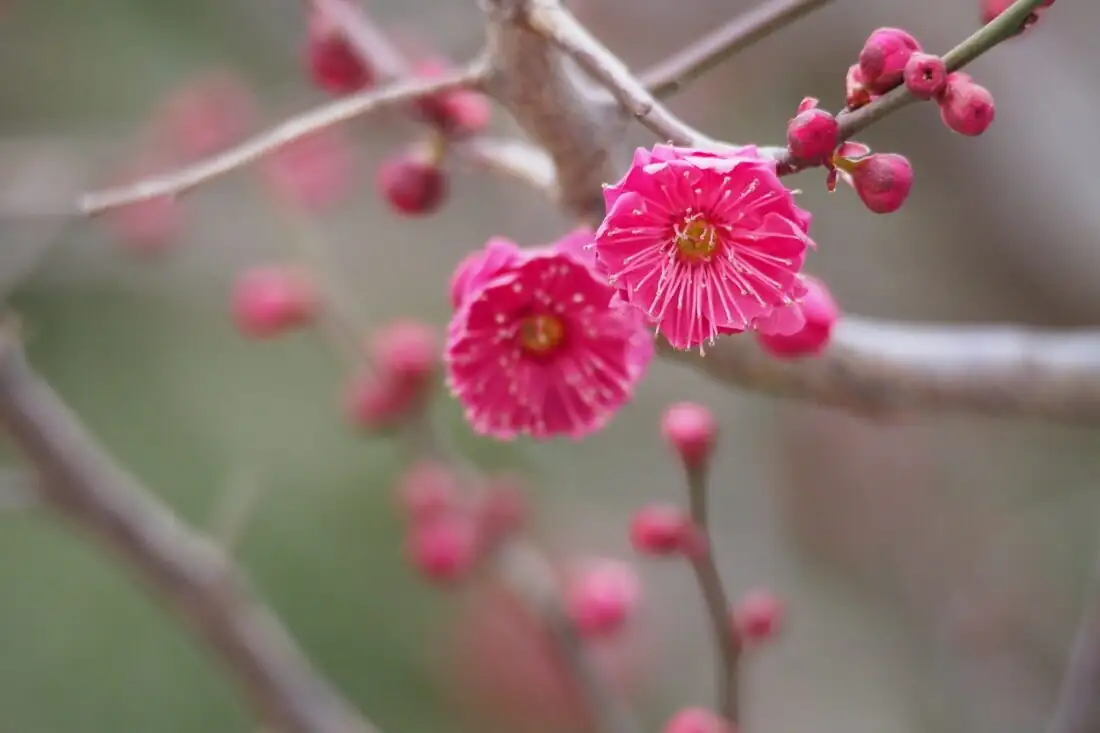
- Star move: Intensely fragrant blossoms open on bare branches in winter to early spring, in shades from white to pink to red (single or double forms).
- Growing vibe: Loves full sun and excellent drainage; dislikes soggy roots. Cool air during flowering keeps blooms fresh. Once established, it’s fairly tough—cold hardy for many cultivars to around -10°C (14°F) and modestly drought tolerant.
The bare-branch bloom: why it flowers before the leaves
Prunus mume has perfected the minimalist runway show—flowers first, leaves later. That timing is not just dramatic; it’s strategic.
- Energy banking: Flower buds are formed the previous growing season and fueled by carbohydrates stored in wood and roots. That banked energy lets the plant flower before photosynthesis ramps back up.
- Visual amplification: Petals aren’t competing with foliage, so each bloom reads bright and clear from a distance—perfect for pollinator signaling on mild winter days.
- Microclimate magic: Leafless canopies warm faster in winter sun. Slight warmth around the flowers helps scent volatilize and may entice cold-hardy pollinators.
- Horticultural tip: Most blooms arise on one-year wood. Right after flowering, cut those spent shoots back hard—leave about 2–3 buds at the base (roughly 1–2 cm). This classic “post-bloom prune” refreshes spurs and sets you up for next year’s show.
Why the fragrance seems stronger in cold air
If you’ve ever caught a surprisingly powerful whiff of ume on a frosty afternoon, you’re not imagining it. Several physics-and-chemistry quirks stack the deck for winter scent.
The chemistry
Ume’s perfume is rich in sweet, almondy and lightly spicy notes from benzenoid and phenylpropanoid volatiles (think benzyl acetate, benzyl alcohol, benzaldehyde, a touch of eugenol in some forms). These small molecules readily evaporate and drift.
The physics of winter air
- Calm, dense air: Cold air is denser and winter days are often still. With less convective lift and mixing, scent plumes linger near branch and nose level instead of dispersing quickly upward.
- Temperature inversions: On clear, cold days, a shallow layer of cool air hugs the ground under slightly warmer air higher up—like a lid on a pot. Volatiles accumulate in that layer where you can smell them.
- Humidity sweet spot: Many winter days are cool and moderately humid. Higher relative humidity can slow the oxidation and breakdown of some volatiles, helping the scent persist.
Indoors vs outdoors
- Indoors: Warm rooms increase volatilization—smell intensifies quickly but bloom life shortens.
- Outdoors: Cool air slows petal senescence and fragrance release is steadier, so you notice it repeatedly over a longer window.
Bud density = a jaw-dropping display
A great ume show isn’t just about big flowers—it’s about how many of them line the wood. Dense, closely set buds deliver that “every node is blooming” effect.
What drives density:
- One-year wood, many nodes: Ume sets lots of buds along last season’s shoots. Managed correctly, these become tightly spaced flower clusters.
- Right-after-bloom pruning: Shortening spent shoots to 2–3 basal buds triggers compact, flower-rich growth for next year.
- Balanced water and feed:
- Spring: water thoroughly, then let the surface begin to dry before the next watering.
- Late spring to early summer: very slightly reduce watering and ease off fertilizer from late June—this supports flower-bud differentiation over leafy sprawl.
- Mid-summer through autumn: keep moisture steady (not soggy) to retain leaves and plump up buds.
- Bright light, always: Full sun (6+ hours) builds the carbohydrate reserves and bud quality that translate into density.
Buying tip: For a potted plant, choose one with lots of plump, closely spaced buds and only a few flowers already open. You’ll enjoy a longer, fuller performance.
Why cut branches perfume a room so effectively
A single branch of Prunus mume can scent an entryway; a few stems can perfume an entire room. Here’s why.

- High bloom-to-wood ratio: Each branch carries many flowers along the stem, concentrating fragrance sources in a small volume.
- Sequential opening: Many buds are staged—some open now, others tomorrow—providing a sustained scent release over days.
- Warmth-assisted volatilization: Indoor warmth raises the vapor pressure of scent molecules, making them evaporate and concentrate in enclosed air.
- Hydrated metabolism: Even in a vase, the flowers keep metabolizing and producing volatiles as long as the cut xylem stays open.
Make the most of cut stems:
- Harvest when buds are colored but mostly closed. Cut during the warmest part of a frost-free day.
- Recut ends at an angle, split thicker bases slightly, and strip any buds or twigs that would sit below the waterline.
- Use clean water, change it every 1–2 days, and keep stems bright but cool (8–10°C / 46–50°F) to extend bloom. Move to a warmer room briefly when you want a stronger scent burst.
- Keep away from heaters and ripening fruit (ethylene shortens petal life).
Quick care cheatsheet for unforgettable bloom
- Light: Full sun; in winter, give the brightest light possible. Not shade-tolerant.
- Temperature: Cool-to-mild is best (about 8–20°C / 46–68°F). Indoors during bloom, a cool spot around 8–10°C prolongs flowers. Many cultivars tolerate around -10°C outdoors.
- Soil: Fertile but very free-draining. For pots, use a loam-based mix with compost/leaf mold and coarse sand/grit. Never let pots sit in water; ume dislikes waterlogging.
- Watering rhythm:
- Spring growth: water deeply, then let the surface begin to dry.
- Late spring–early summer: slightly reduce watering; don’t let it wilt.
- Mid-summer–autumn: keep moisture steady to retain leaves and set buds.
- Winter (leaf-off): water less, never bone-dry; water at midday on sunny days.
- Feeding: Light feeder in pots. Feed 1–2 times during spring extension; reduce from late June. Give one light, bloom-supporting feed in early autumn.
- Pruning (crucial): Right after flowering, shorten last year’s shoots to 1–2 cm (leave 2–3 buds). In summer, thin/pinch overly vigorous growth. Before winter bloom, shorten long uprights to balance the canopy.
- Repotting (potted plants): After flowering and before vigorous spring growth. Refresh the mix and trim long or dead roots.
Placement bonus:
- Outdoors is best year-round for vigor. During flowering, bring a potted plant into a bright, cool indoor spot to savor the fragrance, then return it outside.
Pests, diseases, and safety notes
- Powdery mildew: Improve airflow, avoid late-day overhead watering, remove affected leaves, and treat early if needed.
- Aphids: Rinse off or use insecticidal soap; they love tender spring shoots.
- Wood borers: Keep plants vigorous and prune out infested wood; use permitted controls as needed.
- Safety: Like many Prunus species, the seeds/kernels can contain cyanogenic compounds—don’t chew or ingest pits; keep away from children and pets.
Symbolism and “flower language” with a reality check
The Japanese apricot has been celebrated for centuries as the blossom that braves the cold. Its flowers open while frost still laces the garden, so it naturally came to symbolize resilience, hope, and a steadfast spirit—the quiet promise that spring is on its way. In some traditions, people read the five petals as five blessings (wealth, health, love of virtue, long life, and a peaceful passing). Think of these as cultural interpretations built around the plant’s real-life behavior: early bloom, durability in cold, and a fragrance that feels almost miraculous in winter air.
One last nudge
Whether you grow it in the ground, keep it potted on a sunny balcony, train it as bonsai, or simply bring home a few cut branches, Prunus mume turns late winter into a season worth savoring. Keep it bright, keep it cool, keep the roots out of soggy soil—and let those bare branches do their sparkling, fragrant thing.