

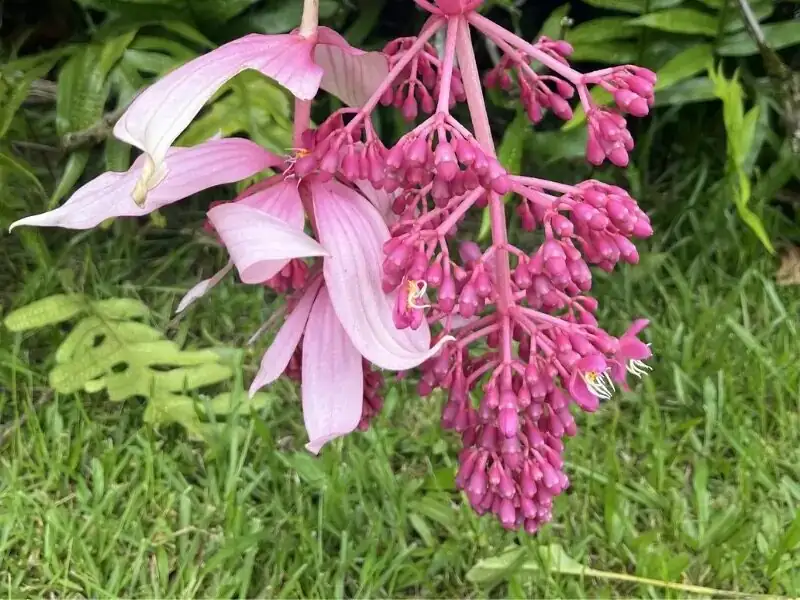
Glossy leaves like lacquered jade. Waterfall-pink bracts that drape like chandeliers. Medinilla magnifica (often sold as Rose Grape) is a showstopper—but it’s also a connoisseur of careful watering. Nail water temperature and quality, perfect your bottom-watering routine, and you’ll keep those blooms hanging on in glorious tiers.
Below is your water-wise playbook—how to keep the root zone evenly moist, safeguard buds from stress, and avoid splashing those luxe flowers.
Why water quality matters for Rose Grape
Medinilla magnifica hails from warm, humid Philippine forests, where rainwater bathes roots and minerals don’t accumulate fast. Indoors, your water source and technique can make or break flowering.
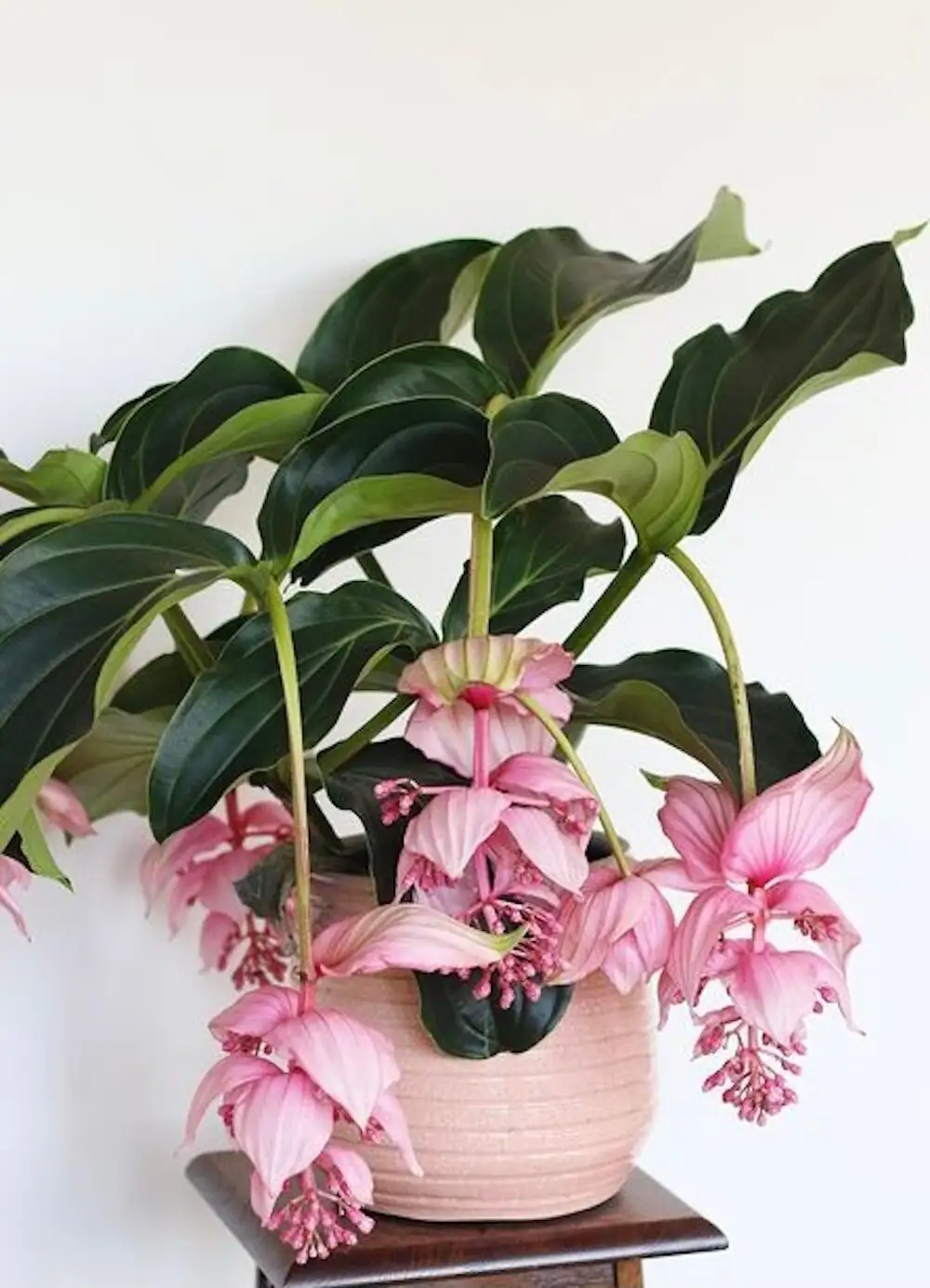
- Hard water and mineral load
- What can go wrong: mineral salts accumulate at the soil surface and around roots, raising pH, drying root tips, spotting leaves, and generally reducing bloom vigor over time.
- Best practice: use soft water whenever possible—rainwater or distilled is reliably gentle for this species.
- Tap water: when you can use it—and how
- If your tap water is soft-to-moderately hard, you can often use it successfully by letting it sit overnight to dissipate some chlorine and warm to room temperature.
- If your tap water is hard (scale on kettles, white crust on pots), switch to rainwater or distilled. Another option is to blend 1 part tap with 1–2 parts distilled/rain to dilute hardness.
- Pro tip: a simple TDS pen or your city’s water report can confirm hardness. If you must rely on hard tap water, periodically flush the pot with distilled/rainwater to leach salts (details below).
The right water temperature (and why it matters)
Cold water can shock warm roots, triggering stress that encourages bud or flower drop. Aim for lukewarm, close to room temperature.
- Target: 20–24°C (68–75°F), roughly the temperature of the space where the plant lives.
- Never use icy or hot water. Sudden temperature shifts plus stagnant air are a fast track to bud drop.
Rain or distilled vs. tap: choosing wisely
- Rainwater or distilled
- Pros: minimal dissolved minerals; kinder to roots and leaves; reduces crusting and salt stress.
- Use cases: regular watering, bottom-watering trays, humidifiers or pebble trays (prevents limescale residue if a little mist reaches foliage).
- Tap water
- Works best if soft. Let it sit overnight and warm before use.
- If your municipality uses chloramine, it won’t dissipate by standing; a carbon filter or blending with distilled helps.
Bottom line: this plant often performs better on rain or distilled water, especially in hard-water regions.
Bottom-watering: step-by-step for even moisture (without wetting blooms)
Heavy, pendant inflorescences dislike splashy watering. Bottom-watering keeps flowers dry while hydrating roots deeply and evenly.
1) Prepare the bath
- Fill a tray or basin with 2–5 cm (about 1–2 in) of lukewarm rain or distilled water.
2) Set the pot in the tray
- Ensure the pot has ample drainage holes and the potting mix is airy (think orchid-style bark plus perlite/charcoal, or a humus-rich mix lightened with perlite/coarse sand). Dense soil defeats the method.
3) Soak
- Leave for about 15–25 minutes (20 minutes is a great baseline). Capillary action will wick moisture up. You’ll know it’s adequate when the top feels just barely moist.
4) Drain fully
- Lift the pot, tilt gently to pour off any excess from the rim, then let it drain completely. Never leave the pot standing in water.
5) Restore airflow
- Return the plant to its bright, filtered-light spot. Good ventilation prevents root and stem troubles.
How often to bottom-water
- During active growth and bloom: keep the mix evenly moist but never soggy. In hot summer rooms and very airy mixes, you may need to water frequently—sometimes even daily if the medium dries fast. Avoid dramatic swings from bone-dry to drenched, which can drop buds.
- In winter: reduce the pace. Allow the mix to dry slightly between waterings, then rehydrate thoroughly. The plant still likes warmth (ideally above 16°C/61°F), but its thirst slows.
How to water from the top (when you must) without splashing blooms
Occasionally you’ll want a top-down flush to wash out salts. Do it like a pro:
- Shield and direct
- Slip a loose paper cone or plastic bag over the blooms and pink bracts, leaving plenty of air space so nothing gets crushed.
- Use a narrow-spout watering can or squeeze bottle aimed at the soil surface beneath the leaves, not at stems or bracts.
- Flush and drain
- Use lukewarm rain or distilled water and pour slowly until it drains freely from the bottom—this leaches built-up salts.
- Let it drain completely before returning to its cachepot or decorative sleeve.
- Timing
- Choose a warm, bright day with gentle air movement so any incidental splashes dry quickly.
Seasonal watering rhythm you can trust
- Late spring to summer (main bloom window)
- Light: very bright, filtered. Avoid harsh midday sun that can scorch leaves and stress flowers.
- Water: keep evenly moist. Check the top 1–2 cm (½–¾ in); if it’s just turning dry, water. Consistency prevents bud/flower drop.
- Humidity: aim for 50–70%+; 70–80% is ideal for bud set. Use a humidifier or a pebble tray—but don’t let the pot sit in water. Mist around, not on, the flowers.
- After flowering
- Remove spent clusters and lightly prune back the shoots that flowered to spur fresh growth, then resume steady, even moisture as new shoots develop.
- Winter
- Keep warm (above about 16°C/61°F) and bright. Water less often and allow a slight dry-down between waterings. No soggy soil, no prolonged drought.
Keeping blooms spotless: zero-splash tricks
- Water low and slow
- Bottom-water by default. If top-watering, slide the spout under foliage and pour onto the mix, not the stems.
- Elevate and ventilate
- Display the plant high so the flower clusters can drape freely; gentle airflow helps them dry if they catch a stray drip.
- Humidity without wet petals
- Run a humidifier nearby or use a pebble tray. If you mist, do it around the plant and aim beneath the blooms to raise ambient moisture without dotting the bracts.
- Temperature steadiness
- Avoid cold drafts, heat spikes, or stagnant, hot rooms—any of these can trigger bud or flower drop even if watering is correct.
Troubleshooting water quality and technique
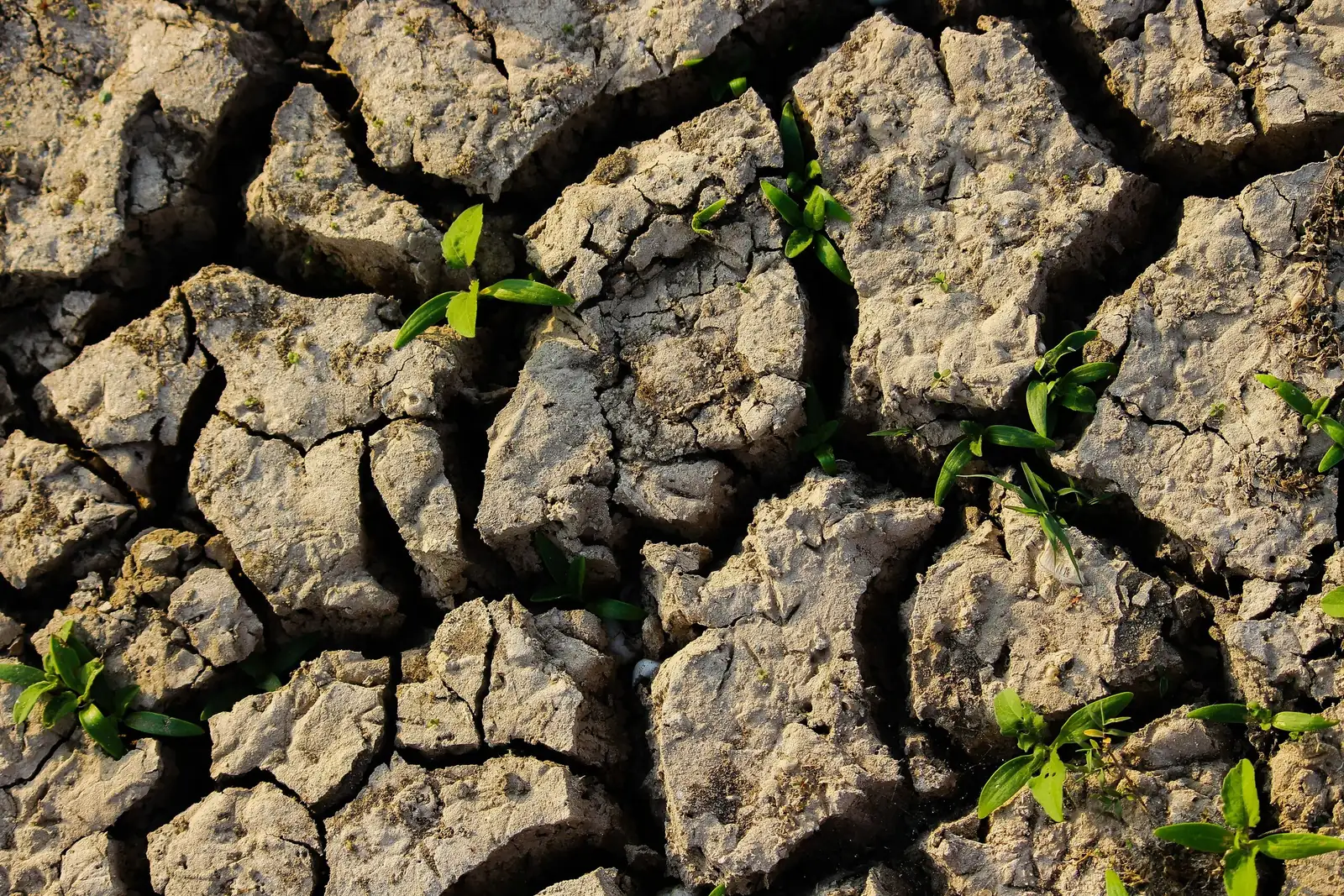
- White crust on soil or pot rim
- Cause: mineral salts from hard water or overfertilizing.
- Fix: leach with rain/distilled water monthly; switch to softer water; confirm you’re not overfeeding.
- Brown tips or edges on leaves
- Cause: salts + low humidity or inconsistent watering.
- Fix: soften the water source; raise humidity; maintain even moisture.
- Buds yellowing and dropping
- Cause: moisture swings, cold water shock, harsh sun/heat buildup, or drafts.
- Fix: use lukewarm water, keep conditions warm and stable, provide bright filtered light and good airflow, avoid soaking then drought cycles.
Quick-reference watering checklist
- Use lukewarm water (20–24°C / 68–75°F).
- Prefer rain or distilled; blend with tap if yours is hard.
- Bottom-water for 15–25 minutes; drain completely.
- Keep evenly moist in growth and bloom; reduce in winter with a slight dry-down.
- Flush salts occasionally with soft water—shield the blooms.
- Keep humidity 50–70%+, ideally 70–80% for best bud set, without wetting the flowers.
A note on symbolism (and those “orchid-like” looks)
Medinilla magnifica is often gifted as a statement of tropical glamour and abundance—an elegant centerpiece that telegraphs refined taste. You’ll even see it sold as “Philippine Orchid,” a trade nickname nodding to its exotic, pendant blooms rather than its true family ties (it isn’t an orchid; it belongs to Melastomataceae). The meaning, then, is less folklore than visual poetry: opulence, grace, and a little theatrical flourish.
With the right water—soft, warm, and delivered with finesse—your Rose Grape will return the favor with cascading clusters that look like living chandeliers, week after week. Keep the roots evenly moist and the flowers dry, and you’ve cracked the code.