

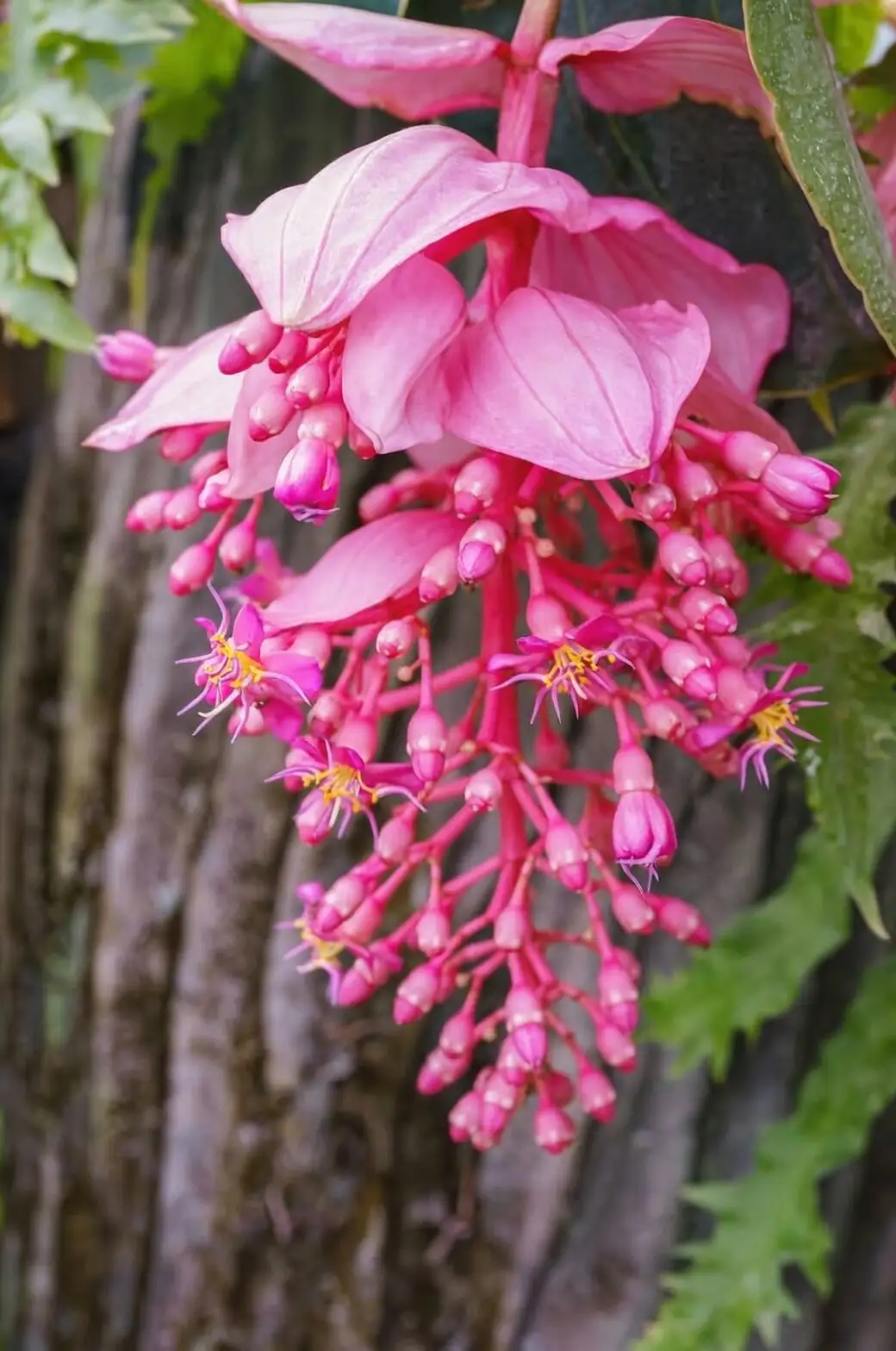
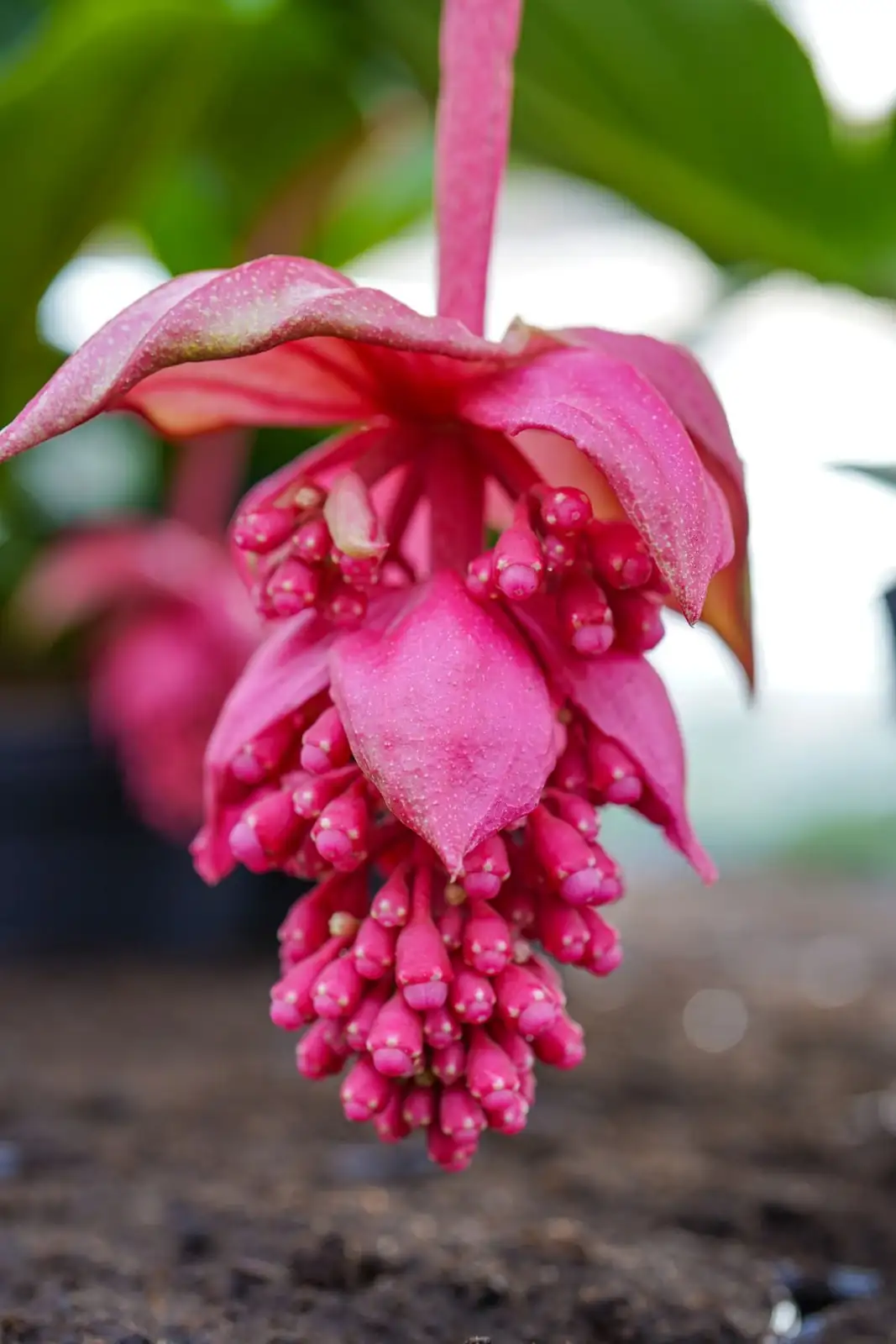
Think of Medinilla magnifica—Rose Grape—as a living chandelier: glossy, architectural leaves above cascades of satiny pink bracts and tiny pink-to-purple flowers that dangle like jewels. To make those cascades the star indoors, styling matters as much as care. Here’s how to set the stage so your Medinilla reads as high design, not just a pretty plant.
Meet the star: quick style-and-care profile
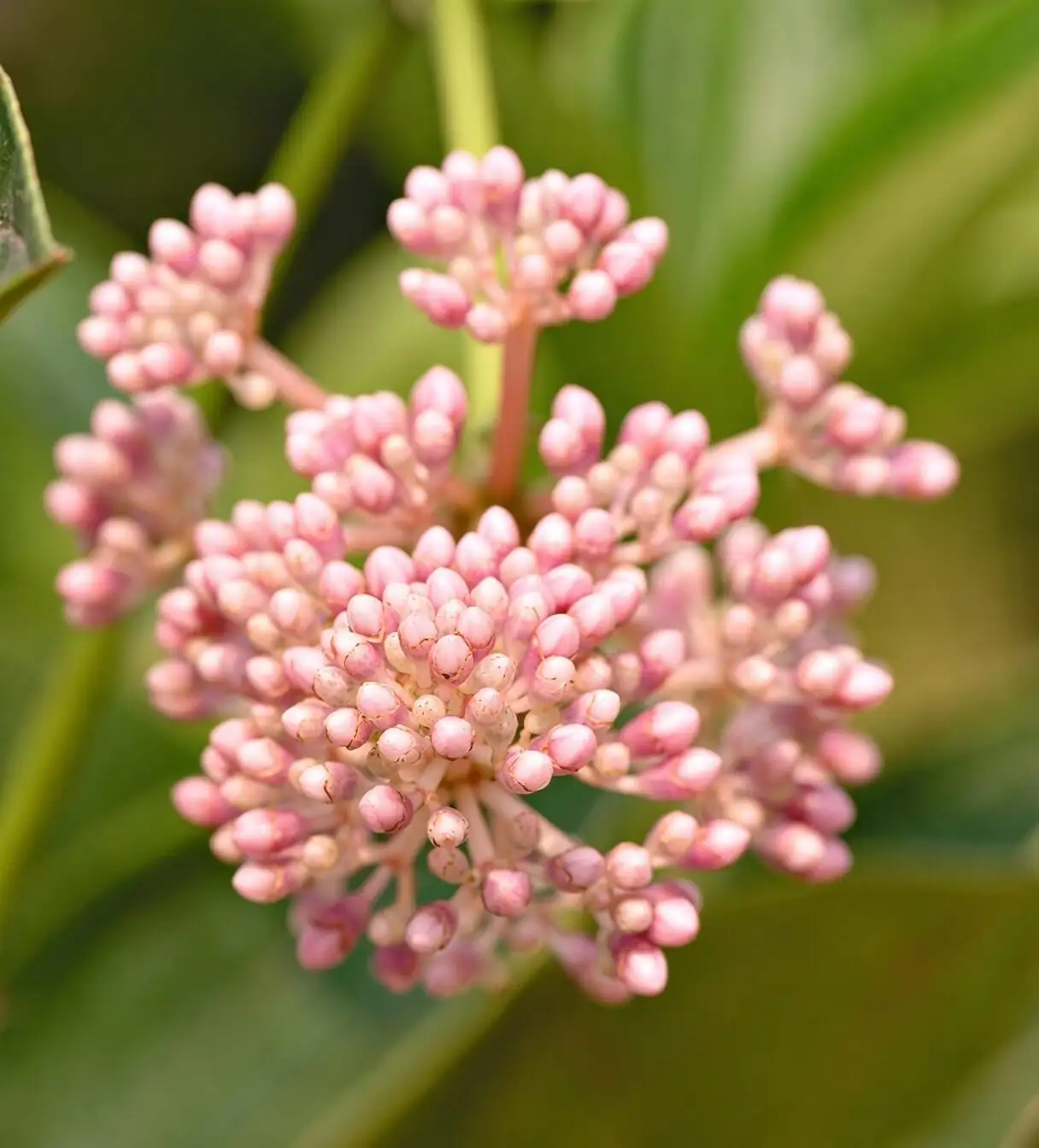
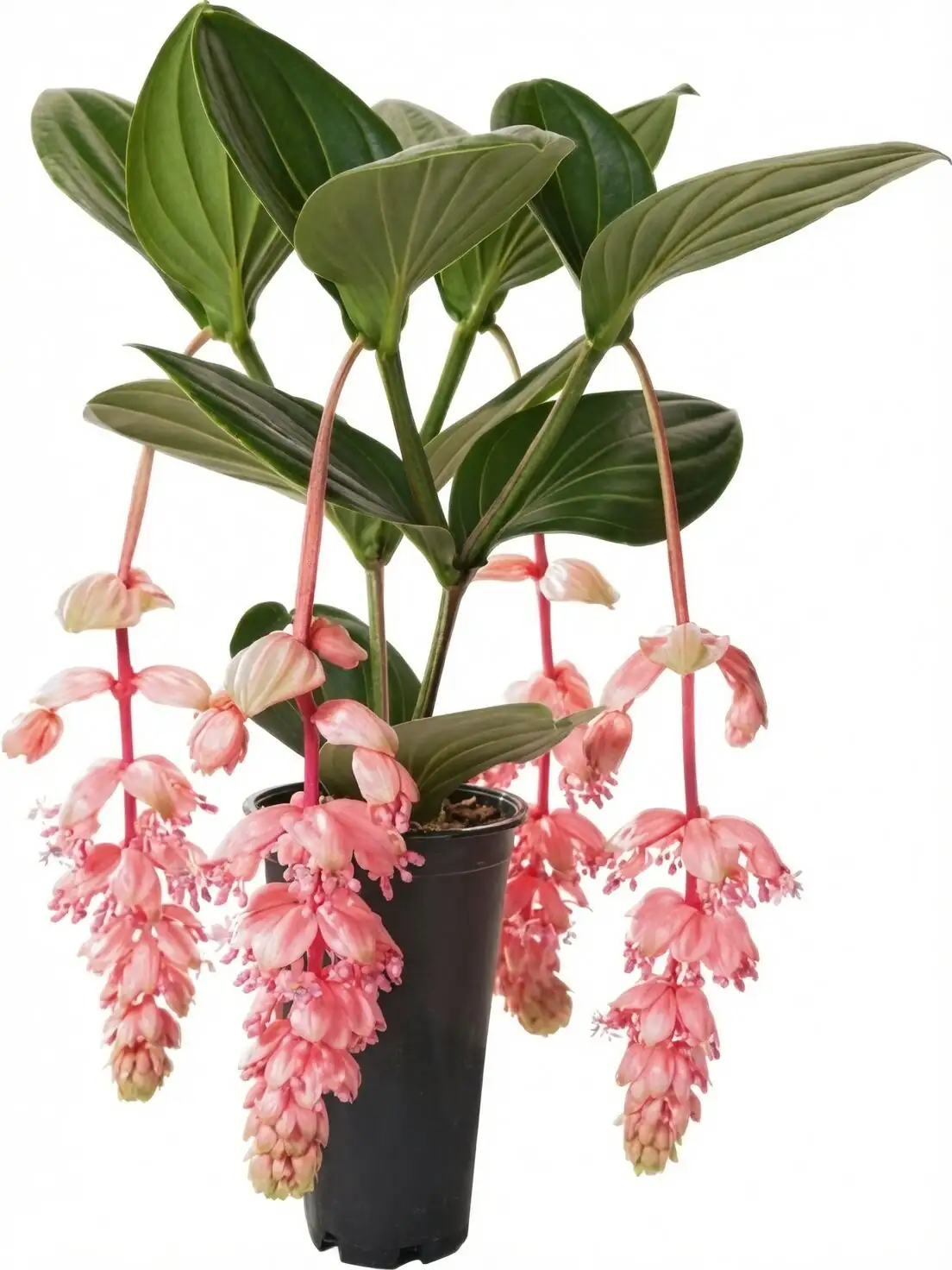
- Look: Large, leathery, deep-green leaves with raised veins; long, arching, pendant flower clusters in rosy pink with small true flowers tucked inside (often pink to purple).
- Origin: Tropical forests of the Philippines.
- Size indoors: Commonly 1–2 m tall and up to ~1.5 m wide at maturity; many specimens around 1.2 m tall × 1.0 m wide.
- Light: Bright, filtered/indirect; an east window or a south window with a sheer is ideal.
- Climate cravings: Warm and steady (about 22–28°C/72–82°F), medium-high to high humidity (aim 50–70%+, with 70–80% ideal).
- Bloom time: Late spring through summer indoors.
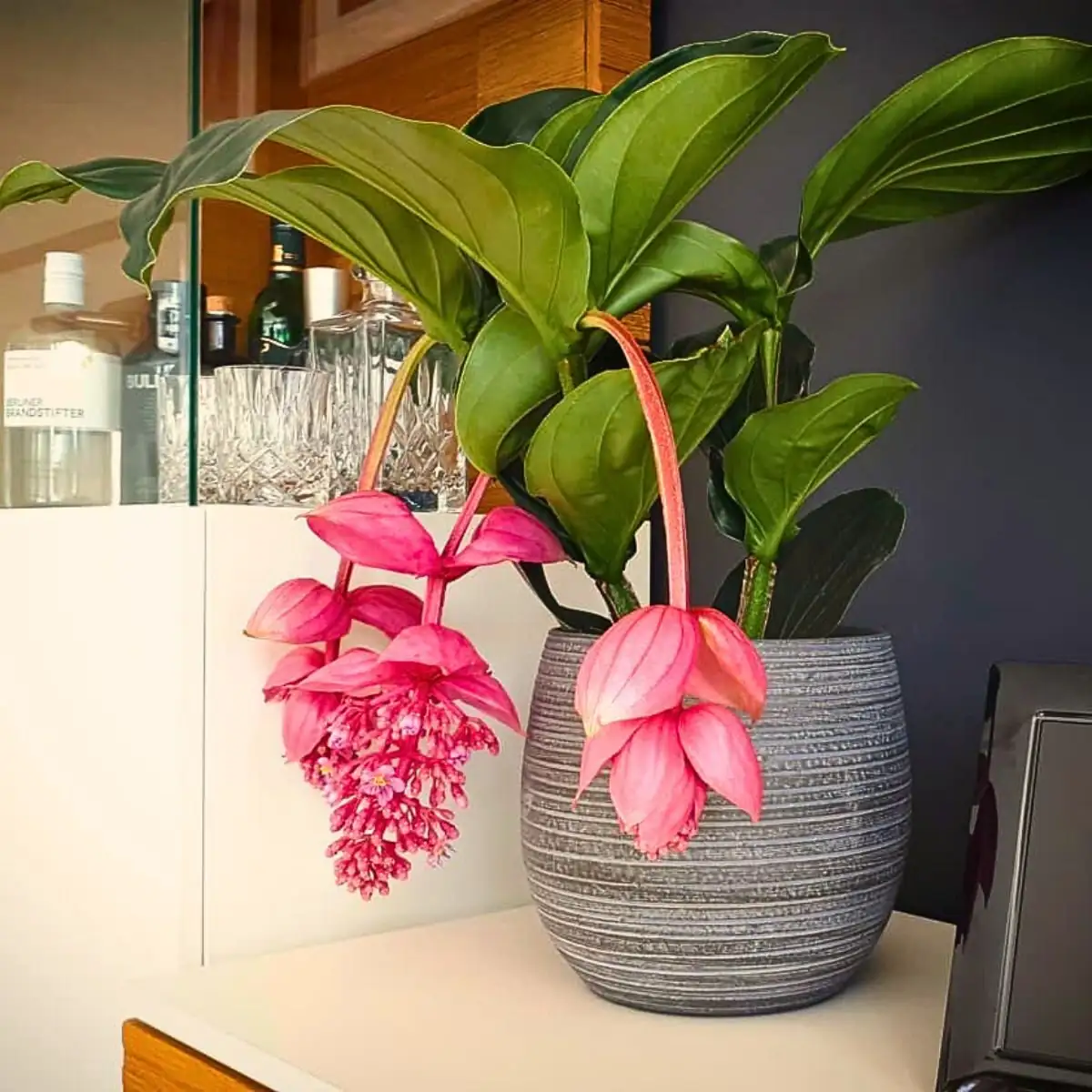
- Key styling note: Because the inflorescences hang below the foliage, it’s a natural for stands and tall planters so the clusters can drape cleanly into view.
Elevation is everything: stands and tall planters for perfect cascades
Raising Medinilla lifts the blooms into sightlines and prevents them bunching on the floor or tabletop.
Pot specs and soil that make displays effortless
- Pot dimensions: A deep container about 20–25 cm (8–10 in) wide and 30–40 cm (12–16 in) deep is standard. Some growers pot 1–3 young plants together for a fuller, showier crown.
- Mix options (both work—choose your style):
- Orchid-style chunky: fine bark + perlite/charcoal.
- Humus-rich potting mix: leaf mold/compost base lightened with coarse sand/perlite/vermiculite.
- Non‑negotiables: Excellent drainage and air at the roots; never let it sit in waterlogged media.
Choosing the right stand or tall planter
- Height guidelines: Elevate the rim so pending clusters can hang freely 20–40 cm (8–16 in) without hitting a surface. For most plants, a 45–70 cm (18–28 in) stand is perfect.
- Stability first: Use a heavy, wide-base stand; blooms are surprisingly weighty. Add discreet museum putty under the cachepot or use a strap-on pot ring for child/pet zones.
- Double-potting for clean watering: Keep your plant in a drainage pot that nests inside a decorative cachepot. Add a riser inside so runoff never re-wets the rootball.
- Mobility: A low-profile caddy with lockable casters lets you chase winter light without wrestling a tall planter.
Composition tricks
- “Waterfall window” look: Place the plant so clusters read front-and-center from the main room view, with foliage as a deep-green canopy behind.
- Grouping: Planting 2–3 young Medinillas in one deep pot gives a lush, exhibition-grade dome from which many pendant clusters can descend.
Backdrop colors that make pink bracts glow
The bracts are a refined pink, not neon—treat them like silk eveningwear.
- Best backdrops:
- Deep charcoal, anthracite, or soft black: turns blooms into luminous jewelry.
- Stormy blue or petrol/teal: amplifies pink without shouting.
- Bone white, ivory, or warm greige: gallerylike calm that suits contemporary rooms.
- Eucalyptus-grey greens: harmonize with foliage while letting blooms pop.
- Metals and textures: brushed brass, antique bronze, natural rattan, or cane add tropical-luxe warmth.
- Pot color pairings:
- Anthracite for drama; linen white or bone for minimalism; deep blue for a jewel-box effect; blush or mauve to echo the bracts.
- Avoid: Busy botanical prints directly behind the plant—compete with the architecture of the inflorescences.
Light angles: the flattering setup
Medinilla wants bright, filtered light—no harsh midday scorch.
- East window: A sweet spot—gentle morning sun then bright indirect. Position so side light skims the clusters, giving depth and shadow play.
- South window with sheer: Use a medium-weight sheer to soften midday rays; keep 0.5–1.5 m back depending on intensity.
- Backlighting magic: Slightly behind-and-above light makes the bracts glow like stained glass, especially at dusk.
- Rotate 15–25 degrees weekly: Keeps the canopy balanced and the cascades addressing your primary viewpoint.
- Airflow counts: Good ventilation without blasts. A gentle, far-off oscillating fan prevents heat buildup that can trigger bud drop.
Humidity hacks that don’t wet the blooms
Target 50–70%+ humidity (70–80% is ideal for bud set) while keeping flowers dry.
- Ultrasonic humidifier placed 1–2 m away on low, pointed past—not at—the plant.
- Wide pebble trays: Use an oversized tray filled with pebbles and water; the pot sits high and dry above the waterline.
- Plant clustering: Buddy up with other humidity lovers to create a microclimate.
- Bathroom adjacency: Park just outside a bright bathroom with the door open for post-shower ambient humidity—no splashing.
- Hygrometer on the stand: Aim for steady, not spiky, humidity.
- Mist the air around foliage only when not in bloom (or very cautiously), never on the flower clusters.
- Avoid: Heat vents, radiators, and direct spray—wet blooms can spot and shorten their life.
Watering and feeding—without dimming the show
- Watering rhythm:
- Growing/blooming season: Keep evenly moist but never soggy. Bottom‑water with lukewarm rain or distilled water: set the pot in a tray for ~20 minutes, then drain completely.
- Heat waves: The mix may dry fast—check daily but avoid a bone-dry to soak cycle that causes bud/flower drop.
- Winter: Water less; allow the top layer to dry slightly between waterings.
- Always avoid splashing water onto the flowers.
- Feeding for performance:
- Option A: Monthly balanced feed (e.g., 20‑20‑20 at label rate) with 1–2 extra bloom‑supporting feeds higher in K/P as buds form.
- Option B: Every 2 weeks, half‑strength high‑potassium feed from spring to late summer.
- Don’t overdo it—potassium support during bud and bloom is the key.
Gentle supports and tying techniques for showtime displays
Those chandelier clusters can pull stems off-balance. Support invisibly and kindly.
- Tools to have:
- Soft, stretchy plant ties or silicone-coated wire; florist’s tape; clear nylon line (only if padded where it touches stems); slim U- or Y‑stakes.
- Never use thin, unpadded wire directly on stems.
- The cradle tie (for heavy clusters):
- Insert a slim stake at a 30–45° outward angle on the bloom side of the pot.
- Loop a soft tie under the peduncle (stem of the inflorescence), about halfway to the cluster—not on the bracts.
- Gently lift until the cluster clears the pot rim and drapes; secure to the stake with a figure‑eight tie so it doesn’t chafe.
- The rim sling (for show windows):
- Pad the inner cachepot rim with a small self-adhesive foam strip.
- Run a soft tie from a rear stake to the padded rim as a sling.
- Rest the peduncle in the sling so the cluster faces forward like a stage spotlight.
- Discreet guy-lines:
- For asymmetrical specimens, run a clear, padded line from a rear stake to a hidden point on the stand to counterbalance a lopsided canopy.
- Check weekly:
- Retie looser as stems thicken; never cinch. Remove supports after flowering and prune back the flowered shoots by about half to promote next cycle growth.
Styling playbook: rooms, vignettes, and height tricks
- Entry pedestal: A tall, weighted stand under an east-facing transom window turns every arrival into a “wow.”
- Reading nook: Angle the plant so side light catches the bracts; use a charcoal wall and brass floor lamp for Old-World conservatory vibes.
- Dining room sideboard: Backlight with a shaded lamp behind a sheer—blooms glow at dinner without heat on the plant.
- Stair landing: A pair flanking the turn looks grand; use lockable caddies for safe maintenance.
- Sheltered outdoor moment (in truly warm climates): Bright shade, out of rain and drying winds. Bring indoors the moment temps threaten to drop below ~16°C/61°F. Year‑round outdoor culture is best reserved for roughly USDA Zones 11–12.
Care and troubleshooting essentials (fast fixes)
- Bud/flower drop? Common stress triggers: hot direct sun, overheated rooms with poor airflow, cold drafts, and erratic watering from bone-dry to sopping. Return to bright filtered light, even moisture, steady warmth, and good ventilation.
- Leaves marking or scorch? Too much direct sun—add a sheer or move to bright indirect.
- Pests: Watch for spider mites in dry air, plus scale, mealybugs, and whiteflies. Isolate and treat early with insecticidal soap or horticultural oil; improve humidity and airflow.
- Repot timing: Every ~2 years in spring; disturb roots minimally. Offer brief light shade after repotting while it settles.
- Safety: Not widely documented as toxic to humans or pets, but best kept out of reach of nibblers.
Symbolism and story: why it reads as “couture”
Medinilla magnifica has long been a conservatory celebrity—its pendant, tiered clusters look like beaded gowns on a runway. That’s why it’s associated with tropical glamour, elegance, and abundance. You’ll sometimes see it sold as “Philippine Orchid”—a trade nickname inspired by its exotic, hanging blooms rather than its family ties (it’s not an orchid). As a gift, it telegraphs refined taste and a love for the unusual—a true statement plant.
Final polish: the pre‑show checklist
- Wipe leaves with a barely damp microfiber cloth (no oily leaf-shines).
- Set humidity to a steady 60–75% using a tray + distant humidifier; confirm with a hygrometer.
- Adjust light so clusters are softly front- or side-lit; add a sheer at midday if needed.
- Bottom-water with lukewarm, low‑mineral water; fully drain.
- Tie and cradle the heaviest clusters so they float—never tug or cinch.
- Step back, dim the room, and let the living chandelier do the rest.
When you blend smart elevation, flattering light, dry-bloom humidity, and invisible supports, Rose Grape transforms from houseplant to headliner—no florist required.