

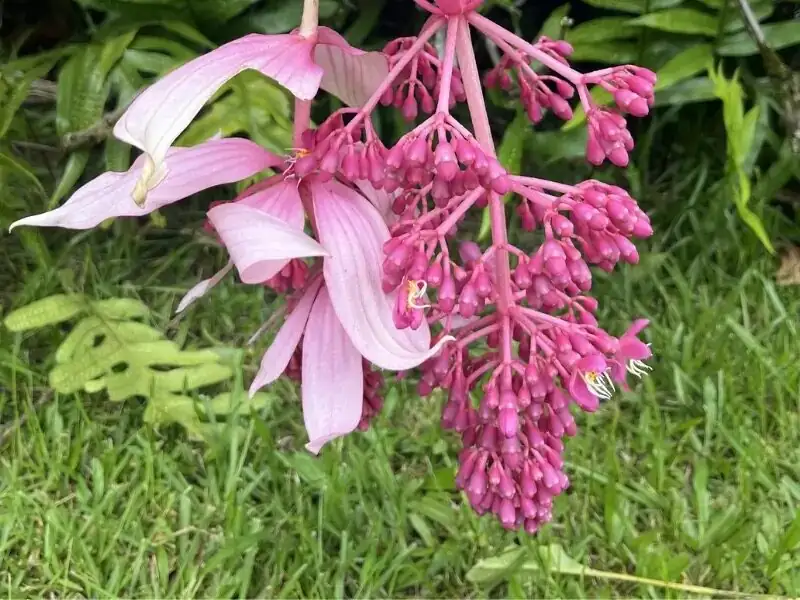
Picture a living chandelier draped in silk-pink tiers, each cluster heavy with promise and light as a sigh. That’s Medinilla magnifica—commonly called Rose Grape—an icon of tropical elegance whose very posture seems to whisper: abundance, poise, and a taste for the extraordinary. But how did one plant come to mean all that? Its story winds from the Philippines’ lush forests to glasshouse prestige in Europe and the curated cool of East Asian floristry.
The look that launched a language of meaning
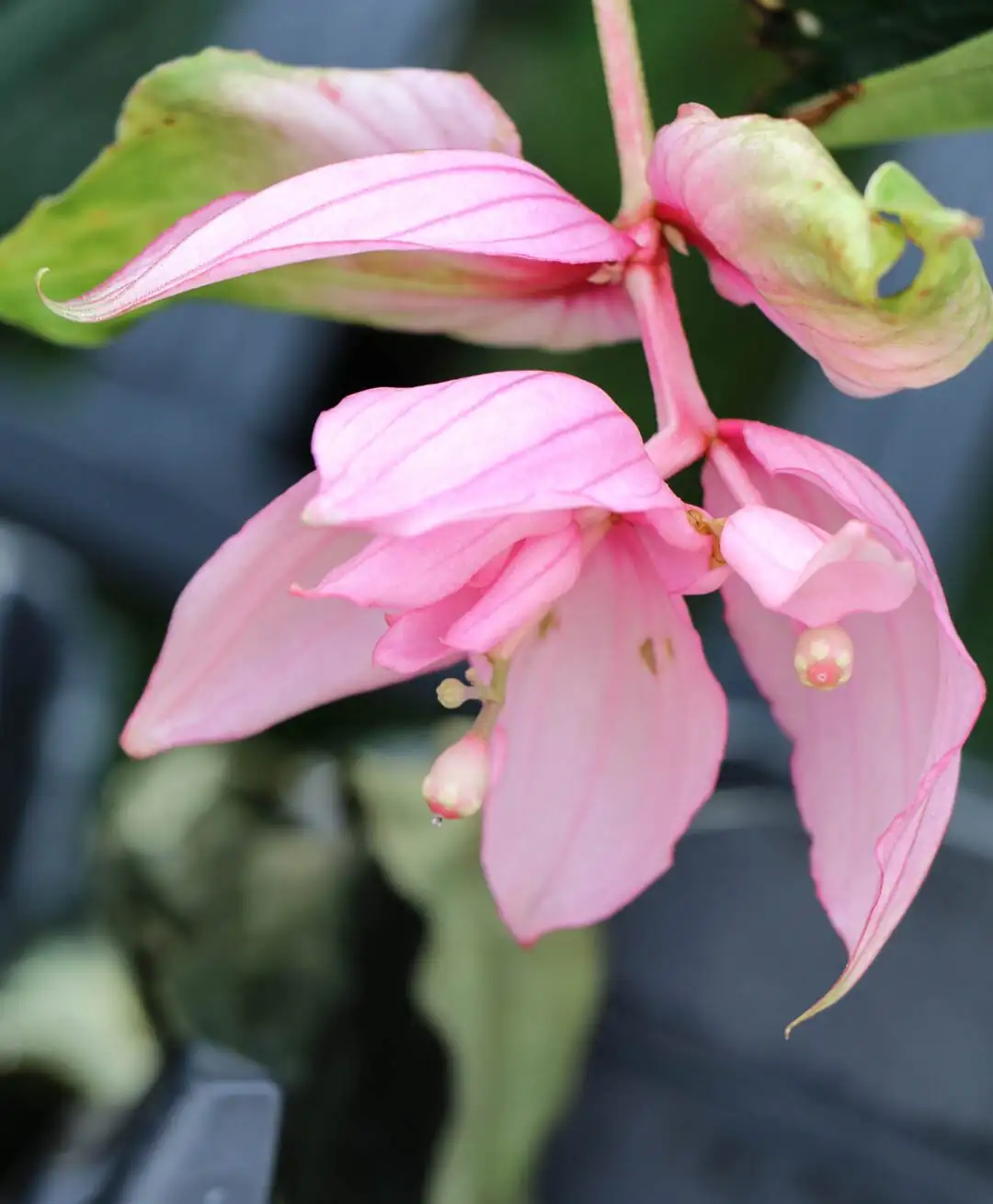
- Chandelier blooms, not petals: The showiest “petals” are actually rosy-pink bracts. Nestled inside are the true flowers—often pink to purple—forming pendant clusters that cascade like strings of luminous grapes.
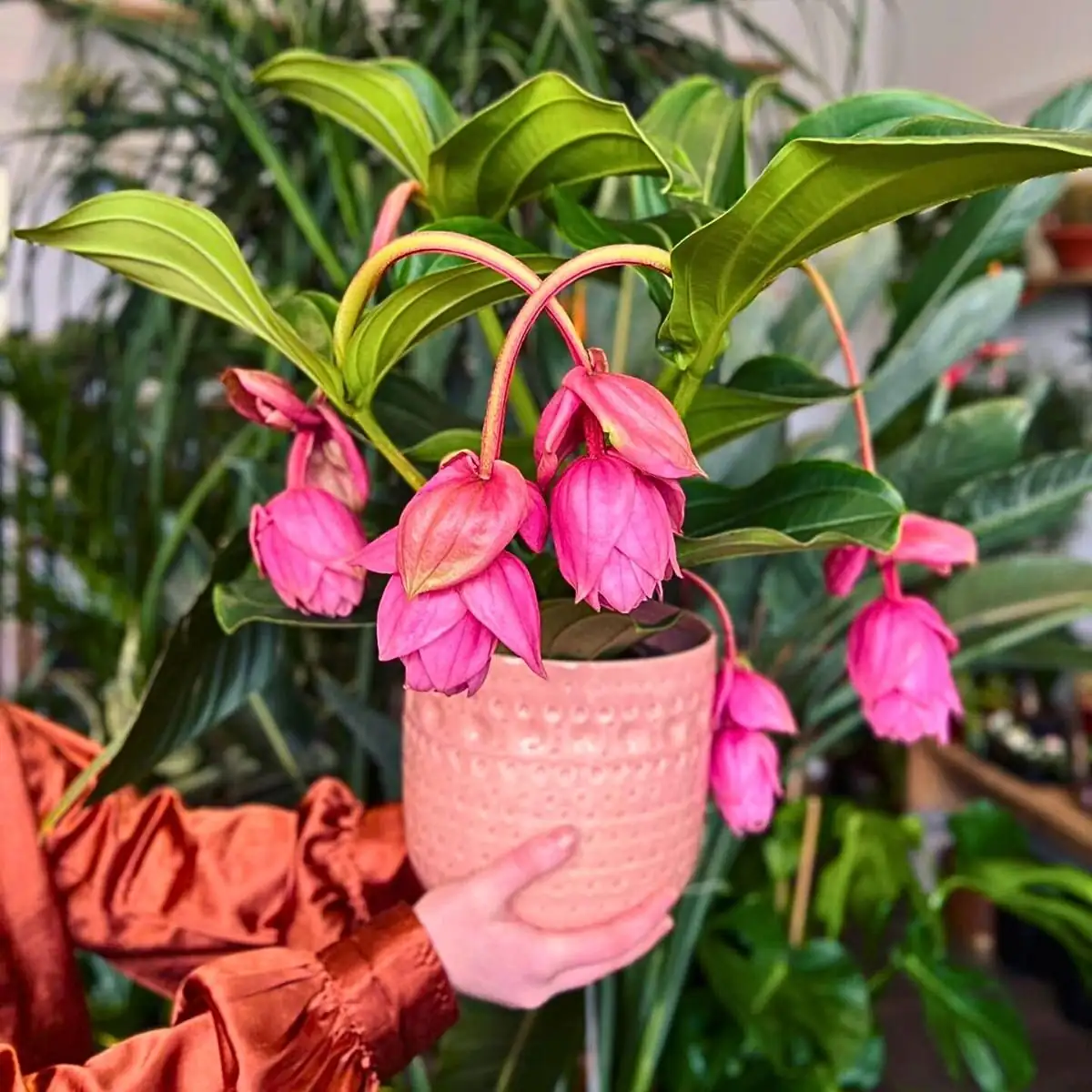
- Sculptural foliage: Large, deep-green leaves with bold, raised veins create a rich, architectural frame for the draping blooms.
- Abundance, literally: Flower clusters are hefty. Displayed high, they pour over the pot’s edge—visual shorthand for generosity and plenty.
- Rarity and finesse: The plant prefers bright filtered light, steady warmth, and higher humidity. That picky temperament—paired with long-lasting, spring-to-summer displays—turned Medinilla into a byword for cultivated discernment.
Roots of its symbolism
Philippine heritage: the source of tropical abundance
Native to the tropical forests of the Philippines, Medinilla magnifica carries a distinctly Filipino extravagance: glossy foliage, opulent bracts, and a preference for warmth and humidity. Even its trade nicknames—Philippine Medinilla and “Philippine Orchid” (a nod to its exotic look, not its taxonomy)—frame it as a national showpiece. In essence, its symbolism begins at home: tropical glamour made tangible.
Conservatory celebrity and the prestige factor
When this plant sailed into elite conservatories, its meaning deepened. Grand glasshouses prized Medinilla for exactly what makes it memorable—massive, pendant inflorescences that look theatrical against polished foliage. It became a “statement plant” associated with luxury interiors, botanical connoisseurship, and refined leisure time spent nurturing rarity. Anecdotes of royal conservatory collections and the plant’s standing in top-tier gardens only amplified that aura; even today, collectors treat a flourishing Medinilla as a quiet brag.

East Asian floristry: elegance with modern line
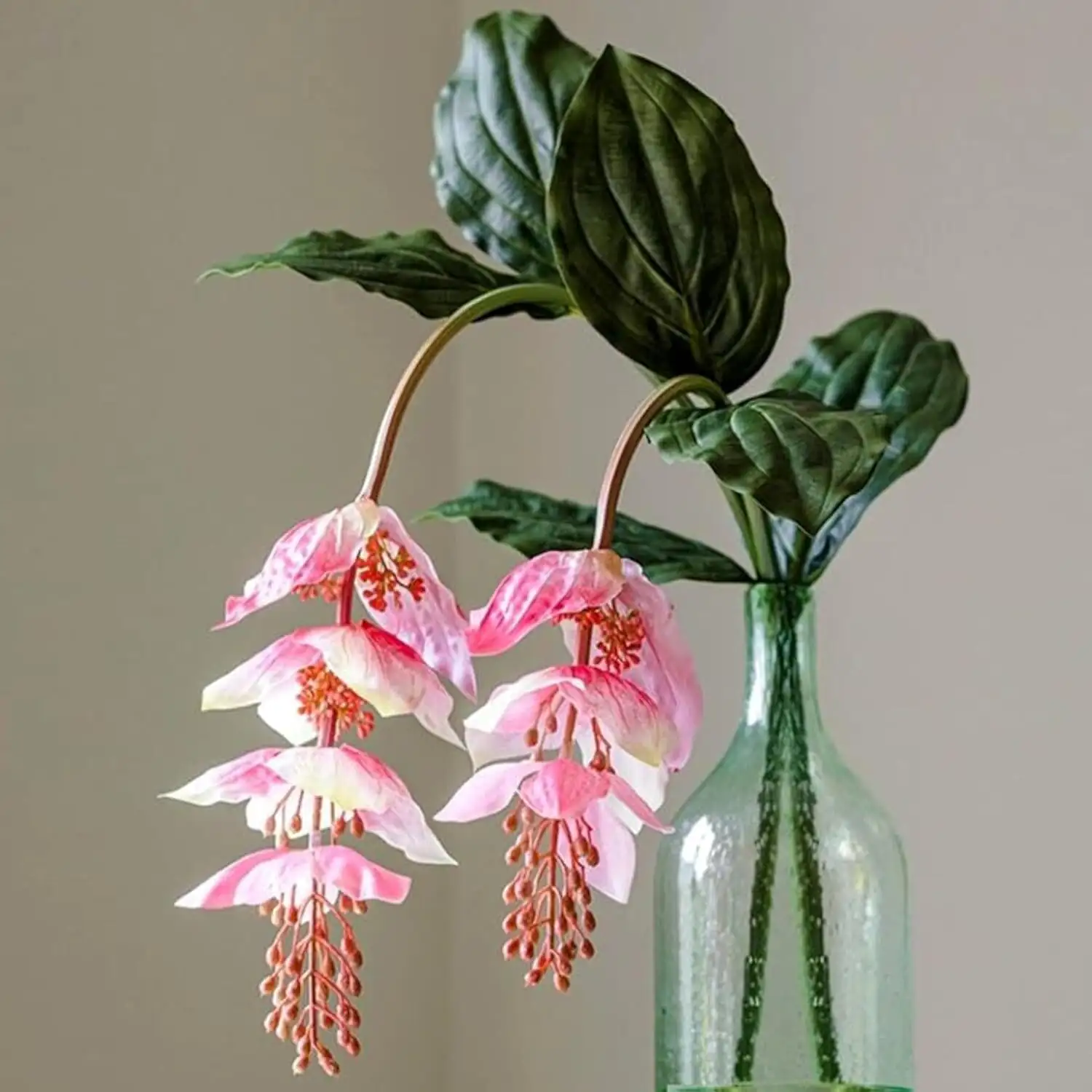
Across East Asia, designers lean into Rose Grape’s cascading lines for sculptural, high-end compositions and lobby-scale plantings. Sold widely under the Chinese name 宝莲花 (Bao Lian Hua), its jewel-like bracts pair elegantly with minimal containers, letting the droop and tiered rhythm do the talking. Here, “flower language” is a modern blend of aesthetic codes—from contemporary design to local gifting culture—where Medinilla reads as chic, rare, and unmistakably tropical-luxe.
Flower language decoded: what Medinilla magnifica says
- Elegance and refined beauty: Tiered pink bracts read like folded silk; the plant’s poise suggests cultivated restraint rather than flash.
- Tropical abundance: The grape-like, cascading clusters symbolize generosity, prosperity, and celebratory plenty.
- Prestige and rarity: Its exacting care and infrequent availability mark it as the choice of collectors and aesthetes.
- Sophisticated taste: Offering Medinilla says, “You’ll appreciate the exceptional.”
Color nuances
- Pink bracts: refined grace, gratitude, and a soft, celebratory warmth.
- True flowers within (pink to purple): a quiet complexity—detail that rewards a closer look.
When to gift it (and what the gift “says”)
Choose Rose Grape when the occasion calls for tropical abundance delivered with exquisite manners.
Perfect moments
- Milestone celebrations: milestone birthdays, promotions, retirements, major achievements
- Weddings and anniversaries: a lush focal plant for spaces that prize design
- Housewarmings and grand openings: signals prosperity, taste, and a fresh chapter
- Gallery or boutique launches: a sculptural showpiece that matches creative ambition
- Thank-you for a design-forward client or host: the connoisseur’s alternative to cut bouquets
Who will love it most
- Design enthusiasts and art collectors who appreciate dramatic form
- Experienced plant parents who enjoy a rewarding challenge
- Anyone curating a bright, humidity-friendly interior or conservatory
How to present it beautifully
- Elevate it: a plant stand or tall planter lets the clusters drape naturally.
- Keep the palette simple: a neutral container amplifies the pink architecture.
- Add a care card: a few pointers protect the bloom (and your thoughtfulness).
A quick care note for gifters and recipients
Medinilla’s symbolism of “refined taste” stems partly from how well you pamper it. Share these essentials:
- Light: Very bright, filtered light; avoid harsh, direct midday sun.
- Warmth: Aim for about 22–28°C (72–82°F); keep it above 16°C (61°F).
- Humidity: Prefers 50–70%+, with 70–80% ideal for setting buds.
- Water: Keep evenly moist but never soggy. Bottom-watering works well; avoid wetting the flowers.
- Air and stability: Good ventilation, no drafts, no heat spikes.
- Bloom window: Spring to summer; after flowering, remove spent clusters and prune the flowered shoots back by about half to encourage new growth.
- Stress signs: Buds or blooms may drop if it gets scorched sun, temperature swings, stale hot air, or erratic watering.
- Safety: Not widely documented as toxic, but best kept out of reach of pets and children.
Gifting etiquette and timing tips
- Best seasons: Late spring to early summer, when plants are budding or in bloom.
- Winter deliveries: Avoid chilling—keep transport warm and brief.
- Space sensibility: It’s a presence; gift where a statement plant can shine.
- Hospitals and low-light offices: Consider alternatives unless good light and humidity are assured.
Why Medinilla signifies “refined taste”
- It’s sculptural, not showy-for-showy’s-sake: big impact with elegant lines.
- It rewards patience and knowledge: the bloom is both a spectacle and a horticultural achievement.
- It’s memorable and uncommon: a conversation piece that signals you shop beyond the obvious.
- It elevates a room: like a well-chosen art piece, it transforms a corner into a focal point.
A final flourish
The flower language around Medinilla magnifica didn’t appear out of thin air—it grew from the plant’s own character. Tropical abundance is written into its grape-like cascades. Elegance lives in the satin glow of its bracts and the gravitas of its leaves. Prestige stems from its conservatory pedigree and from the care it asks you to master. Gift it when you want your message to be unmistakable: Here is something rare, cultivated, and exquisitely you.