

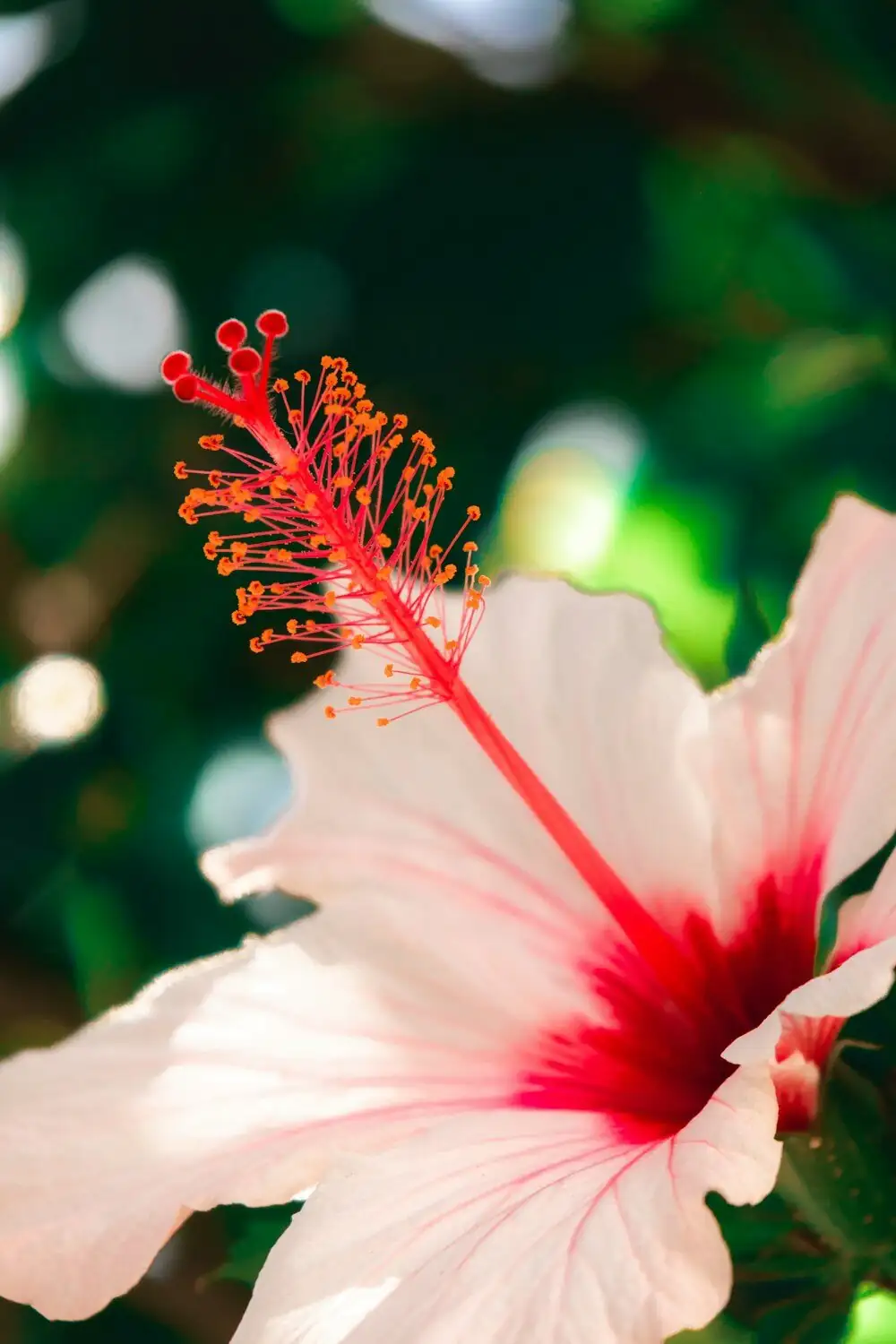
If you’ve ever watched a Chinese hibiscus open at breakfast and drop its petals by dinner, you know its drama is delightfully brief—yet the show goes on for months. Hibiscus rosa-sinensis is the plant world’s daily fireworks: one-day spectacles powered by a shrub that can reset and reload bloom after bloom in warm, sunny weather.
Meet Hibiscus rosa-sinensis (aka Chinese Hibiscus)
- Family: Malvaceae (the mallow family)
- Origin: Tropical Asia; now a global favorite across the tropics and subtropics
- Aliases: Hawaiian Hibiscus, Rose of China, Shoe Flower, Tropical Hibiscus
- Look: Glossy, deep-green leaves and oversized flowers (single or double) in a rainbow of colors
- Habit: Bushy, many-branched shrub that loves sun, warmth, and steady moisture
Grown in containers, it’s easy to keep compact—often around 50 cm (20 in)—and remarkably floriferous with just a bit of tip-pinching and pruning.
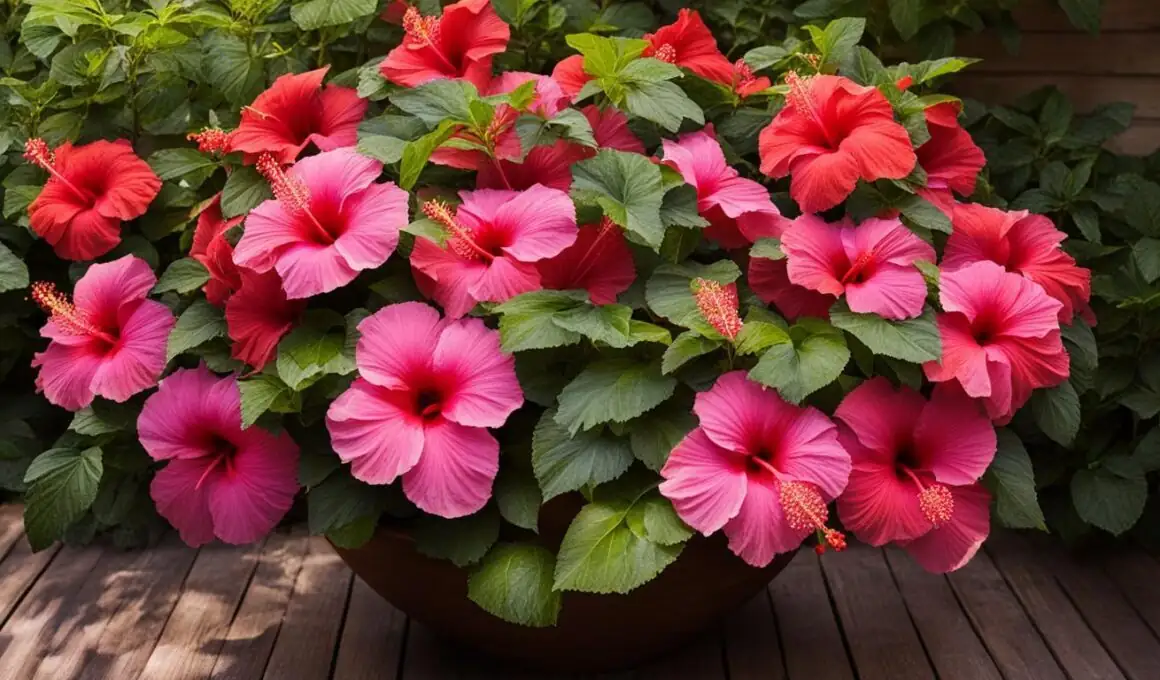
Day-Long Wonders, Months of Color: How That Works
- The one-day bloom: Each hibiscus flower is designed for a quick, glorious performance. The petals unfurl, the reproductive parts get prime pollinator time, and by evening the corolla typically fades and falls. Think of it as botanical theater—short act, high impact.
- The long season: The plant keeps forming new buds and opening fresh blooms repeatedly. In warm, bright conditions, many cultivars flower over long stretches (late summer to early winter outdoors in mild climates, and sometimes almost continuously in extended warmth and sun).
What keeps the marathon going?
- Strong light fuels bud production (full sun is best).
- Warmth speeds growth and bloom cycles.
- Even moisture and regular feeding support constant bud initiation.
The Stamen Column: A Floral Engineering Marvel
Look closely at the flower’s center: those golden anthers aren’t sitting on separate filaments like many flowers. In hibiscus, the stamens are fused into a showy tube—the “staminal column”—that surrounds the style (the female structure).
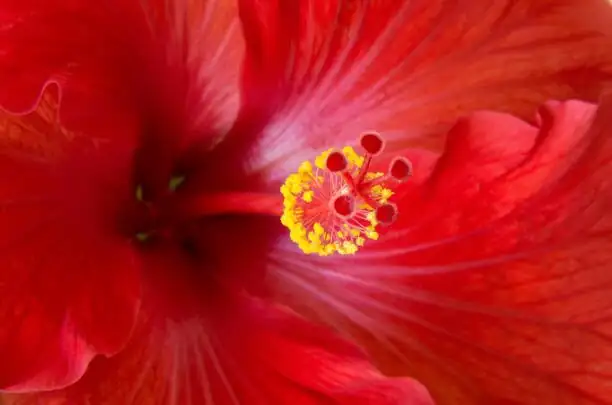
- Pollen placement: The anthers line the outside of the column, perfectly positioned to dust visiting pollinators.
- Female finish: The style runs up the middle and splits into several fuzzy-tipped stigmas at the top, which brush against pollinators for cross-pollination.
- Result: Elegant design, efficient pollination, and one unforgettable floral silhouette.
Color Quirks You’ll Notice
- Kaleidoscope palette: Cultivars come in reds, pinks, oranges, yellows, whites, and blends, with contrasting “eyes” (throats) and even multi-tone washes.
- Daily shifts: Many varieties deepen or soften in color from morning to evening as pigments respond to temperature, light, and age.
- Form matters: Single flowers flaunt that dramatic central column; double forms pack petals so densely the column can be partly hidden—two different moods on the same plant family.
The Pinch That Powers Blooms
Simple tip-pinching is hibiscus magic:
- Why it works: Removing the soft growing tip interrupts apical dominance (the plant’s tendency to focus upward), redirecting energy to side buds.
- What you get: More branching, more flower-bearing shoots, and a fuller, shorter plant (translation: more color at eye level).
- When to pinch: Start when the plant reaches about 20 cm (8 in). Continue lightly through the growing season; prune after a flowering flush to cue another round of fresh growth.
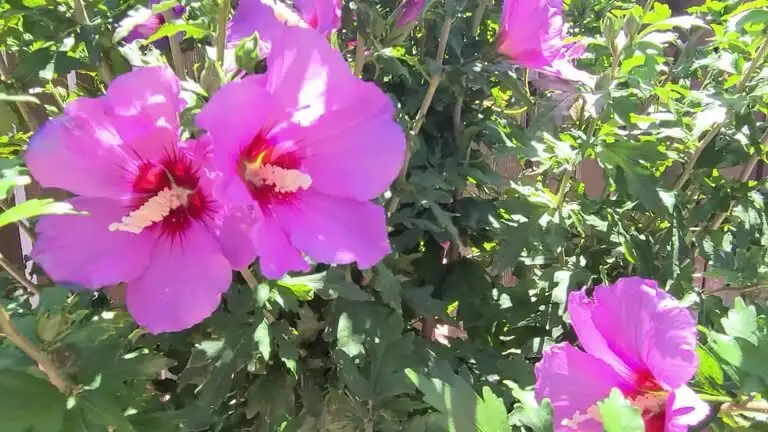
Fast Care Cheatsheet for a Flower-Factory Shrub
- Sunlight
- Aim for full sun. Light shade is okay; deep shade means fewer, smaller blooms.
- Temperature
- Sweet spot: 15–25°C (59–77°F)
- Keep above 10°C (50°F) in winter; foliage may yellow below ~5°C (41°F)
- Frost (below 0°C / 32°F) can kill tender growth
- Watering (containers; adjust for your climate and pot size)
- Spring: about 2× weekly
- Flowering peak in a sunny, breezy spot: about 3× weekly
- Peak summer heat: about every 2 days to keep moisture steady
- After moving indoors in autumn: about 2–3× weekly; at 12–15°C (54–59°F), ~1× weekly may suffice
- Winter in warm rooms: often 2–3× weekly—never waterlog or let bone-dry
- Feeding
- A heavy feeder: every 2 weeks in the growing season with a balanced-to-blooming formula (e.g., similar to 15-15-30)
- Ease off in autumn; pause in winter
- Soil
- Rich, slightly acidic, free-draining mix (loam + peat/coco + perlite or coarse sand)
- Humidity
- Moderate to high preferred; occasional misting or a humidity tray helps (avoid constantly wet leaves)
- Size and pots
- Many compact specimens thrive in 15–20 cm (6–8 in) pots; repot annually in spring and refresh the mix
- Pruning
- Pinch tips early; prune after bloom flushes to keep the plant branchy and productive
- Placement
- Outdoors in a sunny, airy spot in frost-free weather; bring potted plants inside before nights near 10°C (50°F)
Quick Propagation: Root a New Bloom Machine
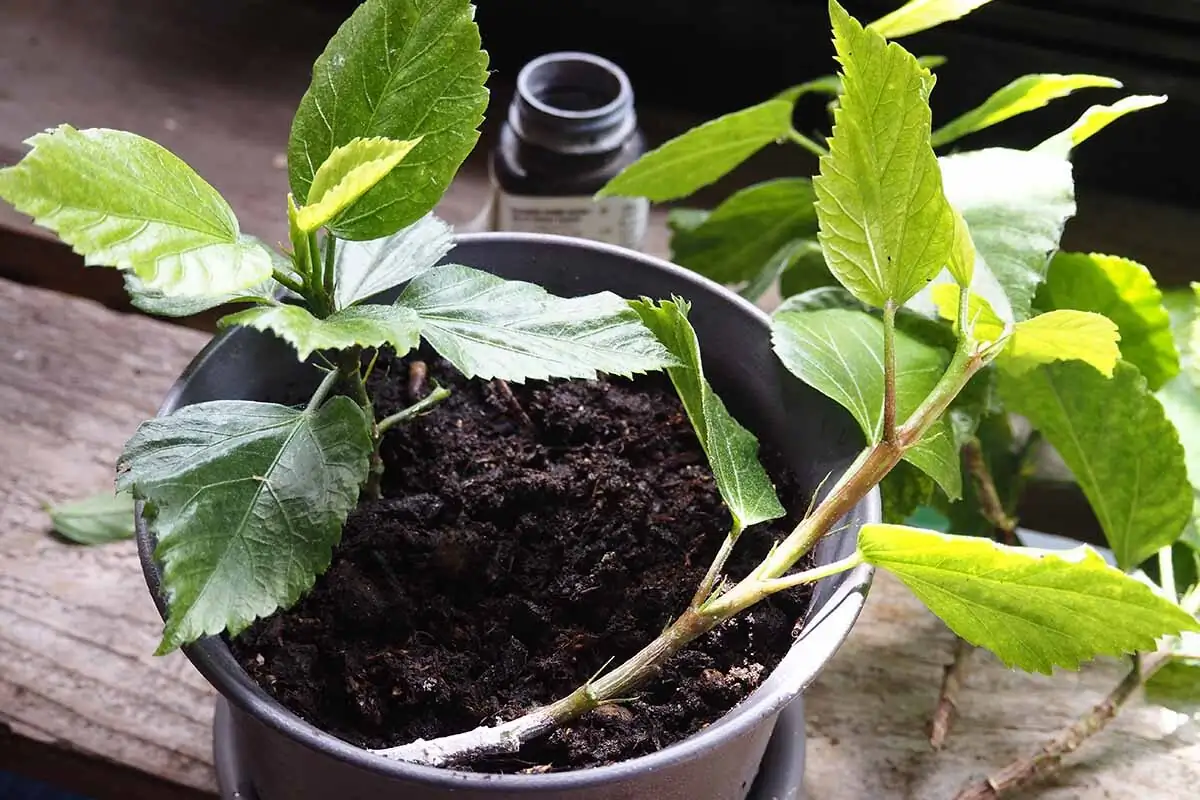
- Soft tip cuttings: 10 cm (4 in) long, taken in warm, humid weather
- Prep: Strip lower leaves, keep a few at the tip, and insert into clean sand or a very free-draining medium
- Conditions: High humidity, 18–21°C (64–70°F)
- Timing: Roots in about 20–25 days; rooting hormone boosts success
- Grafting: Common in spring or autumn for fancy doubles or trickier cultivars; single-flowered forms often serve as rootstock
Pests, Problems, and Pet Safety
- Watch for: Aphids, spider mites, scale, and caterpillars; manage with rinsing, horticultural soap/oil, or labeled controls
- Leaf spot: Remove affected leaves, improve airflow, and avoid wet foliage late in the day
- Toxicity: Generally considered non-toxic to people and pets; sap can mildly irritate sensitive skin—discourage chewing
Flower Language and Symbolism (and what it really means)
Chinese hibiscus is often gifted as a wish for a thriving home and cheerful prosperity. In some modern gifting traditions:
- Single-flowered forms: congratulations, success, and family flourishing
- Double-flowered forms: tenderness and thoughtfulness in romance
A note on origins: these meanings are largely cultural and contemporary rather than ancient botanical lore. They vary by region, so treat them as joyful suggestions, not hard rules.
Fast Fix: Small Flowers?
- Most often it’s not enough light or food. Move the plant to stronger sun (full sun if possible) and feed every two weeks during active growth with a bloom-supporting fertilizer so buds can fully develop.
Fun, Final Nudge
- In warm, sunny conditions, many cultivars bloom repeatedly for months.
- A little tip-pinching turns a lanky hibiscus into a compact, flower-packed showpiece.
Give your hibiscus sun on its leaves, warmth at its roots, food in its soil, and a playful pinch at its tips—and enjoy a new bouquet every day.