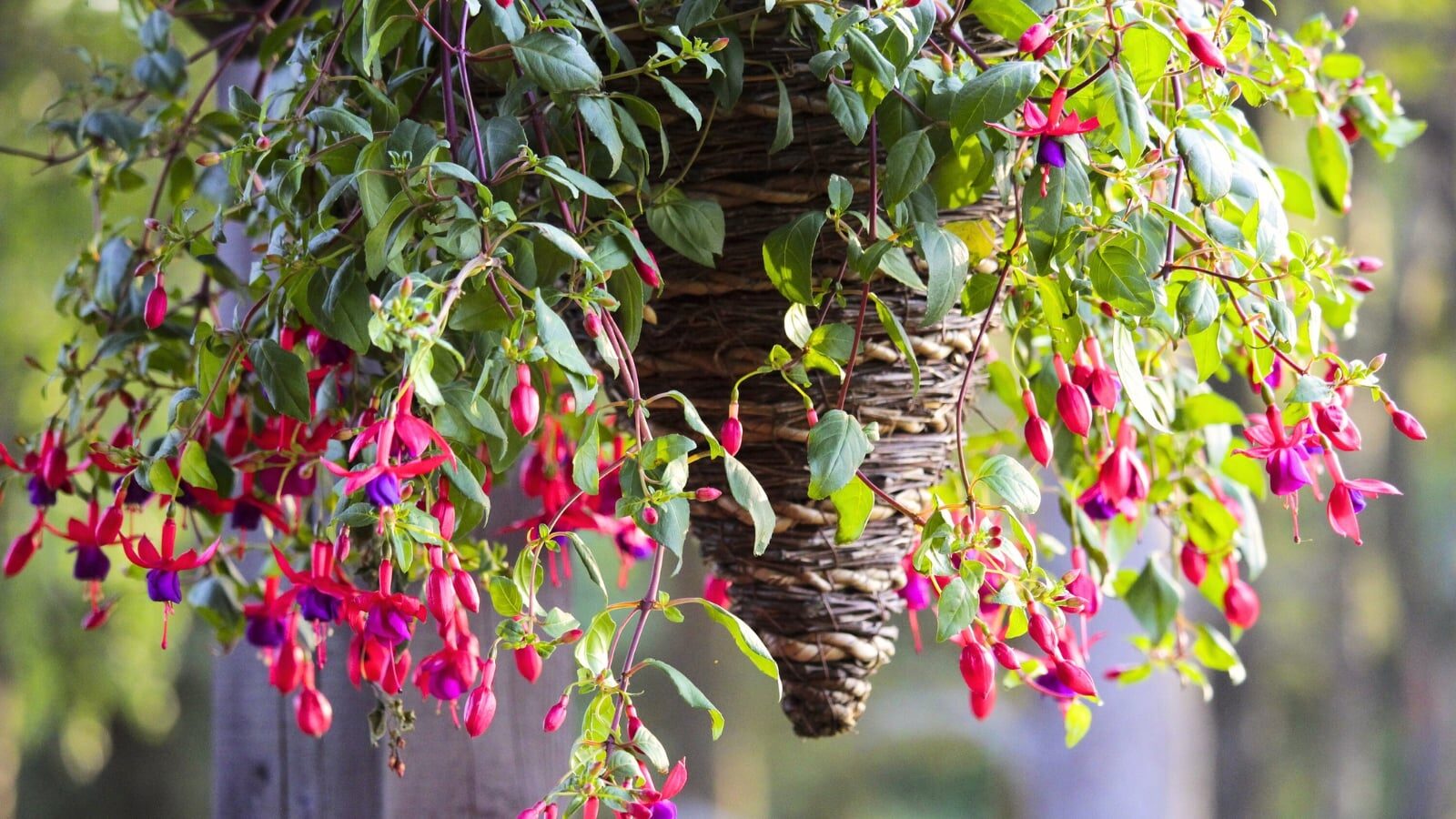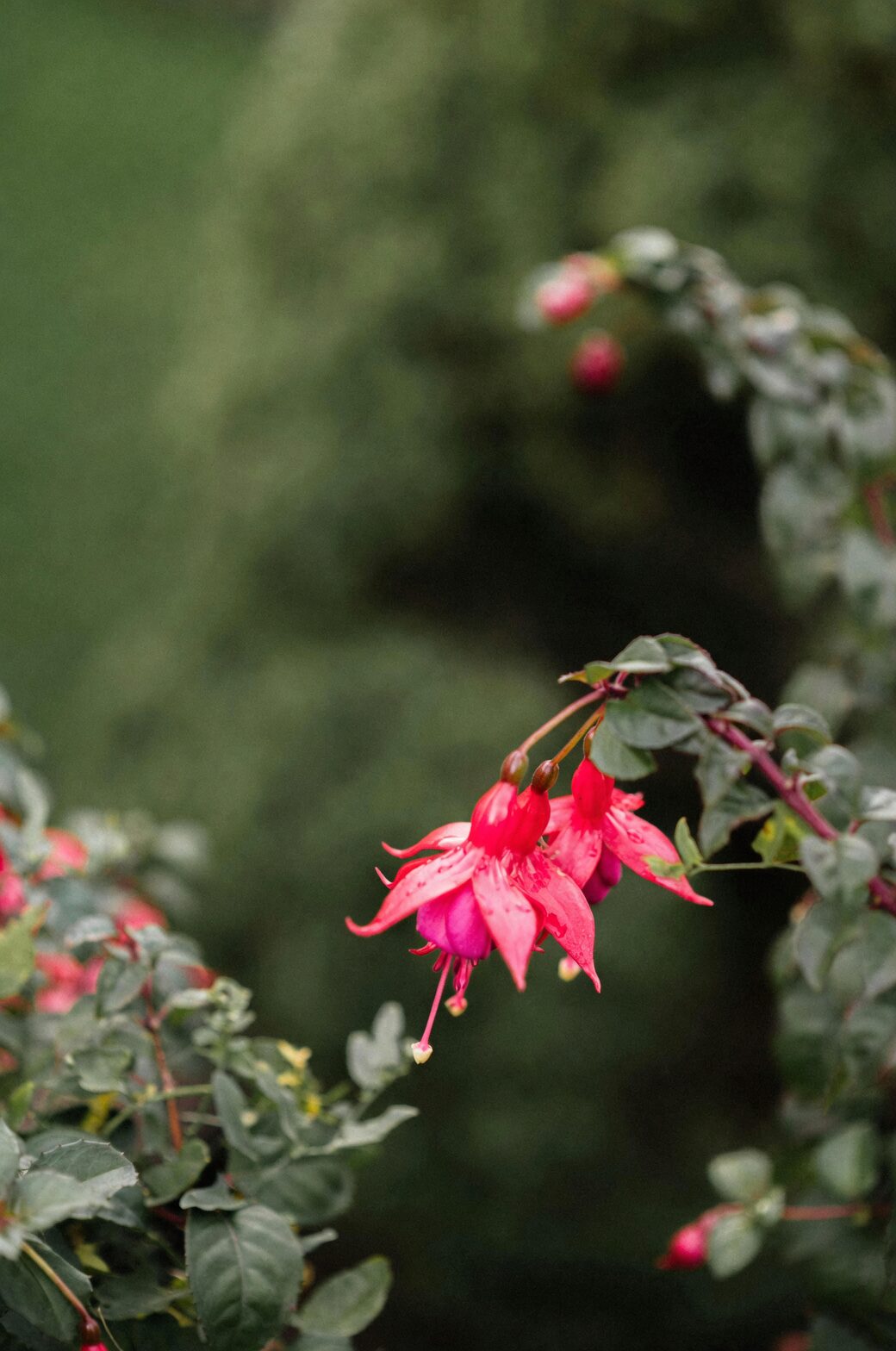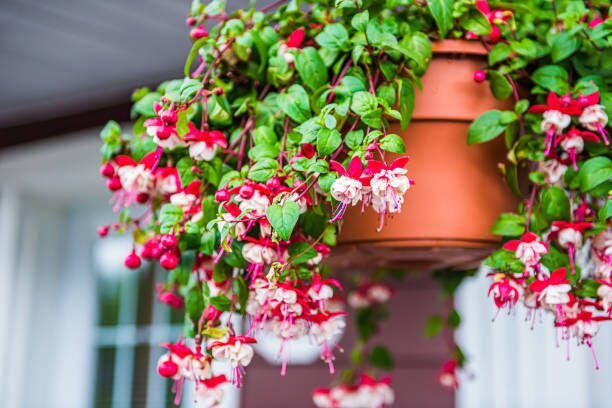
When summer turns sultry and still, Fuchsia × hybrida—the classic “lady’s eardrops” for baskets and pots—can sulk, shed buds, and stall. The good news: with a smart heat plan, you can carry your fuchsia through hot spells and back into long, graceful bloom. Think of it as a cool-breeze strategy: morning sun, bright afternoon shade, steady moisture without sogginess, and constant fresh air.
Below is your field-tested survival guide for scorching weather, plus a recovery roadmap once cool breezes return.
Meet your plant (and why heat is the enemy)
- Identity: Fuchsia × hybrida (Onagraceae), a heavily bred garden hybrid beloved for pendulous, lantern-like flowers that read best from below—perfect for hanging baskets and patio pots.
- Lineage & look: Modern hybrids descend from American species (with strong ties to the Mexican Plateau), selected into thousands of cultivars—single, double, petite to big, often gorgeously bicolored.
- Ideal conditions: Bright light with gentle direct sun (especially mornings), cool air, and evenly moist, airy soil.
- Heat thresholds to remember:
- Loves 15–22°C (59–72°F)
- Slows above 25°C (77°F)
- Can suffer severe dieback near 35°C (95°F)
- Size guide: Commonly 30–90 cm tall and wide in containers, mounding to trailing. Baskets often look fullest with 2–3 young plants per 15 cm (6 in) pot.
The hot-spell survival plan
1) Light: morning sun, afternoon shade
- Best placement:
- East exposure (gentle AM sun), then bright open shade from noon onward.
- A bright, breezy porch or balcony. Indoors, a bright east- or south-facing window (not a dim corner).
- Microclimate tricks:
- Use 30–40% shade cloth during heat waves—enough to soften glare while keeping light bright.
- Hang baskets a little away from hot walls and ceilings so heat doesn’t pool.
- Rotate the basket every few days for even light and to prevent one-sided stretch.
Why it works: Strong morning light fuels flowering without baking the plant. Harsh midday/afternoon sun during a heat wave accelerates yellowing and bud drop.
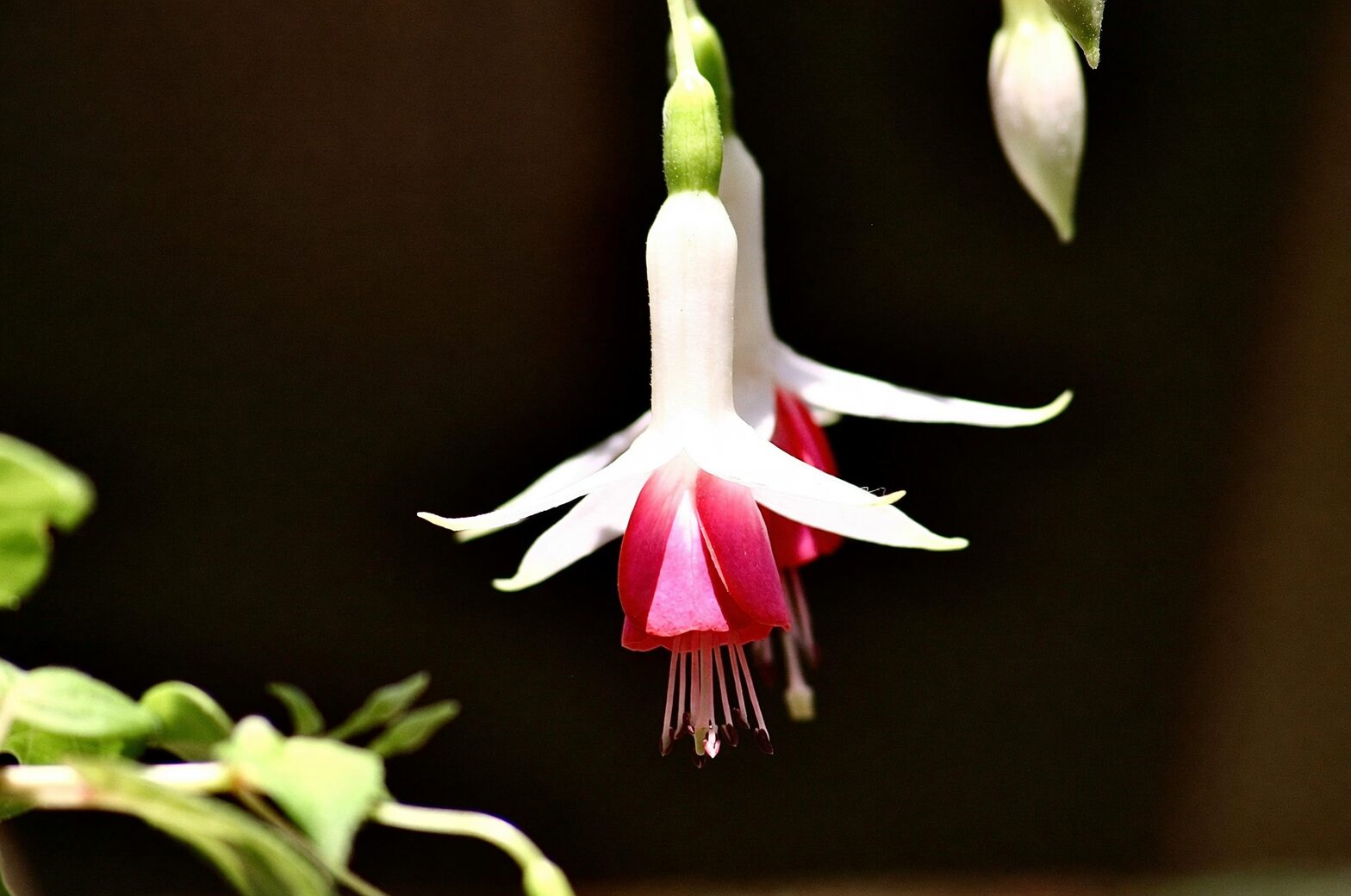
2) Airflow hacks (your first defense against heat and fungi)
- Spacing: Keep baskets a forearm’s length apart so flowers hang freely and air can move between plants.
- Height: Hang slightly below the eave rather than tight to it—warm air collects high up.
- Cross-breeze: Encourage gentle, consistent movement. Outdoors, choose a naturally breezy spot (but not a wind tunnel). Indoors, run an oscillating fan on low.
- Open the canopy: Maintain about 5–7 strong main branches; thin weak, crisscrossed shoots so you can “see light” through the plant. Flowers dry faster after misting or rain, reducing botrytis.
- Clean as you go: Deadhead and remove spent petals/leaves daily in muggy weather—old blooms are botrytis magnets.
3) Watering and misting—cool the plant, not the fungus
Fuchsia loves steady moisture, not swampy roots or drenched flowers. Use this routine:
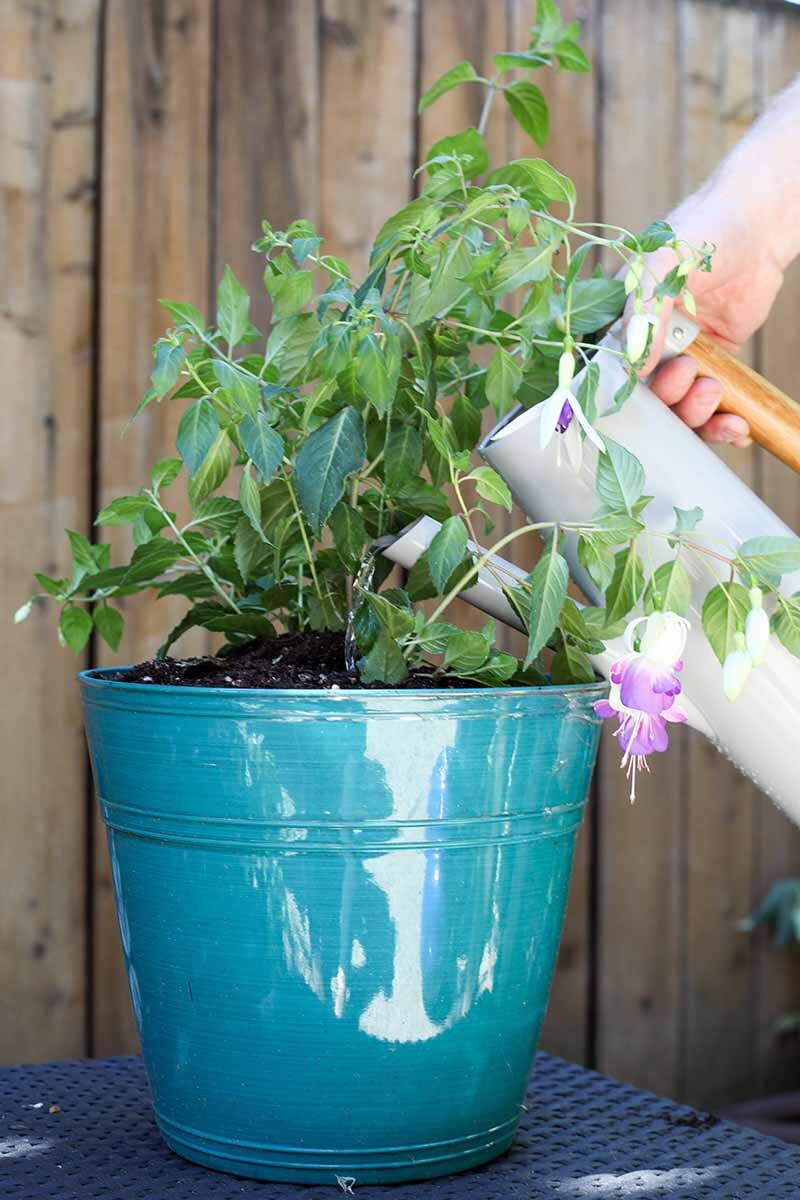
- The soak-drain-breathe method:
1) Check: Water when the top 1–2 cm (about a fingertip) of mix feels dry. In heat, that can be every 1–2 days.
2) Soak thoroughly until water runs out the drain holes.
3) Drain completely—never leave water in saucers.
4) Let the mix “breathe” before the next drink. The goal is evenly moist, never waterlogged.
- Potting mix matters: Use a fertile but airy blend (peat/leaf mold or composted leaf mold base) cut with perlite and/or coarse sand for drainage. Dense mixes suffocate roots in heat.
- Timing: Water early morning. Plants start the day hydrated, and any splashes on foliage dry quickly.
- Misting that helps (without a fungal flare-up):
- When: Early morning or late morning, never in the evening.
- How: A very fine spray aimed mostly around—not into—full blooms, paired with airflow so leaves and flowers dry within 30–60 minutes.
- Where: Avoid tight clusters of petals (double blooms can trap moisture). Keep air moving!
- Cooling extras:
- Use light-colored pots or pot covers to reduce root-zone temperatures.
- Raise pots on feet so heat and water don’t stagnate underneath.
- Pebble trays are fine as long as the pot base stays above the waterline and the area is ventilated.
Common heat-time mistakes to avoid:
- “Sips” of water that never reach the root ball (leads to wilt and salt build-up).
- Standing water in saucers.
- Heavy evening overhead watering or nightly misting (hello, gray mold).
- Crowding plants so nothing can dry.
4) Strategic cutbacks (let it rest, then rebound)
- Before a predicted heat wave:
- Lightly thin soft, congested tips so air can move through.
- During prolonged heat:
- If growth stalls or the plant is yellowing and dropping buds, cut back by about 1/3–1/2. This reduces stress on roots, encourages a “rest,” and sets up a strong flush once temperatures cool.
- After the heat breaks:
- Resume gentle pinching on regrowth to build a fuller basket (pinch after 3–4 leaf pairs).
- Continue deadheading to keep new buds coming.
- Renovation tip: Older, bare-at-the-base plants respond well to a harder prune to push fresh shoots.
5) Feeding: when to pause fertilizer (and when to restart)
- In active, cool growth: Feed every ~2 weeks with a balanced-to-blooming formula (something in the vein of 15-15-30) or a well-diluted organic liquid feed.
- Pause feeding during peak heat: When nights are warm and growth has clearly slowed, stop fertilizing. Extra salts plus stalled roots can do more harm than good.
- Restart as soon as nights cool and you see active new growth. If you suspect salt build-up (leaf tip burn, crust on soil), flush the pot with plain water before resuming feed.
- Flower-forward tip: Avoid heavy nitrogen bursts right before a bloom push—too much leaf, not enough lanterns.
Troubleshooting hot-weather woes
Yellowing leaves, bud/flower drop
- Usual cause: Heat, warm nights, or harsh sun.
- Fix fast:
- Move to bright shade with a steady breeze.
- Water deeply, then let drain; maintain lightly moist conditions.
- Consider a 1/3–1/2 cutback if the plant is really flagging.
- Resume feeding only once growth restarts in cooler weather.
Wilting at midday
- Often a sign of heat stress rather than dry soil. Check the mix; if it’s moist, don’t overwater. Increase shade and airflow; cool roots with light-colored pot covers.
Gray mold (botrytis) or rust
- Prevention is 90% of the cure:
- Space plants, deadhead daily, water early, and keep air moving.
- Avoid wetting flowers late in the day.
- If it appears: Remove affected parts promptly and improve ventilation.
Pests that pounce in heat
- Aphids, spider mites, and whiteflies love warm, dry stillness.
- Response:
- Rinse foliage early in the day to knock populations back (allow fast drying).
- Follow with insecticidal soap or horticultural oil, repeating as needed.
- Strengthen airflow and avoid plant crowding.
After the heat: set up a long, graceful season
- Light: Ease back into morning sun with bright, airy afternoons.
- Temperature: Aim for cool—around 12–15°C (54–59°F) in late autumn keeps the show going; keep above about 5–10°C (41–50°F) if overwintering indoors.
- Repot and refresh in spring: Use an airy, moisture-retentive mix and combine repotting with a shaping cutback.
- Placement reminders:
- Outdoors: Protect from waterlogging and strong winds.
- Indoors: Choose a bright window (east/south), and keep away from ripening fruit—ethylene gas can trigger bud drop.
Note on cold and heat: Most container fuchsias are frost-tender, though a minority of cultivars can shrug off brief, light frosts. Heat is the bigger enemy—prolonged hot spells, especially with warm nights, reduce flowering.
Quick-reference summer checklist
- Morning sun, bright afternoon shade
- Constant gentle airflow; don’t crowd baskets
- Water deeply, drain fully; keep soil lightly and evenly moist
- Mist only in the morning and pair with ventilation
- Deadhead daily in muggy weather
- Cut back 1/3–1/2 if the plant is struggling in heat
- Pause fertilizer during heat waves; restart with new growth
- Keep away from ripening fruit (ethylene = bud drop)
Safety and touch-on care notes
- Low-toxicity for people and pets, but any plant nibbling can cause mild stomach upset—discourage curious chewers.
- Keep foliage and flowers dry by evening; most fungal issues start where petals linger.
A little flower language (and what it really means)
Fuchsia’s pendulous, bell-like blooms have long invited symbolism—playful charm, fascination, and a curious, almost theatrical elegance. In parts of Europe, they’ve also been read as tiny “warning bells,” a gentle nudge toward caution before acting on impulse. Like much Victorian-era flower language, these meanings were cultural inventions rather than botanic truths; still, they capture the plant’s spirit beautifully: an exuberant cascade that asks for cool air, a light touch, and a bit of patience—especially when summer turns up the heat.
With this cool-headed plan—morning sun, afternoon shade, swift airflow, careful watering and misting, timely cutbacks, and a fertilizer pause—you’ll guide Fuchsia × hybrida through hot spells and back into its signature show: a living chandelier of “little earrings,” swaying happily in the breeze.