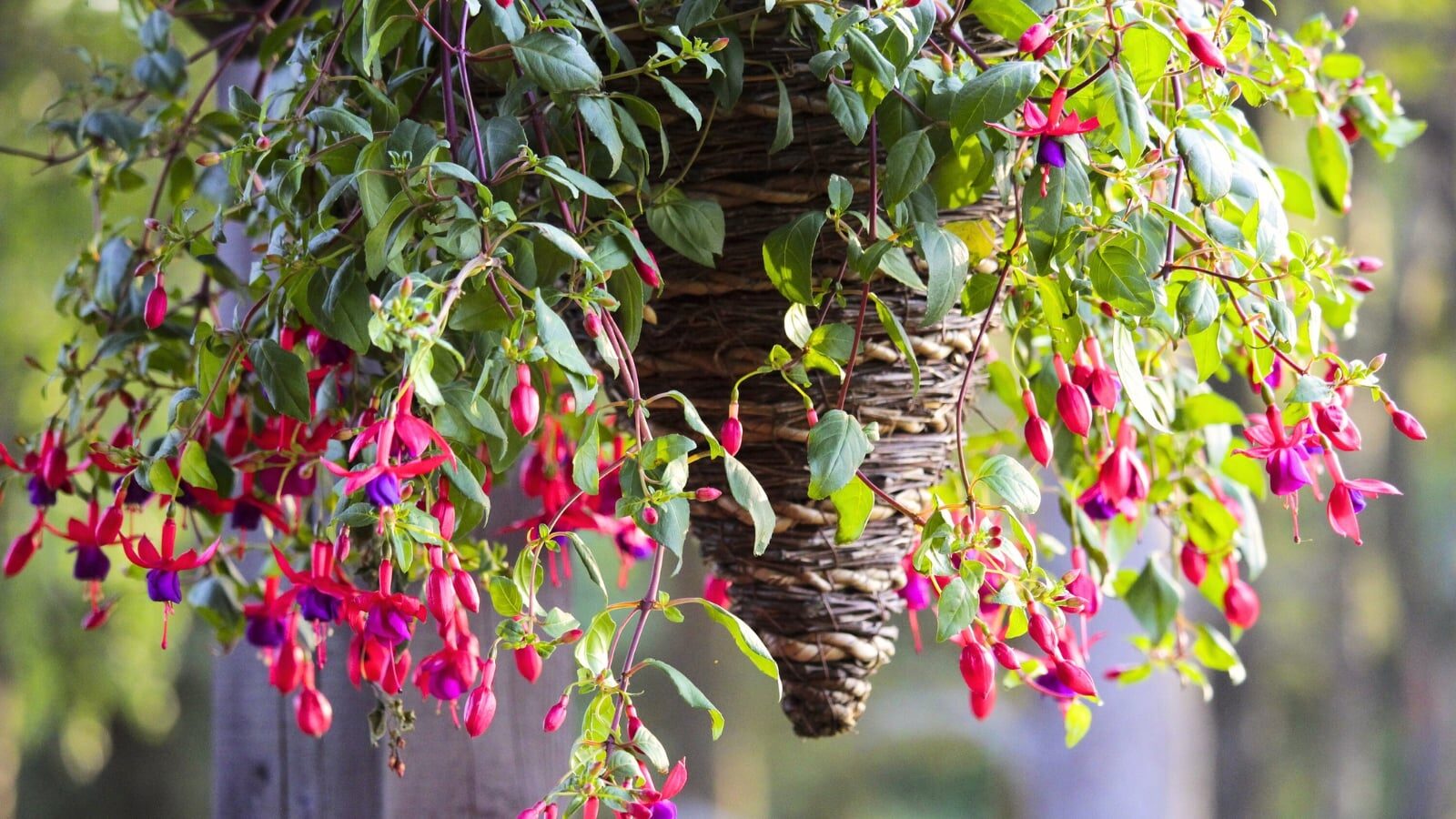

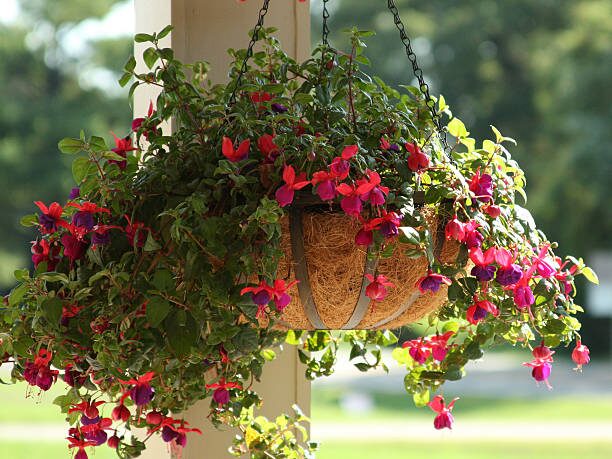
If jewelry could grow on stems, it would look like this: a cascade of tiny lanterns and ballerina skirts, swaying in the breeze. Meet Fuchsia × hybrida—aka Lady’s Eardrops—the classic for hanging baskets that turns patios and bright porches into living chandeliers. It loves cool air, bright but gentle light, and a steady sip of moisture. And it comes with some delightful quirks: the blooms are best admired from below, it flowers more the more you pinch, its cuttings root in a flash, and its buds…well, they’re drama queens around ethylene.
Quick ID
- Botanical name: Fuchsia × hybrida (family Onagraceae)
- Common names: Fuchsia, Hanging Fuchsia, Hybrid Fuchsia, Lady’s Eardrops; 中文名:倒挂金钟
- Roots and routes: Modern garden fuchsias descend from species native to the Americas, with strong ties to the Mexican Plateau region.
- Habit and size: Freely branching, mounding to trailing; typically 30–90 cm tall and wide in containers, depending on cultivar and training.
Why these flowers look best from below
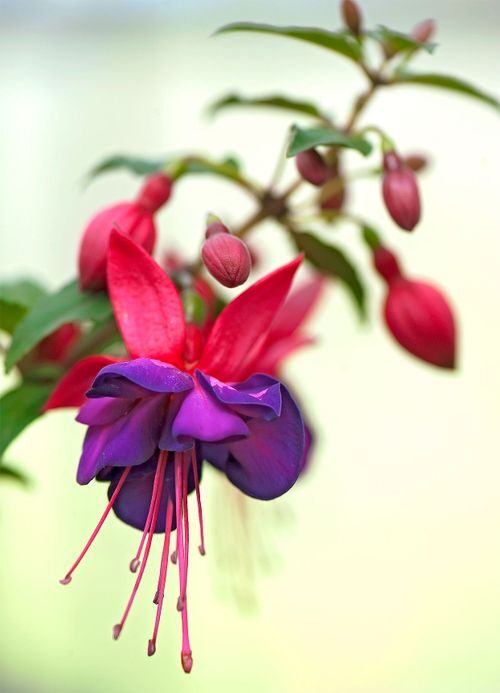
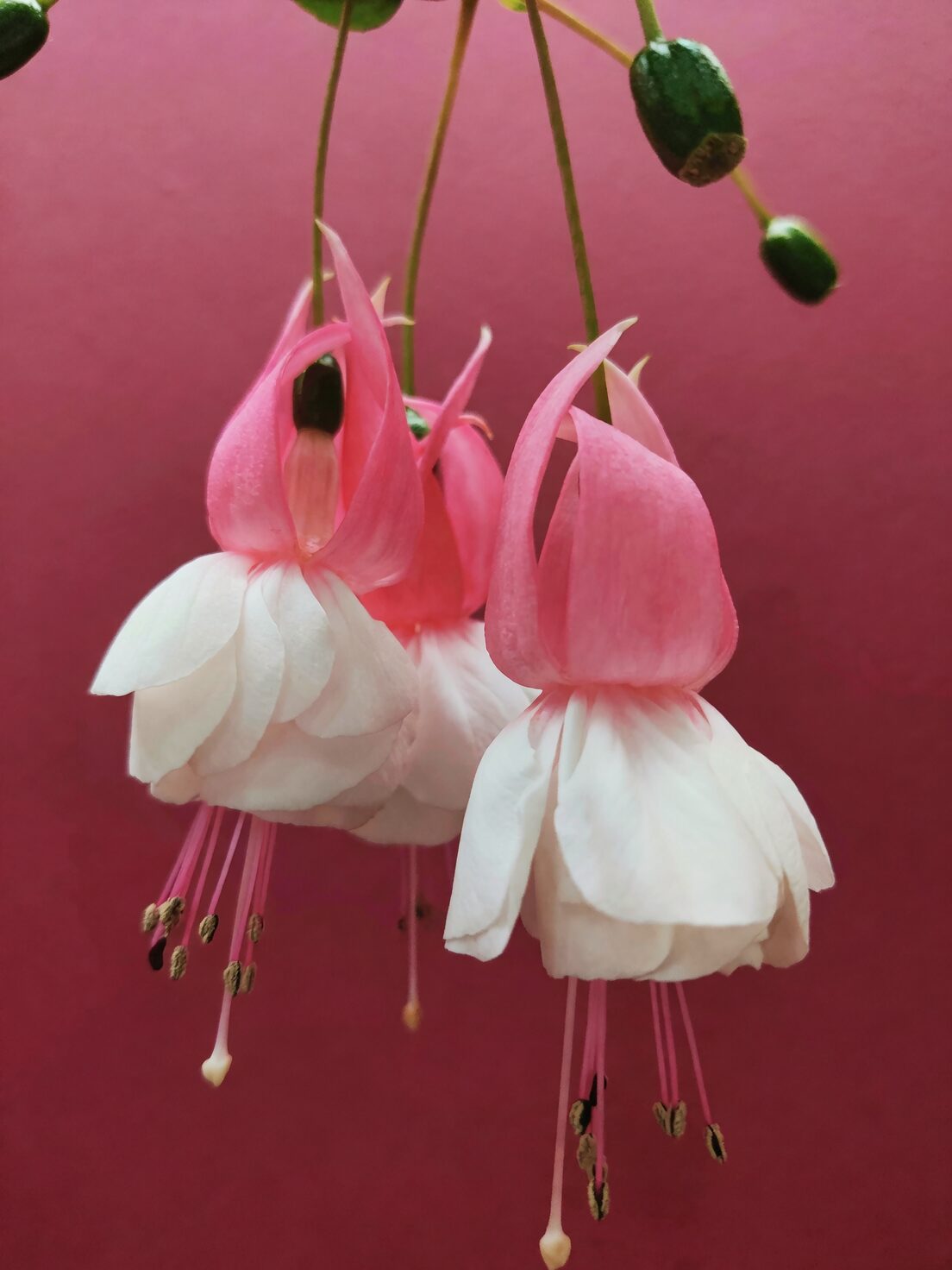
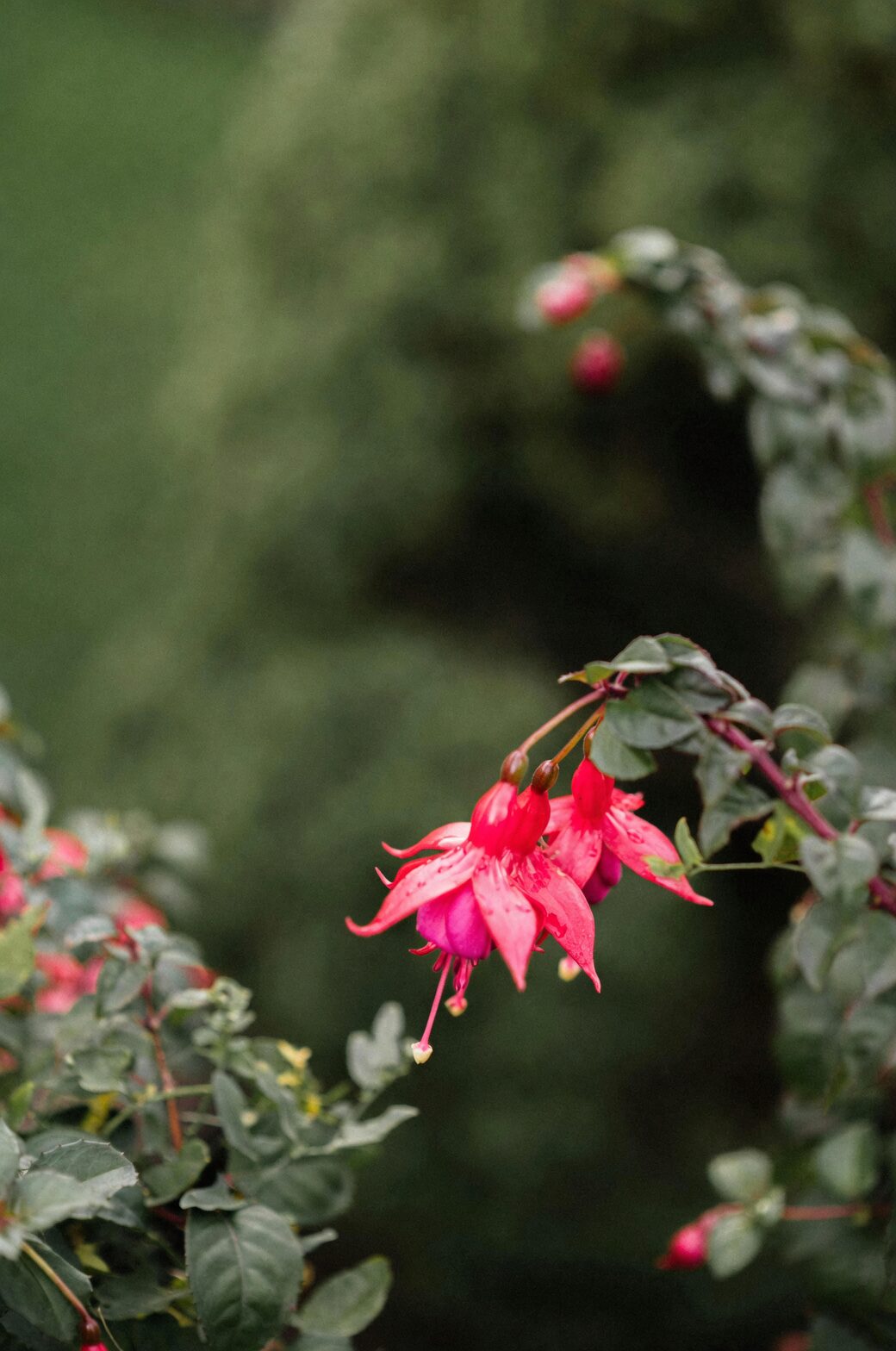
- Nature designed the show to hang. Fuchsia’s blossoms are pendulous—little bells that dangle freely. Hang the pot high and step underneath; that’s when you see the full costume: the colored calyx (the “lantern”), the contrasting corolla inside, and the delicate tassel of stamens.
- Bicolors and doubles really pop when viewed upward. From above, leaves hide the best contrasts; from below, the color play and layered forms (especially in doubles) are on full display.
- The breeze factor. Suspended blooms bob and turn, catching light and movement—another reason baskets beat table-top pots for that “wow” moment.
Pinching: the tiny trick that multiplies blooms
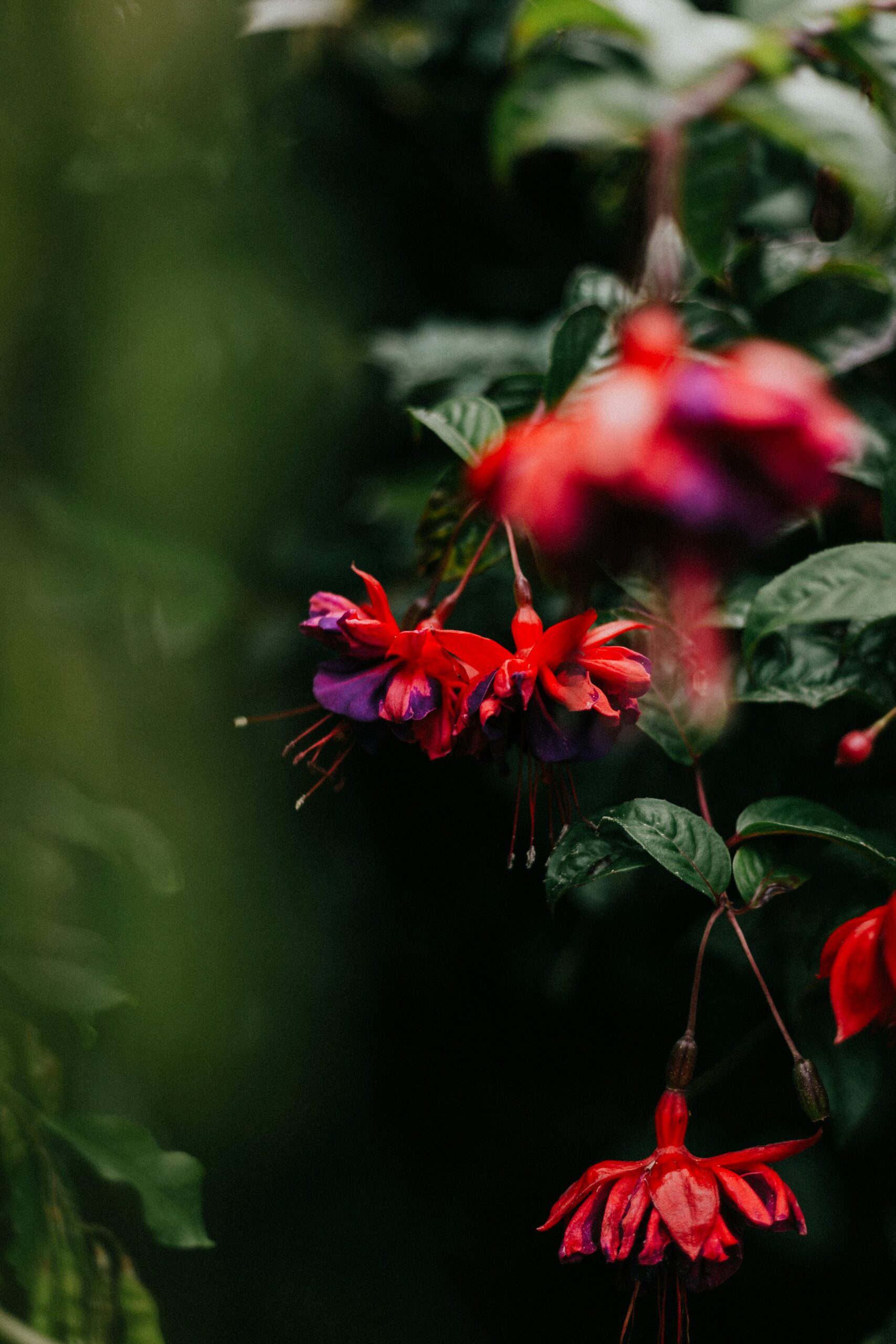
Here’s the fun plant science: fuchsia flowers form at the nodes on new shoots. When you “pinch” the soft tip:
- You cancel apical dominance (the tip’s hormone-led bossiness) so side buds wake up and branch.
- Each new branch = more nodes = more potential flowers.
- Timing that works:
- First pinch when a young plant has about three pairs of leaves (snip back to just above the second pair).
- After the new side shoots grow 3–4 leaf pairs, pinch again.
- Repeat 2–3 times early in the season to build a full, flower-loaded framework.
- Pro tip: Keep 5–7 strong main branches, remove thread-thin weaklings, and deadhead spent blooms promptly to keep buds coming.
Cuttings that root at breakneck speed
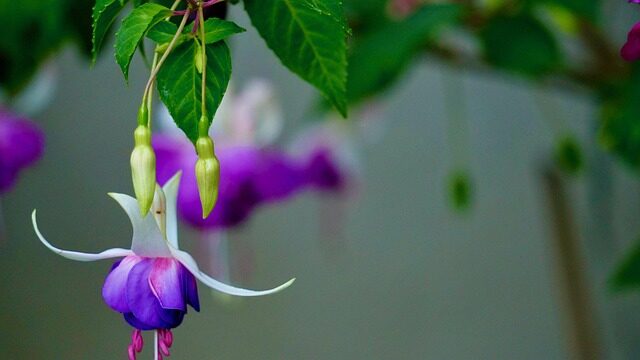
Fuchsia is famously easy from cuttings—perfect for gifting or bulking up a basket.
- What to take: Soft tip cuttings in spring (or semi-ripe in late summer), 7–9 cm long. Strip lower leaves.
- Where to root: In a moist, airy medium (peat/leaf-mold with perlite or coarse sand) or simply in water.
- How fast: Tiny roots can appear in roughly 10 days; pot up around 30 days. Many cuttings flower the same year.
- Conditions: Bright light (no scorching sun), cool-to-mild temps, and even moisture. A loose humidity cover plus good ventilation speeds success.
The ethylene plot twist: why buds suddenly bail
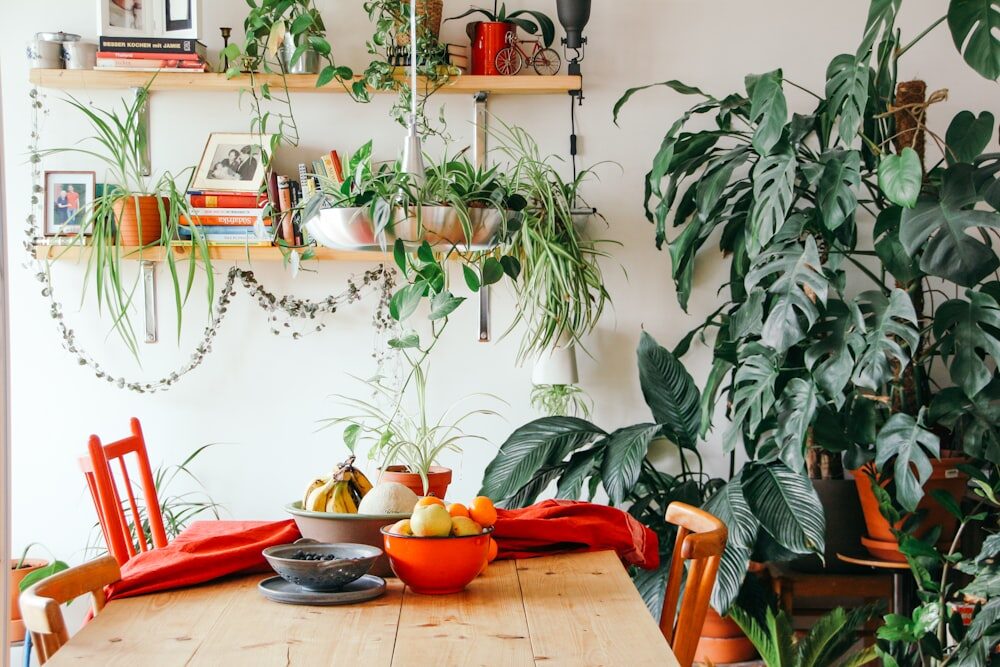
Ever brought home a bud-laden fuchsia only to watch the buds yellow and drop? Often the culprit is ethylene—a natural plant hormone.
- The quirk: Fuchsia is ethylene-sensitive. Ripening fruit (apples, bananas, tomatoes) release ethylene gas that tells nearby plants, “Time to move on.” Fuchsia hears that message as: “Abort those buds.”
- Other triggers: Stale, poorly ventilated indoor air; warm, dim corners; decaying plant debris trapped in the canopy.
- Fixes that work:
- Park it in bright light (morning sun is ideal), with gentle airflow.
- Keep it away from fruit bowls and produce drawers; don’t display a basket over the kitchen fruit stand.
- Remove spent flowers promptly and thin crowded growth for ventilation.
- Keep conditions cool and steady—heat stress magnifies ethylene sensitivity.
Growing for a nonstop “earring cascade”
Light
- Best: Bright light with soft direct sun, especially mornings. Protect from harsh midday/afternoon summer sun.
- Indoors: East or bright south window beats a dim corner every time; low light = leggy growth and bud drop.
Temperature
- Sweet spot: 15–22°C (59–72°F).
- Keep above 5°C (41°F) for steady growth; many growers aim for 12–15°C (54–59°F) in late autumn and above 10°C (50°F) through winter indoors.
- Heat caution: Growth stalls above ~25°C (77°F); prolonged heat near 35°C (95°F) can cause severe dieback.
Watering
- Golden rule: Evenly moist, never bone-dry, never soggy.
- Spring: Water thoroughly when the surface dries (ranges from every 1–2 days to a couple times weekly, depending on light, pot size, airflow).
- Summer: In heat, keep lightly moist, shift to bright shade, boost airflow; frequent checks are normal.
- Autumn: As it cools, reduce—slightly drier helps extend flowering.
- Winter: Bright, cool indoors; usually about weekly, guided by mix dryness.
Humidity and airflow
- Loves moisture in the air plus a breeze. Light misting helps cool leaves in warm spells; always pair with good ventilation to deter gray mold.
Soil and potting
- Use a fertile, moisture-retentive yet airy mix—peat/leaf-mold or composted leaf mold with perlite/coarse sand.
- Repot in spring. A classic full basket trick: plant 2–3 young plants in a 15 cm (6 in) pot.
Feeding
- During active growth, feed every two weeks with a balanced-to-blooming formula (around 15-15-30) or a gentle organic liquid.
- Pause or reduce feeding during peak heat when growth idles.
Pruning and training
- Pinch young plants (see above) for structure and profusion.
- Deadhead to reset the bloom cycle.
- After a flower flush, shorten overlong stems to keep the shape.
- If the base gets bare, renovate with a hard cutback to spark fresh growth.
- In hot spells, a one-third to one-half cutback helps the plant rest and rebound when cool returns.
- Styling options: cascading basket, mounded pot, or trained standard for a “lollipop” look.
Placement pointers
- Perfect for hanging baskets, balconies, bright porches, and near east/south windows.
- Summer: Shift to bright shade with a breeze; protect from waterlogging after heavy rain and from strong winds.
- Indoors: Keep away from ripening fruit to prevent ethylene-induced bud drop.
Seasonal rhythm (cheat sheet)
- Spring: Repot, pinch, bright light; water as the surface dries; feed biweekly.
- Summer: Bright shade, frequent but careful watering; maximize airflow; pause feeding in peak heat; optional partial cutback.
- Autumn: Slightly drier, cooler conditions often boost flowering.
- Late autumn–winter: Bright, cool indoor quarters (about 12–15°C if you want continued performance); light weekly watering.
Troubleshooting at a glance
- Yellowing, bud drop in hot weather? It’s heat stress. Move to bright shade, keep lightly moist, increase airflow, consider a partial cutback.
- Leggy growth, few flowers? Not enough light—relocate to brighter conditions and pinch to branch.
- Buds dropping indoors? Check for ethylene sources (fruit!), dim light, poor airflow, or erratic watering.
- Bare lower stems? Time for rejuvenation pruning.
Pests and diseases
- Pests: Aphids, spider mites, whiteflies—treat early with insecticidal soap or horticultural oil, repeating as needed.
- Diseases: Gray mold (Botrytis) and rust favor cool, damp, stagnant air. Space plants, remove dead petals/leaves promptly, avoid wetting foliage late in the day, and keep air moving.
Safety notes
- Generally low-toxicity to people and pets, but nibbling can cause mild stomach upset. Best to keep out of reach of habitual chewers.
Bloom calendar vibes
- In mild, cool conditions, flowering can run from late spring through autumn, often peaking again in cooler late-season weather. Heat slows the show; cool spells bring it roaring back.
Flower language and lore
- In European floriography, fuchsia often signified playful charm, fascination, and enthusiastic affection—the “little bells” that beckon attention. Some traditions attached a gentle note of caution, like a tiny warning chime. These meanings likely emerged from the flower’s animated, dangling poise and its habit of signaling changes in care with very obvious drops and flushes. Whether you lean into “curiosity” or “fondness,” gifting a basket of Lady’s Eardrops reads as warm, lively, and a bit whimsical.
Five fast “wow” facts
- Bred into thousands of cultivars—singles, doubles, petite, and showy bicolors.
- Designed to be admired from below—the pendulous form is the stage.
- Pinching early multiplies branches and, with them, flower-count.
- Cuttings root quickly; pot up in about 30 days and often get blooms the same year.
- Sensitive to ethylene—keep away from ripening fruit to prevent mysterious bud drop.
FAQs, distilled
- Why does my plant wilt or die back in summer? Heat stress. Above ~25°C growth slows; near 35°C it can crash. Move to bright shade, keep the mix lightly moist, raise humidity with airflow, and consider a light cutback to help recovery.
- I just bought one—where should it live? Bright light with morning sun is perfect. Avoid dim rooms and keep it far from fruit bowls to reduce bud drop.
- Why is it yellowing and dropping buds in hot, humid weather? Warm nights plus heat trigger stress and ethylene sensitivity. Shift to a breezy bright-shade spot, steady the moisture, and prune back by a third to a half if it’s really flagging—then let cool weather relight the bloom show.
Grow it high, keep it cool, pinch with purpose—and enjoy your season-long chandelier of living “earrings.”