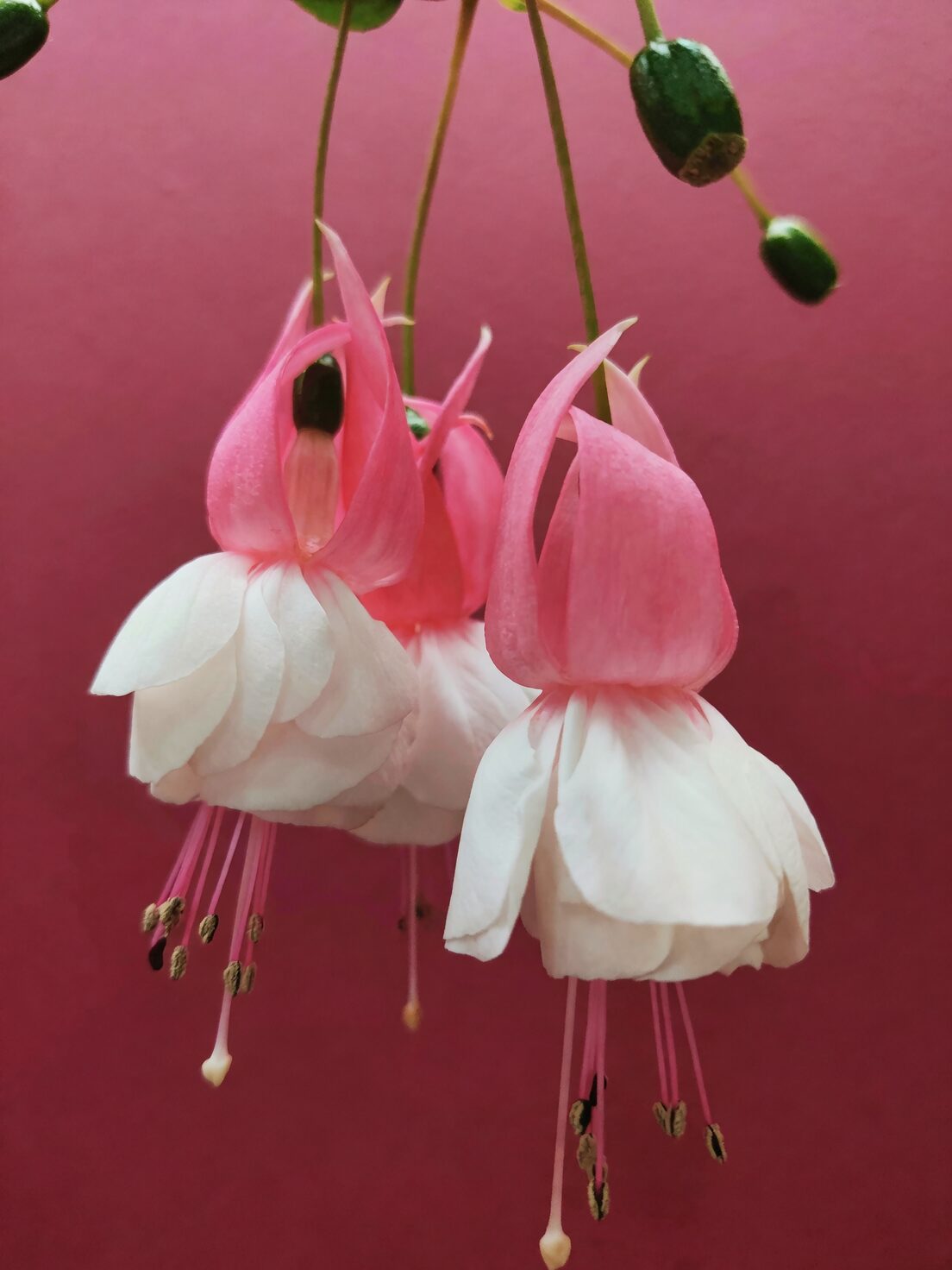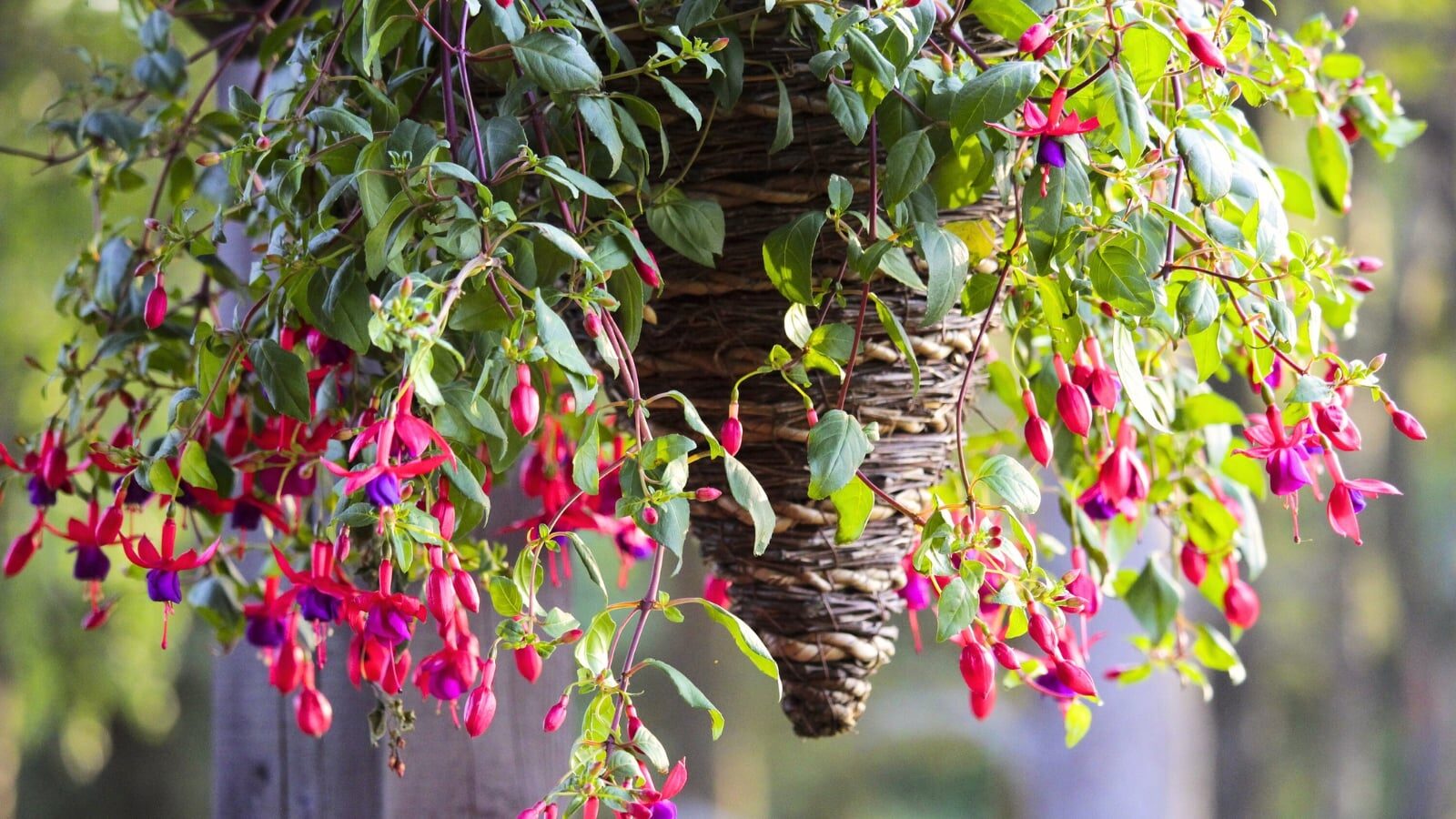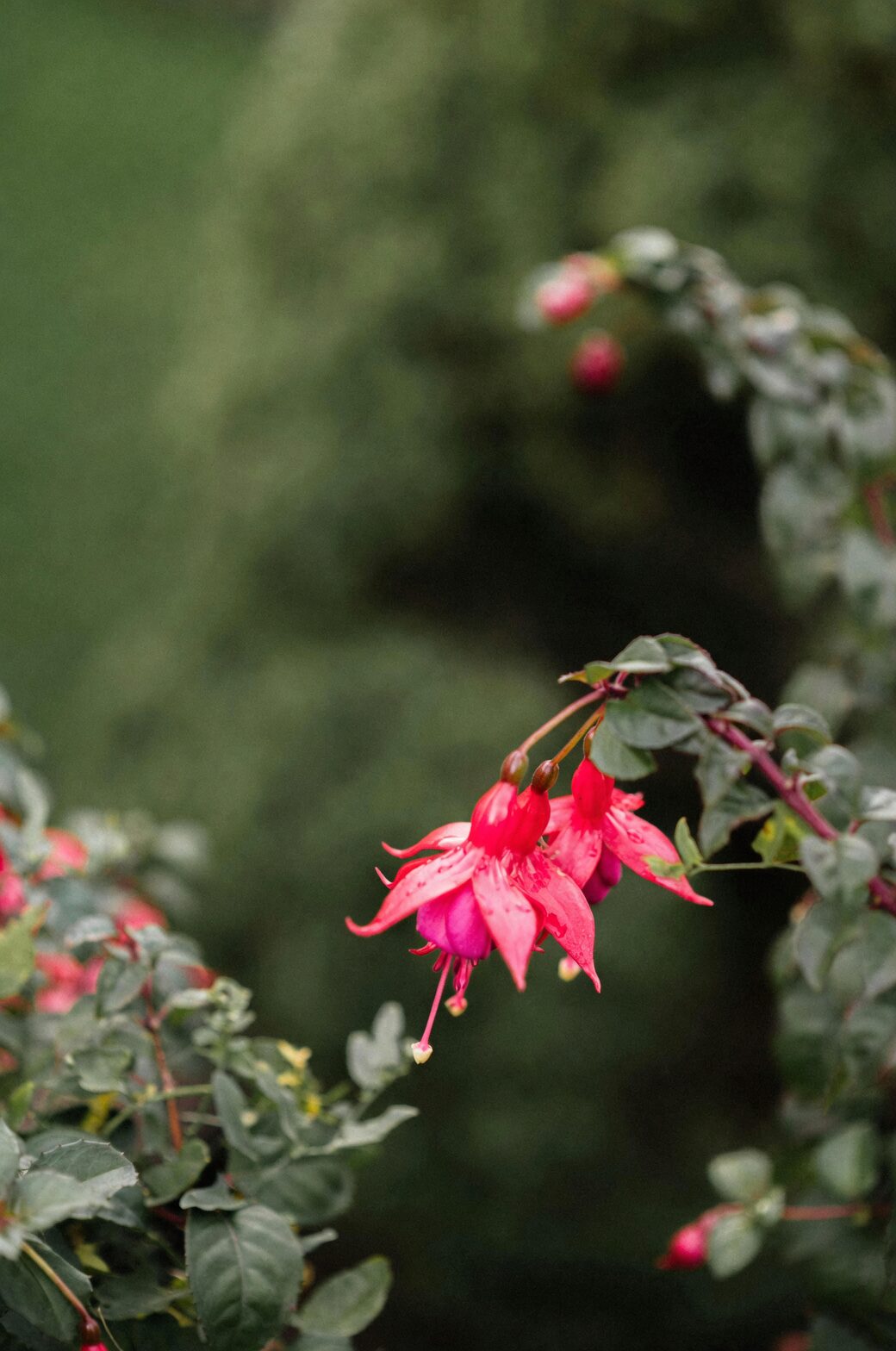

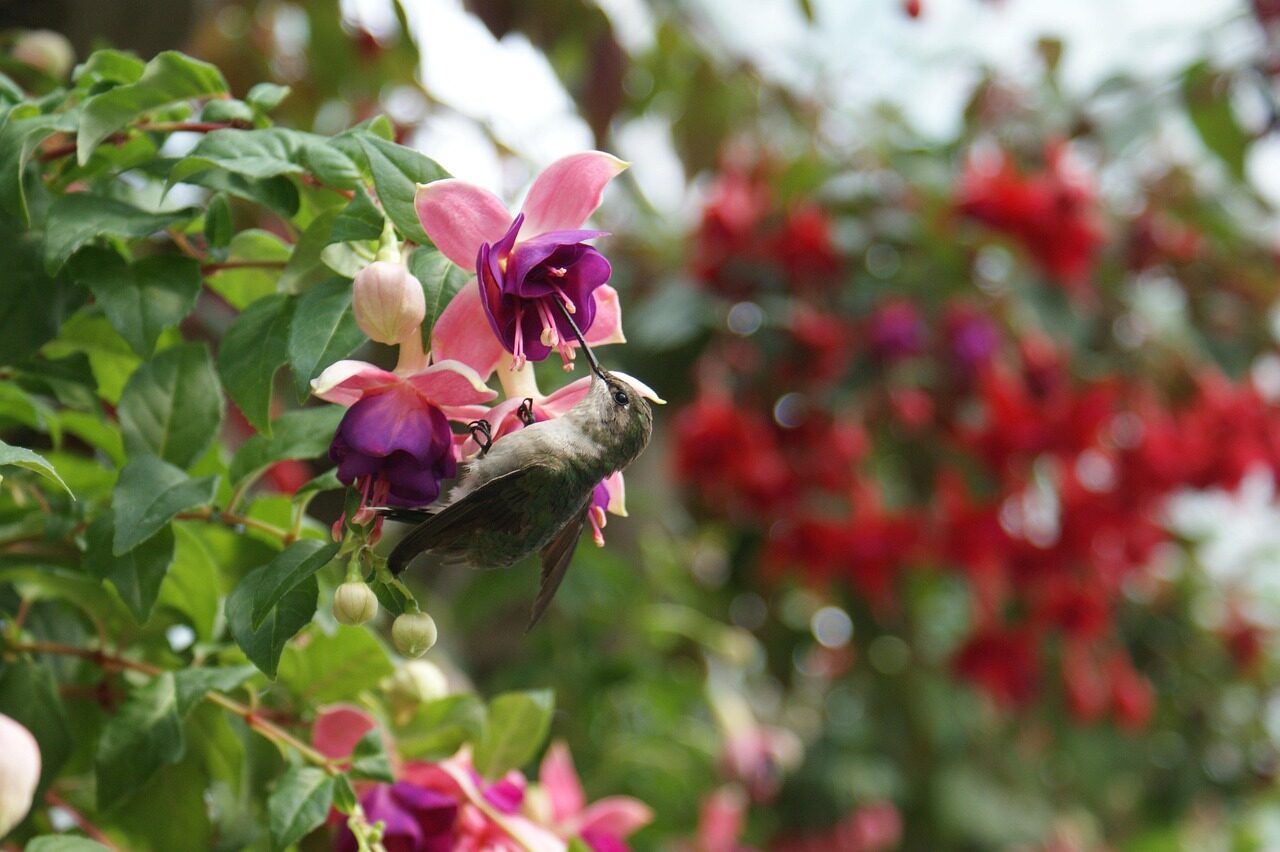
Imagine a breeze setting a thousand little lanterns swaying—blush and berry, coral and cream, single bells and frothy doubles—drawing hummingbirds like tiny comets. That’s the spell of Fuchsia × hybrida, the beloved “Lady’s Eardrops” of porches, patios, and hanging baskets. Its story is a trans‑American road trip followed by a full‑blown breeding boom: wild species from the New World, a wave of Victorian obsession, and generations of hybridizers who shaped today’s bicolored, double, and trailing showstoppers.
From wild bells to window boxes: the origin tale
Centuries before garden centers brimmed with fuchsias, explorers and botanists were meeting them in the Americas.
- The heartland for the modern basket fuchsia: the Mexican Plateau. Many of the species that lend today’s hybrids their lush flower size, saturated color, and generous branching hail from Mexico’s cool, bright highlands.
- The first chapter in print: In 1703, the French botanist Charles Plumier published Fuchsia triphylla (named for the German botanist Leonhard Fuchs) after studying plants from the Caribbean. It was a spark that lit European curiosity.
- South American threads: Species from the Andes and the far south, like the famed hardy Fuchsia magellanica of Chile and Argentina, added vigor, cold tolerance (in some lines), and that signature lantern silhouette.
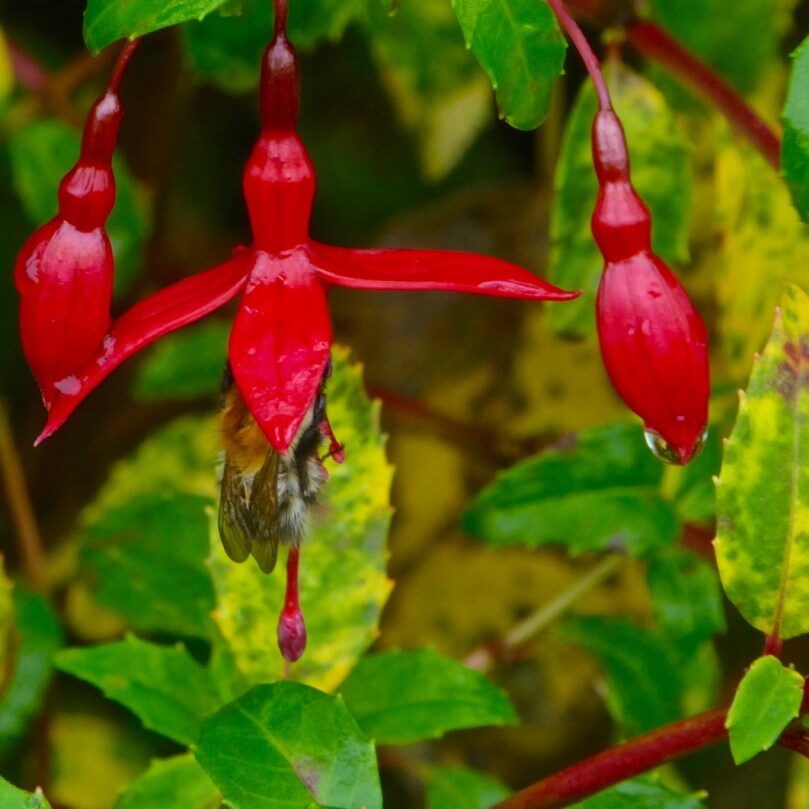
- Pollinators with a preference: Many wild fuchsias are tuned to hummingbirds—hence the pendulous, vividly colored blooms that practically advertise “nectar here.”
By the 19th century, fuchsias had arrived in European nurseries. Breeders crossed species again and again—especially Mexican Plateau types—with a dash of other American lineages. The result wasn’t a single species but a vast hybrid swarm: Fuchsia × hybrida, the catch‑all for the garden forms that fill our baskets today.
The Victorian boom that made modern fuchsias
Think of the 1800s as the fuchsia’s golden age of invention.
- Nurseries selected for ever larger flowers, richer colors, and free‑branching plants.
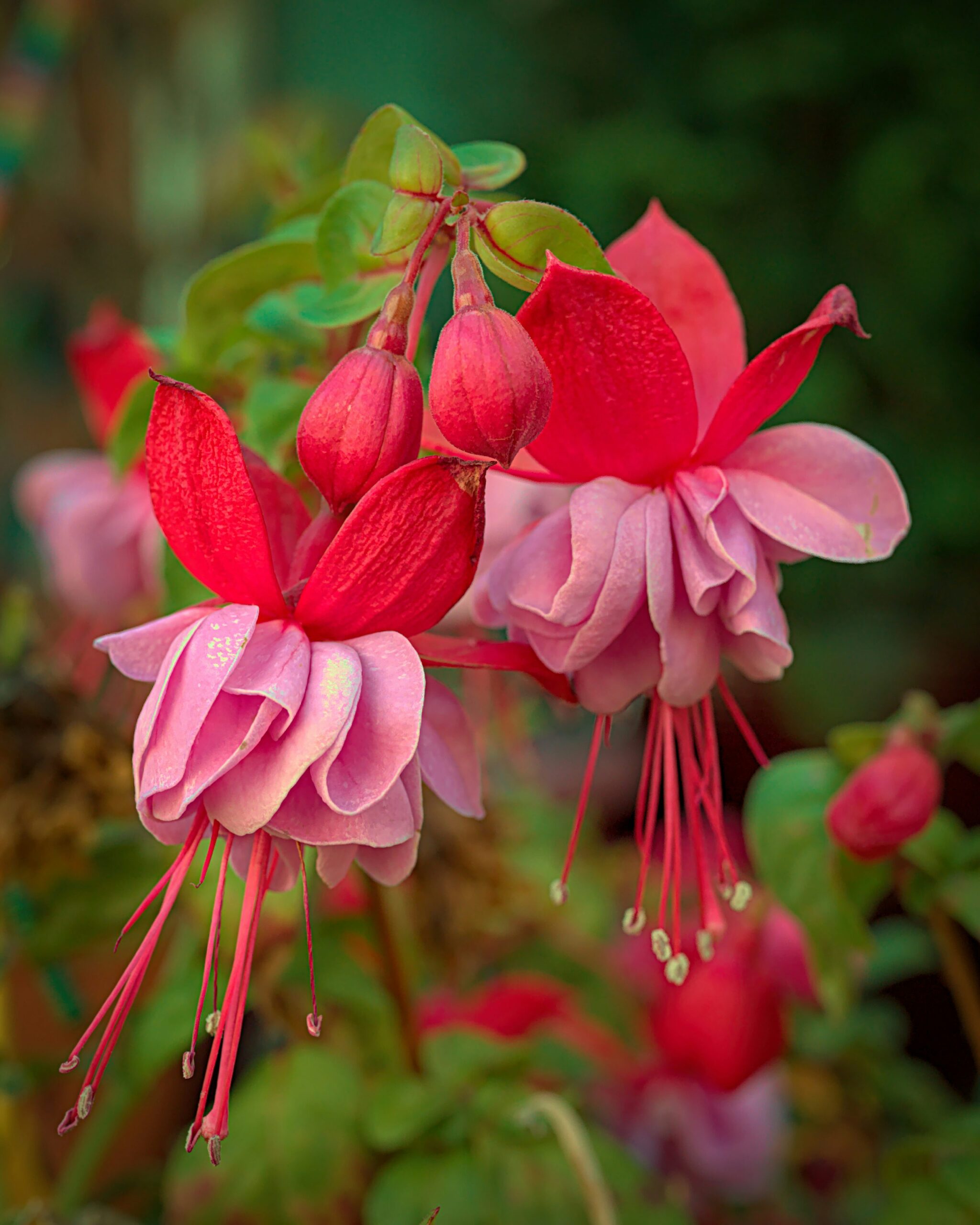
- Bicolors became a calling card: sepals one shade, petals another—raspberry over violet, shell‑pink over plum.
- Doubles arrived: petals layered into tutus and petticoats so full they look almost weightless.
- Habit by design: upright for borders and standards (mini “lollipop trees”), mounding for pots, and strongly trailing for hanging baskets.
That momentum never stopped. Today, thousands of cultivars let you paint with form: petite and dainty, or overflowing cascades that read from across the garden.
Meet the plant: what you’ll see and grow
- Names and family: Fuchsia × hybrida (Hybrid Fuchsia, Hanging Fuchsia, Lady’s Eardrops), in the evening primrose family (Onagraceae).
- Habit and size: Freely branching, graceful plants ranging from mounding to strongly trailing. In containers, expect about 30–90 cm tall and wide; many retail plants start in 12–15 cm pots, and pros often plant 2–3 young plants per basket for instant fullness.
- Foliage: Typically deep green and dense in good light. Low light, or persistent heat, can cause yellowing, legginess, and bud drop.
- Flowers: Pendulous, bell‑like “lanterns” in a stunning range—single or double, petite to large, often two‑toned. They look best when allowed to dangle freely so you can admire them from below.
- Season: In mild climates with cool, bright weather, bloom can run from late spring through autumn, often peaking again during cooler late‑season spells.
Where fuchsias feel at home
- Light: Bright light with gentle direct sun—morning sun is ideal. Shield from harsh midday/afternoon rays in summer. Indoors, choose a bright east or south window, not a dim corner.
- Temperature: Cool is king—about 15–22°C (59–72°F). Growth slows above 25°C (77°F); prolonged heat near 35°C (95°F) can be devastating. Keep above 5°C (41°F) for steady growth; aim for 12–15°C (54–59°F) in late autumn and at least 10°C (50°F) through winter indoors.
- Humidity: Enjoys even moisture in air and soil. Light misting can help cool the canopy, but pair humidity with airflow to deter disease.
- Soil: Fertile, moisture‑retentive yet airy potting mix—peat or leaf‑mould/compost base with perlite and/or coarse sand. The goal: steady moisture without waterlogging.
- Hardiness: Generally tender to half‑hardy; treat most container fuchsias as frost‑tender. A minority of cultivars can shrug off brief light frosts (to around −5°C/23°F), but pots are riskier than ground.
- Placement: Hanging baskets, bright porches, balconies, patios, and sunny windows. In heat waves, move to bright shade with a breeze. Keep away from ripening fruit—ethylene gas can trigger bud drop.
Care that keeps the bells ringing
Watering: the even‑moisture mantra
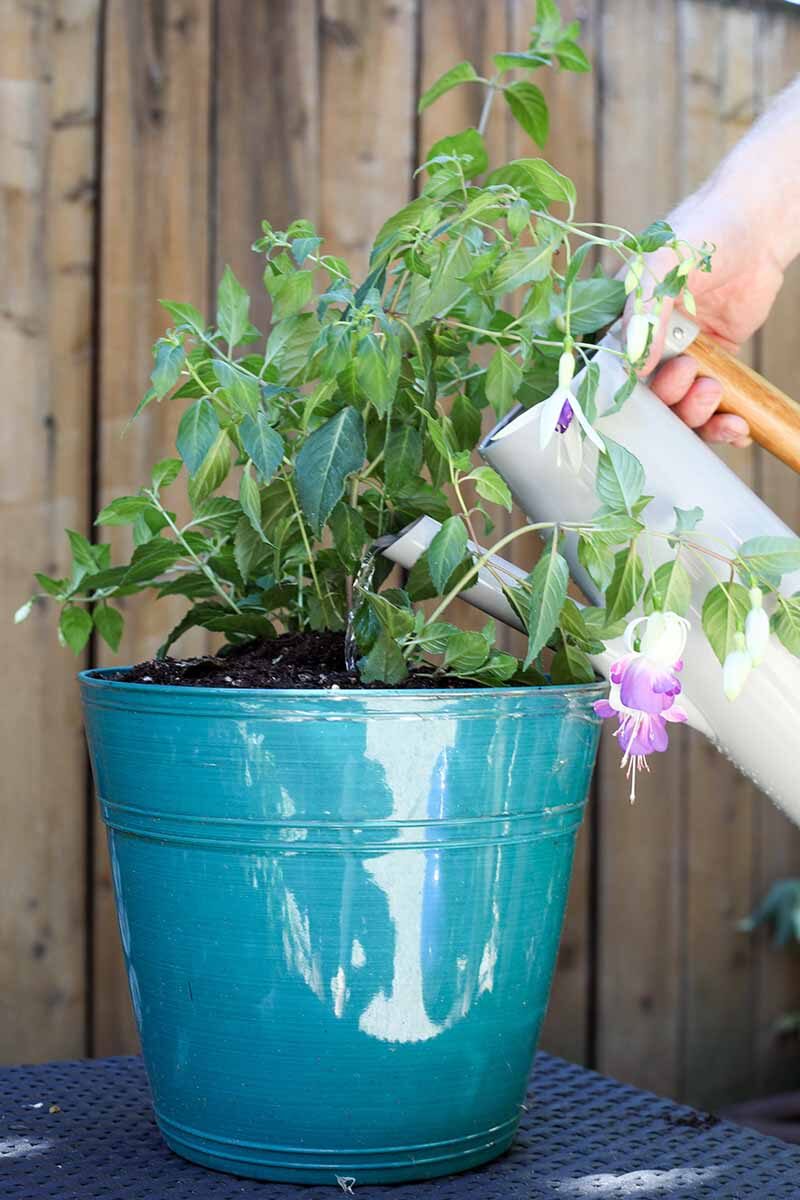
- Rule of thumb: Water thoroughly when the mix surface just dries; keep evenly moist, never bone‑dry or soggy.
- Spring: Often 2× weekly to every 1–2 days, depending on light, warmth, pot size, and airflow.
- Summer: In heat, growth may pause—keep lightly moist and cool the plant with shade and airflow; frequent watering (every 1–2 days) may be needed without waterlogging.
- Autumn: As temps fall, water less (often around weekly, guided by drying time). Slightly drier between drinks can prolong bloom.
- Winter: Bright, cool quarters; typically water weekly, keeping above 5–10°C (41–50°F).
Feeding: fuel for flowers
- During active growth, feed every 2 weeks with a balanced‑to‑bloom formula (something like 15‑15‑30) or a mild organic liquid feed.
- Reduce or pause in peak heat when growth stalls. If you’re getting lots of leaves but few buds, ease off nitrogen.
Pinching and pruning: shape the show
- Pinch young plants 2–3 times to build a full basket:
- First pinch at ~3 pairs of leaves (cut to just above the second pair).
- Pinch again when new shoots have 3–4 pairs of leaves.
- Keep 5–7 strong main branches; remove spindly shoots. Deadhead spent flowers.
- After a big flush, shorten lanky stems. If the base gets bare, hard‑prune to rejuvenate.
- In summer heat, a restorative cutback of 1/3–1/2 helps the plant rest and rebound when cool returns.
Propagation (ridiculously easy)
- Tip cuttings in spring or semi‑ripe cuttings in late summer (7–9 cm long). Strip lower leaves, root in moist medium (or even water). Roots in ~10 days; pot up by ~30 days. Many flower the same year.
- Seed sowing works in spring or autumn at 15–24°C (59–75°F); spring‑sown seedlings often flower the following year.
Repotting
- Repot annually in spring into a rich, free‑draining mix. A classic basket is a 15 cm pot planted with 2–3 young fuchsias for fullness. Combine repotting with a light to hard cutback to refresh growth.
A quick seasonal playbook
- Spring: Repot, pinch to branch, give bright light. Water as the surface dries (every 1–2 days to ~2×/week). Feed every 2 weeks.
- Summer: Guard against heat—bright shade, strong airflow, steady but lighter moisture. Pause feeding during hot spells. Optional 1/3–1/2 cutback for a rest.
- Autumn: Cooler air often boosts bloom; ease watering frequency slightly.
- Late autumn: Move indoors to bright light; aim for 12–15°C (54–59°F).
- Winter: Keep above 5–10°C (41–50°F) depending on growth goals; water about weekly, avoiding soggy soil.
Design ideas for pots and hanging baskets
- Go trailing at the rim, mounding in the middle, upright at the back for a layered cascade.
- Mix bloom forms—singles for clarity, doubles for drama—and play bicolors against foliage tones.
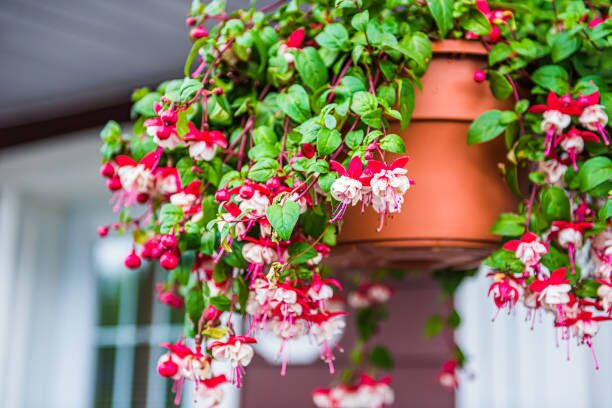
- For instant impact, tuck 2–3 young plants in one 15 cm basket. Train a spare plant as a standard for a whimsical “fuchsia lollipop.”
Buying smart
- Choose plants that are compact, well‑branched, and true to the habit you want (trailing if you want a cascade).
- Look for deep green leaves, no yellowing or spots, and lots of buds with a few open flowers.
- Avoid bare‑based plants or those sold bare‑root. After purchase, move straight into bright light—and keep it away from the fruit bowl (ethylene causes bud drop).
Troubleshooting: when bells go silent
- Heat wilt and dieback: Above 25°C (77°F), growth slows; near 35°C (95°F), plants can crash. Move to bright shade, maintain gentle moisture, raise humidity slightly, and boost airflow.
- Bud/flower drop in summer: Usually heat plus warm nights. Shift to a breezy, bright‑shade spot, steady the moisture, and consider a 1/3–1/2 cutback to help it reset.
- Diseases: Gray mold (Botrytis) and rust love cool, stagnant, damp air. Space plants, remove spent flowers/leaves, water the soil—not the blooms—late in the day.
- Pests: Aphids, spider mites, and whiteflies—treat early with insecticidal soap or horticultural oil; repeat as needed.
Safety note
Generally low‑toxicity for people and pets, but chewing may upset tummies. Keep out of reach of nibblers.
Flower language and meaning
Fuchsia’s “flower language” often speaks of playful charm, fascination, and bright curiosity—unsurprising given those jaunty, bell‑like blooms. In some European traditions, the drooping flowers were read as gentle “warning bells,” a reminder to proceed thoughtfully. Like much Victorian floriography, these meanings are cultural poetry rather than botanical fact—but they capture how people experience fuchsias: lively, enchanting, and just a little bit mischievous.
A few delightful extras
- Thousands of cultivars exist—singles, doubles, and dramatic bicolors among them.
- They’re iconic in hanging baskets because the flowers are meant to be admired from below.
- Sensitive to ethylene gas: keep plants away from ripening fruit to reduce bud drop.
- Early pinching pays off with a fuller plant and bigger show.
- Cuttings root fast—often pot‑ready in about 30 days, with flowers the same season.
- Pronunciation tidbit: The name honors Leonhard Fuchs—etymologically “FOOK‑sya”—though “FYOO‑sha” is the common English.
The living legacy
Fuchsia × hybrida is less a single species than a living story: wild American bells—with a big chapter written on the Mexican Plateau—rewritten by gardeners into an orchestra of color and form. Put one in a basket, give it cool brightness and steady moisture, and it will repay you with months of motion—lanterns dancing on the lightest breeze.