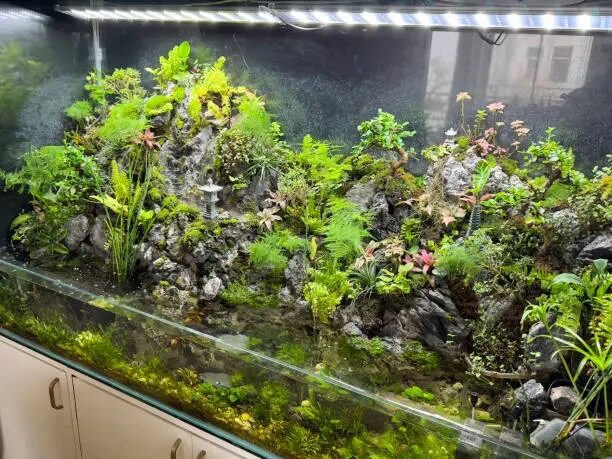
Imagine a living ribbon of glossy green stepping out of your water, draping a driftwood arch, and strolling right onto the land section—each leaf a bright little “coin” catching the light. That’s the charm of Hydrocotyle umbellata, the Brazilian pennywort, when you train it as an emersed “green bridge” along aquarium and paludarium edges. Below, you’ll find a design-and-care playbook focused on the four things that make those above-water leaves shine: light, airflow, trimming, and clean, stable water.
Meet the plant: a natural edge-dweller
- Botanical name: Hydrocotyle umbellata (Brazilian pennywort)
- Look: round, peltate “coin” leaves on slender stalks; quick to creep and root at nodes
- Habit: low, mat-forming emergent aquatic; perfect for edges, shelves, and shallow, continuously moist zones
- Best range: 20–28°C (68–82°F); enjoys bright light, tolerates partial shade
- Indoors: thrives at an east- or south-facing window or under bright LEDs
- Tip: rotate the container about half a turn weekly so the growth stays even and the “bridge” doesn’t lean toward a single light source
Why “green bridges” work so well
Hydrocotyle umbellata loves to anchor in something damp and then wander. Give it a moist ledge or a wicking path at the tank rim and it readily steps above the waterline, where it often grows faster and stays denser. Emersed leaves get more CO2 from air, and with the right light and airflow they develop that coveted glossy finish.
Three reliable “green bridge” builds
Pick one (or mix and match) depending on your scape and hardware.
1) The marginal shelf (clean and discreet)
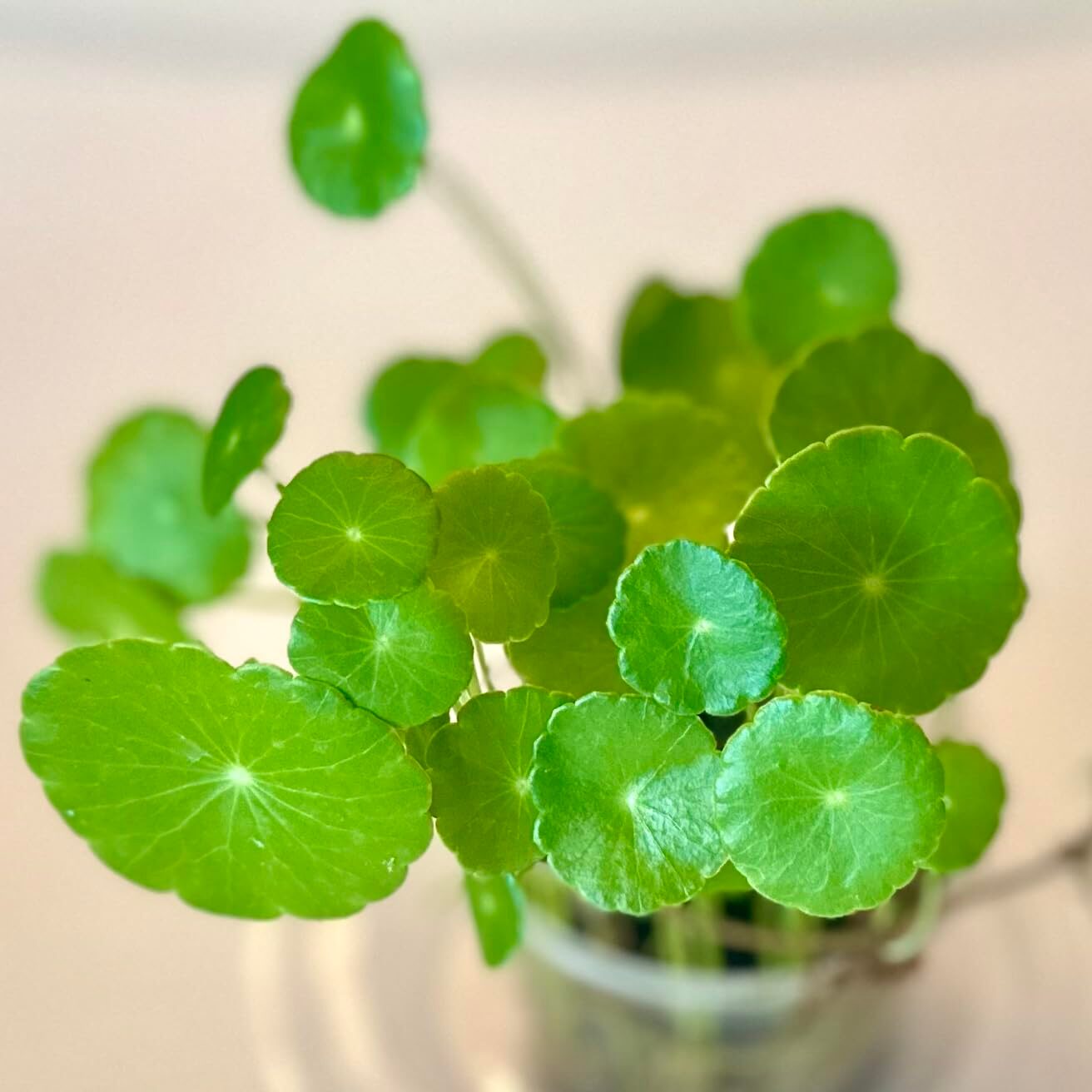
- What you need:
- A shallow, slotted or mesh pot (or a low-profile planter strip)
- Airy, moisture-retentive mix: loam or potting soil + compost/leaf mold + a bit of coarse sand
- A piece of geotextile/fine mesh to keep soil from washing out
- How to do it:
- Set the planter so the mix stays constantly moist but not submerged. Let water lick the bottom of the pot or wick up from below.
- Plant trimmed runners every 5–8 cm; pin with U-clips until rooted.
- Let stems creep outward over the shelf edge and onto wood/rock, guiding them with gentle ties.
- Why it works: steady moisture at the root zone + bright air above = compact, glossy growth.
2) The LECA basket (low-mess hydro)
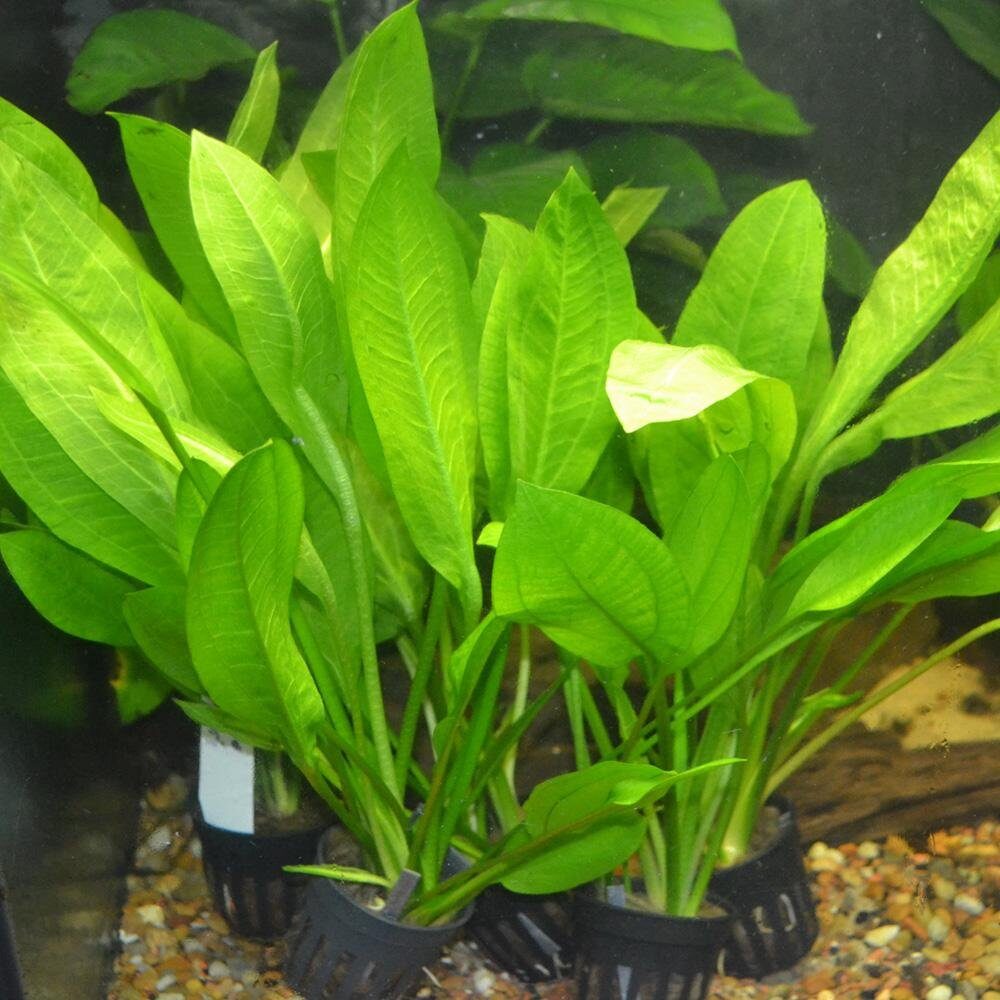
- What you need:
- A small mesh basket or perforated plastic cup
- Rinsed LECA or pebbles
- How to do it:
- Seat the basket so the lower third just kisses the water surface.
- Thread a few nodes into the LECA; roots grab quickly. Top up water so the lowest balls stay wet.
- Refresh or flow past the basket to prevent stagnation.
- Pro move: once new white roots appear, this setup needs only regular tank water turnover; leaves stay high and tidy.
3) The wick-and-raft (for dramatic spans)

- What you need:
- A cork bark strip or inert raft, plus a strip of polyester wick
- How to do it:
- Anchor one end at the waterline, the other touching land or hardscape.
- Thread the wick over the raft to ferry moisture; secure runners along it.
- Trim for symmetry as it greens over—instant “living causeway.”
Light: the gloss maker
Aim bright, not blistering. Hydrocotyle umbellata takes bright light to full sun, but in hot climates give midday protection to prevent scorch.
- Indoors (LEDs): moderate-high intensity with a 10–12-hour photoperiod. As a rule of thumb, aim for bright, evenly spread light at the rim; avoid a single harsh hotspot.
- Windows: east or south exposure is great; rotate weekly for symmetry.
- Outdoors or sunrooms: provide 40–60% shade or bright filtered light during harsh midday sun; the coins stay glossy, not crispy.
- What bright does:
- Keeps leaves small, round, and shiny
- Encourages tight internodes and a plush “bridge”
- Signs you need more light:
- Long petioles reaching skyward
- Sparse leaves, dull finish
- Signs you need less or gentler light:
- Scorch or pale patches after midday exposure (pull back to filtered light)
Airflow: the difference between dewy and dewy-fungal
Above-water leaves love humid air, but they hate stale pockets. Balance is key.
- Target environment: warm, humid (around 70–80%) with gentle, continuous air movement
- Tools:
- A small USB fan on low, angled past—not at—the foliage
- Slatted lids or vent gaps on paludariums
- Good airflow prevents:
- Aphids settling on tender tips
- Fungal spotting on perpetually wet leaves
- Mineral and algae films where splashes linger
Tip: If your setup misted heavily, switch to lighter, less frequent misting with RO/distilled water and boost airflow. Keep leaves mostly dry; let roots and wicks do the hydrating.
Water-quality habits that keep leaves pristine
Even emersed leaves betray what’s happening in the water below. Keep it fresh and stable.
- In aquariums/paludariums:
- Steady filtration and regular water changes keep nutrients balanced and prevent “stale” conditions that lead to yellowing.
- Manage splash: splatter from hard water leaves chalky spots. Deflect spray, lower outflow energy, or use lily pipes/spray bars to calm the rim zone.
- Wipe leaves gently with RO/distilled water if mineral film develops. Avoid detergents.
- In dedicated water-culture cups or edge baskets:
- At first, change water every 3–4 days; after new white roots appear, every 7–10 days is usually enough.
- Top up before levels drop; consistency beats feast-or-famine soaking.
- Fertilizer etiquette:
- Light feeding only during active growth: balanced liquid at low strength every 2–4 weeks (about monthly in soil, every 2 weeks in water culture).
- Keep fertilizer off the leaves to prevent spotting and burn.
- Pause feeding in winter; focus on light and steady moisture.
Trimming and training for a tidy bridge
Think of yourself as a scenic railway manager: prune, re-route, and keep the line clear.
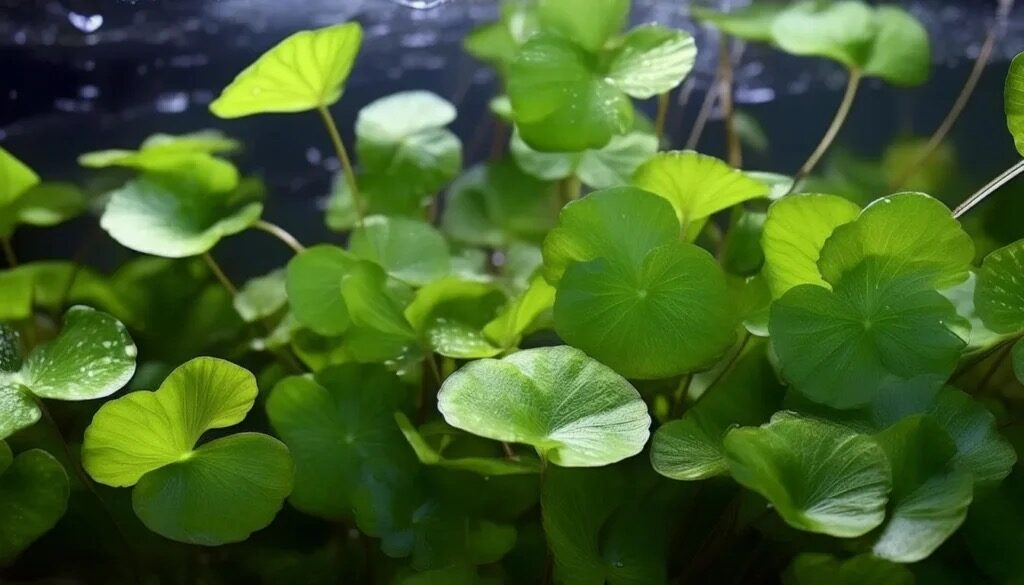
- Pinch or cut off:
- Yellowing basal leaves (normal over time)
- Scorched or torn leaves
- Shape your bridge:
- Trim long stems back to a node to encourage side shoots and thicker cover.
- Replant tip cuttings (10–15 cm / 4–6 in) where you want new coverage; they root fast in moist sand, soil, or right in the LECA basket.
- Rhythm:
- Light touch weekly: remove a few tired leaves and redirect a runner.
- Monthly tune-up: even out edges, thin for airflow, and re-pin stragglers.
Temperature, humidity, and seasonal notes
- Best range: 20–28°C (68–82°F). Try to keep summer highs below 30°C (86°F).
- Winter: keep bright and above 10°C (50°F) ideally (at least above ~5°C/41°F) to reduce yellowing and dieback.
- Outdoors in cold regions: treat as frost-tender; overwinter indoors.
Substrates and anchors that work
- Soil mix (for planters/shelves): moisture-retentive yet airy—loam/potting soil + compost/leaf mold + a bit of coarse sand. Cover with mesh to prevent washout.
- Hydro anchors: clean pebbles or LECA in a perforated cup; easy, tidy, and perfect for edge pots.
- Hardscape helpers: soft garden ties or plant clips to coax runners across wood, rock, or raft surfaces without damaging petioles.
Troubleshooting the “coins”
- Yellowing leaves
- Common causes: inconsistent moisture (too dry/too soggy), stagnant water, low light, cold stress, or poor ventilation.
- Fixes: refresh water and airflow, stabilize moisture, brighten the light, and keep temps in range. Remove yellowed leaves.
- Leggy or floppy growth
- Causes: insufficient light or one-sided light.
- Fixes: increase/redistribute light; rotate weekly; trim to a node to promote bushiness.
- Scorch or pale patches
- Cause: harsh midday sun without protection.
- Fix: add 40–60% shade or diffuse the light; improve hydration at the root zone.
- Aphids on new tips
- Response: rinse off with water, wipe leaves, or use insecticidal soap carefully and away from direct contact with aquarium water. Improve airflow. Repeat weekly until gone.
- Spotty leaves from spray
- Likely culprits: fertilizer or hard-water droplets drying on the surface.
- Fix: avoid wetting leaves with fertilizer; use RO/distilled water for occasional leaf wiping; reduce splash.
Propagation that keeps the bridge evergreen
- Tip or node cuttings: take 10–15 cm (4–6 in) pieces with at least one node; root in moist sand, soil, or water at 20–24°C (68–75°F). Often roots within ~2 weeks.
- Division: slice a dense mat into sections and replant. Spring is easiest, but anytime during warm, active growth works if light and moisture are steady.
- Pro tip: replant fresh cuttings to fill thin spots on your bridge for instant fullness.
A simple weekly ritual
- Rotate planters a half-turn for even light
- Check and adjust water level at the edge; top up if needed
- Remove a handful of oldest/yellow leaves
- Thin a few runners to keep airflow through the canopy
- Wipe any mineral film from splash-prone leaves
- Enjoy the new growth and redirect a stem or two to refine the bridge line
A quick word on symbolism
Those bright round leaves have long invited comparisons to coins—hence the common names like pennywort and dollarweed. In many homes, this plant is gifted as a wish for prosperity and smooth fortunes. Treat it as a light-hearted, aesthetic tradition rather than a historical doctrine; its “good luck” comes mainly from the steady pleasure of fresh, healthy greenery.
Safety and placement notes
- Pets and people: no widely accepted evidence of significant toxicity for commonly grown Hydrocotyle pennyworts, but chewing any houseplant may cause mild stomach upset. Keep out of nibblers’ reach.
- Placement ideas:
- A paludarium ledge with a gentle fan and bright LED panel above
- An aquarium rim with a LECA basket tucked under the light
- A shallow bowl tucked beside the main tank as a feeder reservoir for cuttings
The takeaway
Give Hydrocotyle umbellata a moist foothold at the water’s edge, bathe it in bright, gentle light, keep the air moving, and practice a little weekly tidying. Do that, and your “green bridge” will stay dense, glossy, and irresistibly fresh—like living jade jewelry linking water and land.