

Think of Brazilian pennywort as the jewelry of a tiny water garden: bright green coins on slender stems that slip into a bowl, creep, and softly fountain new leaves. Here’s a quick, aesthetic micro-pond you can assemble in minutes—and keep effortlessly fresh and lush for months.
Meet your plant: Hydrocotyle umbellata (Brazilian Pennywort)
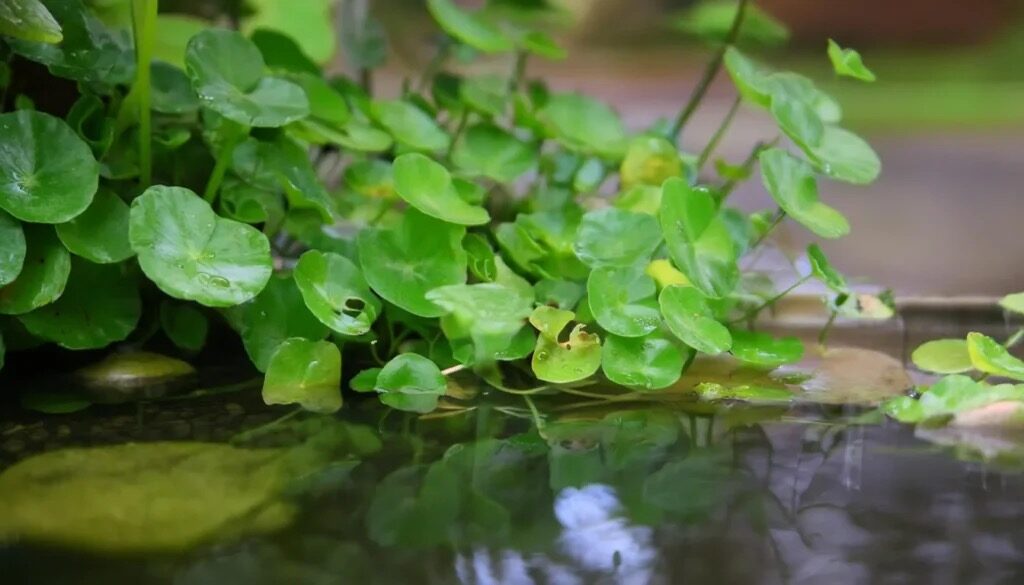
- Look: round, glossy, peltate leaves—little umbrellas/coins on wiry petioles
- Habit: fast, creeping runners that root at the nodes and quickly fill a shallow vessel
- Size: typically 5–30 cm tall, spreading 30–60+ cm as runners ramble
- Light style: bright light to gentle sun; indoors it loves an east or south window
- Fun note: widely sold as “pennywort” or “dollarweed,” and sometimes confused in shops with related species; the care below fits the classic windowsill “coin-leaf” plant

What you’ll need (beautiful and simple)
- A shallow, wide container (15–20 cm / 6–8 in diameter is perfect to start)
- Clean water (dechlorinated); a small water jug for tidy top-ups
- Anchors: rinsed pebbles and/or pre-soaked LECA (lightweight expanded clay aggregate)
- Scissors and tweezers
- Optional style-boosters:
- A slim clip-on or puck LED grow light (warm-white looks elegant)
- A tiny, ultra-quiet pump or air stone for gentle circulation/aesthetic ripple
- A pinch of decorative gravel or a smooth rock to “pin” runners
- A small mesh bag with a spoon of activated carbon or ceramic bio-balls for clarity
The 10‑minute micro‑pond setup
- Prep the plant
- Rinse roots. Trim away any brown, mushy bits. Keep a few 10–15 cm runner tips with healthy nodes.
- Rinse your anchors
- Wash pebbles; pre-soak LECA 20–30 minutes so it sinks and dust washes away.
- Build a base
- Add a 2–3 cm layer of pebbles/LECA. This anchors roots, keeps water oxygenated around them, and looks clean.
- Place the pennywort
- Tuck nodes onto/into the pebble-LECA layer, keeping leaf blades above water level.
- “Pin” runners in place with a few heavier stones so nodes stay in light contact with the substrate.
- Fill
- Add clean water until it just covers the roots and nodes (think shallow shore: leaves stay dry, crowns stay wet).
- Style and settle
- Add a pretty stone, a sprig of moss on a rock, or leave it minimalist.
- If using a micro-pump, set to the gentlest trickle so it doesn’t buffet the leaves.
Tip: For a lusher “carpet,” train runners in a circle along the bowl’s rim and pin them every few centimeters. They’ll root at nodes and thicken into a coin-green wreath.

Light placement for that dewy, coin-bright glow
- Windowsill: East or bright south is ideal. Give bright light to soft sun, but in hot climates shield harsh midday rays (40–60% filtered light) to avoid scorch.
- LED option: Position a warm-white or full-spectrum light 15–30 cm above leaves for 10–12 hours/day.
- Rotate the bowl a half-turn weekly for even growth and perfectly symmetrical rosettes.

Sweet spot: 20–28°C (68–82°F). Keep above 10°C (50°F) indoors in winter; avoid cold drafts. Aim for comfortably humid air; a water bowl already helps, but occasional light misting in dry rooms is welcome.
Clean-water routine (the clarity formula)
- Week 1 transition: change water every 3–4 days while the plant settles and new white roots appear.
- After rooting: change every 7–10 days. Top up in between to maintain that shallow “shoreline.”
- Refresh method:
- Lift the whole planting slightly with your hand, pour off most water, refill gently along the glass so you don’t uproot nodes.
- Wipe the bowl’s inner wall with a soft cloth to prevent biofilm haze.
- Monthly: swish pebbles/LECA in old tank water to rinse fines; reassemble.
- Optional helpers:
- A tiny pump/air stone improves oxygen and sparkle.
- A mesh bag with a spoon of activated carbon or a handful of ceramic bio media tucked behind rocks keeps water sweet with minimal fuss.
Consistency is everything—stagnant water leads to yellowing leaves; fresh water keeps them coin-bright.
Anchoring tricks with pebbles and LECA
- Pebble pinning: Lay a runner on the substrate and bridge a small pebble over each node to hold it flush. New roots grab quickly.
- LECA collar: Nest the crown in a LECA “ring.” It cradles delicate roots while allowing water to flow freely.
- Two-texture base: Heavier pebbles on the bottom, LECA on top for easy re-positioning as the scape evolves.
Keep the foliage lush (and growth compact)
- Feeding: In water culture, use a balanced liquid fertilizer at low strength every 2 weeks during active growth. Avoid splashing fertilizer on leaves. Pause feeding in winter.
- Grooming: Snip yellow or tired basal leaves promptly; trim floppy stems back to a node to encourage bushy regrowth.
- Airflow: Gentle movement keeps leaves clean; rinse foliage occasionally if dust builds.
- Training: Guide runners along the rim or over a low rock for dimension; they’ll root at contact points and thicken.
Simple style upgrades that also boost health
- Warm spotlighting: A small, warm LED aimed across the surface makes leaves gleam and discourages leggy reach.
- “Spa ripple”: The slightest surface movement from a micro-pump increases oxygen and keeps water fresher between changes.
- Shade-smart: If summer sun gets fierce, use a sheer curtain during midday; the coins stay glossy, not crispy.
- Clarity kit: Carbon or ceramic balls hidden behind stones = cleaner water, less frequent full resets.
Troubleshooting fast
- Yellowing leaves?
- Usual causes: water left too long without changes, swings between too dry/too wet crowns, low light, cold drafts, or poor ventilation.
- Fix: return to the clarity formula, brighten light, stabilize temps, prune old leaves.
- Pests: Aphids sometimes fancy the tender tips. Rinse off, pinch affected growth, or use insecticidal soap as needed.
- Going fully underwater?
- It can adapt, but expect leaf drop and regrowth. Submerged forms may produce floating leaves on long stalks; for a desktop micro-pond, keeping leaves emergent is the most elegant and easiest mode.
Quick care at a glance
- Light: Bright light to gentle sun; protect from harsh midday scorch.
- Water: Refresh every 3–4 days at first; then every 7–10 days. Keep roots/nodes submerged, leaves dry.
- Temp/Humidity: 20–28°C ideal; above 10°C in winter; enjoys humid air.
- Feed: Low-dose liquid fertilizer every 2 weeks in water culture (growing season only).
- Prune/Train: Remove yellow leaves; trim and pin runners for a neat rim-wreath effect.
- Rotate: Half-turn weekly for even growth and tidy rosettes.
Symbolism: why the “coin leaves” feel so lucky
Pennywort’s round, gleaming leaves naturally read as coins, which is why many cultures link it with prosperity and “money luck.” It’s less a formal Victorian flower language than a visual metaphor: a plant that multiplies into a lush, many‑coined mat suggests steady abundance. Place it by a well-lit window or entry table for a little daily nudge toward growth—literal and figurative.
Safety note
There’s no widely accepted evidence that commonly grown Hydrocotyle pennyworts are significantly toxic to people or pets, but any houseplant can cause mild stomach upset if chewed. Keep out of reach of nibblers and consult a professional if ingestion symptoms occur.
—
Set it once, keep the water sweet, and let those little green coins do their charming, creeping thing. A tiny pond, a soft shimmer of light, and an ever‑fresh ring of leaves—instant calm on a windowsill.