
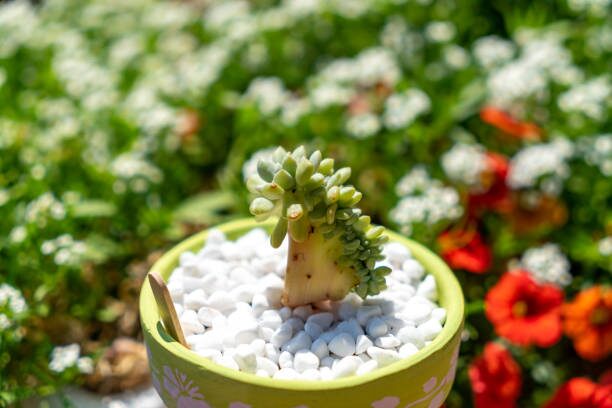
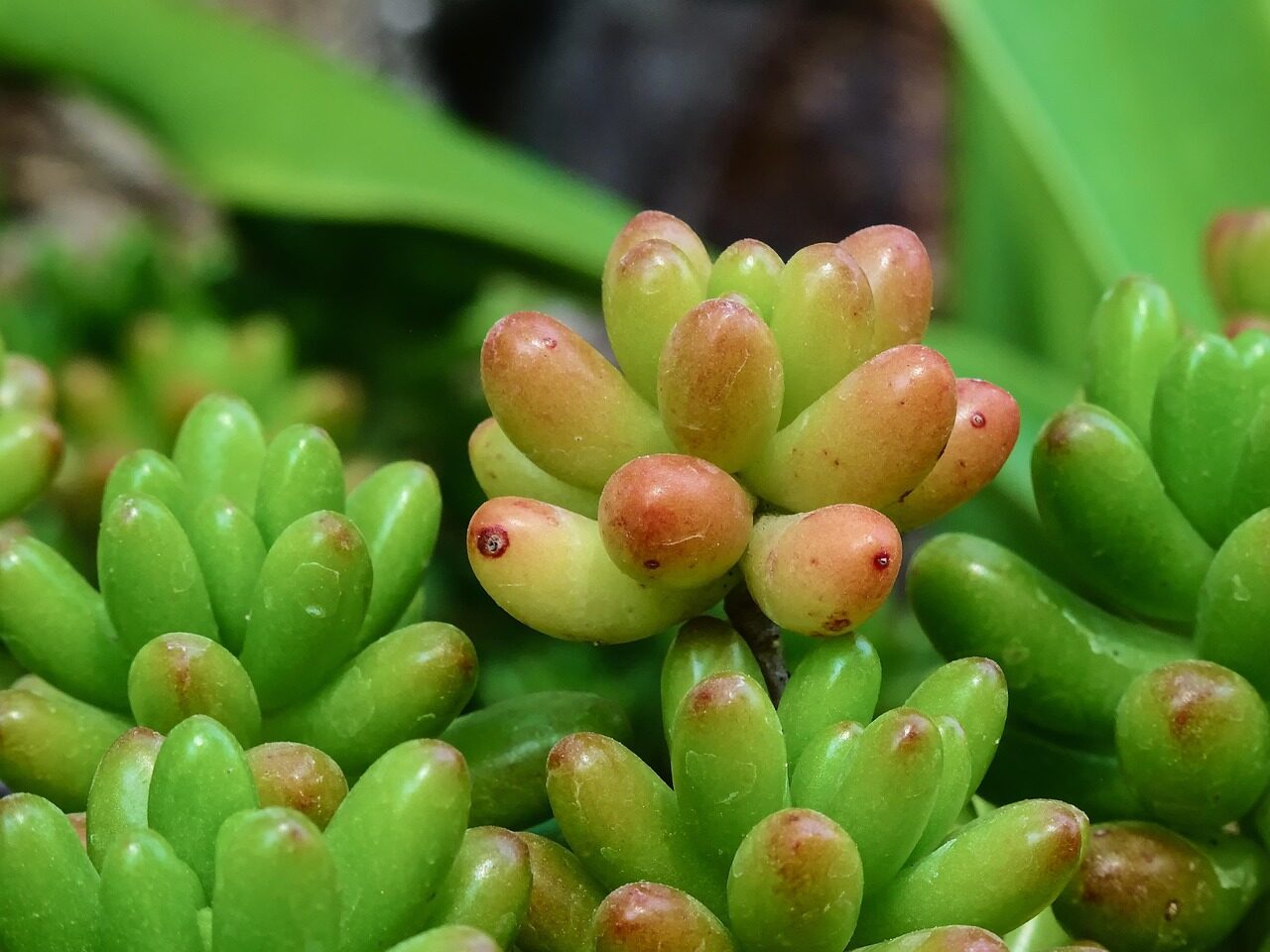
If your garden were a tapas bar, Sedum rubrotinctum would be the irresistible bowl of jelly beans right at the center—bright, glossy, and impossible not to nibble with your eyes. This small Mexican succulent (aka Jelly Bean Plant, Christmas Cheer Sedum, Pork and Beans) blushes coppery red in strong sun, mounds and trails with age, and roots from the slightest leaf. It craves what most design-forward succulent plantings also crave: fast drainage, long sun, and frugal watering. That makes it a perfect “bridge plant” for texture- and water-matched companions that keep the whole design thriving, not just surviving.
Below you’ll find recipe-style pairings, compact layout maps, and a maintenance cadence you can actually follow. Bring your brightest light, gritty soil, and a little restraint with the watering can—and let’s plate up some living sculpture.
Ground Rules: What Pairs Beautifully with Sedum rubrotinctum
- Sunlight and stress color: Provide bright light to full sun; the red blush intensifies with strong light plus cooler nights. Acclimate gradually to avoid sunburn (especially behind glass).
- Drainage first: Use a very fast-draining succulent/cactus mix—try potting soil cut 1:1 with coarse grit/perlite/pumice.
- Warmth wins: Protect from frost; best growth around 13–18°C (55–64°F); keep above 5°C (41°F).
- Dry rhythm: Water thoroughly, then let the mix dry almost completely before watering again. Much drier in summer; barely moist in winter.
- Matchmates: Choose sun-loving, drought-tolerant succulents with similar watering and dormancy patterns. Skip shade-lovers (e.g., many Haworthia) or thirstier plants.
Texture keys that flatter Jelly Bean Plant’s glossy “beans”:
- Contrast fine with chunky: pair with needle-like or filiform leaves (Curio/ Senecio “blue chalksticks”) and tight rosettes (Echeveria, Graptopetalum, Sedeveria).
- Play color echoes: red-tipped beans pop against blue-glaucous foliage and chartreuse golds.
Pro tip: Indoors, give the brightest south- or west-facing window and strong airflow. Outdoors, offer sun with a touch of midday protection in scorching heat.
—
Recipe 1: Sun‑Kissed Candy Bowl (12 in/30 cm shallow dish)
A compact crowd-pleaser that celebrates red, blue, and silver tones with crisp textures.
- Core spiller: 2–3 Sedum rubrotinctum (Jelly Bean Plant)
- Focal rosette: 1 Echeveria ‘Perle von Nurnberg’ or E. ‘Lola’
- Linear contrast: 1 Curio repens (Blue Chalksticks)
- Spark accent: 1 Sedum rupestre ‘Angelina’ (chartreuse needle)
Soil: ultra-gritty succulent mix; topdress with 3–6 mm gravel.
Light: bright light to full sun; acclimate over 10–14 days.
Layout Map (top view)
- North edge: Curio repens (Blue Chalksticks)
- Center: Echeveria focal
- East + West flanks: Sedum rubrotinctum
- South rim and gaps: Sedum ‘Angelina’ threading between plants
Spacing guide
- Echeveria center with 8–10 cm clearance.
- Jelly Bean Plants on 10–12 cm centers.
- Blue Chalksticks 5–7 cm from rim for a clean line.
Maintenance cadence
- Spring: water after full dry‑down (~every 2 weeks). Light monthly feed.
- Summer: keep drier; water lightly only after a full dry‑out; provide slight midday shade in extreme heat.
- Autumn: resume ~every 2 weeks post dry‑down; enjoy peak red tones.
- Winter: minimal water (~monthly indoors), brightest light possible.
—
Recipe 2: Balcony Rail Box “Sunset Sampler” (24–30 in/60–75 cm)
Rhythmic drifts where red tips and warm tones repeat down the line.
- Repeating modules (x3 along the box):
- 1 Sedum rubrotinctum
- 1 Graptosedum ‘California Sunset’ (peachy rosette)
- 1 Crassula ovata ‘Hummel’s Sunset’ (dwarf jade; golden edges)
- Optional trail: Senecio radicans ‘String of Bananas’ at corners
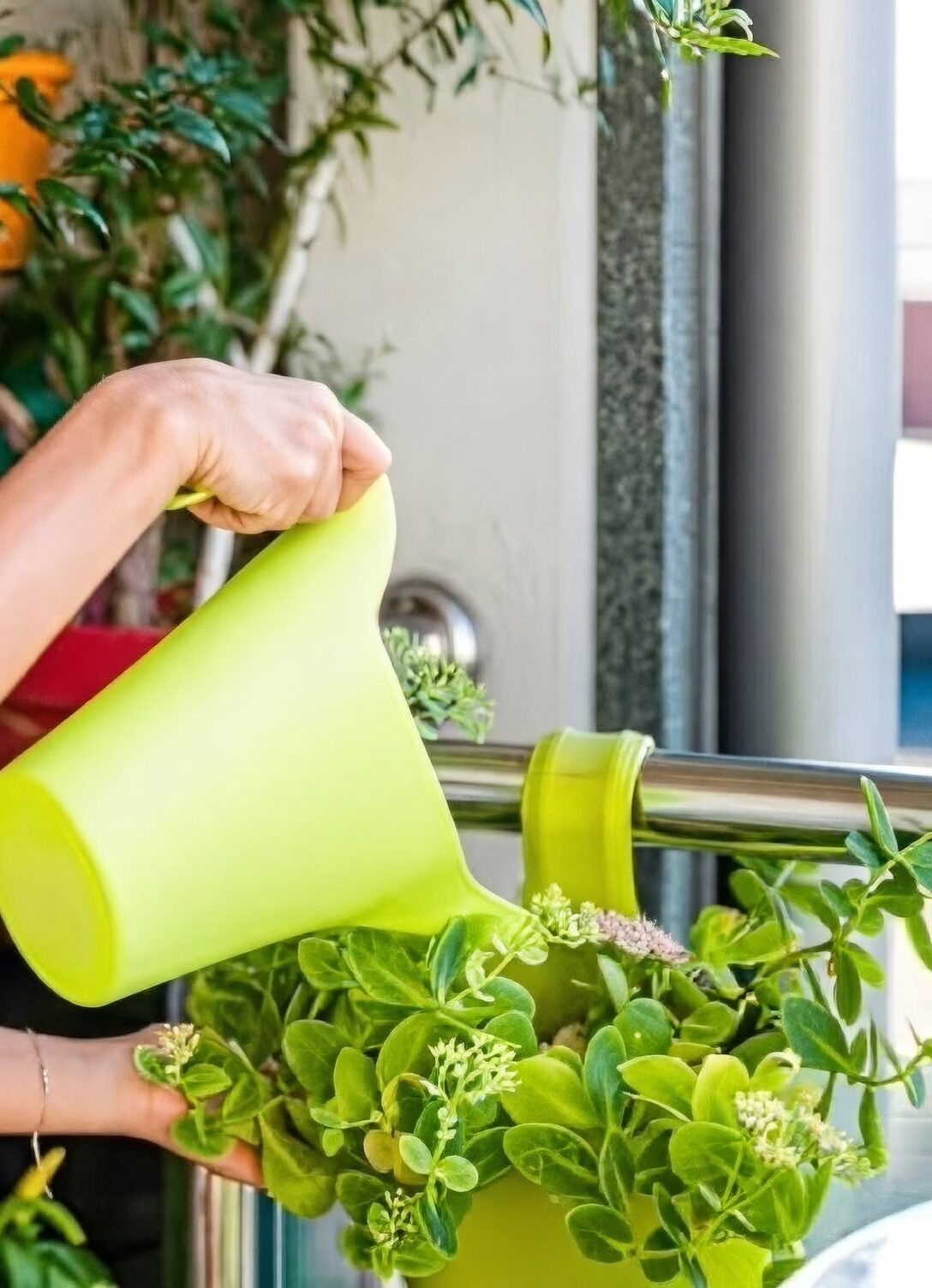
Light: full sun outdoors with a touch of midday protection in very hot spells.
Layout Map (left to right)
- Corner A: String of Bananas
- Module 1: Jelly Bean → Graptosedum → Crassula
- Module 2: Jelly Bean → Graptosedum → Crassula
- Module 3: Jelly Bean → Graptosedum → Crassula
- Corner B: String of Bananas
Design notes
- Use repetition for unity. The Graptosedum’s warm rosettes echo Jelly Bean’s red blush; Crassula adds upright rhythm.
- Keep soil shallow-to-medium depth but extremely fast draining.
Maintenance cadence
- Water in spring/autumn after a full dry‑down (often ~every 2 weeks).
- Summer: much drier; check corners (trailers dry faster).
- Light monthly fertilizer spring to early autumn; skip winter.
—
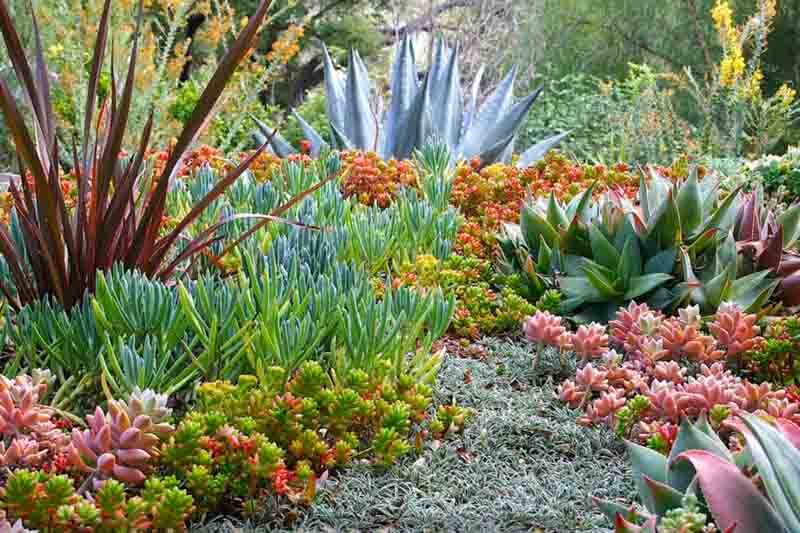
Recipe 3: Rock‑Pocket Trio for Frost‑Free Beds (Zone ~10–11)
A low, mounding, high-contrast planting for patios or rock gardens with perfect drainage.
- Groundcover matrix: 5–7 Sedum rubrotinctum (scattered clumps)
- Structure: 1 compact Agave ‘Blue Glow’ or Mangave ‘Blue Dart’ (dwarf scale)
- Ribbon: 3 Curio talinoides ssp. mandraliscae (Blue Chalk Fingers)
Placement Map (top view)
- Center-back: Dwarf Agave/Mangave (focal, not oversized for the space)
- Mid-left to mid-right arc: Curio as a cool blue “swoosh”
- Foreground and between stones: clusters of Sedum rubrotinctum to knit the composition
Spacing
- Keep Jelly Bean clumps 15–20 cm apart; they’ll sprawl 20–45 cm with time.
- Allow 30–45 cm clearance around the Agave/Mangave.
- Curio in a 3‑plant staggered line 12–15 cm apart.
Maintenance cadence
- Water deeply, then let the whole pocket dry thoroughly before repeating; in summer, water sparingly.
- Zero overhead irrigation; keep foliage dry, maximize airflow.
- Light, infrequent feeding in spring–early autumn.
- No frost exposure; provide rain cover in prolonged wet.
—
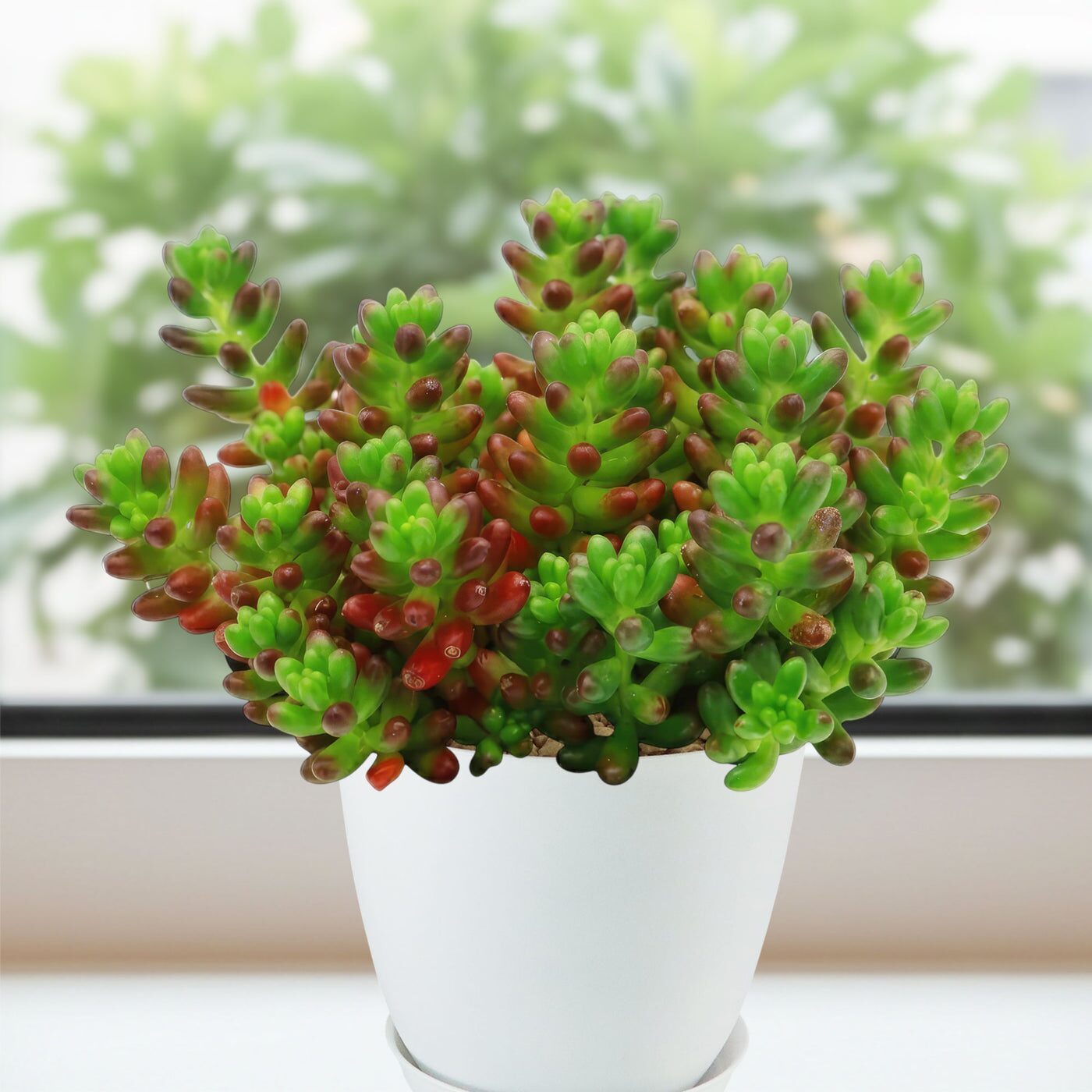
Recipe 4: Bright Window Tray “Pastel + Pop” (8–10 in/20–25 cm)
A windowsill‑ready mini with strong light and crisp edges.
- Core: 2 Sedum rubrotinctum
- Rosette: 1 Graptopetalum paraguayense (Ghost Plant; blue‑silver)
- Tiny beads: 1 Sedum dasyphyllum ‘Major’ to fill negative space
Notes for indoor success
- Place at the brightest south- or west-facing window; rotate monthly for even growth.
- Behind glass, sun intensity spikes—acclimate to avoid leaf scorch.
Layout Map
- Back-center: Ghost Plant rosette
- Sides: two Jelly Bean mounds
- Front and seams: Sedum dasyphyllum weaving as a “soft foam”
Maintenance cadence
- Water only after an almost complete dry‑down; in winter, about monthly.
- Ensure drier air and moving air; avoid persistently humid rooms.
—
Recipe 5: Hanging Rimmed Bowl “Ruby + Beans” (30 cm)
Movement and color for eye-level displays.
- Spillers: 2 Sedum rubrotinctum
- Color contrast: 1 Othonna capensis ‘Ruby Necklace’ (purple stems, yellow daisies)
- Filler rosette: 1 Sedeveria ‘Letizia’ (tight, red-tinged with sun)
Layout Map
- Center: Sedeveria focal
- North + South rims: Jelly Bean spillers
- East rim, cascading: Ruby Necklace
Maintenance cadence
- Water sparingly; let the bowl drain fully and dry down thoroughly.
- Protect from extreme midday heat to avoid leaf scorch.
—
Design Notes: Why These Work
- Water and light harmony: All featured companions love bright light and fast drainage and tolerate long dry intervals.
- Texture play: Jelly Bean’s glossy, chunky leaves stand out against fine needles (Curio), tight rosettes (Echeveria/Grapto/Sedeveria), or beadlike mats (Sedum dasyphyllum).
- Color choreography: Red tips echo peachy rosettes and pop against blue glaucous foliage and chartreuse accents.
Skip this mismatch
- Shade-first genera (many Haworthia, Gasteria) underperform or scorch in the sun level that Sedum rubrotinctum enjoys.
- Moisture-loving tropicals demand more water and organic soil—recipe for rot.
—
Potting Mix, Pots, and Topdressing
- Mix: 1 part high‑quality potting soil : 1 part coarse grit/perlite/pumice. The goal is “water rushes through.”
- Pot: Always use drainage holes. A 12–15 cm pot suits a typical Jelly Bean Plant; plant 3–5 cuttings together for instant fullness.
- Topdress: 3–6 mm gravel keeps stems dry, presents clean lines, and deters fungus gnats.
—
Seasonal Care Cadence (works for all recipes; adjust to your climate)
- Spring
- Water after full dry‑down (about every 2 weeks).
- Fertilize lightly monthly (diluted balanced or low‑N cactus feed).
- Great time to prune, shape, and propagate.
- Summer
- Keep on the dry side; water lightly only after a full dry‑out.
- Provide light midday shade in extreme heat, especially behind glass.
- Autumn
- Moderate watering after dry‑down; bask in best red coloration.
- Continue light feeding until early autumn.
- Winter
- Bright light and warm protection (keep above 5°C/41°F).
- Reduce watering to roughly once a month indoors; keep mix dryish.
- Expect starry yellow flowers from winter into spring in good light.
Warning signs
- Rapid leaf drop with wrinkling plus a soft stem base = likely rot from excess moisture. Unpot, remove rot, let cuts callus, replant in fresh gritty mix, and water far less.
—
Quick Pruning + Propagation “Kitchen”
- Leaf cuttings: Set healthy leaves on dry gritty mix; new roots and plantlets typically form with patience.
- Stem cuttings: Take 5–7 cm tips, let callus, then set in dry‑to‑slightly‑moist gritty mix. Expect roots in ~10–21 days in warm, bright conditions.
- Tidy time: Trim leggy stems in spring/autumn; handle gently—leaves detach easily (free plants!).
—
Troubleshooting and Health
- Pests: Aphids and scale are the usual suspects. Treat promptly with insecticidal soap or horticultural oil; ensure airflow.
- Fungal leaf spots: Often from humidity and wet foliage—ventilate, keep leaves dry, remove affected parts.
- Rot insurance: Fast drainage + bright light + conservative watering.
Safety note
- Toxicity is not consistently documented; treat as potentially mildly irritating if chewed. Keep away from pets and small children.
—
A Note on Meaning and Mood
Garden “symbolism” around this plant often highlights resilience and enduring affection—fitting for a succulent that bounces back and multiplies from a single fallen leaf. In design, that spirit shows up as companionship: repeat a few choice textures and colors, let them mingle, and watch the arrangement get better with time, not fuss. Think devotion in plant form—little hearts in sync, blushing red together on bright, cool nights.
—
Your Next Steps: Plate, Place, and Pace Yourself
- Choose one recipe and stick to it—restraint is your secret spice.
- Acclimate to sun gradually; use gritty mix and a pot with drainage.
- Follow the seasonal cadence. If in doubt, wait to water.
- Keep a small tray for cuttings—you’ll always have “refills” for any gaps.
With Sedum rubrotinctum as your anchor, you’re not just planting succulents—you’re composing a low‑water chorus of texture and color that sings brightest when you water least and watch most.