
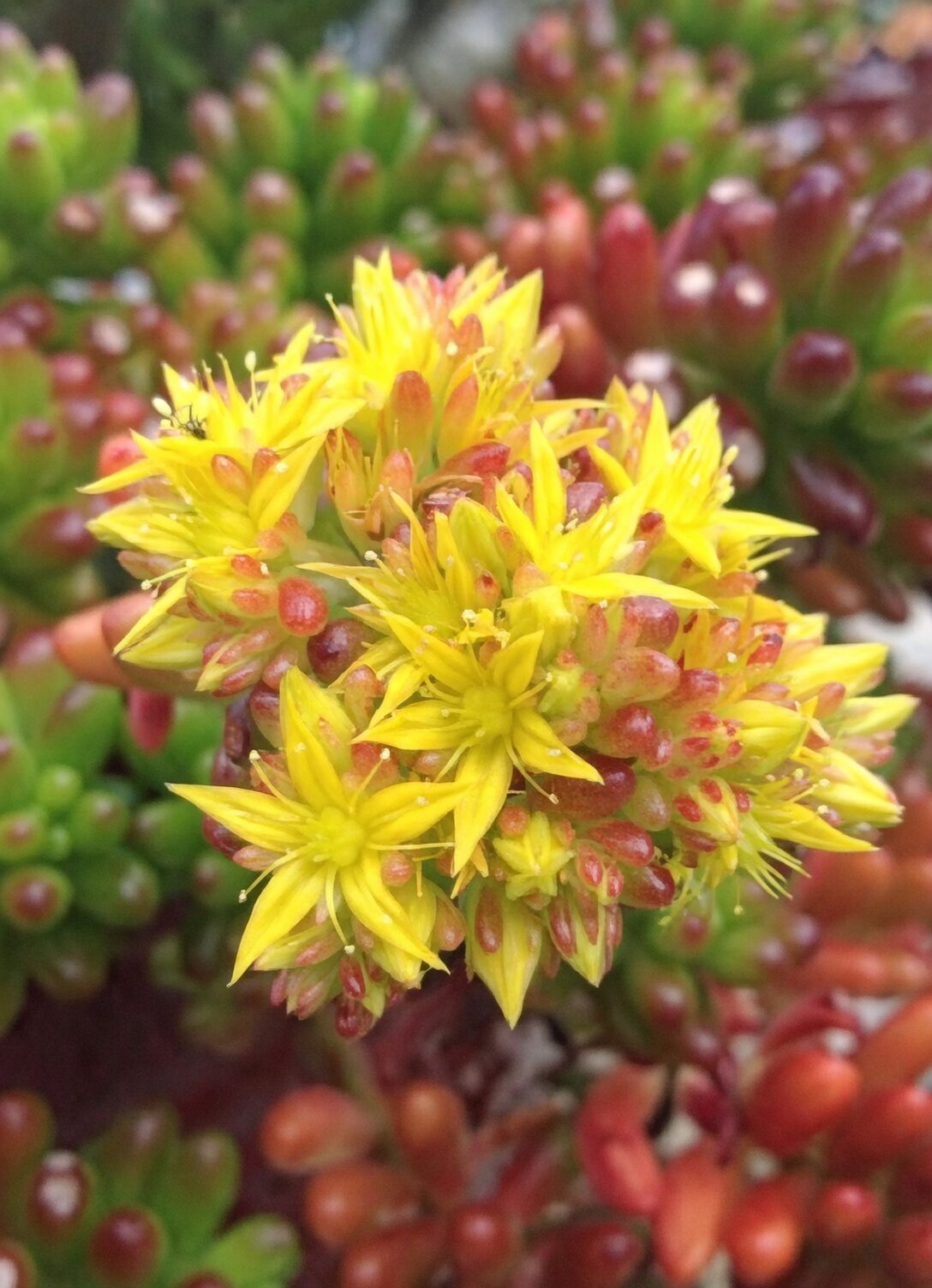
If you’ve ever wondered how that humble pot of jelly beans turns into a constellation of tiny, yellow stars, you’re already halfway to success. Sedum rubrotinctum—Jelly Bean Plant, Pork and Beans, Christmas Cheer—saves its party tricks for the cool season. Give it bright days, cool nights, and a lean winter watering rhythm, and you’ll set the stage for winter-to-spring blooms indoors.
Here’s how to cue that show.
Meet your star: compact, colorful, and winter-inclined
- Origin: Mexico; family: Crassulaceae.
- Habit: low, mounding succulent, typically 10–20 cm (4–8 in) tall; it can sprawl and trail as it matures.
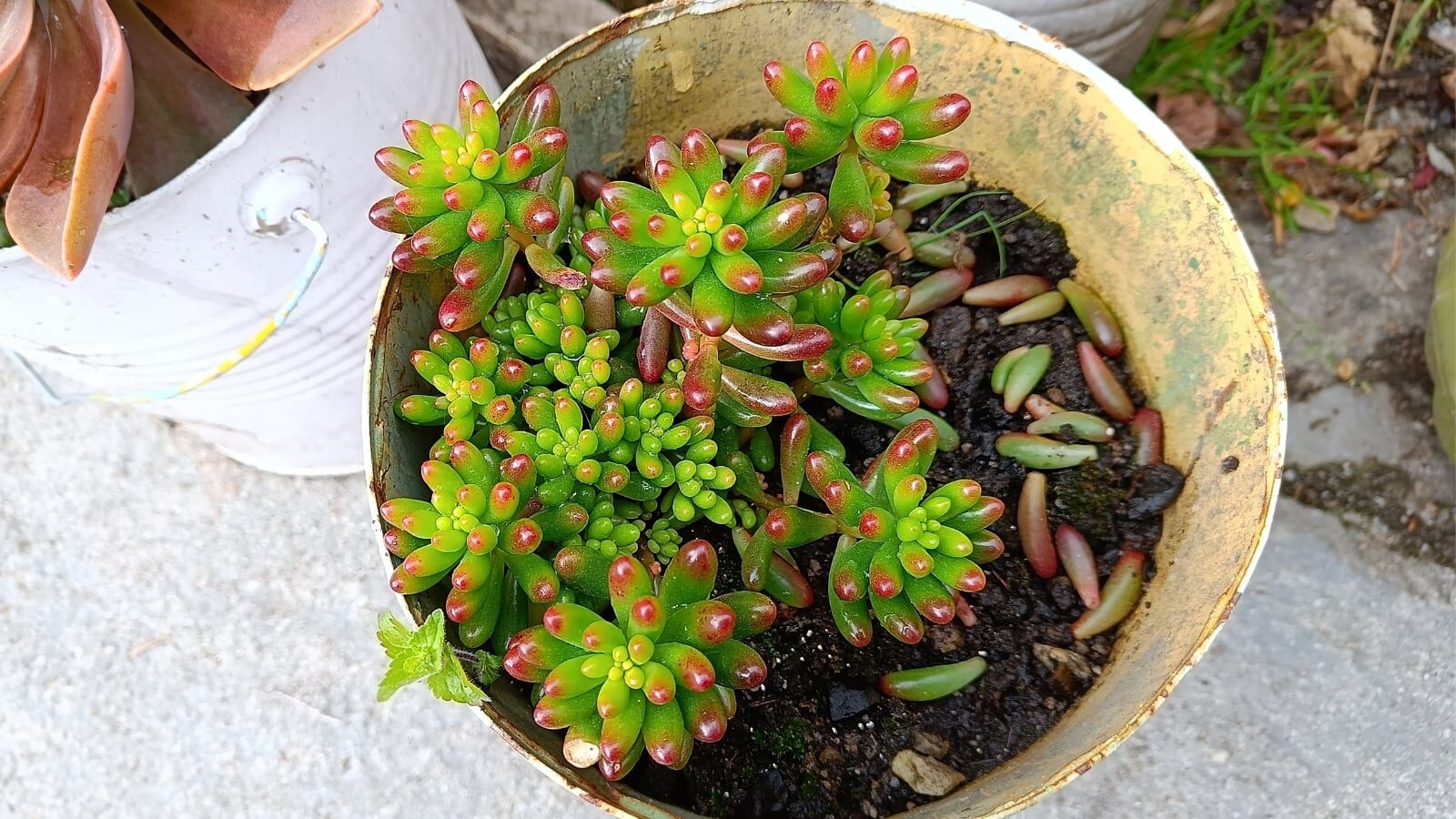
- Foliage: smooth, plump, bean-shaped leaves; mid-green in lower light, flushing coppery red to reddish-brown in strong sun—especially when days are bright and nights run cooler.
- Flowers: small, star-shaped yellow clusters at the stem tips, most commonly from winter to spring. Indoors, flowering can be sporadic—but the right seasonal setup greatly improves your odds.
The bloom window: winter to spring
Sedum rubrotinctum is a cool-season bloomer. Expect buds and blossoms from winter into spring when:
- Light is strong (bright window or supplemental grow light).
- Nights are cooler than days (a noticeable swing).
- Watering is conservative (soil kept on the dry side).
No buds yet? Your plant may still be too young, underlit, or just too comfortable and moist through winter.
The three levers: bright days, cool nights, lean watering
1) Bright days (without scorch)
- Aim for bright light to full sun indoors, with several hours of direct sun if possible. A south- or west-facing window is ideal.
- Acclimate gradually to stronger light to prevent sunburn, especially if you’ve moved it from shade.
- Behind glass in winter, sun is gentler—but midday rays can still concentrate heat. If leaf tips bleach or scorch, diffuse the light slightly at midday.
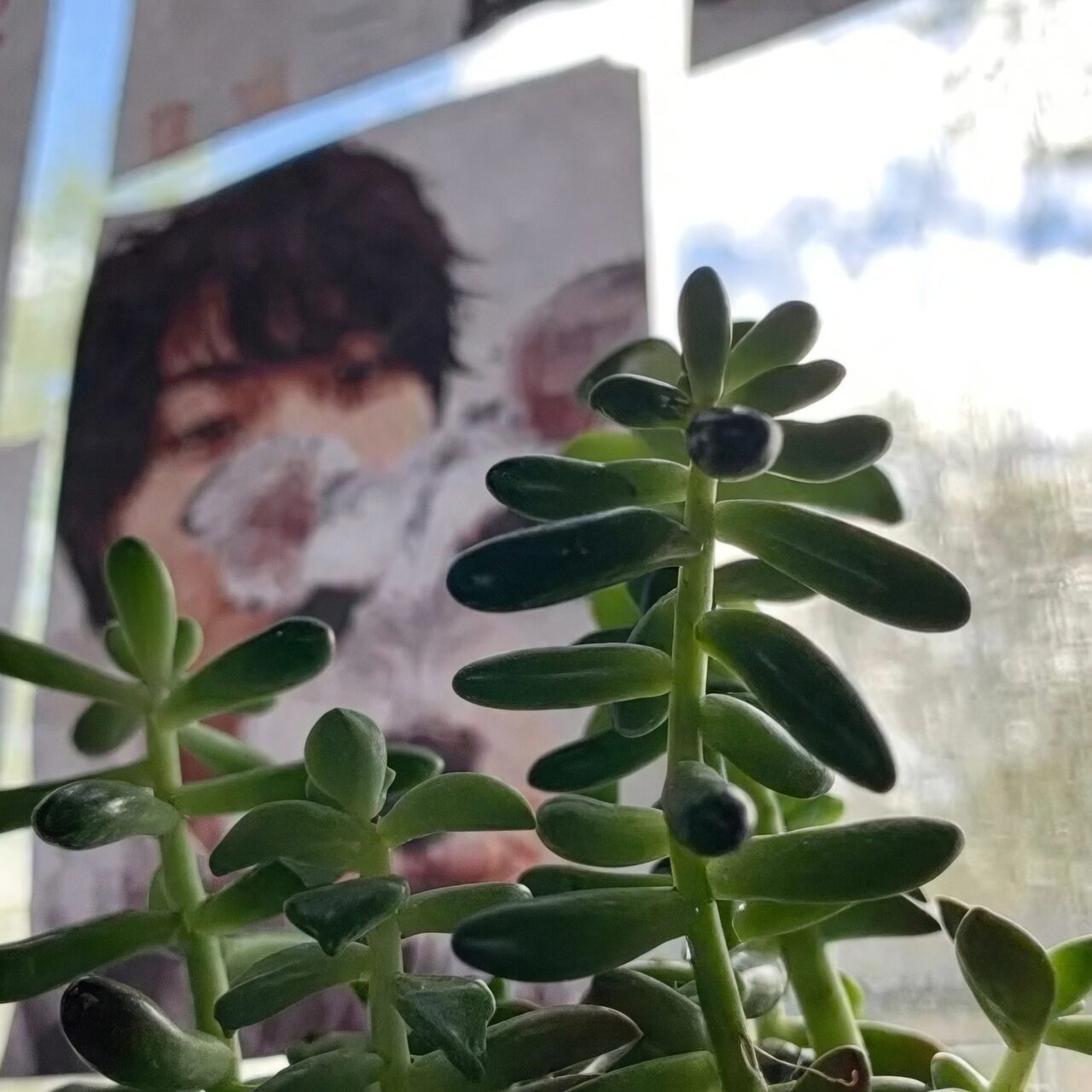
Pro tip: A mirror or white board opposite the window can bounce extra light onto the plant without increasing heat.
2) Cool nights (the quiet cue for buds)
- Target a day–night temperature swing. Days comfortably bright and mild; nights distinctly cooler.
- Sweet spot:
- Day: roughly 13–18°C (55–64°F).
- Night: a gentle drop helps; keep safely above 5°C (41°F).
- How to create the swing indoors:
- Overnight a few inches from a cool, bright window or on an enclosed (frost-free) porch.
- Use a vent or slightly cracked window on mild nights if safe.
- Shift to an unheated but bright room at night (still above 5°C/41°F).
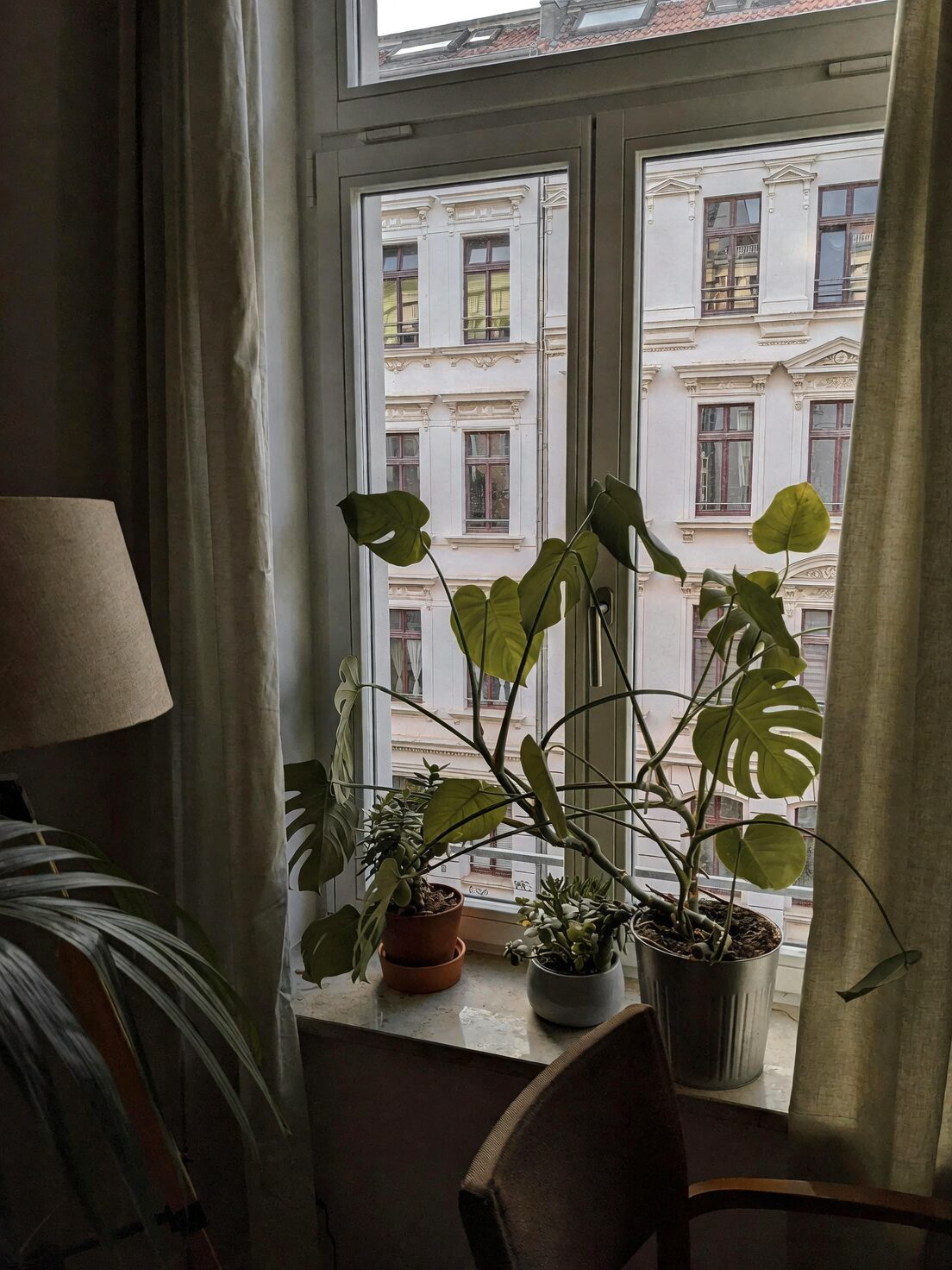
This cool-night cue often deepens the red blush and aligns with the plant’s natural winter–spring flowering rhythm.
3) Lean watering (the decisive nudge)
- Water thoroughly, then let the mix dry almost completely before you water again. Never keep the soil constantly moist.
- Winter cadence indoors: roughly once a month (or even less) if light is modest and temperatures are cool.
- Spring uptick: as days lengthen and buds form, you can water a bit more often—still only after a near-complete dry-down.
Checks that beat the calendar:
- Depth test: insert a wooden chopstick; if it comes out clean and dry, it’s time. Gritty mix should feel dry all through, not just on top.
- Weight test: lift the pot—dry, fast-draining soil feels surprisingly light.
Warning sign: lots of leaf drop plus wrinkling and a soft stem base suggests rot from excess moisture. Unpot, remove any rot, let cuts callus, and repot into fresh, gritty mix.
The foundation: soil, pot, and air
- Soil: very fast-draining succulent/cactus mix. A reliable home blend is equal parts potting soil and coarse perlite/pumice/grit (about 1:1).
- Pot: always use drainage holes. Unglazed terracotta helps moisture escape.
- Air: dry air and good ventilation are preferred. Avoid persistently humid, stagnant corners and keep foliage dry to prevent spotting or fungal issues.
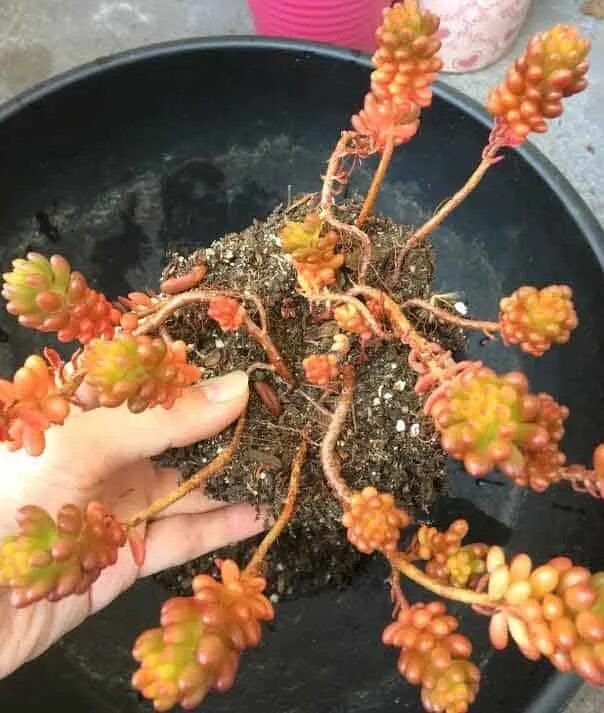
A simple 6–8 week indoor “bloom prep” plan
Late autumn setup (or any time before peak winter light)
- Repot only if needed, using a gritty mix. Overpotting delays drying and risks rot.
- Move to the brightest window you have. Begin gradual light acclimation if stepping up sun exposure.
- Stop heavy feeding (save fertilizer for spring).
Weeks 1–3 (deep winter calm)
- Water once after a thorough dry-down—then wait. Many plants won’t need water again for 3–4 weeks indoors.
- Ensure nights are cooler than days; aim for a noticeable, safe drop above 5°C (41°F).
- Keep leaves dry and the air moving.
Weeks 4–6 (light increases)
- Maintain the bright/cool/lean routine. If you see tight clusters forming at stem tips, those are likely buds.
- Still avoid frequent watering; wait for that nearly complete dry-down.
Buds appearing → early spring
- Continue bright light and cool nights if possible.
- Resume light feeding when active growth resumes (about monthly, diluted, low-nitrogen).
- Water only after the mix dries well; do not “chase” blooms with extra water or fertilizer—this leads to weak, stretchy growth.
Reading the leaves: color as a compass
- Red-blushed tips (sometimes an overall coppery blush) mean strong light and a day–night swing: you’re in bloom-favoring territory.
- All-green, very plump growth indoors usually signals lower light and/or frequent watering—less likely to flower.
- Scorched or bleached patches: scale back midday sun and increase acclimation time.
Indoors microclimate hacks
- South/west window ledge or a bright stairwell with a cool night draft (above 5°C/41°F).
- Sheer curtain for midday diffusion if scorch threatens.
- A small fan on low across the room to keep air fresh, not directly blasting the plant.
- Reflective surfaces to amplify winter light without baking the plant.
Troubleshooting no-bloom scenarios
- Too little light: move closer to glass; consider a grow light during short days.
- Night temps never drop: shift to a cooler window or unheated (frost-free) room at night.
- Winter watering too generous: extend intervals; let the mix dry nearly completely.
- Immaturity: some plants need a season or two of good light before blooming.
- Heavy nitrogen: avoid rich feeds; use a diluted, balanced or low-nitrogen formula in the growing season only.
- Pests at the tips: aphids and scale love tender growth and buds. Treat early with insecticidal soap or horticultural oil and repeat as needed.
After the show: spring refresh
- Deadhead spent blooms; tidy lanky stems with a gentle prune.
- Resume modest, regular watering after dry-down.
- Feed lightly about once a month spring through early autumn.
- Propagate fallen leaves or 5–7 cm (2–3 in) tip cuttings; let cut ends callus, then set on or in dry-to-slightly-moist gritty mix. Roots typically form in 10–21 days in warm, bright conditions.
- Repot in spring every 1–3 years or when the mix breaks down, using a pot with drainage and a very fast-draining medium.
Quick safety and health notes
- Not frost-hardy; protect from cold and keep above about 5°C (41°F).
- Toxicity isn’t consistently documented. Treat it as potentially mildly irritating if chewed or ingested; keep away from pets and children and seek advice if ingestion occurs.
- Most disease issues trace back to damp, stagnant conditions. Keep foliage dry, improve airflow, and remove spotted leaves. Switch to a grittier mix and water less if rot threatens.
A tiny legend, a generous heart
Gardeners often share Jelly Bean cuttings the way you might pass a bag of sweets—one leaf becomes many. That’s why the plant has picked up modern symbolism around resilience and enduring affection. Those small, steadfast stars in winter feel like a quiet promise: devotion that doesn’t need fanfare, just the right light, a cool night, and a bit of restraint.
—
Set the scene—bright days, cool nights, lean watering—and your Sedum rubrotinctum will likely reply with red-kissed foliage and, when the season turns, those cheerful yellow stars. It’s a small winter performance that never gets old.