
If you’ve ever wished your houseplants came with built-in party tricks, meet the Jelly Bean Plant (Sedum rubrotinctum). It’s plump, glossy, delightfully dramatic—and just quirky enough to make you grin every time you walk by. Here’s a playful deep dive into its best stunts, from “pop-off” leaves that clone themselves to winter starbursts of sunny flowers.
Meet the Jelly Bean Plant
- Scientific name: Sedum rubrotinctum
- Family: Crassulaceae (the stonecrop clan)
- Origin: Mexico
- Also known as: Jelly Bean Plant, Pork and Beans, Christmas Cheer Sedum, Red Jelly Bean Plant
- Habit and size: A low, mounding succulent that can trail and sprawl with age—typically 10–20 cm (4–8 in) tall and spreading 20–45+ cm (8–18+ in) over time
- Signature look: Thick, bean-shaped leaves packed along short stems—glossy green in softer light, but they blush coppery red to reddish-brown in strong sun, especially when warm days meet cooler nights
9 Quirks That Make Sedum rubrotinctum a Crowd Favorite
1) The leaf pop-off party
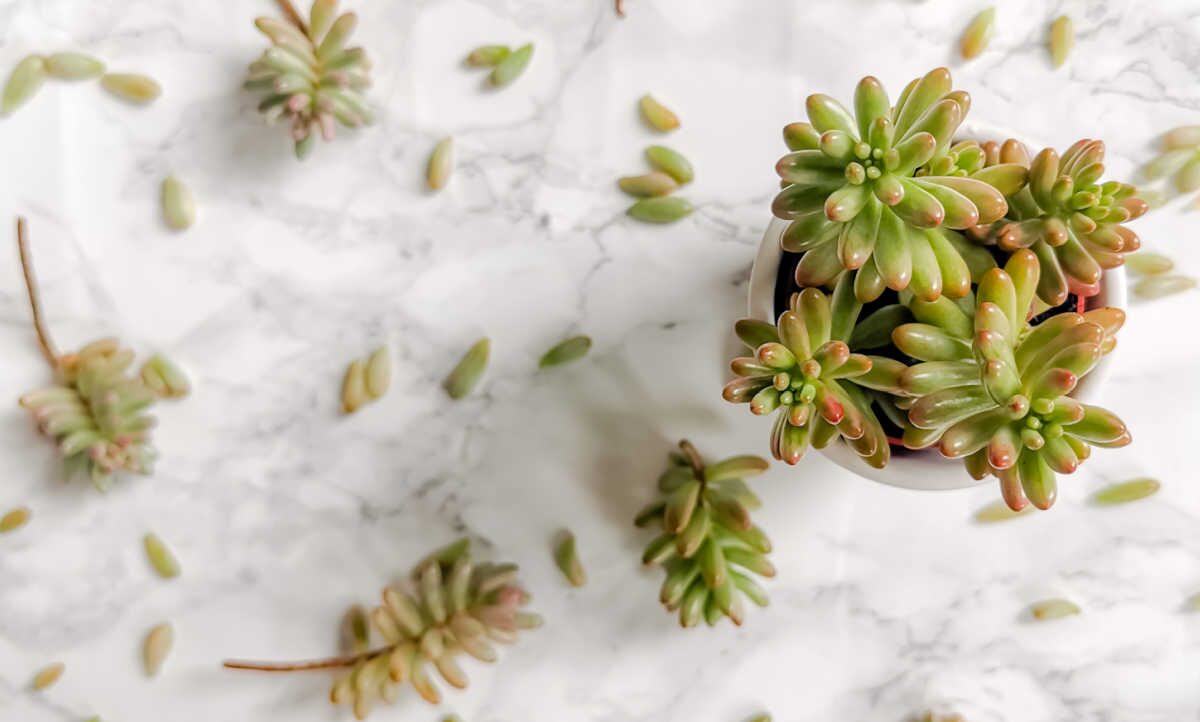
This plant wears its leaves like tiny jelly beans balanced on stems—touch it during a repot or brush past it and “pop!” a few beans may drop. No panic: it’s a normal quirk. Handle gently, avoid frequent shuffling, and keep the fallen leaves—they’re your ticket to free plants.
2) Fallen leaves that start families
Here’s the magic trick: a single healthy leaf can become an entire new plant. Set a fallen leaf on top of dry, gritty succulent mix and wait. It often sprouts roots and a baby rosette on its own (dropped leaves may even root on slightly damp surfaces). Patience and airflow are your best friends; soggy soil is not.
3) It blushes when nights turn crisp
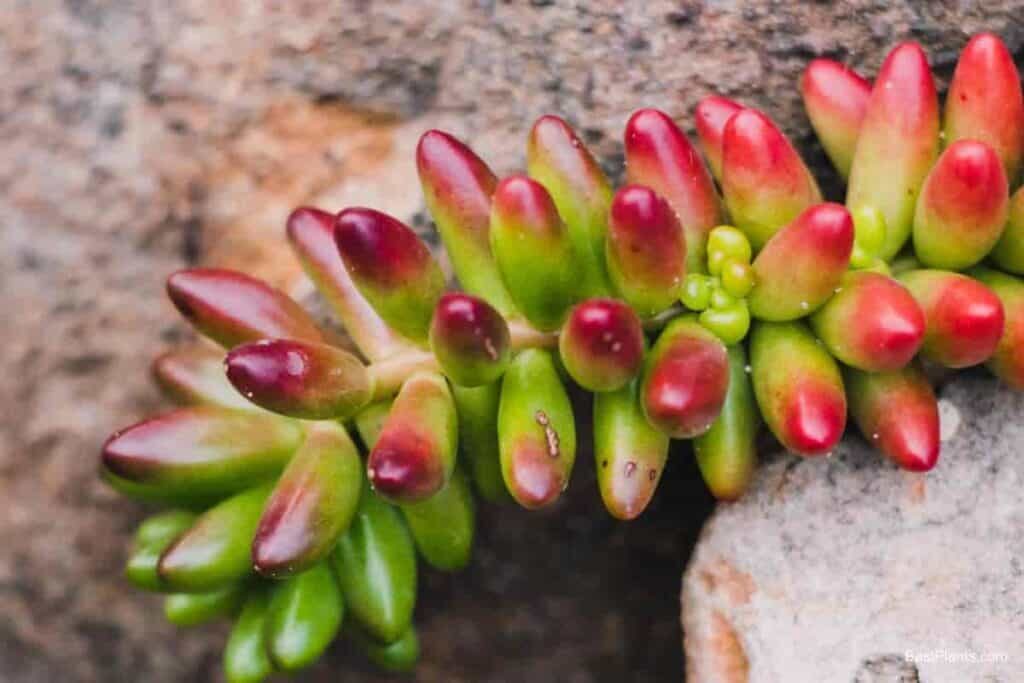
Want that “Christmas Cheer” red? Give it:
- Strong, direct light
- Noticeable day–night temperature swings (cooler nights are the color amplifier)
- A lean, fast-draining mix and conservative watering
Result: coppery red tips to a full-on red flush—like sunset bottled in a plant.
4) Winter sparks tiny starbursts
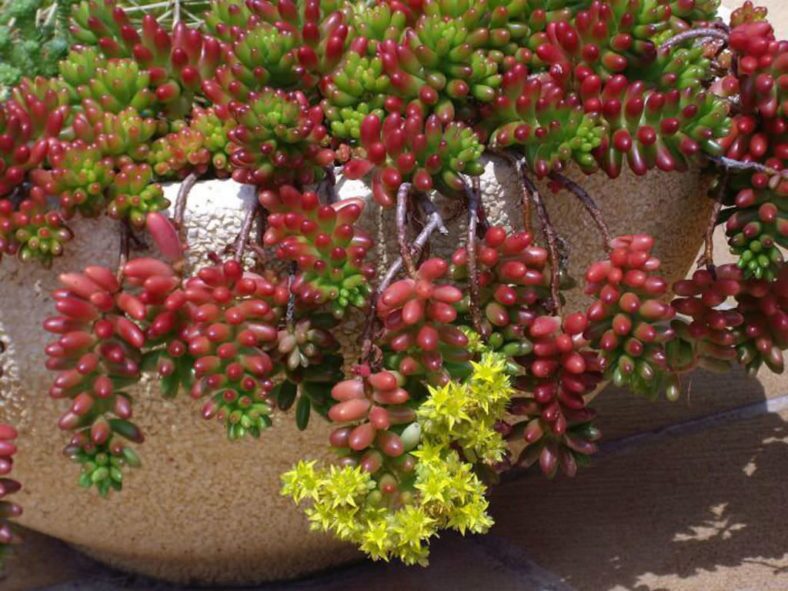
From winter into spring, mature plants often top themselves with small, starry yellow flowers—cheery as confetti. Indoors, blooms can be sporadic, but you can nudge them with bright light, a drier winter rest, and cool—not cold—nights. Keep temperatures safely above about 5°C (41°F).
5) Built for bright windows and sun-baked patios
The Jelly Bean Plant is sun-loving:
- Best color with several hours of direct sun (acclimate gradually to avoid sunburn)
- In very hot midsummer, give light midday shade—especially behind glass
- Loves dry air and a breeze; keep foliage dry to prevent spotting
6) Groundcover antics in the right climate
Given warmth, dryness, and frost-free conditions (approximately USDA 10–11), stems lean, trail, and sometimes root where they touch, creating a quirky, low groundcover. Excellent for rock gardens and terrace edges with superb drainage. Not frost-hardy, and never happy in wet, heavy soil.
7) The minimalist watering philosophy
This plant prefers “soak and then long, thoughtful pauses.”
- Water thoroughly, then let the mix dry out almost completely before the next drink.
- Seasonal rhythm (adjust for your light and home):
- Spring: about every 2 weeks after full dry-down
- Summer: go even drier; water lightly only after a full dry-out and shield from extreme heat
- Autumn: moderate, often ~every 2 weeks
- Winter: sparing—about once a month indoors, keeping the mix quite dry
8) Drama-free pruning—instant freebies
Leggy or crowded? Snip 5–7 cm (2–3 in) tips, let the cut ends callus, then place in dry-to-slightly-moist gritty mix. Under warm, bright conditions, roots usually form in ~10–21 days. Bonus: every trim session = new plants for you and your friends.
9) It’s resilient—but fussy about wet feet
Most troubles trace back to waterlogged roots.
- Warning signs: lots of leaf drop plus wrinkling and a soft stem base = likely rot
- Rescue plan: unpot, cut away the mush, let cuts dry and callus, then repot into a very gritty mix—and water less often
Quick how-to: paint yours cherry-red
- Sun: Several hours of direct light (acclimate slowly)
- Temperature: Warm days + cooler nights (still above ~5°C/41°F)
- Water: Lean—full dry-down between drinks
- Feed: Lightly in spring–early autumn with diluted, low-nitrogen fertilizer
- Soil: Very fast-draining—a cactus/succulent mix cut with coarse sand, pumice, or perlite (about 1:1)
Styling ideas for maximum charm
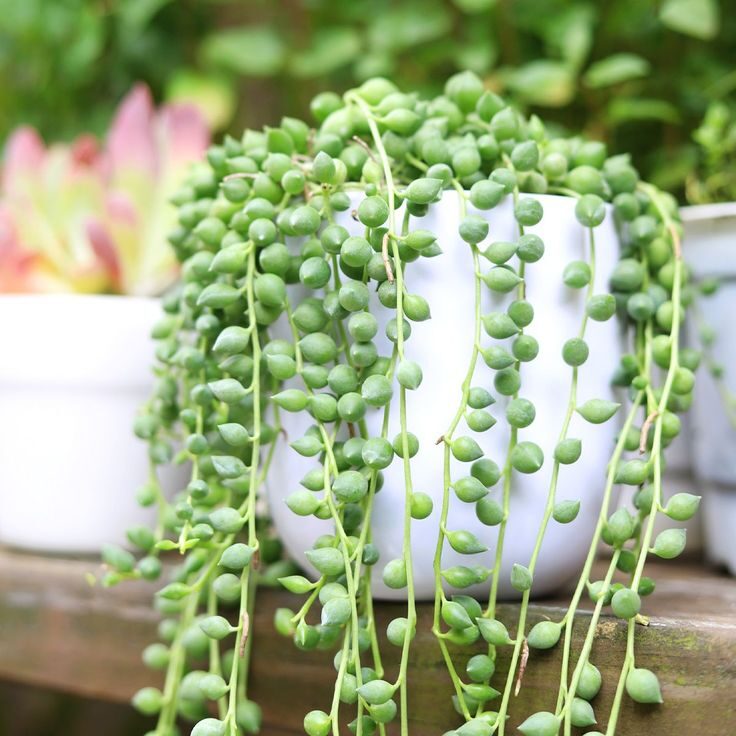
- Windowsill mounds in shallow bowls with sandy top-dress—like a mini desert sunset
- Trailing from a sunny balcony box or hanging pot
- Rock garden accent in frost-free, dry climates where it can sprawl into a lively mat
Care cheat sheet (because you’ll ask)
- Light: Bright to full sun; indoors, the brightest window you have
- Temperature: Thrives around 13–18°C (55–64°F); protect from cold; avoid frost
- Humidity: Dry air suits it; good airflow prevents spotting and fungal issues
- Pests: Watch for aphids and scale; respond early with insecticidal soap or horticultural oil
Safety notes and house rules
Toxicity isn’t consistently documented. Play it safe: treat it as potentially mildly irritating if chewed or ingested. Keep away from pets and small children, and wash hands after handling sap.
Little legend and symbolism
Among succulent lovers, the Jelly Bean Plant is a classic “sharing plant”—it propagates so easily that friends pass along leaf babies like postcards. Its symbolism often centers on resilience and steady affection: it bounces back from a single leaf and thrives with modest care. In the language-of-flowers sense, think quiet devotion and companionship—two plants growing “hearts in sync” from just one fallen leaf. While modern and informal in origin, the sentiment fits its generous, regenerative nature.
Fast FAQ
Why is my Jelly Bean Plant dropping leaves?
A few leaves popping off is normal. If lots fall and the plant looks wrinkly or the stem base feels soft, suspect rot from excess moisture. Unpot, remove any mushy tissue, let cuts callus, and repot into fresh, very fast-draining mix. Water only after near-complete dry-down.
How do I pick a healthy plant at the shop?
Look for tight leaf spacing, even branching, and plump, smooth leaves. Skip stretched, floppy, or spotty plants, and avoid any with mushy stems or visible pests. A red blush—especially in autumn—often signals strong light and sturdy form.
I just brought one home—what now?
Give it very bright light (increase sun gradually if it came from shade), water sparingly after the mix has dried well, and hold off on heavy feeding. Prioritize airflow and a gritty, fast-draining substrate.
—
In short: Sedum rubrotinctum is a sunny, good-humored succulent that loves bright light, dry shoes, and the occasional cool night. Treat it gently, let it blush, and don’t be surprised when a single “bean” turns into a whole new plant.