

Think of a plant that looks like a tiny lotus but behaves like a night‑owl scientist—breathing after dark, hoarding CO2 as acids, and spending daylight hours as a compact, sun‑powered sculpture. That’s Orostachys furusei, the Dunce Cap Succulent: a tidy, rosette‑forming Crassulaceae native to Southeast Asia that thrives on bright light, quick drainage, and a touch of restraint.
Meet Orostachys furusei (Dunce Cap Succulent)
- Family: Crassulaceae; Genus: Orostachys
- Origin: Southeast Asia
- Habit: Small, tightly layered “lotus‑like” rosettes with thick, shingle‑stacked leaves. Individual rosettes are typically 5–15 cm (2–6 in) across. Over time, they can form petite clumps.
- Foliage: Bright green to slightly glaucous (bluish‑green), with crisp, orderly patterning; leaf bases can look subtly petiole‑like.
- Flowers: Star‑shaped on a short stalk in summer to autumn. Like many monocarpic rosette succulents, a blooming rosette may weaken or die back afterward—so some growers remove the stalk early to keep a favorite rosette pristine longer.
- Vibe: Container‑friendly, architectural, and happiest with strong light, warmth, and a gritty, fast‑draining potting mix. Not frost‑hardy.
Why the “lotus‑like” architecture matters
The plant’s signature look isn’t just for show—it’s bio‑engineering for hot, bright places.
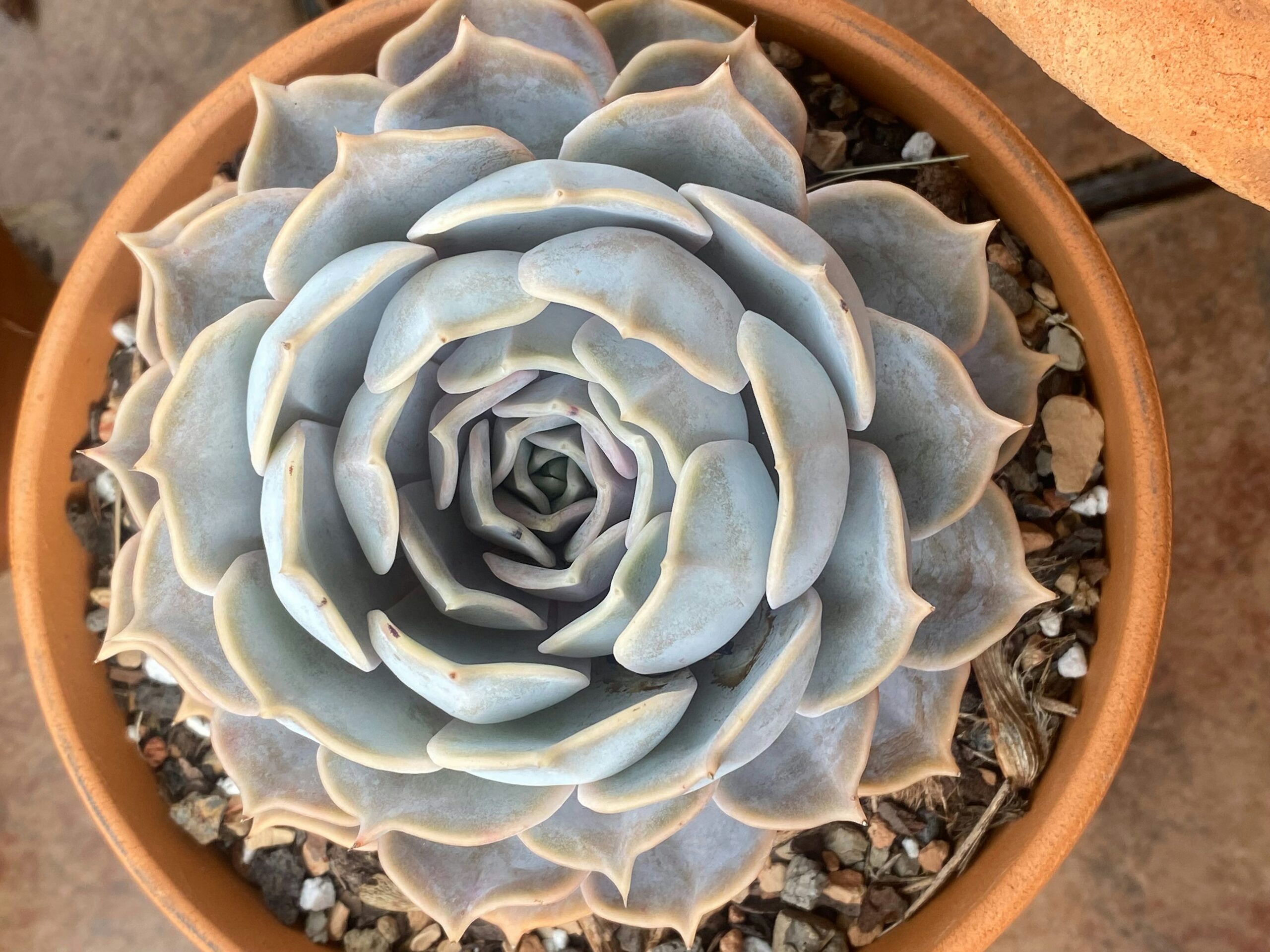
- Layered leaves = built‑in shade: The shingle‑like stacking shades the inner core and growing point, reducing overheating and sun stress while still giving plenty of light to the outer leaves.
- Rosette aerodynamics: A tight rosette slows air movement at the center, thickening the boundary layer and slightly reducing water loss. Along the outer rim, where airflow is higher, the plant can dump heat efficiently—great for bright windows and dry patios.
- Light at smart angles: Leaves are angled like a faceted solar array. They sip light without baking, especially if you give them light midday protection behind glass during extreme summer heat.
- Subtle glaucous bloom: That faint bluish cast is often a thin epicuticular wax that reflects a bit of sunlight, lowers leaf temperature, and limits water loss.
- Clump microclimate: As Orostachys furusei offsets into small clusters, neighboring rosettes buffer each other from extremes—another tiny, self‑made habitat.
Note: “Lotus‑like” here is about geometry and symmetry, not the famous “lotus effect” of ultra‑water‑repellent leaf surfaces.
Geek mode: CAM photosynthesis, the night‑owl strategy
Orostachys furusei belongs to the family that gave CAM its name—Crassulacean Acid Metabolism. CAM is a 24‑hour time‑split system that maximizes water efficiency:

- Night shift (stomata open):
- CO2 flows in while it’s cool and less evaporative.
- An enzyme (PEP carboxylase) fixes CO2 into malic acid, which is stored in vacuoles. Leaves literally become more acidic overnight.
- Day shift (stomata mostly closed):
- Stored malate is decarboxylated—CO2 is released internally right where photosynthesis needs it.
- This elevates CO2 around RuBisCO, reducing photorespiration and allowing photosynthesis with minimal water loss.
What this buys you on a windowsill:
- Outstanding water‑use efficiency (less “sweating,” more growing).
- Tighter rosettes in strong light without frequent watering.
- Better performance in bright, dry air compared to many non‑succulents.
CAM in practice: care choices that play to its strengths
- Bright light to full sun is fuel; the plant can conserve water while photosynthesizing hard.
- Let the mix dry thoroughly between waterings—CAM plants are built for dry spells.
- Keep nights cooler than days when possible; a modest day–night temperature swing supports the CAM rhythm.
How to grow it like a pro
Light
- Best: Bright light to full sun.
- Tip: In very hot midsummer (especially behind glass), give light midday protection to prevent scorch.
Temperature and hardiness
- Ideal growth: 20–25°C (68–77°F).
- Winter minimum: Keep above 5°C (41°F). Not frost‑hardy; treat as a tender succulent (roughly USDA 10–11 outdoors).
Soil and pot
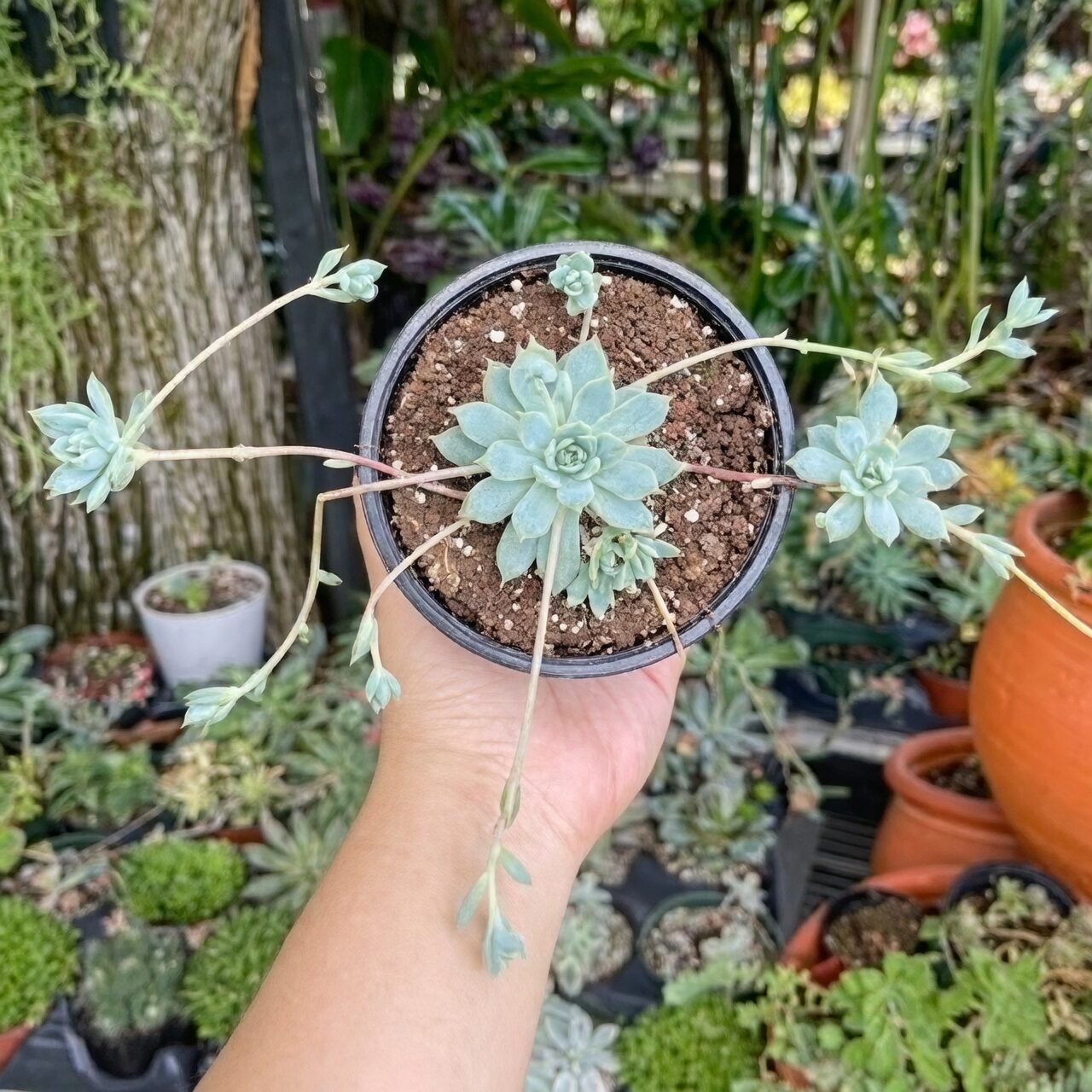
- Mix: Very free‑draining succulent/cactus mix. Blend a peat‑free base with coarse sand, grit, or pumice. Don’t over‑enrich—too much fertility makes soft, weak growth.
- Pot: Always use drainage holes. A typical plant is happy in a 12–15 cm (4.7–5.9 in) pot. Repot yearly in spring to refresh the gritty mix.
Watering rhythm
- General rule: Water thoroughly, then let the mix dry out well before watering again.
- Spring: About once per month, adjusted for pot size, light, and airflow.
- Summer: May drink a bit more during active growth; never leave it sitting soggy.
- Autumn: Gradually reduce.
- Winter: Keep on the dry side, especially in cool conditions. Overwatering in the cold is the fast track to rot and stretched growth.
Feeding
- During active growth, feed about once monthly with a low‑strength balanced fertilizer (e.g., diluted 20‑20‑20). No feeding in winter.
Grooming and pruning
- Remove dead or damaged leaves to keep the rosette crisp.
- If you want to prolong a particularly perfect rosette, snip the flower stalk shortly after it appears.
Propagation
- Offsets (best): Divide and replant during spring repotting; rooted offsets establish fastest.
- Seed: Sow fresh seed promptly; germination is often best around 13–18°C (55–64°F).
Placement
- Indoors: A bright windowsill with good airflow is ideal.
- Outdoors (warm seasons): Great on a balcony or sheltered spot; protect from heavy rain. Bring indoors to the brightest place for winter.
Troubleshooting quick wins
- Loose, stretched rosette (etiolation): It needs more light. Move to a brighter spot or add a grow light. Outdoor light in mild seasons can help, but protect from fierce midday sun behind glass.
- Root rot: Usually cold, wet soil or poor drainage. Repot into a gritty mix, increase airflow, and water only after the mix dries well.
- Leaf spots in damp air: Improve ventilation, keep foliage dry, and remove affected leaves.
- Pests: Mealybugs and scale are the usual suspects. Dab with isopropyl alcohol on cotton swabs, or use horticultural oil/insecticidal soap; repeat until controlled.
Design notes: tiny lotus, tidy clumps
- Use Orostachys furusei in compact succulent bowls, windowsill trays, or rock‑style arrangements.
- Its disciplined geometry pairs beautifully with upright grasses or looser sedums to create contrast.
- Over time, clusters form a miniature “colony”—the outer ring protects inner rosettes, and the whole group reads like a living mandala.
Flowering, lifecycle, and the “monocarpic moment”
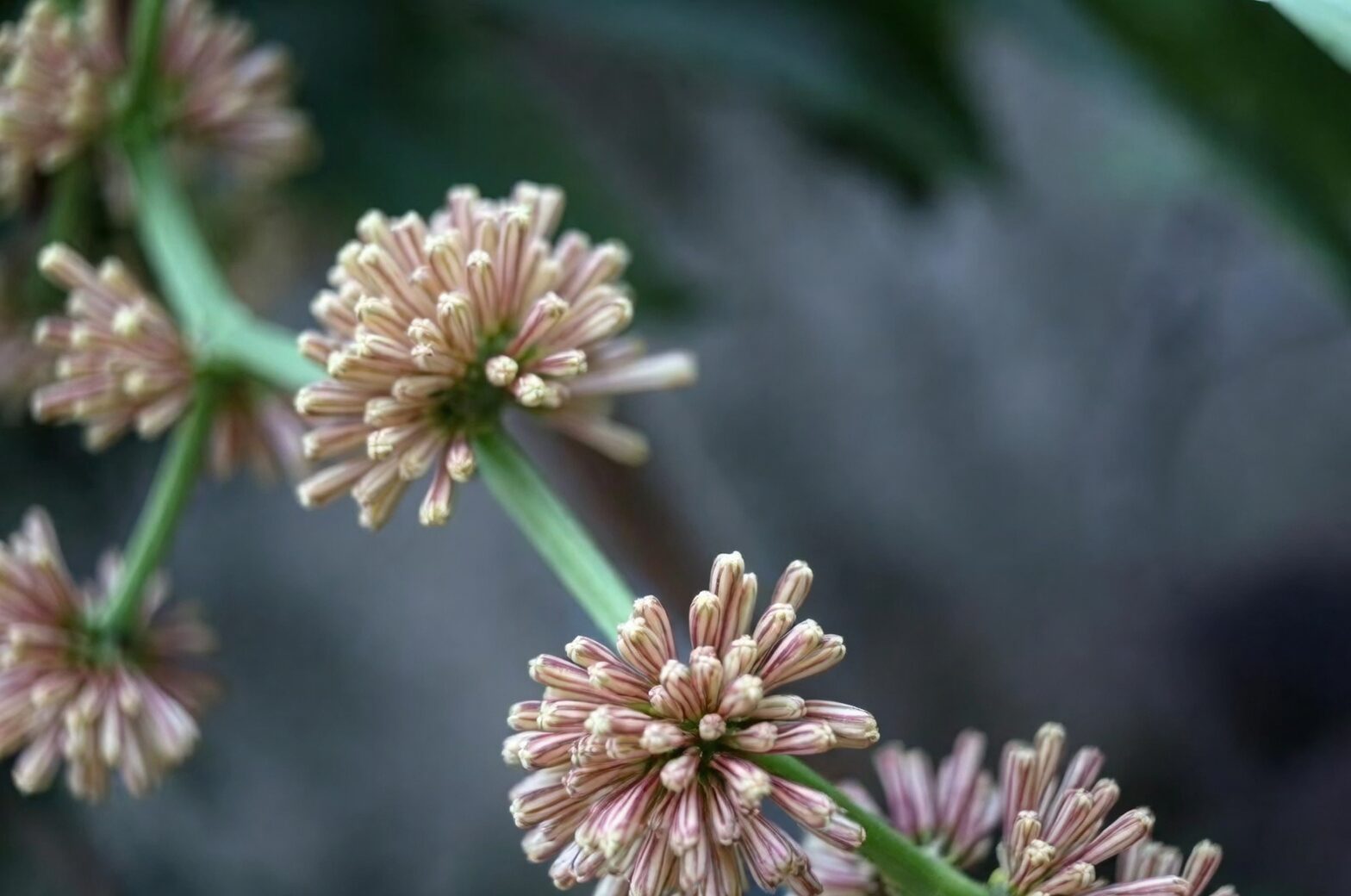
- Bloom time: Summer to autumn, with delicate star‑shaped flowers.
- Lifecycle note: Like many monocarpic rosettes, the blooming rosette may decline or die after flowering. The colony continues via offsets—your cue to propagate and keep the display going.
- Aesthetic tip: If you’re attached to a pristine rosette, remove the emerging stalk early.
Symbolism and “flower language”
This species is often likened to a lotus and associated with a parent rosette surrounded by “children”—a sweet nod to its clumping habit. While there isn’t a formal, historic flower‑language canon for Orostachys furusei, enthusiasts commonly read it as:
- Serenity through structure (that calm, lotus‑like symmetry)
- Renewal and continuity (offsets carrying on after a monocarpic bloom)
- Resilience (a design tuned for bright, dry challenges)
These meanings grow organically from its form and lifecycle rather than from a traditional literary source—so think of them as modern, observant symbolism rather than fixed folklore.
Seasonal care calendar
- Spring: Repot, divide offsets, restart gentle watering and light feeding as days warm.
- Summer: Give very bright light; protect from extreme midday heat behind glass; water only after the mix dries.
- Autumn: Taper watering; stop feeding as growth slows; enjoy (or edit) flower stalks.
- Winter: Keep dry, bright, and above 5°C (41°F). No fertilizer.
Safety note
There isn’t widely cited, species‑specific toxicity data for Orostachys furusei. As with most house succulents, it’s best to prevent chewing/ingestion and keep out of reach of pets and small children.
Fun for the curious
- Many rosette succulents are monocarpic: one rosette blooms, then bows out, while offsets keep the lineage thriving.
- Strong light is the secret to that tight, sculptural “dunce cap” form—low light quickly loosens the stack.
In short: give Orostachys furusei strong light, quick‑drying roots, and measured watering, and it will reward you with a compact lotus of leaves—powered by a night‑owl metabolism that’s as clever as it is beautiful.