

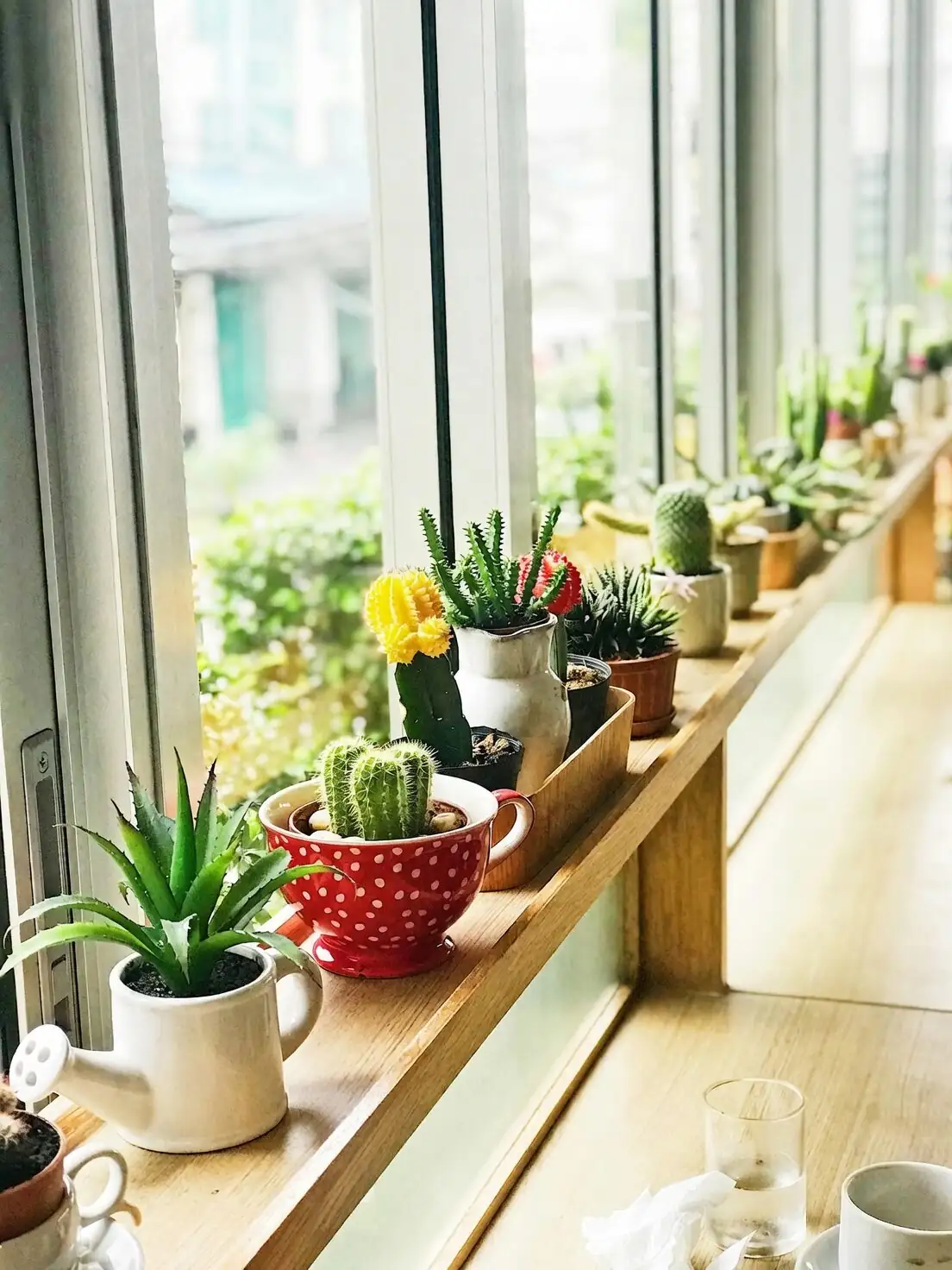
If you love the look of a tiny alpine slope perched on your windowsill, Orostachys furusei—often called the Dunce Cap Succulent—might be your muse. Its neat, lotus-like rosettes stack leaves like tiny shingles and, with time, gather into clumps that beg to be staged as micro‑landscapes. Think: a tabletop scree garden, a balcony “islands in the sky” box, or a single rosette set like a jewel in grit. Below, design-forward ideas to spotlight those sculptural rosettes while keeping them healthy and tight.
Know your plant: the sculptural basics
- Looks and size: Compact, orderly rosettes of thick leaves, typically bright green to slightly glaucous (bluish-green). Individual rosettes are usually 5–15 cm (2–6 in) across and can form small clumps over time.
- Habit: Rosette-forming, often clustering with age; happiest in bright light, warmth, and a fast-draining mix. Tolerates a bit of shade and short dry spells; strongly dislikes soggy soil.
- Flowers: Small, starry blooms in summer to autumn on a short stalk. Like many monocarpic rosettes, a blooming rosette may decline after flowering—snip the stalk early if you want to keep a favorite rosette pristine longer.
- Comfort zone: Bright light to full sun with light protection during extreme midsummer heat, especially behind glass. Ideal temps 20–25°C (68–77°F). Keep above 5°C (41°F); not frost‑hardy.
Design-forward tips for micro‑landscapes
The pot as a frame
- Shape and scale: Choose low, wide dishes for clusters and mini “terrain,” or a small cylinder/teacup for a single statement rosette. A typical clump looks great in a 12–15 cm (4.7–5.9 in) pot.
- Color and finish: Let the plant star. Neutral, matte finishes (sand, charcoal, stone, unglazed clay) flatter green-to-glaucous rosettes. Super-bright pots can upstage subtle foliage—use them sparingly.
- Must-haves: Drainage holes and airflow. Outdoors on a balcony, shelter from heavy rain.
Soil: invisible architecture that keeps forms tight
- Mix recipe: A peat-free compost blended with coarse sand, grit, or pumice for very rapid drainage. Keep it lean—overly rich mixes cause soft, stretchy growth.
- Pro tip: No “drainage layer” needed. Fill the pot entirely with the gritty mix and use a mesh over the hole. This keeps water moving uniformly down and out.
Grit topdressing: the finishing move
Topdressing is where design and plant health shake hands.
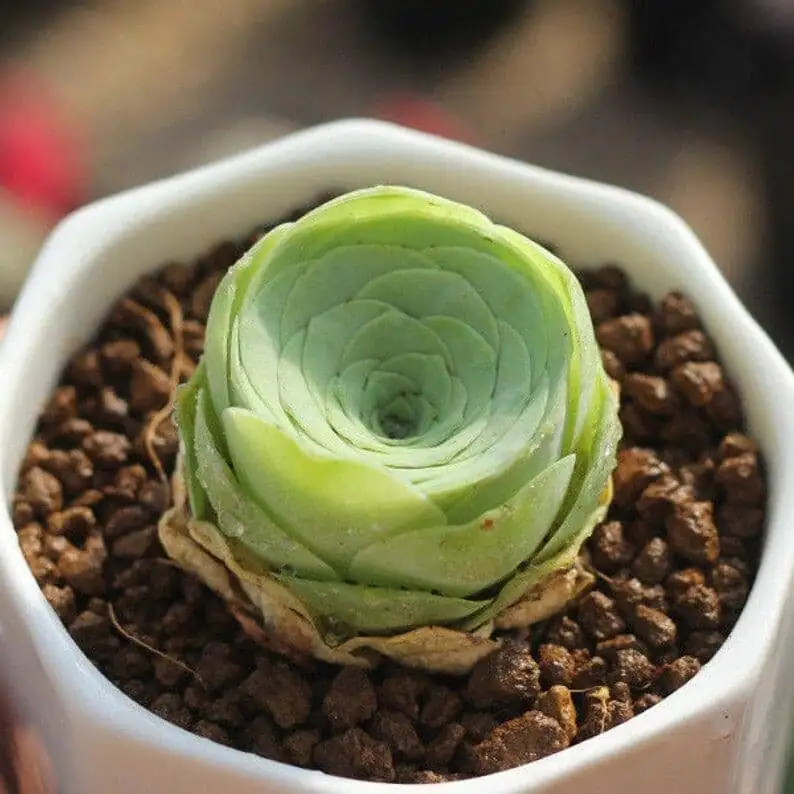
- Why it matters:
- Visually completes the scene—no bare soil.
- Keeps lower leaves clean and dry; reduces splash and algae; deters fungus gnats.
- Helps you read moisture: dark when wet, pale when dry.
- What to use:
- 2–6 mm (about 1/8–1/4 in) crushed rock or pea gravel. Try:
- Pale granite or decomposed granite for a natural alpine vibe.
- Black lava or dark basalt for high contrast with glaucous leaves.
- Warm taupe pea gravel for a quiet, minimalist look.
- Go easy with bright white marble—it can glare in a sunny window and distract from the rosette.
- How to apply:
- After potting, brush a 5–10 mm (1/4–3/8 in) layer of grit across the surface.
- Leave a finger-width dry “collar” around the rosette’s base so no moisture lingers against leaves.
- Use a soft brush to tidy grit from the foliage.
Pairing textures and accents
- Living companions (keep it simple so watering stays congruent):
- Tiny, drought-tolerant rosette succulents or small-scale sedums with bead-like leaves for contrast.
- Use companions sparingly—this plant’s geometry looks most striking with negative space.
- Inert accents:
- Lava fragments, river pebbles, tufa chips, or a single “feature stone” to imply a boulder field.
- A sliver of driftwood or weathered ceramic shard adds line and movement without stealing the show.
Arranging clumping rosettes
Design as if you’re placing miniature boulders on a slope.
- Start with a focal rosette slightly off-center (rule of thirds).
- Tuck two smaller rosettes to form a loose triangle; odd numbers feel natural.
- Tilt rosettes a touch forward so you admire the spirals from above.
- Leave runway space for offsets—this plant will “populate” your scene over time.
- Carve a subtle “gravel path” with slightly lighter grit to suggest terrain and depth.
Three micro‑landscape recipes to try
1) Windowsill scree saucer
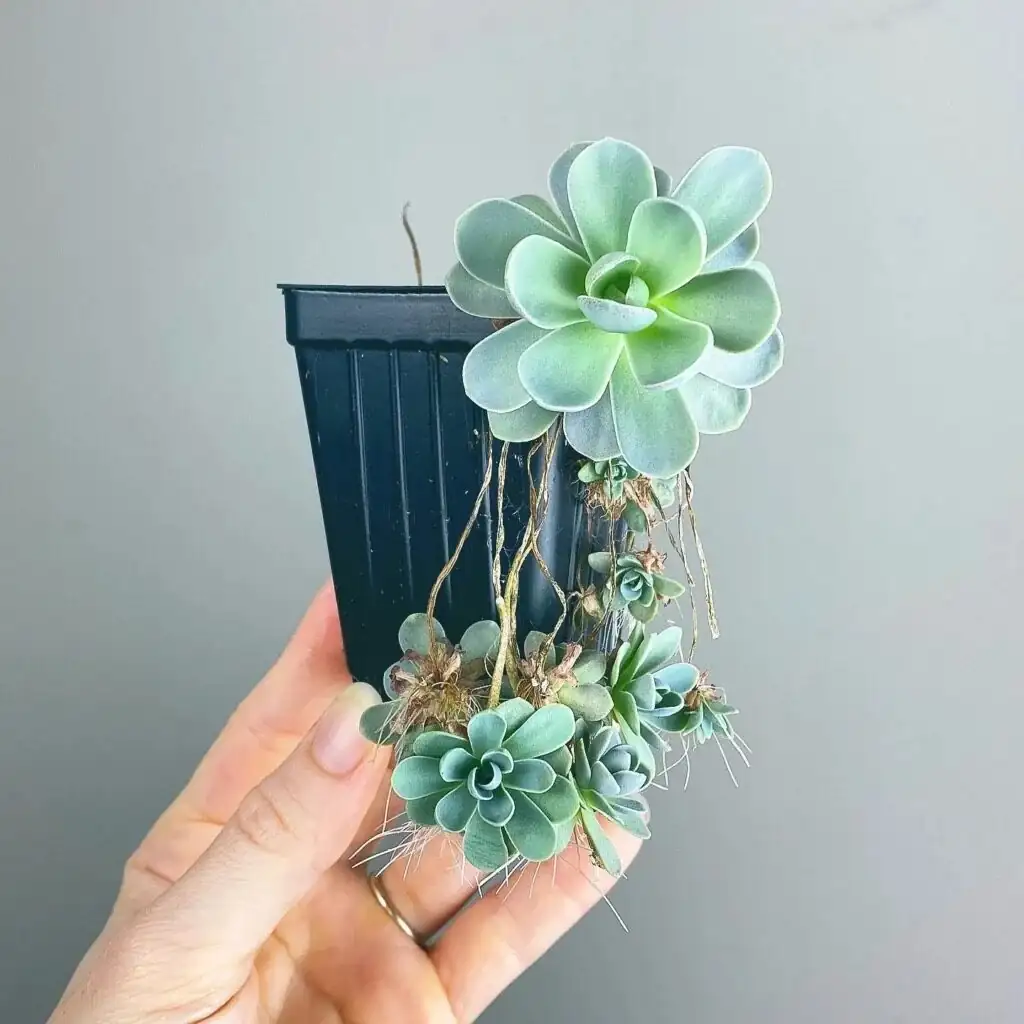
- Pot: 18–22 cm (7–9 in) shallow, matte stoneware dish with drainage.
- Planting:
- Mound gritty mix so the center sits a bit higher (implied slope).
- Plant one mid-size rosette high on the “ridge,” two smaller near the “foothill.”
- Nestle two thumb-sized lava stones to frame the focal plant.
- Topdress with pale granite; brush a narrow curving “path” in slightly darker grit.
- Light: East or bright south-facing window; diffuse harsh midday summer sun behind glass.
2) Balcony “islands in the sky” box
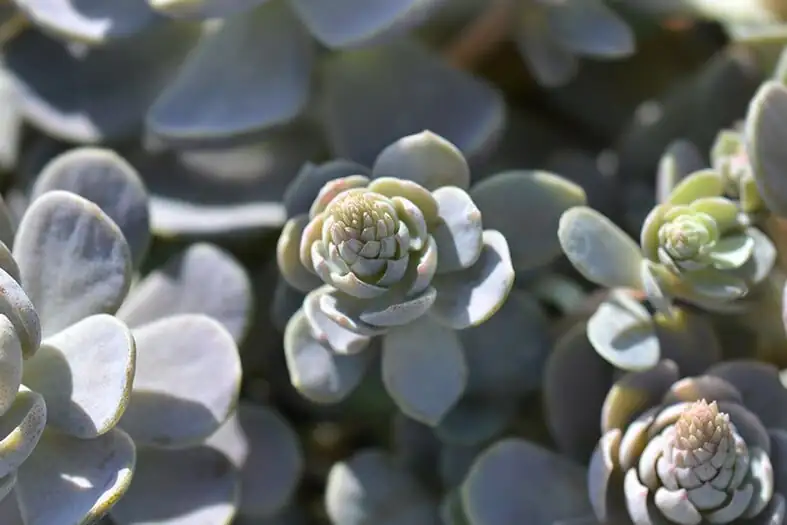
- Pot: Narrow trough or railing box with drainage holes.
- Planting:
- Create three low mounds of mix—your “islands.”
- On each mound, place a rosette and leave open gravel “water” between.
- Use contrasting topdressings: island tops in pale grit; channels in darker stone.
- Add two or three flat river pebbles as “stepping stones.”
- Note: Protect from heavy rain and scorching midsummer sun; ensure breezy airflow.
3) Solo jewel in a teacup
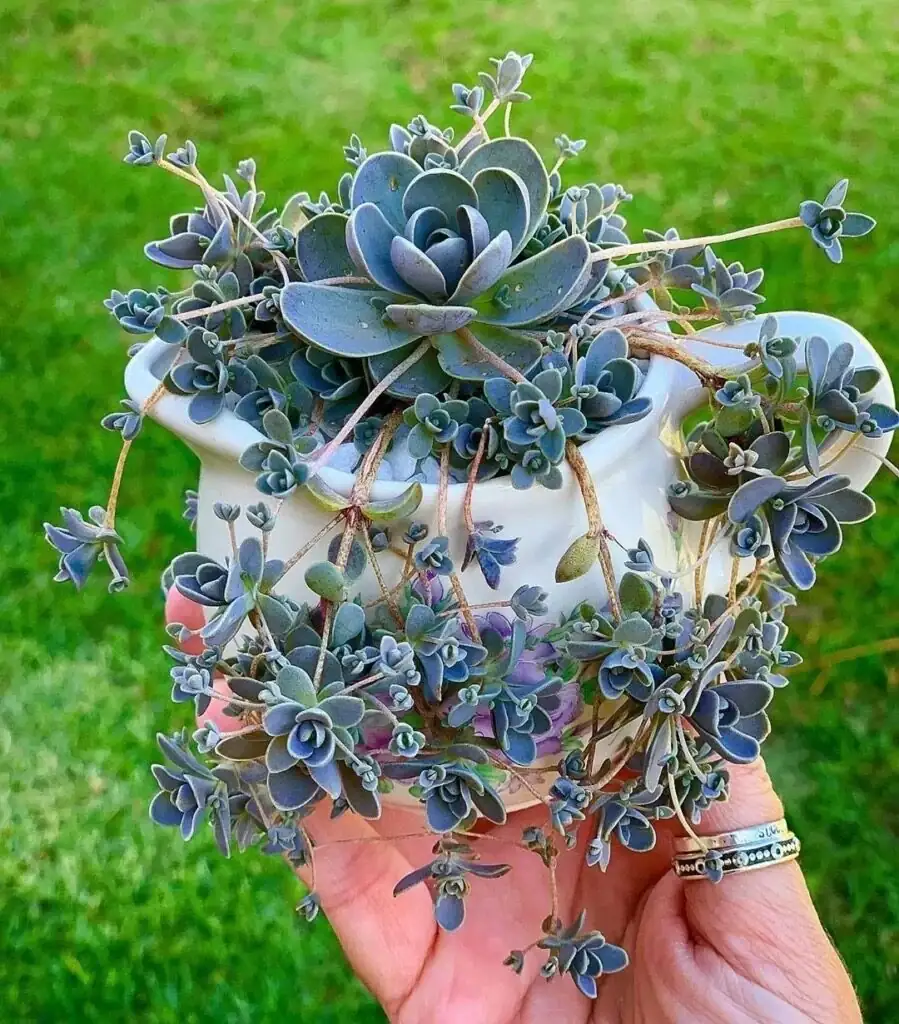
- Pot: Small teacup or 8–10 cm (3–4 in) cylinder with a drilled hole.
- Planting:
- Seat one perfect rosette just above the rim line.
- Spiral fine grit from dark at the back to light at the front to accentuate swirl and depth.
- One tiny shard of driftwood as a counterpoint.
- Perfect for desks and narrow ledges; rotate weekly for even light.
Light, watering, and seasonal rhythm
- Light:
- Bright light to full sun; give light shade during extreme midsummer heat, especially behind glass.
- If the rosette starts to loosen or elongate, it needs more light.
- Watering:
- Water thoroughly, then wait until the mix dries well before watering again.
- Spring: about once per month, adjusted for pot size, light, and ventilation.
- Summer: may drink a bit more during active growth; never leave it sitting wet.
- Autumn: reduce gradually.
- Winter: keep on the dry side; water sparingly, especially if it’s cool.
- Temperature and placement:
- Ideal 20–25°C (68–77°F). Keep above 5°C (41°F). Not frost‑hardy.
- Indoors in winter: brightest spot with airflow. Outdoors in warm seasons only if sheltered from heavy rain.
A quick seasonal checklist
- Spring: Repot, divide offsets, refresh topdressing; resume gentle watering and diluted feeding.
- Summer: Bright light, protect from scorching midday sun through glass; water only after the mix dries.
- Autumn: Taper watering; stop feeding as growth slows.
- Winter: Keep dry, bright, and frost‑free; no fertilizer.
Keeping it crisp: maintenance and troubleshooting
- Grooming: Snip away dry, lower leaves to keep the rosette tidy and airflow strong.
- Flower stalks: Expect summer–autumn bloom. If you want to preserve symmetry longer, cut the stalk early. The blooming rosette may decline afterward, but offsets carry the clump forward.
- Repotting: Yearly in spring; refresh the gritty mix. This is also the easiest time to lift and re-stage offsets.
- Pests: Mealybugs and scale are the usual suspects. Spot-treat early with cotton swabs dipped in isopropyl alcohol, or use horticultural oil/insecticidal soap as needed.
- Common hiccups:
- Stretching (etiolation): Increase light or add a grow light; rotate the pot weekly.
- Root rot: Happens in cold, wet, slow-drying soil. Repot into a gritty mix, increase airflow, and water less often.
Propagation and refresh cycles
- Offsets: During spring repotting, separate and replant rooted offsets—they establish fastest and are perfect for filling “blank” spots in your micro‑landscape.
- Seed: Sow fresh seed as soon as it ripens; best germination often around 13–18°C (55–64°F). Seedlings are charming in a miniature “nursery” corner of your trough.
Symbolism in small spaces
Often nicknamed “lotus-like,” this succulent is also affectionately tied to the image of a parent surrounded by children—an organic metaphor born from the way rosettes cluster over time. It’s not a formal flower‑language tradition so much as a gardener’s shorthand for kinship and continuity. On a windowsill or balcony, those slow-growing circles become little constellations—living reminders that patient design pays off.
—
Design tip to remember: With Dunce Cap Succulent, less is more. A lean, gritty mix, a restrained palette of rock, and the confident placement of a few clumping rosettes will make your micro‑landscape look intentional from day one—and even better as the “children” arrive.


