
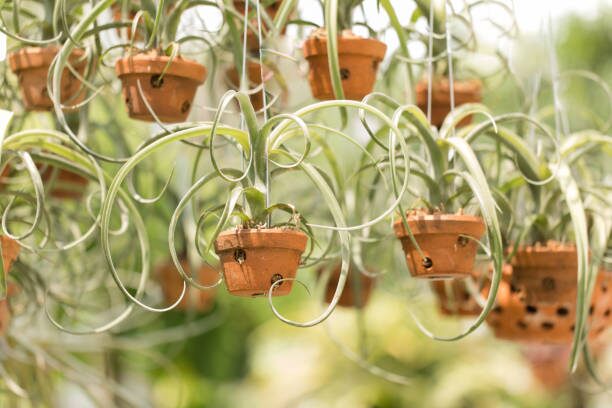
Air plants are nature’s little sculptures—no pot, no mess, just swirls, curls, and elegant rosettes that thrive on bright light, water, and air. If you’ve just watched a Tillandsia bloom, congratulations: you’re at the doorway to propagation. What happens next—separating pups or letting them knit into a show-stopping clump—shapes the look of your collection for years. Here’s your masterclass, from post-bloom care to pup timing, feeding for faster growth, and styling mature clusters that turn heads.
After the show: post-bloom care that kick-starts pups
A Tillandsia rosette typically blooms once, then redirects energy into offsets (“pups”). Help it do that smoothly:
- Trim the spent bloom spike when its bracts have faded and dried. This tidies the plant and reduces places where water lingers.
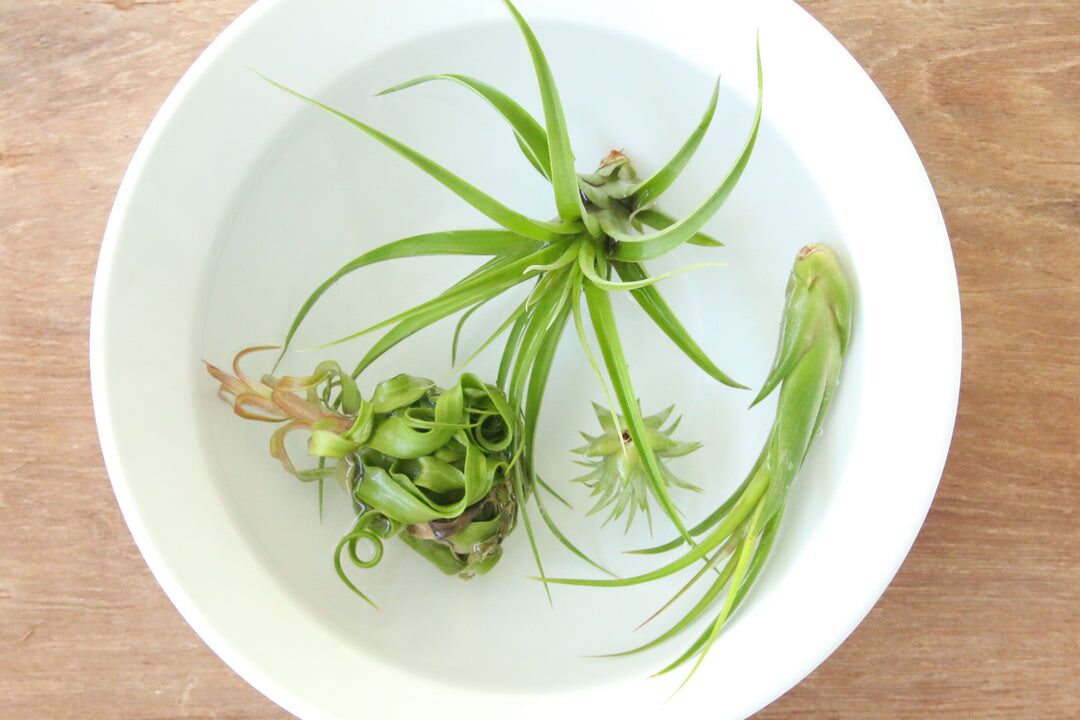
- Keep the routine steady: bright, filtered light; regular watering; strong airflow. Soak weekly for 30–60 minutes, shake off excess, then dry within about 4 hours. Keep flowers dry during any remaining color to avoid damage.
- Feed lightly so the mother has resources to pup. Mist or soak with a weak bromeliad/air-plant (or orchid) fertilizer at about 1/4 strength monthly; some growers go every 2 weeks in warm, bright months at very low strength. Rinse with plain water occasionally to prevent mineral buildup.
- Expect a slow goodbye from the mother rosette over months as pups grow. Keep caring for her until she’s fully spent and crisp.
Environment matters:
- Light: bright, indirect to lightly filtered sun. Silvery, trichome-rich types handle gentler morning sun; greener kinds prefer bright shade.
- Temperature: best at 15–25°C (59–77°F). Keep above ~10°C (50°F) in winter.
- Humidity: moderate to high with real ventilation (around 50–70%+ is friendly, but airflow is just as important as moisture).
Pup production 101: where, when, and how many
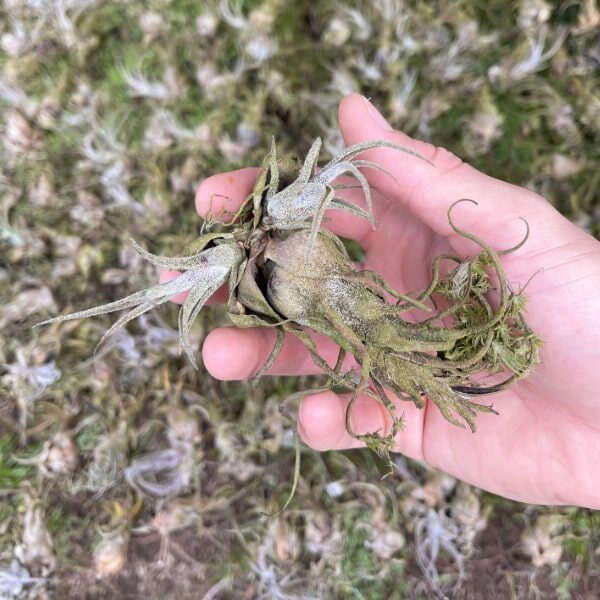
- Where pups appear: usually at the base, tucked between the lower leaves; in some species they emerge from beneath a leaf sheath.
- How many: commonly 1–3 per bloom cycle, though well-cared-for plants and certain species can produce more.
- Readiness check: separate when pups are about one-third to one-half the size of the mother. Gently wiggle—if there’s strong resistance, give them more time.
Pro tip for clean separations:
- If you cut, allow the tiny wound on both mother and pup to air-dry and harden for 2–3 days before soaking again. Rest them in bright, airy shade to discourage rot.
To separate or not: shaping your future display
You’re not just propagating—you’re designing.
- Separate pups when:
- You want faster growth in individual plants (they often speed up once independent).
- You’re building multiples for mounts, gifts, or trades.
- The clump is overcrowded and airflow is compromised.
- Leave pups attached when:
- You’re aiming for a sculptural clump with a cascade or sphere of rosettes.
- You want a multi-bloom spectacle as different rosettes mature in waves.
- You’re working with naturally clump-prone species (e.g., ionantha types, stricta, schiedeana, houston enano).
Shaping clumps:
- For a spherical look, hang the plant so pups can develop in 360 degrees.
- For a driftwood “ridge” or crest, mount the mother slightly off-axis so pups can radiate around the wood.
- Patience is part of the art—each generation adds volume.
Step-by-step: clean, safe pup separation
- Tools: clean hands, small bonsai snips or fine pruning scissors (sanitized), and a tray.
- Technique:
- Hold the mother plant firmly at the base.
- Grasp the pup at its base and gently twist or lever outward. If it doesn’t part with minimal force, stop and wait.
- If needed, make a precise cut where pup connects, avoiding the mother’s core.
- Let both plants rest dry for 48–72 hours before the next soak.
- Resume normal care: bright, gentle light; thorough soak-and-dry.
Securing pups without smothering crowns
Tillandsia don’t drink through roots; they breathe through leaves. Mount with airflow in mind.
Do:
- Use cradles: soft-coated wire rings, springy floral wire, or discreet fishing line to create a loose “seat” for the plant.
- Anchor by the dried outer leaf sheaths or the natural waist, never across the living crown.
- Tilt the rosette slightly side-on so water drains from the center after soaking.
- Choose breathable mounts: cork bark, driftwood, open-wire frames, shells with wide openings.
- Encourage natural anchoring by lightly misting the base where it contacts bark—roots will grip over time.
Don’t:
- Pack sphagnum or moss around the base (it stays wet and invites rot).
- Strap plants tightly or bury crowns in cups, shells, or glass.
- Use permanent, heavy glue blobs. If you must use adhesive, a tiny, removable dot on a dried outer sheath—never in the crown—keeps options open for future soaking and drying.
- Confine in closed terrariums. Glass can be fine if very open—and only return plants once fully dry.
Feeding for momentum: faster, fuller growth
Growth rate is a triangle: light, water, and nutrition—plus warmth.
- Fertilizer: use a bromeliad/air-plant or orchid formula (urea-free is a nice plus) at 1/4 strength.
- Frequency: about once monthly; in warm, bright seasons, very weak feeds every 2 weeks can help.
- Method: foliar is king—add fertilizer to your soak or light mist. Rinse with plain water every few weeks to prevent salt crusts.
- Water quality: rain, distilled, or low-mineral water helps avoid leaf spotting and buildup.
- Sync with seasons: feed less or pause in winter/low light; keep plants a bit drier but not bone-dry for long.
- Pair with conditions: brighter filtered light (no harsh midday sun), 15–25°C warmth, and lively airflow will multiply the effect of feeding.
Styling mature clumps: from soft spheres to wild cascades
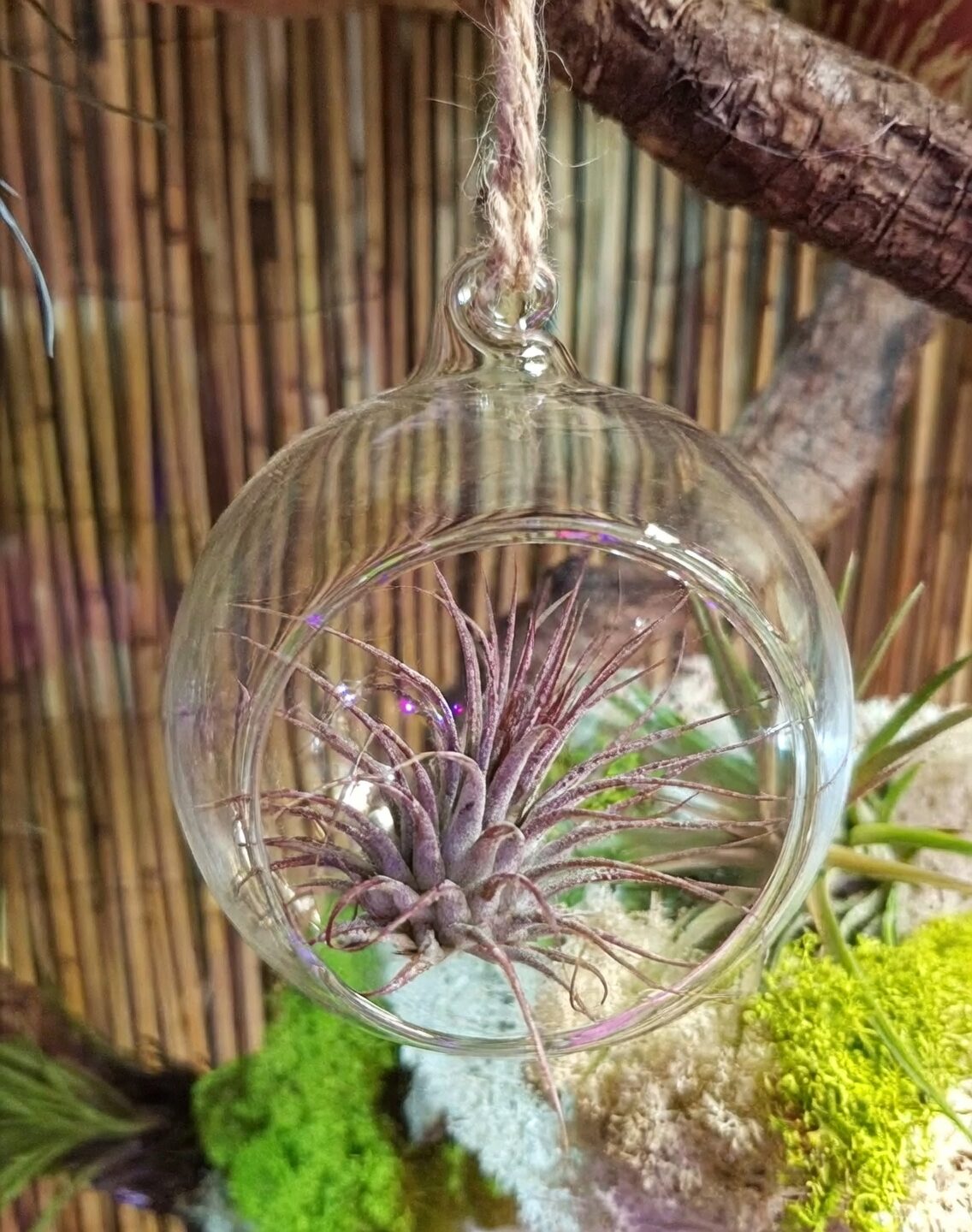
- Spherical “skybombs”: Hang clump-formers (ionantha groups are classics) from fine wire or a swivel so pups develop evenly on all sides. Rotate weekly for even light.
- Cascading drifts: Mount on driftwood with the main crown angled; let gravity and new pups create a natural waterfall of rosettes.
- Wreaths and frames: Affix multiple rosettes loosely along a wire frame or wooden hoop, spacing each for airflow and growth room.
- Mixed-texture displays: Combine compatible species—silvery, trichome-rich types together; greener, moisture-loving types together—so care is uniform.
Care for big clumps:
- Soak the whole piece. Afterwards, gently shake and hang to drain. Aim to dry within 4 hours.
- Make sure inner rosettes get wet—use a squeeze bottle or turkey baster during soaks—then ensure they dry.
- Groom spent leaves and remove fully dead mothers to keep ventilation clean.
- Keep flowers as dry as possible when in bloom.
Troubleshooting your propagation
- Pups stall or stay tiny:
- Boost light (brighter filtered), feed lightly, and ensure warmth with good airflow. Check that they aren’t shaded inside a dense clump.
- Inner crown rot:
- Plants are staying wet too long, especially in cool/still air. Shorten soaks, increase ventilation, and tilt crowns for drainage.
- Mineral crust or dullness:
- Switch to rain/distilled water. Rinse thoroughly between feeds.
- Sun scorch:
- Pale, crispy patches signal too much direct sun. Pull back to bright, filtered light.
- Pests (mealybugs/scale):
- Treat early with insecticidal soap or spot-dab with diluted isopropyl alcohol. Keep crowns from staying wet after treatment.
Species picks: clumps vs. statement singles
- Clump artists:
- Ionantha forms (including rubra and vanhyningii): fast, floriferous, great spheres.
- Stricta, schiedeana, houston enano: generous pupping and tidy rosettes.
- Statement singles:
- Xerographica: grand, slow, architectural—fabulous focal plant that eventually pups.
- Streptophylla and caput-medusae: sculptural curls and tentacle vibes; striking in mounts, beautiful as they cluster over time.
A note on symbolism
Air plants often symbolize freedom (no soil!), resilience (surviving on light, water, and air), creativity (endless display possibilities), and even “perfection” in their neat rosette geometry. While these associations aren’t botanical truths, they echo what makes Tillandsia so beloved indoors: a light footprint and an artful, adaptive spirit.
—
Master propagation is really about rhythm: bright, gentle light; generous water with fast drying; light, regular feeding; and thoughtful spacing. Whether you’re raising tidy singles or building cloud-like clumps, keep air moving, crowns breathing, and patience as your co-pilot. The payoff—waves of blooms and sculptural clusters—is worth every soak and shake.