

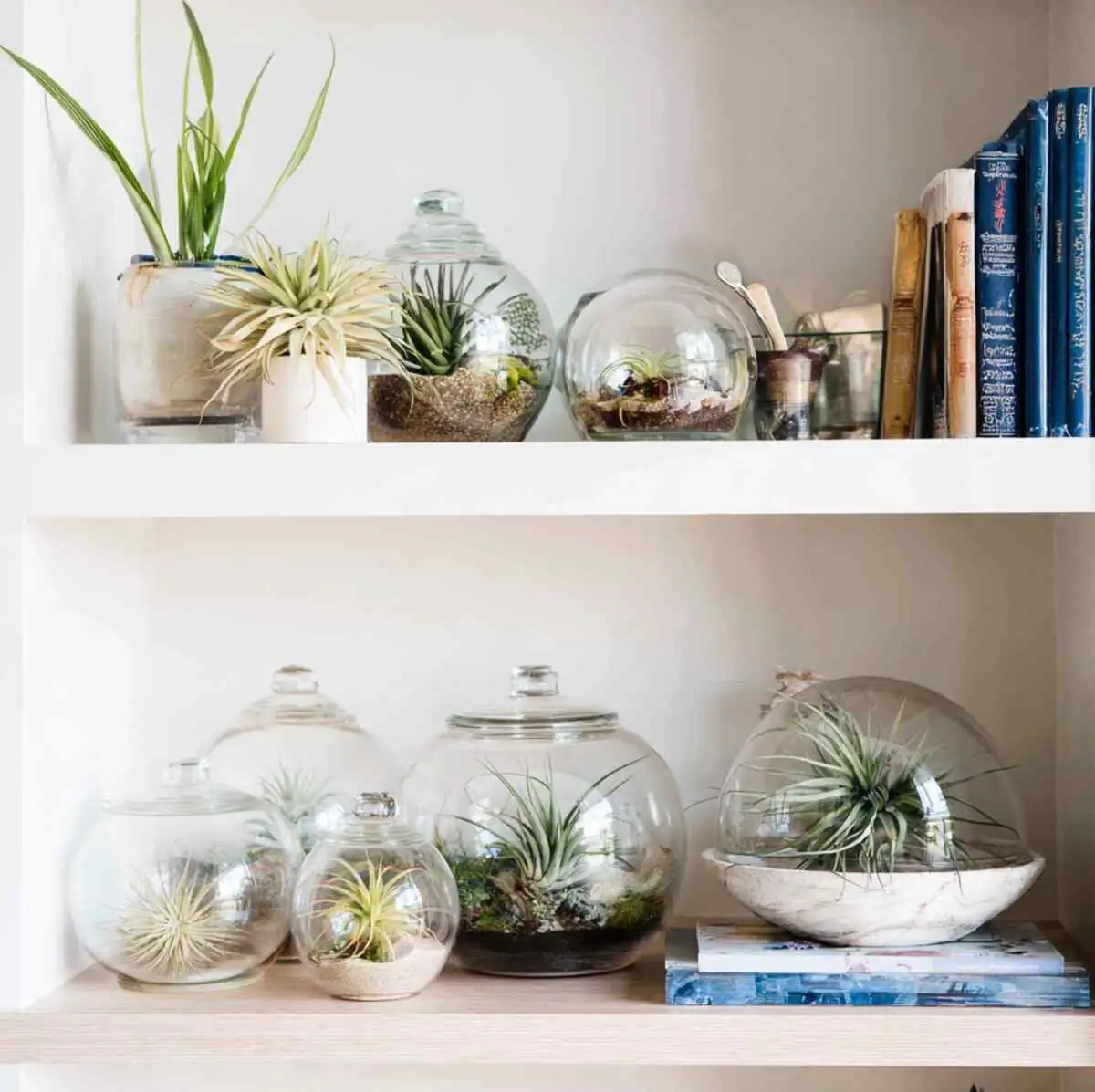
Air plants are the design chameleons of the plant world—pure sculptural energy with zero soil. But the most beautiful displays share a single hidden rule: they breathe. Prioritize airflow and fast drying, and you’ll unlock arrangements that look refined, are easy to water, and keep Tillandsia thriving for years.
Below you’ll find display ideas—driftwood, cork, shells, wire hangers, and smart ways to use glass—plus a quick, no-stress care rhythm that fits real life.
The golden rule: beautiful displays that dry fast
- Angle matters: Mount rosettes slightly sideways or upside down so water can’t sit in the crown.
- Space is styling: Leave negative space around leaves. Crowded displays trap moisture and invite rot.
- Light and air go together: Bright, filtered light plus steady ventilation beats “humid but still.” A small fan on low nearby works wonders.
- Match plant to spot: Silvery/gray-leaved Tillandsia with dense trichomes handle brighter, drier zones and gentle morning sun. Greener types prefer bright shade and a softer microclimate.
Ideal conditions
- Light: Bright, indirect light to light shade; avoid harsh midday sun (especially behind glass).
- Temperature: 59–77°F (15–25°C). Keep above ~50°F (10°C) in winter.
- Humidity: Moderate to high with strong airflow. Still, wet air is a recipe for rot.
Driftwood mounts: coastal-modern classics
Driftwood gives instant texture and contrast to those sculptural rosettes.
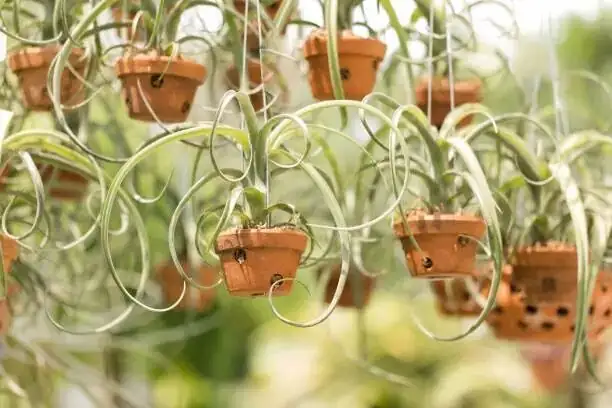
How to build it (no glue needed)
- Choose clean, fully dried wood. Rinse salty pieces, scrub, and let them dry thoroughly.
- Plan your angle so the plant sheds water (side tilt is your friend).
- Attach with bonsai wire or fishing line:
- Thread gently through the lowest leaves (never the crown) and wrap just snug enough to hold.
- Or create two tiny pilot holes and run a U-shaped wire staple over the leaf bases.
- If the plant has roots, nestle them into crevices to help it self-anchor over time.
- Watering workflow: Unhook to soak—or dunk the entire mount, then shake and set where the plant will dry within ~4 hours.
Design tip: Cluster 3–5 plants in asymmetric “constellations,” staggering sizes and leaf textures for depth.
Cork cradles: bark with benefits
Cork bark is light, inert, and dries quickly—perfect for air plants.
Build a cradle
- Use cork flats or tubes. Create a shallow pocket with two small U-wires, or twist a minimal wire ring that “cups” the base leaves.
- Keep contact points minimal so air circulates around the base.
- Cork mounts excel for clumps: leave pups attached and let a natural bouquet form.
Shells: sculptural pedestals, not bathtubs
Shells look dreamy, but don’t let them trap moisture.
Make shells plant-friendly
- Choose shells with wide openings; avoid deep cavities that collect water.
- Add a pebble or two so the plant sits slightly elevated and angled to drain.
- Skip glue. Lift plants out for soaking and return only when completely dry.
- Water with low-mineral/rain/distilled water to avoid crusty deposits on leaves.
Wire hangers and mobiles: floating airflow champions
Hanging plants = maximum ventilation and drama.
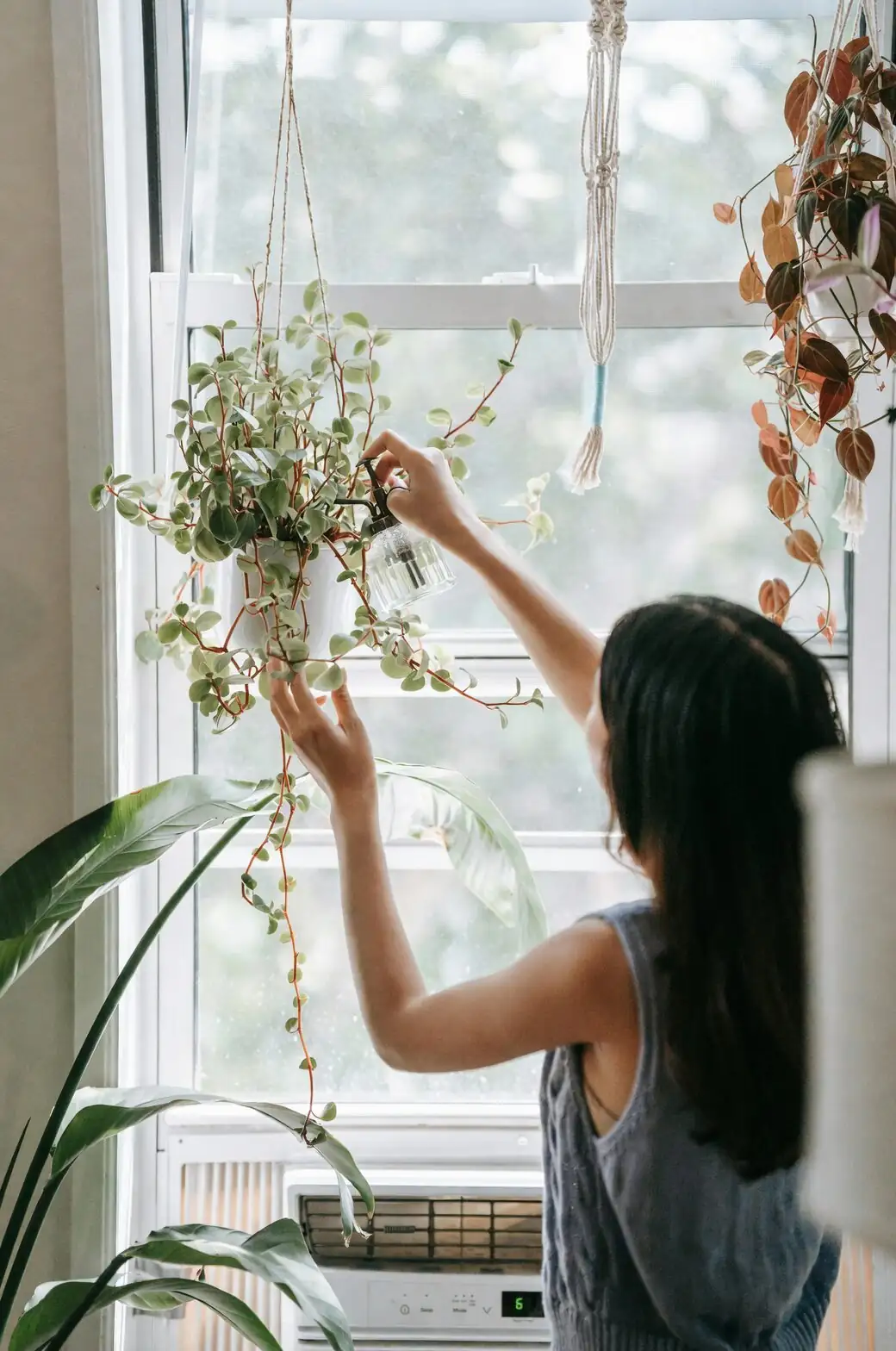
What to use (and avoid)
- Use stainless steel, aluminum, or bonsai wire.
- Avoid copper wire—copper is toxic to air plants.
- Fishing line is great for invisible suspensions.
How to hang
- Spiral a wire cradle loosely around the base leaves, then attach to a hook or branch.
- Stagger heights to create a “cloud” of tillandsias where air can move freely.
- To water, unhook the cradle or lift the plant out—soak, shake, and rehang to dry.
The right way to use glass
Yes to glass—if you keep it open and airy.
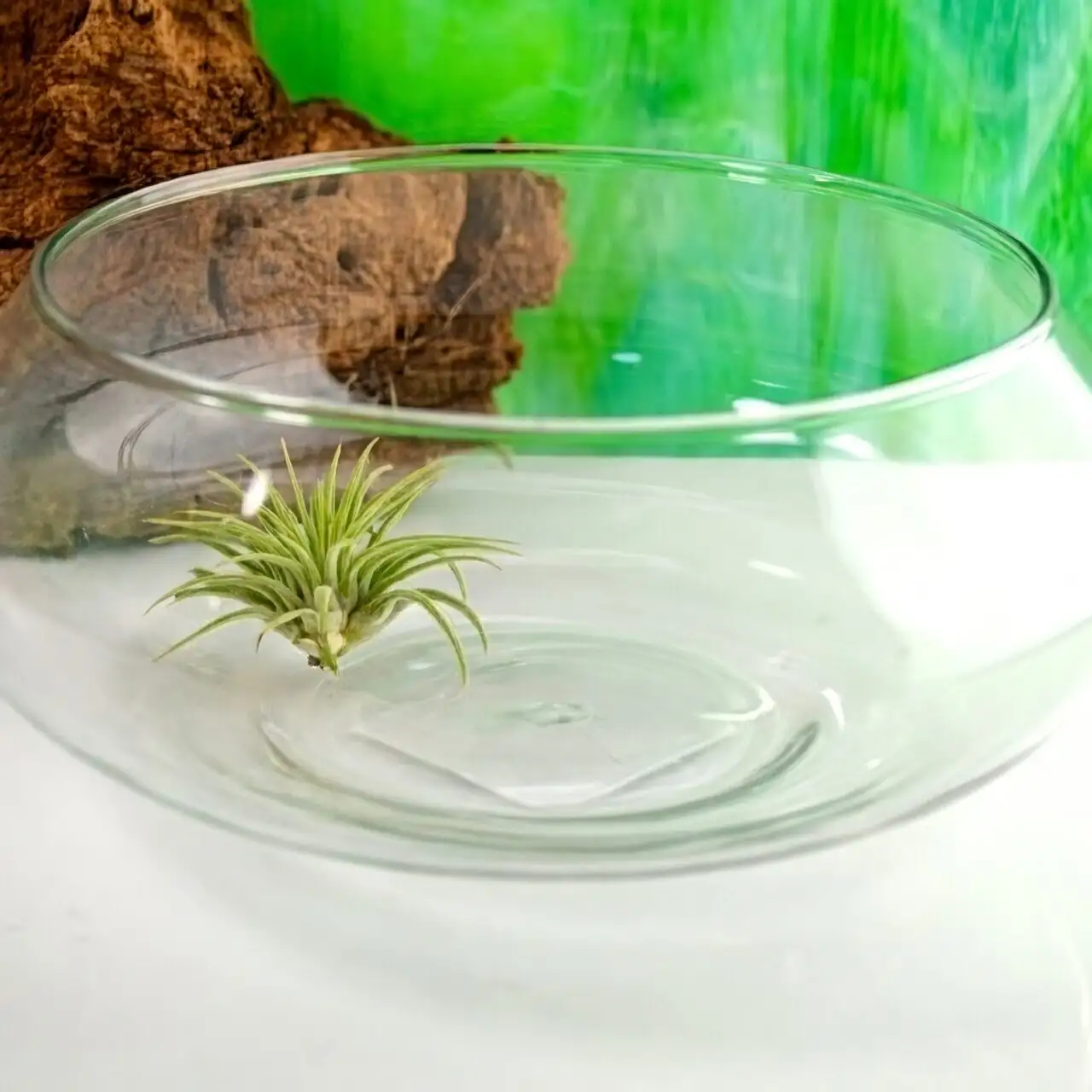
Glass guidelines
- Choose vessels with big openings (bowls, cylinders, wall bubbles with generous mouths).
- Never keep air plants closed in glass for long-term display; poor airflow = rot.
- Remove the plant for soaking; don’t mist heavily and leave it inside.
- Keep glass out of strong midday sun—glass can magnify heat and scorch leaves.
- Inside the vessel, use just a few pebbles or a ceramic stand to elevate foliage. Don’t pack with damp moss.
Materials and methods to avoid
- Permanent glue: It locks plants in place so you can’t remove them to soak or dry thoroughly. This is the fast track to rot.
- Copper wire: Toxic to Tillandsia.
- Closed terrariums: Traps moisture; plants can’t dry.
- Soggy dressings: Constantly damp sphagnum moss or thick glued-on moss against the base.
- Soil-filled cups: They don’t need soil, and packed media restricts airflow.
- Treated/pressure‑treated wood or resinous fresh softwood: Off-gassing and residue aren’t plant-friendly.
- Heavy, unventilated sand layers: Hold moisture against the base and impede drying.
Quick maintenance rhythms (that fit real life)
Water
- Weekly soak: Submerge for 30–60 minutes in rain, distilled, or low-mineral water.
- After soaking: Shake off water and set the plant sideways/upside down to drain; aim to dry within ~4 hours.
- Between soaks in hot/dry rooms: Light misting 2–3× weekly. In winter or low light, reduce frequency and keep plants a bit drier.
- Keep flowers as dry as possible to prevent damage.
Feeding
- During active growth: Mist or soak monthly with a bromeliad/orchid fertilizer at 1/4 strength. Rinse with plain water occasionally to prevent mineral buildup.
- In winter: Pause or greatly reduce feeding.
Grooming and checks
- Weekly: Remove any fully dry, dead leaves; check that bases aren’t staying wet; rotate displays for even light.
- Monthly: Inspect for mealybugs/scale; treat early with insecticidal soap or a dab of diluted isopropyl on a cotton swab (keep crowns from staying wet).
- Seasonal:
- Spring–summer: a touch more water, brighter filtered light, plenty of airflow.
- Autumn: begin tapering watering.
- Winter: keep warm (>50°F/10°C), water less often, and prioritize fast drying.
Pups and blooms
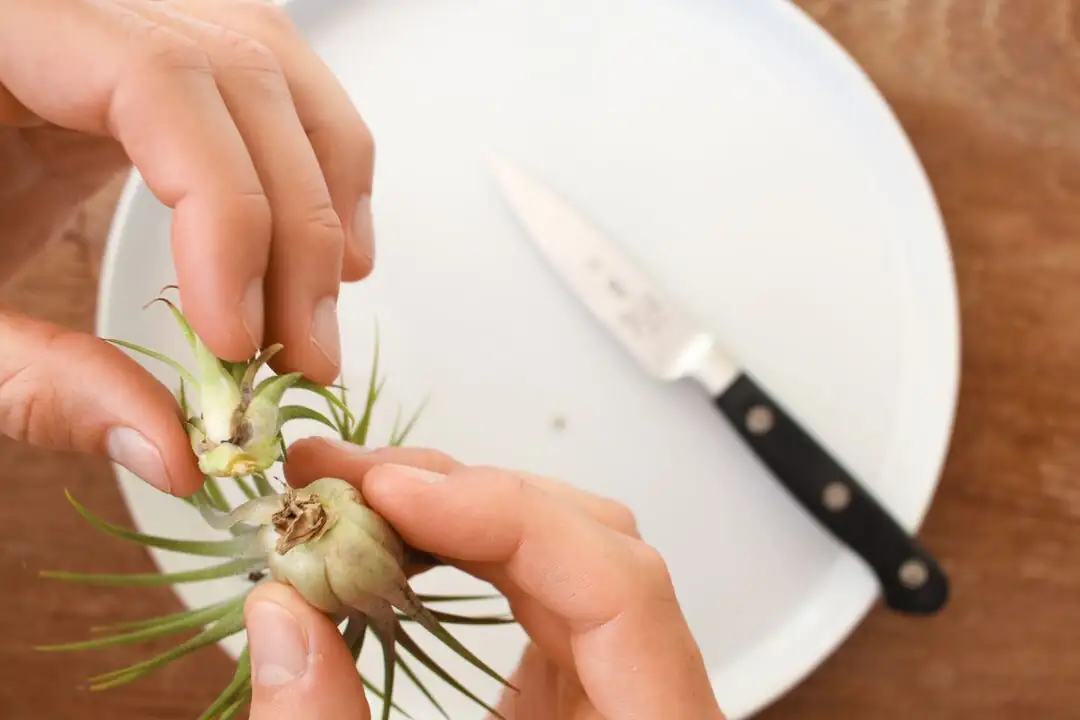
- Most rosettes bloom once, then produce offsets (“pups”). Leave pups attached for a fuller clump, or separate when they’re 1/3–1/2 the size of the mother.
Fast troubleshooting
- Base or crown rot (soft, blackened tissue): The plant stayed wet too long in cool or still air. Trim damaged parts if possible, increase ventilation, and lengthen dry time; reduce watering frequency.
- Crispy tips, rolled leaves: It’s thirsty. Give a full 60-minute soak and improve your weekly rhythm.
- Bleached or scorched patches: Too much direct sun/heat, especially behind glass. Shift to bright, filtered light.
- White crust or spots: Mineral deposits. Switch to rain/distilled water and rinse thoroughly during soaks.
Styling notes that elevate any setup
- Contrast textures: Pair needle-like forms with curly or broad-leaved rosettes.
- Let silver shine: Silvery species read like living metal in modern interiors—perfect on dark driftwood.
- Odd numbers and negative space: Groups of 3 or 5 feel natural; leave breathing room around each plant.
- Move the eye: Stagger heights in hanging installations; angle rosettes to point in different directions.
A quick primer on Tillandsia, the “live-lightly” bromeliads
- Botanical ID: Tillandsia spp., family Bromeliaceae; native across the Americas from the southern/southeastern U.S. through Mexico, Central America, the Caribbean, and much of South America to central Argentina.
- In nature: Mostly epiphytes growing on trees and rocks. Roots are anchors; leaves (covered in trichomes) do the drinking and feeding.
- Indoors: Perfect for creative displays—just give bright, gentle light, regular watering, and excellent airflow.
Symbolism and “flower language”
Air plants are often linked with freedom, resilience, creativity, and an elegant sense of “perfection” in their neat rosette form. As for formal “flower language” traditions, those are cultural interpretations rather than botanical truths—lovely as design inspiration, but not rules. If you want your display to “say” something, lean into intention: a floating mobile for freedom, a clustered clump for continuity through pups, or a single silver rosette on dark wood for minimalist calm.
—
Design forward, plant first—that’s the formula. Give your Tillandsia room to breathe, make watering a smooth weekly ritual, and your displays will look curated, not complicated.


