Imagine a plant that perches on a piece of driftwood, drinks from mist, and wears a silvery glow like moonlight. Air plants (Tillandsia spp.) invite us to rethink what a houseplant can be—and, in the process, they’ve inspired a distinctly modern flower language that speaks to freedom, creativity, and living lightly.
Meet the air plant (Tillandsia spp.)
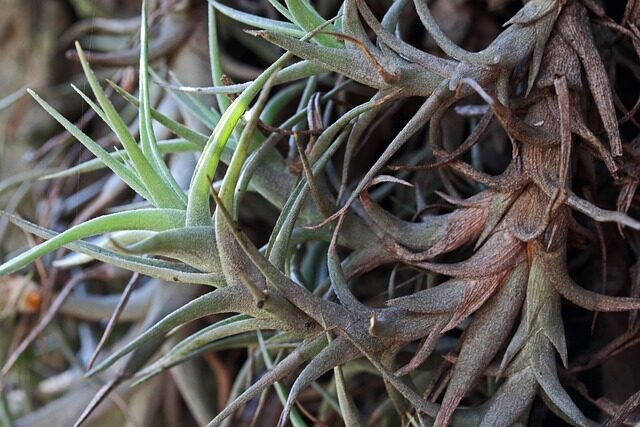
Air plants are bromeliads native to the Americas, from the southern/southeastern U.S. through Mexico, Central America, and the Caribbean down to Argentina. Most are epiphytes: they cling to trees, rocks, or even rooftop wires, using their roots like tiny grappling hooks while their leaves—covered in specialized scales called trichomes—absorb water and nutrients from rain and fog. Indoors they’re displayed on cork bark, driftwood, shells, or in open glass vessels, thriving with bright, gentle light, regular watering, and, above all, good airflow so they dry quickly.
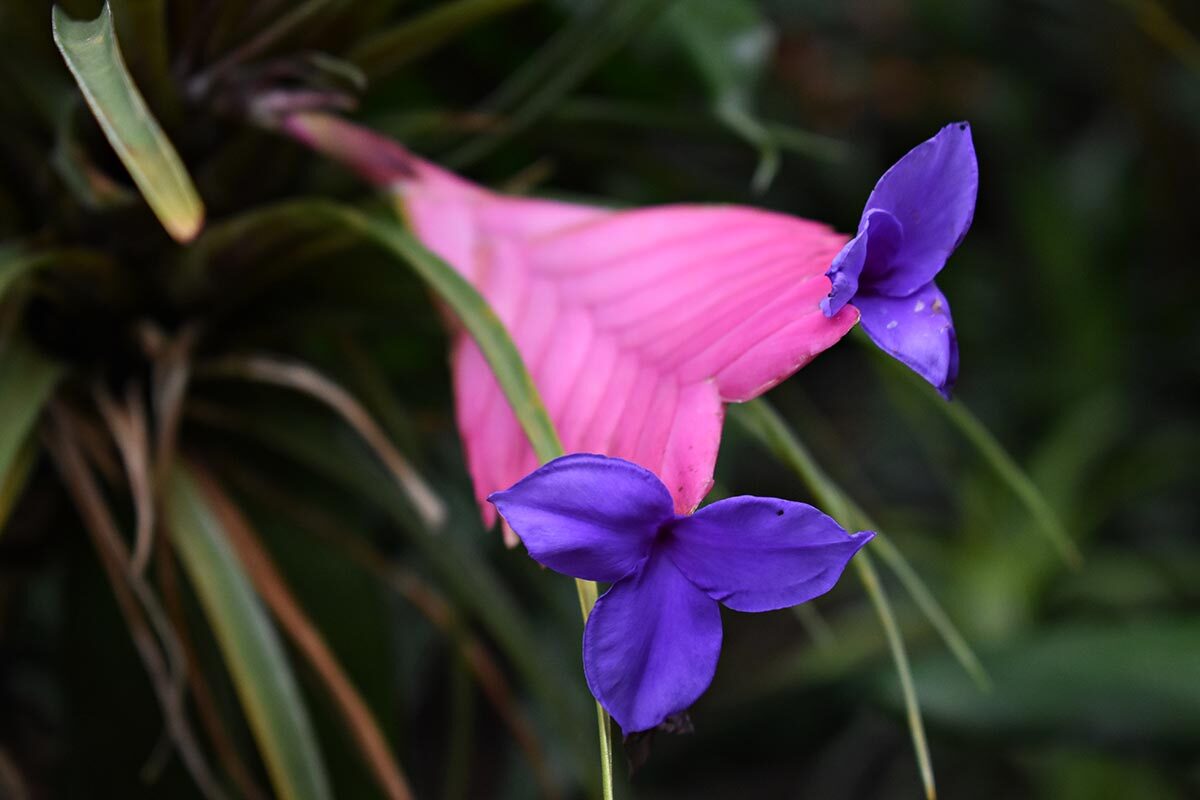
Many Tillandsia bloom once per rosette, unfurling vivid bracts with tubular flowers in pink, red, purple, or yellow. Afterward, the “mother” rosette slowly fades while producing offsets (“pups”) that keep the lineage—and the display—going.
How the air-plant “flower language” took root—now, not in Victorian times
Victorian floriography rarely featured air plants; they weren’t part of the parlor-plant repertoire. Their meanings emerged much later with the houseplant renaissance: design stores, wedding stylists, plant bars, social media, and indie florists needed quick, resonant “readings” for a plant that:
- doesn’t use soil (a shock to expectations),
- sculpts space with minimal fuss,
- and thrives when given light and air.
This contemporary floriography links qualities we can see and feel—weightlessness, adaptability, sculptural clarity—to the messages we want to send when we gift a plant.
Meanings grounded in their lifestyle
- Freedom and independence: No pot of soil required; Tillandsia anchor where they choose. Their epiphytic habit whispers, “I make my own way.”
- Creativity and play: They can be mounted, hung, nestled in a shell, or balanced on a wire cradle—living art that invites experimentation.
- Resilience and adaptability: From misty forests to arid hillsides, species have adapted with trichomes that drink from air. Indoors, they rebound well once you learn their rhythm.
- Living lightly: No mess, no heavy container—just form, light, and movement. They embody minimal footprint, maximum presence.
- Quiet perfection: The neat, symmetric rosette and frosted sheen often read as “order and clarity,” a small icon of balance.
- Continuity and community: After bloom, pups carry the family forward. Clumping plants symbolize legacy, teamwork, and shared growth.
Tip: Grayer, more silvery plants (with dense trichomes) tend to be “sun-tough” and drought-tolerant—perfect symbols for independence and exploration. Greener-leaved types prefer brighter shade and suggest care, calm, and gentleness.
Minimalism and feng shui: lightness that moves energy
Air plants are darling to minimalists: they’re “clean” houseplants—no soil spill, just sculptural lines and soft shadows. They breathe visual lightness into a space.
In many feng shui interpretations:
- They align with the Wood element (growth, creativity, renewal). Their upward leaves and pup-making habit amplify “new beginnings.”
- Their suspended displays and the necessity of airflow encourage gentle qi circulation—an energetic lightness.
- Placement ideas (always prioritize bright, indirect light and ventilation first):
- West (Creativity/Children in the Bagua): above a worktable or art shelf to spark ideas.
- East (Family/Health): a symbol of steady growth and resilience in shared spaces.
- Entry consoles or living room shelves: to greet guests with a sense of openness and ease.
Thoughtful gift occasions—and what they say
- New job, promotion, or studio launch: “May your ideas take wing.” Choose a silvery, architectural form.
- Housewarming (especially small spaces): “A beautiful life needs little to flourish.”
- For travelers, students, and remote workers: “Rooted in air—ready for anywhere.”
- Wedding or anniversary: Gift a small clump or a mother with pups as a “growing together” emblem.
- Recovery or life transition: “Lightness returns.” Pick a gentle, green-leaved rosette for calm.
- Team gifts and thank-yous: “We thrive with good air and good company.”
Short note you can tuck in:
“Air, light, and a little care—that’s all it takes. May this Tillandsia remind you to breathe, create, and keep things light.”
Placement ideas that honor the message (and keep the plant happy)
- East-facing windowsill or a bright shelf set back from strong sun.
- Mounted on cork or driftwood above a desk for a creativity nudge.
- Open glass orb by a bright window (leave it open and remove for soaking).
- A bright bathroom with a window—the steam helps, the window ventilates.
- Hanging mobile in filtered light to keep energy and air moving.
- Cluster a few on a tray as a “community”—perfect for a shared office table.
Avoid: closed terrariums, dim corners, or spots blasted by heater/AC vents.
Quick care cues to include with your gift
- Light: Bright, indirect light or gentle filtered sun. Silvery types tolerate a bit more sun; soft green types prefer brighter shade.
- Water: Soak weekly for 30–60 minutes in rain/distilled/low-mineral water. Shake off, then dry within about 4 hours; place upside down or on its side to drain. Add light misting between soaks in hot, dry rooms. Keep flowers as dry as possible.
- Airflow: Essential. Still, wet air invites rot.
- Temperature: Best 15–25°C (59–77°F). Keep above ~10°C (50°F) in winter; they are not frost-hardy.
- Feeding: Mist/soak monthly with very weak bromeliad/orchid fertilizer during active growth; rinse with plain water occasionally to prevent buildup.
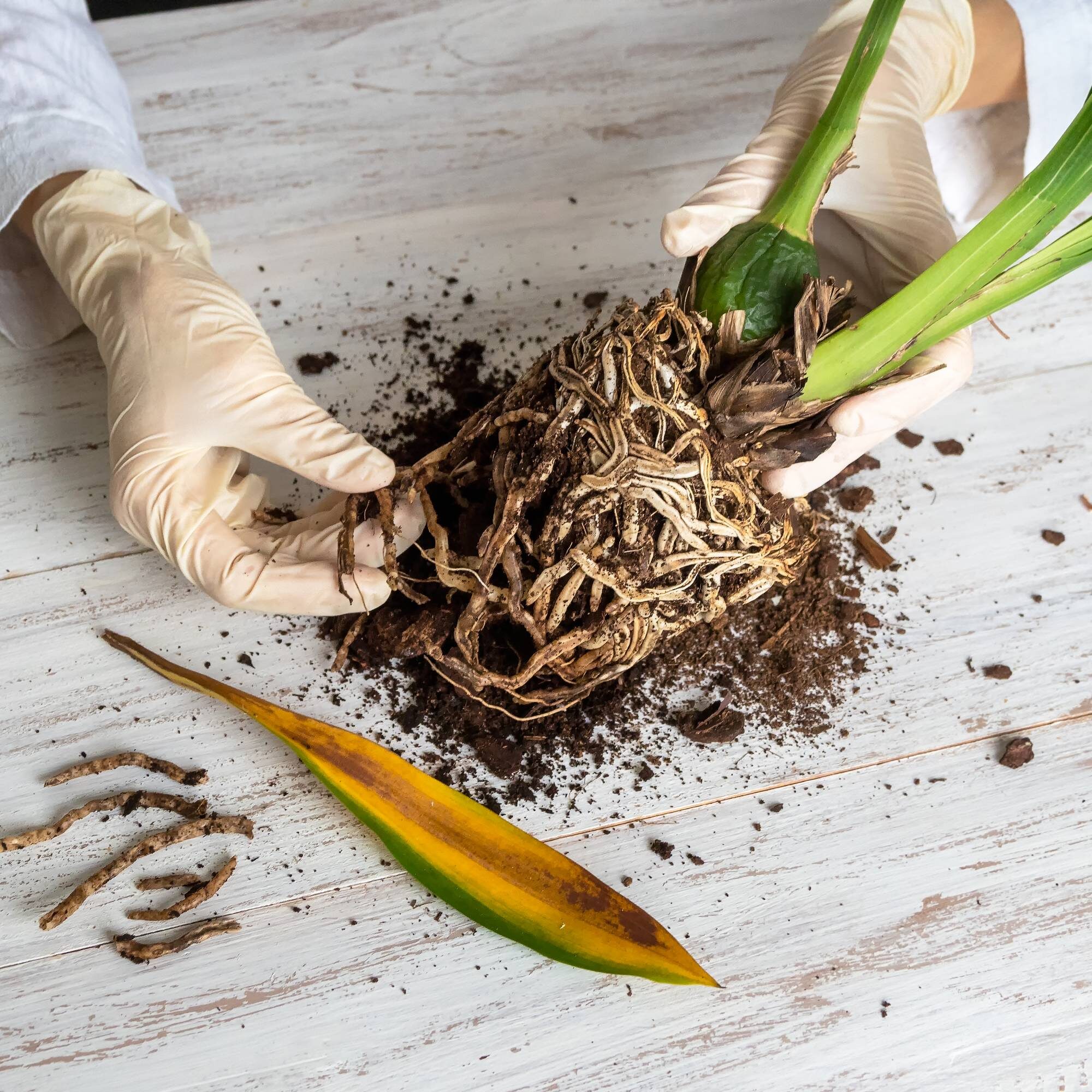
- Pups: After flowering, the mother makes offsets—leave for a fuller clump or separate when pups are 1/3–1/2 her size.
- Pet-friendly: Generally non-toxic to people, cats, and dogs. Still, place out of nibbling range.
Myth-buster: They don’t live on “air alone.” They need water, light, nutrients—and a quick dry after soaking.
Choosing the right Tillandsia for the message
- Curly, highly trichomed forms (often silvery): “Freedom, adventure, self-reliance.”
- Soft green, arching rosettes: “Calm, care, renewal.”
- Blushing or purple-flowering types: “Creative spark and celebration.”
- A small clump or a mother with pups: “Continuity, teamwork, and family.”
Why air plants make today’s floriography feel fresh
In a fast, sometimes heavy world, Tillandsia embody a lighter way to thrive: no clutter, no drama—just bright light, clean air, and a rhythm that rewards attention without demanding it. Gifting one says something unmistakably current: travel lightly, create boldly, and grow in good air. That’s a language we can all understand.