
Air plants look like they bend the rules of botany—no soil, sculptural rosettes, and the confidence to perch on driftwood or a windowsill. But three villains can topple even the prettiest Tillandsia: rot, dehydration, and scorch. Add mealybugs, scale, or spider mites, and you’ve got a real emergency on your hands. Here’s your rapid-response guide—clear, quick, and kind to trichomes—plus the airflow reset that keeps problems from coming back.
Fast triage: read the leaves in 30 seconds
- Rot (crown/base rot)
- Clues: Soft or blackened base/crown, sour smell, leaves detaching with a gentle tug.
- Usual cause: Staying wet too long in cool, dim, or still air.
- Dehydration
- Clues: Rolled or tightly curled leaves, dull/grayish cast beyond the usual frosty sheen, crispy tips, a “shrunken” look.
- Usual cause: Under-watering or hot, dry rooms without supplemental misting.
- Sun scorch
- Clues: Bleached, bronze, or crunchy patches on the sun-facing side; often worse behind hot glass.
- Usual cause: Harsh midday sun or too-close placement to a south/west window.
- Pests
- Mealybugs/scale: White cottony tufts or hard dome-like bumps; sticky honeydew; sooty mold on nearby surfaces.
- Spider mites: Fine stippling, dusty leaves, and delicate webbing in very dry indoor air.
Jump to the matching protocol below, then finish with the Airflow Reset.
—
Rot rescue (crown/base rot)
Rot moves fast—act now.
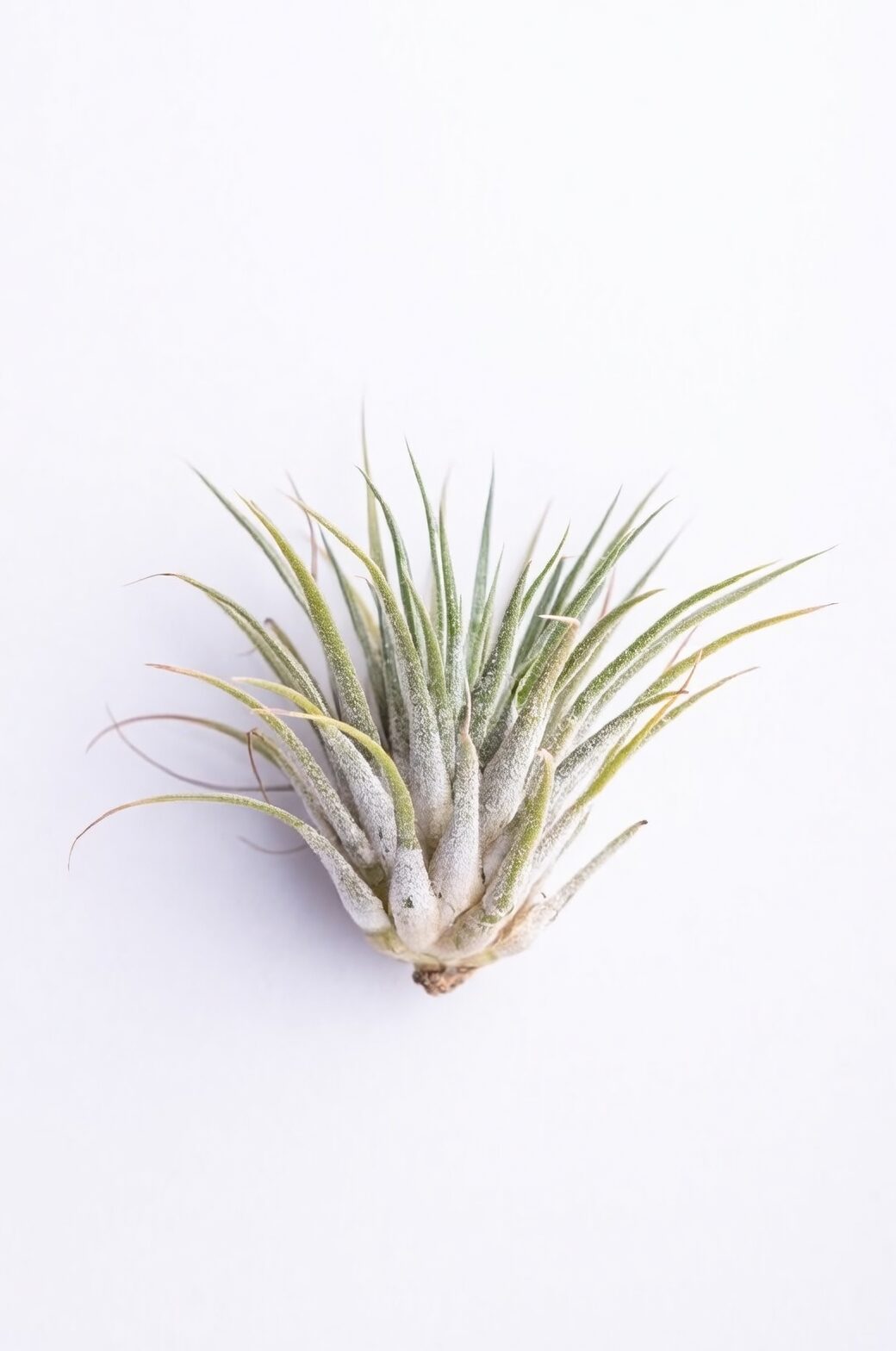
Step-by-step
- Isolate and unmount
- Gently remove the plant from glass vessels, shells, or tight holders. Rot accelerates in still, confined spaces.
- Drain and dry immediately
- Do not soak. Shake out any trapped water, then place the plant upside down or on its side on a towel in bright, indirect light.
- Target: fully dry within about 4 hours.
- Clean up decayed tissue
- Carefully peel away soft, blackened, or foul-smelling leaf bases until only firm tissue remains. Discard debris.
- Airflow therapy
- Provide steady, gentle air movement (a small fan on low, not blasting). Keep warm: ideally 15–25°C (59–77°F).
- Hold water
- Skip soaking for 3–5 days. If leaves begin to curl, lightly mist the outer leaves only in the morning and ensure swift drying.
- Resume cautious hydration
- When firm and odor-free, give a short soak (15–20 minutes), then dry fast. If any softness returns, revert to drying and short, infrequent soaks.
- Salvage what you can
- If the core collapses but outer leaves or pups are firm, separate pups and grow them on with excellent airflow and gentle light.
Prevention pointers
- Always dry within ~4 hours after watering.
- Reduce soaking frequency in winter or low light.
- Never leave water sitting in the crown or bracts; keep flowers as dry as possible.
—
Dehydration recovery
Think “deep drink, quick dry, steady rhythm.”
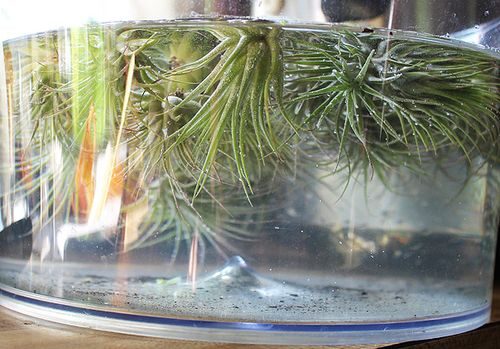
Step-by-step
- Soak to re-inflate
- Submerge for 30–60 minutes in rain, distilled, or low-mineral water. For severe curl, extend up to 2 hours.
- Shake and drain
- Shake off excess and dry the plant upside down or on its side in bright, indirect light with airflow.
- Place wisely
- Bright filtered light is perfect. Gray/silver-leaved types tolerate gentle morning sun; greener, softer types prefer brighter shade.
- Rebuild a routine
- Typical rhythm: soak about once weekly; in hot, dry rooms, add 2–3 light mists between soaks.
- In winter or low light, water less often but don’t let plants stay bone-dry for long stretches.
- Feed lightly (optional during active growth)
- Mist or soak monthly with a very weak bromeliad/air-plant (or orchid) fertilizer (about 1/4 strength). Rinse with plain water occasionally to prevent mineral buildup.
—
Sun scorch fix
Sun damage doesn’t heal, but new growth will look right once you reset the light.
Step-by-step
- Move to filtered light
- East light or a bright spot set back from a south/west window is ideal. Avoid harsh midday sun behind glass.
- Cool down the microclimate
- Heat magnifies scorch. Keep off hot sills and away from heater/AC vents.
- Water normally
- Don’t overcompensate with extra water; keep the usual soak-and-dry rhythm.
- Cosmetic cleanup
- Leave mildly damaged leaves if they still offer structure; trim only fully crisped tips and dead tissue to keep airflow clean.
- Match the species to the light
- Grayer, heavily trichomed types handle more light and drier air; greener types want brighter shade.
—
Safe pest cures for Tillandsia (gentle on trichomes)
Trichomes are your plant’s sponge—keep treatments light, targeted, and followed by a rinse and fast dry.
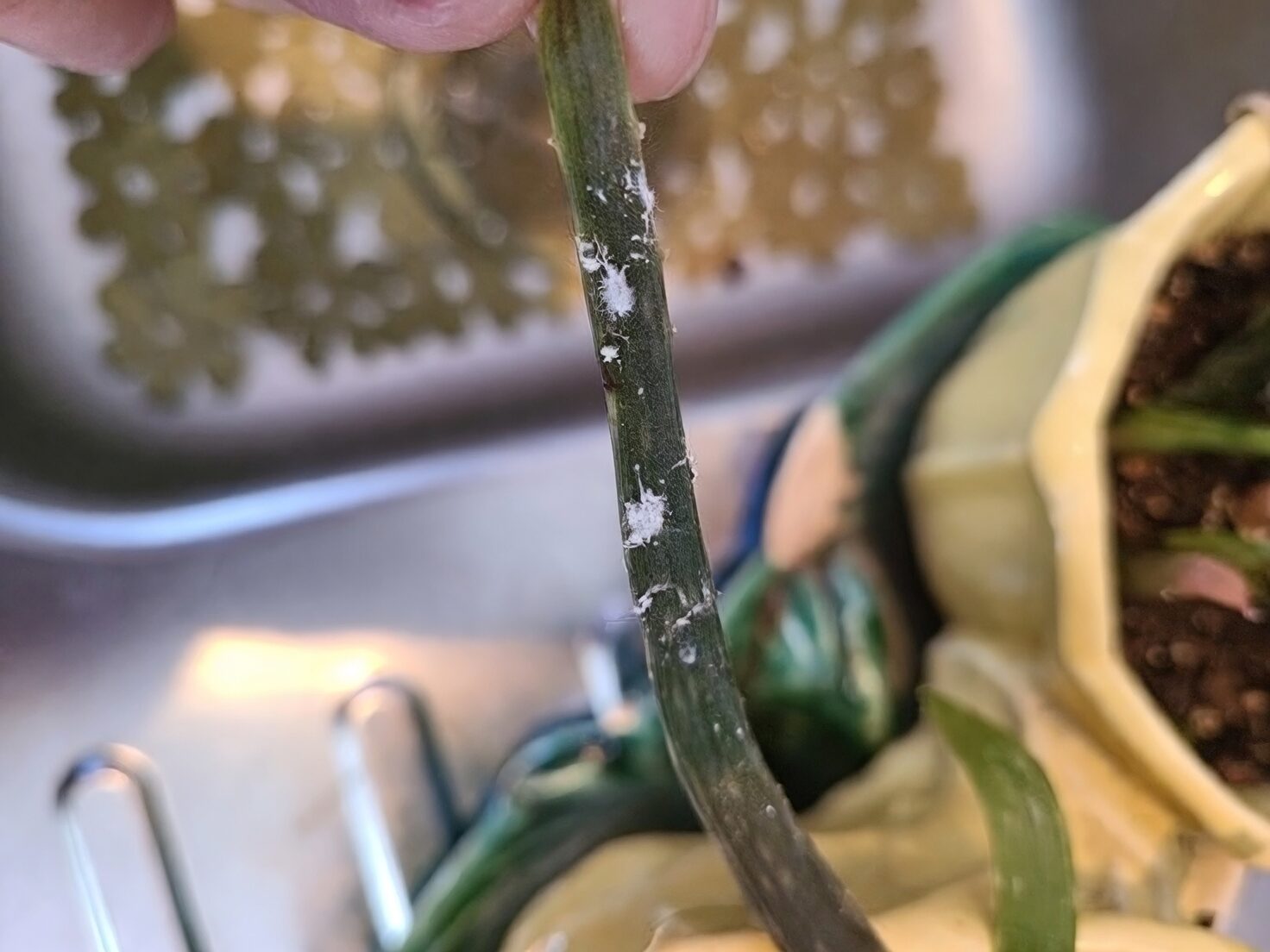
General pest protocol
- Isolate the plant immediately.
- Inspect the crown, leaf bases, and undersides. Check pups and mounts.
- Avoid oil-heavy sprays that can smother trichomes.
- Treat early, repeat weekly for 3–4 cycles, and always dry quickly.
Mealybugs (those “cotton” clusters)
- Manual removal
- Use tweezers and cotton swabs to lift off clusters.
- Alcohol dab
- Spot-treat visible bugs with isopropyl alcohol at 70% or less using a swab. Avoid flooding the plant.
- Soap, rinse, dry
- If needed, follow with a light application of insecticidal soap; wait 10–15 minutes, then rinse thoroughly.
- Dry upside down or on the side with airflow; target full dry within ~4 hours.
- Repeat weekly
- Continue until no pests are seen for 3–4 weeks. Clean honeydew from nearby surfaces to deter sooty mold and ants.
Scale (hard bumps stuck to leaves)
- Pop and lift
- Gently pry adults off with a fingernail or dull blade; dispose.
- Alcohol spot-dab
- Touch remaining spots/crawlers with 70% (or less) isopropyl using a swab.
- Soap, rinse, dry
- Light insecticidal soap if needed, then rinse and dry fast.
- Repeat weekly for 3–4 rounds.
Spider mites (love dry, dusty air)
- Rinse reset
- Give a thorough tepid rinse or short soak, then dry with airflow.
- Improve humidity + airflow
- Aim for moderate humidity (around 50–70%+) but keep the air moving. Still, wet air invites rot; balance is key.
- Soap contact
- Use a light insecticidal soap on leaf surfaces; rinse after 10–15 minutes, then dry promptly.
- Repeat weekly until webbing/stippling stops.
Pro tip: During any treatment, keep moisture out of the crown/bracts, and never put a damp plant back into a tight holder or glass until fully dry.
—
The Airflow Reset: a 10-minute blueprint that prevents 90% of problems
Do this once, then enjoy the easy life with air plants.
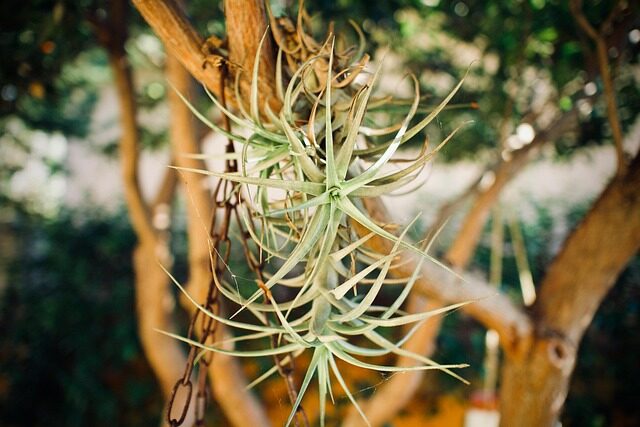
- Placement check
- Bright, indirect light near a window. East windows are excellent; for south/west, set back or use sheer curtains.
- Space to breathe
- Keep distance between plants and off crowded shelves; avoid closed terrariums. Use open stands, wire cradles, cork, or driftwood.
- Fan on low
- A small, quiet fan on low/oscillate a few hours daily (or continuously, gentle) keeps air fresh and drying consistent.
- Watering workflow
- Soak → shake → dry upside down/on side → ensure fully dry within ~4 hours.
- Reduce frequency in winter or dim rooms; never let water pool in the crown.
- Season smart
- Summer: a bit more water and airflow. Winter: warmer temps (>10°C/50°F for most common types), less water, extra vigilance about drying.
- Quality water
- Rain, distilled, or low-mineral water is best. Rinse occasionally to clear residues.
- Gentle feeding (optional in active growth)
- Very weak foliar feed about monthly; pause or greatly reduce in winter.
- Clean as you go
- Remove fully dead leaves and spent bracts to boost airflow and reduce hiding spots for pests.
- Quarantine newcomers
- Isolate new plants for 2–3 weeks; inspect for mealybugs/scale before joining the display.
- Mind the microclimate
- Keep away from heater/AC blasts. Ideal temps: ~15–25°C (59–77°F). Not frost-hardy.
—
Quick reference: when to worry, what to do
- Soft, smelly base? Stop watering, peel soft tissue, blast the airflow, and dry fast.
- Tightly rolled leaves? Deep soak 30–60 minutes (up to 2 hours), then rebuild a weekly rhythm with mists in dry rooms.
- Bleached patches? Shift to filtered light; heat, not just light, is the enemy behind glass.
- White fluff or sticky leaves? Isolate, dab mealybugs/scale with 70% (or less) alcohol, light soap, rinse, dry, repeat weekly.
—
A note on meaning
Air plants are often seen as symbols of freedom, resilience, and creative minimalism—living “lightly” without soil yet thriving through smart design. Their once-in-a-lifetime bloom followed by new pups reads like a reminder that endings feed beginnings. Lovely, yes—but the real magic is practical: trichomes that sip mist, roots that anchor artfully, and a body plan evolved for air and light.
—
Give Tillandsia bright, gentle light, a good weekly drink, and—above all—air that moves. Do that, and rot, thirst, scorch, and pests won’t stand a chance.