
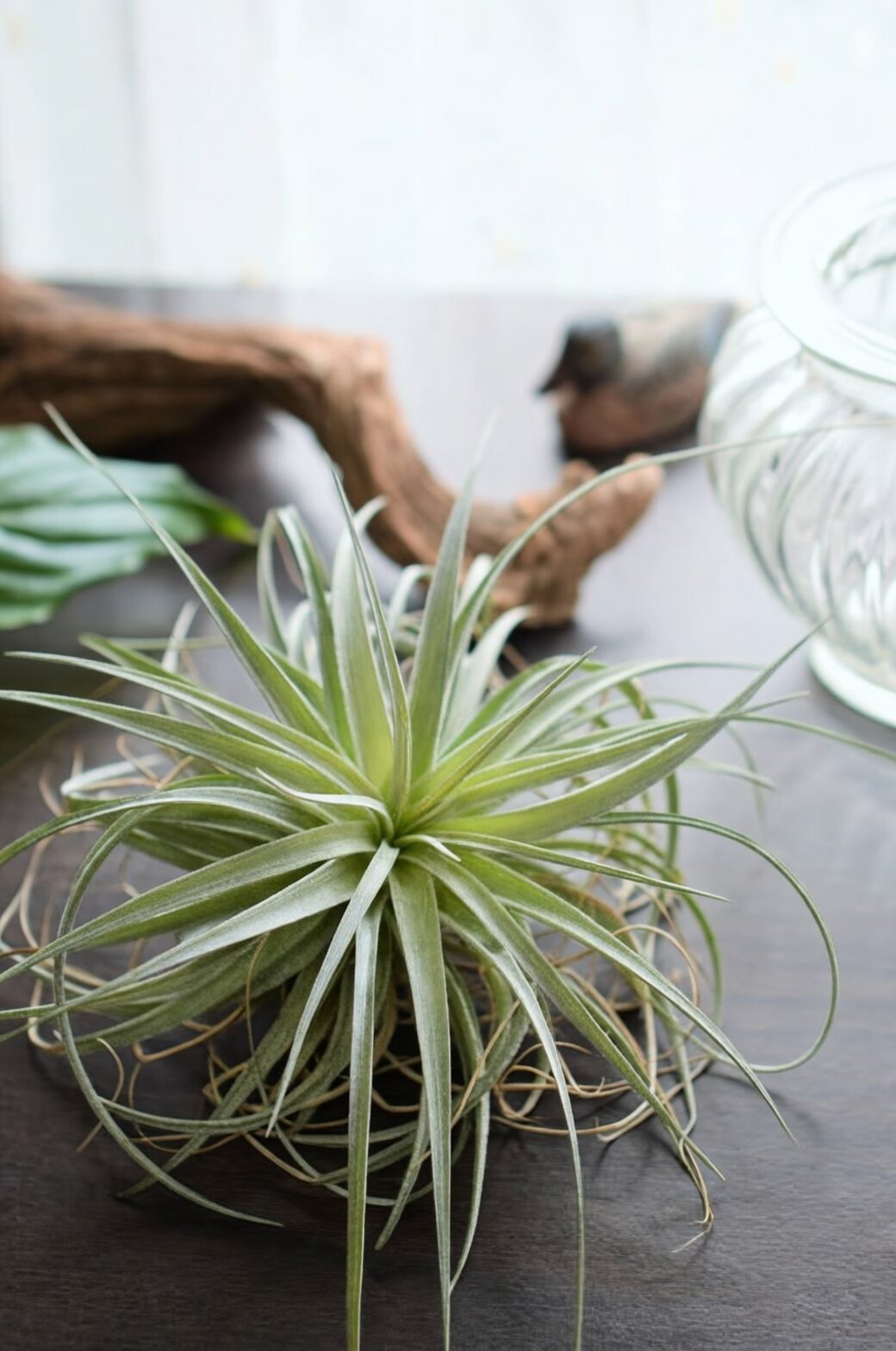
Air plants are the sculptural minimalists of the plant world—no potting mix, no mess, just elegant rosettes that sip water and nutrients through their leaves. Treat Tillandsia spp. like tiny, living wind-catchers: give them bright, gentle light, regular hydration, and—most importantly—steady airflow so they dry quickly. Master the soak–shake–dry ritual and you’ll have thriving clumps that blush, bloom, and pup for years.
Meet Tillandsia (Air Plants) at a glance
- Botanical: Tillandsia spp. (Bromeliaceae), native across the Americas
- Habit: Mostly epiphytic rosettes that anchor to bark, branches, rocks
- Look: Leaves range from green to silvery-gray, straight to curly; many species blush or produce vivid bracts and tubular flowers
- Pro tip: Grayer/silver-leaved species with dense trichomes tolerate brighter light and drier air; greener types want brighter shade and steadier moisture
- Display ideas: Hung, mounted on cork/driftwood, set in shells, or placed in open glass—always with room to breathe
The care blueprint
Place them where light is bright and gentle—and the air moves
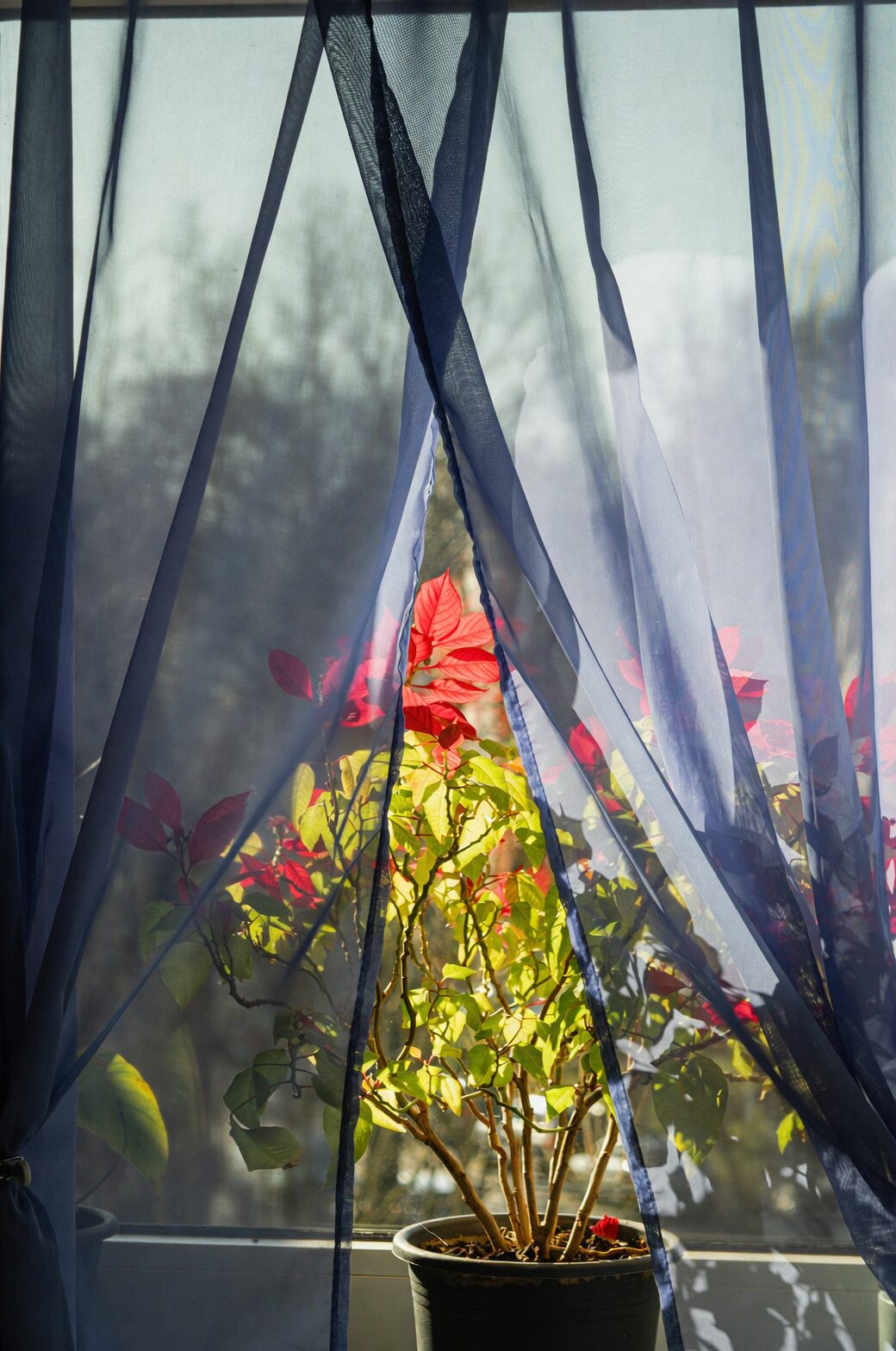
- Best windows: Near an east window is ideal. For south or west windows, set back or diffuse with a sheer curtain. Avoid harsh midday sun behind glass that can scorch leaves.
- Airflow is non-negotiable: Stagnant, humid corners = rot risk. Choose open shelves, hanging cradles, or wall mounts where air naturally moves. A small fan on low is a plus.
- Keep away from heater/AC vents: Blasts of hot or cold, dusty air dehydrate and stress the plant.
- Terrariums: If you love glass, keep it open and only return the plant after it’s fully dry. Closed vessels are short-term staging at best, not long-term homes.
Watering rhythm by season (with the 4-hour dry rule)
Air plants prefer a thorough drink followed by a fast dry. Think “brief rainforest, then breeze.”
- Spring–summer (active growth)
- Soak once weekly for 30–60 minutes using rain, distilled, or low-mineral water.
- Mist lightly 2–3 times per week between soaks in hot, dry rooms; daily during extreme dry spells.
- Always dry within about 4 hours. Increase airflow and light (not direct midday sun) after watering to speed the dry.
- Autumn (light begins to drop)
- Gradually lengthen the interval between soaks; many homes do well at every 7–10 days.
- Reduce misting as humidity rebounds and temperatures cool, but don’t let plants stay desiccated for long.
- Winter (low light, higher rot risk)
- Water less often and keep plants drier overall—soaks every 10–14 days are common, adjusting to indoor heating dryness.
- Water early in the day, then ensure a quick, complete dry. Prioritize warmth (generally above 10°C/50°F) and ventilation.
- Keep flowers as dry as possible during any rinse or soak to extend their life.
Signs it needs water: Leaves curl or roll, tips crisp, color looks dull, rosette appears slightly “shrunken.” After a good soak, leaves should feel firmer.
The soak–shake–dry ritual (your plant’s spa day)
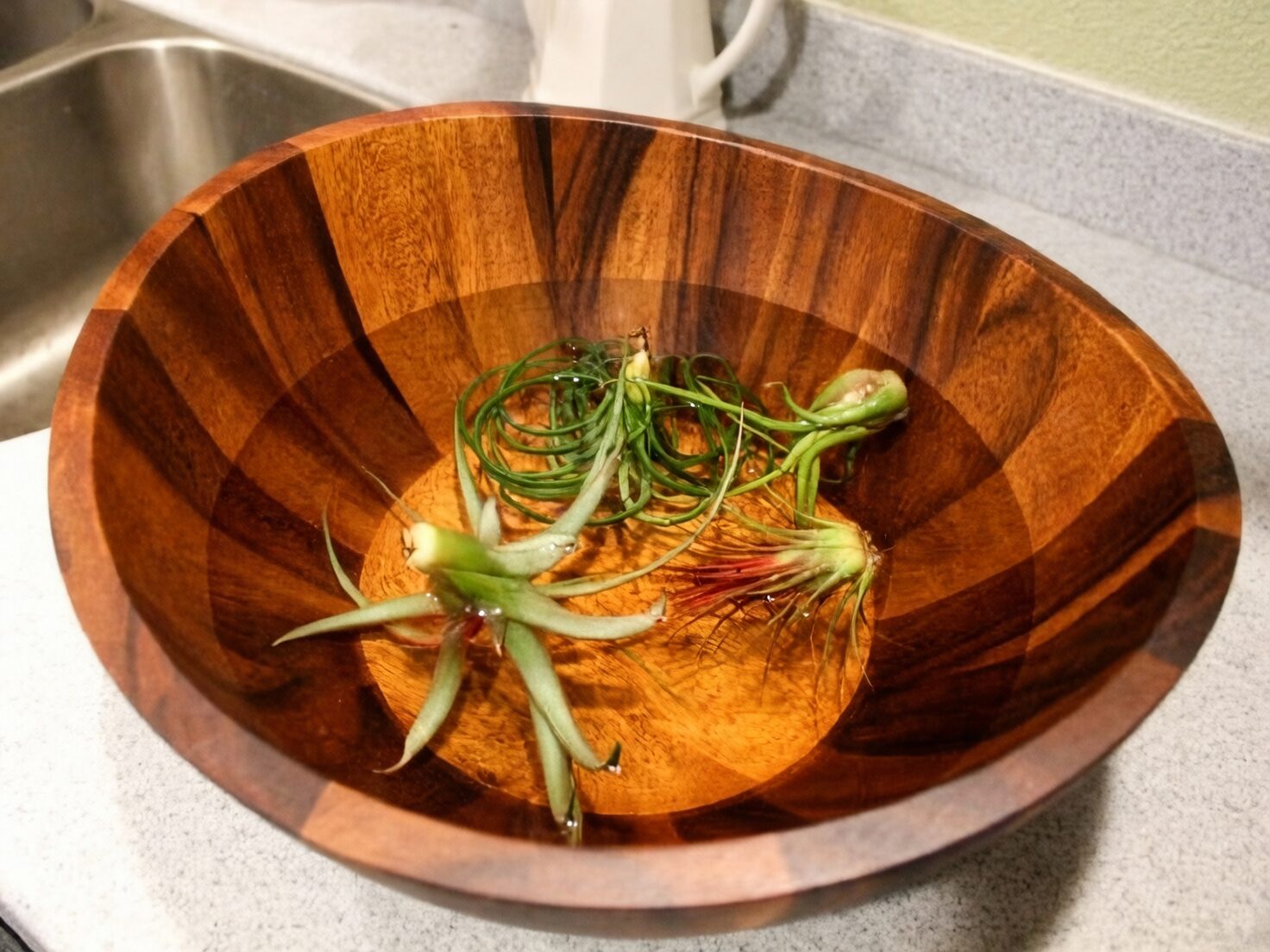
- Submerge the whole plant (skip the flowers if in bloom) for 30–60 minutes.
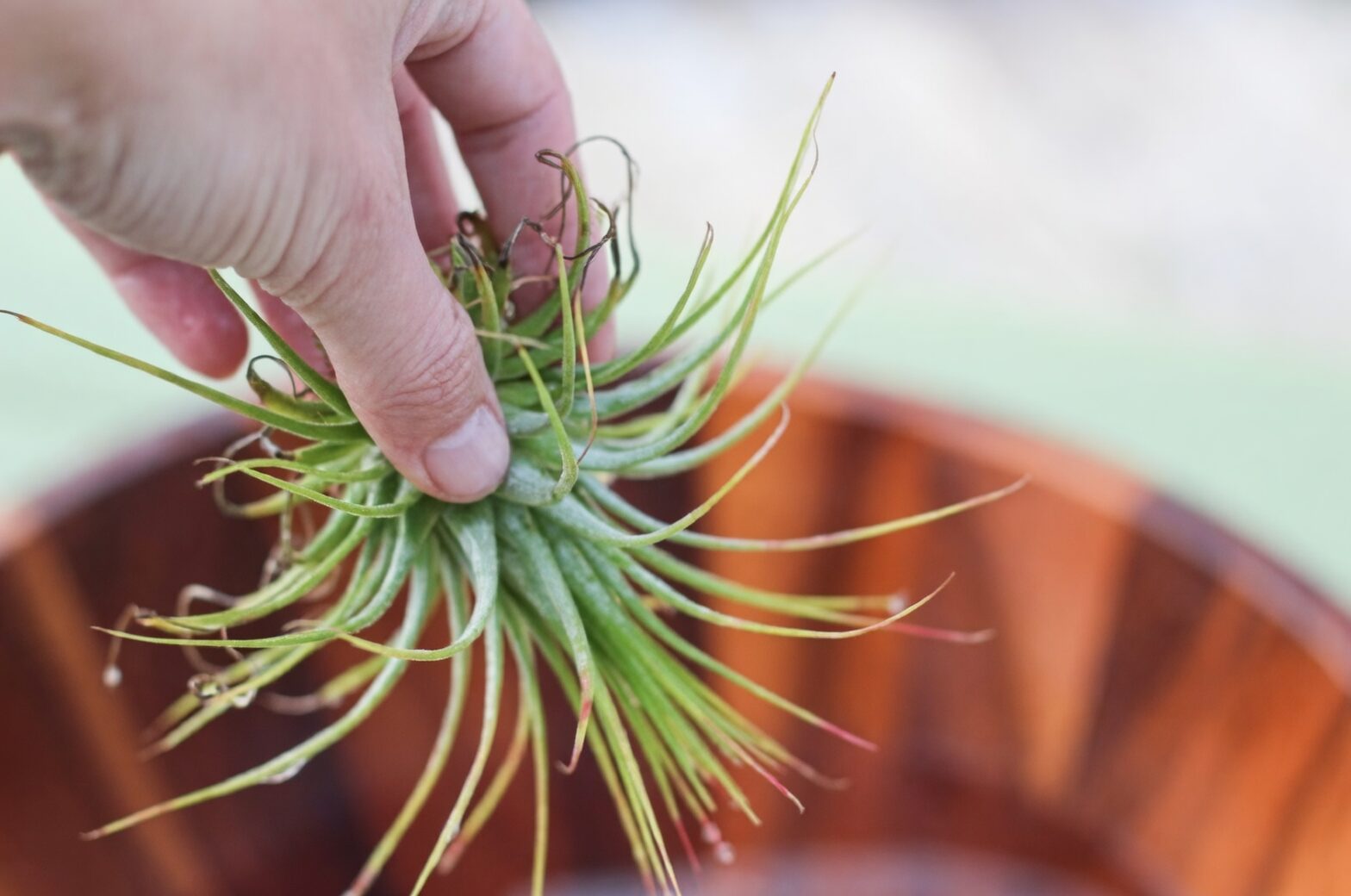
- Lift out and gently shake to expel water from the crown and leaf bases.
- Set the plant upside down or on its side to drain.
- Place it in bright, gentle light with good airflow and let it dry completely—aim for within about 4 hours.
- Only return it to a display vessel (especially glass or a snug holder) once it’s fully dry.
Water quality notes:
- Best: Rainwater, distilled, or low-mineral water. If your tap is hard, rotate with distilled/rainwater and occasionally rinse with plain water to prevent mineral buildup.
Temperature and humidity sweet spot
- Temperature: 15–25°C (59–77°F) is ideal. Keep commonly grown types above about 10°C (50°F) in winter. Not frost-hardy.
- Humidity: Moderate to high (around 50–70%+), paired with strong airflow. Still, wet air invites rot.
Feeding (light and occasional)
- Use a bromeliad/air-plant or orchid fertilizer at weak dilution (about 1/4 strength).
- Foliar feed by misting or soaking with diluted fertilizer about monthly during active growth; some growers go every 2 weeks at very low strength in summer.
- Rinse with plain water occasionally to prevent salt buildup. Reduce or pause feeding in winter.
Mounting and display that make care easy
- Best mounts: Cork bark, driftwood, cholla wood, wire cradles, shells, or open ceramic stands.
- Fasten with soft wire, fishing line, or removable adhesive dots—avoid permanently gluing so you can soak and fully dry the plant.
- If you tuck one into a “pot” purely for looks, keep it removable and ventilated. Skip traditional potting soil; if you add a base material, make it extremely airy and never let moisture sit around the crown.
Common rookie mistakes to avoid
- Letting plants stay wet in cool, dim, or still air: The fast-dry window (about 4 hours) is your rot insurance.
- Cooking them in strong midday sun, especially behind glass: Leaves can scorch, then desiccate.
- Thinking they live on air alone: They still need real watering and periodic nutrients.
- Parking in closed terrariums: Beautiful at first, but poor airflow is a slow death sentence.
- Skipping the “shake”: Water trapped in the crown or bracts is a rot trigger—always shake and drain upside down or on the side.
- Over-fertilizing: Less is more. Heavy salts burn trichomes and leaf tips.
- Using only hard, mineral-heavy water: Leads to deposits and dull, stressed leaves. Rotate with low-mineral water.
- Mounting with permanent glue: You’ll struggle to soak and dry properly.
- Ignoring species differences: Grayer, heavily trichomed plants tolerate more sun and drier air; greener types want brighter shade and more frequent moisture.
Troubleshooting fast
- Thirsty plant
- Symptoms: Rolled/curling leaves, crispy tips, dull color, flexible rosette
- Fix: Resume weekly soaks (30–60 minutes) with quick-dry, add light misting in hot/dry air
- Rot alert
- Symptoms: Blackened base or crown, mushy leaves, sour smell
- Fix: Trim away soft tissue, improve airflow, reduce watering frequency (especially in cool seasons), and stick to the 4-hour dry rule
- Sunscald
- Symptoms: Bleached/sunburned patches, crispy edges
- Fix: Move to bright, indirect light; offer gentle morning sun only if the plant is a silver/gray type
- Pests
- Culprits: Mealybugs and scale; occasional spider mites in very dry air
- Fix: Treat with insecticidal soap or dab diluted isopropyl alcohol on pests, keeping the crown from staying wet; improve airflow and rinse routinely
Blooming, pups, and grooming
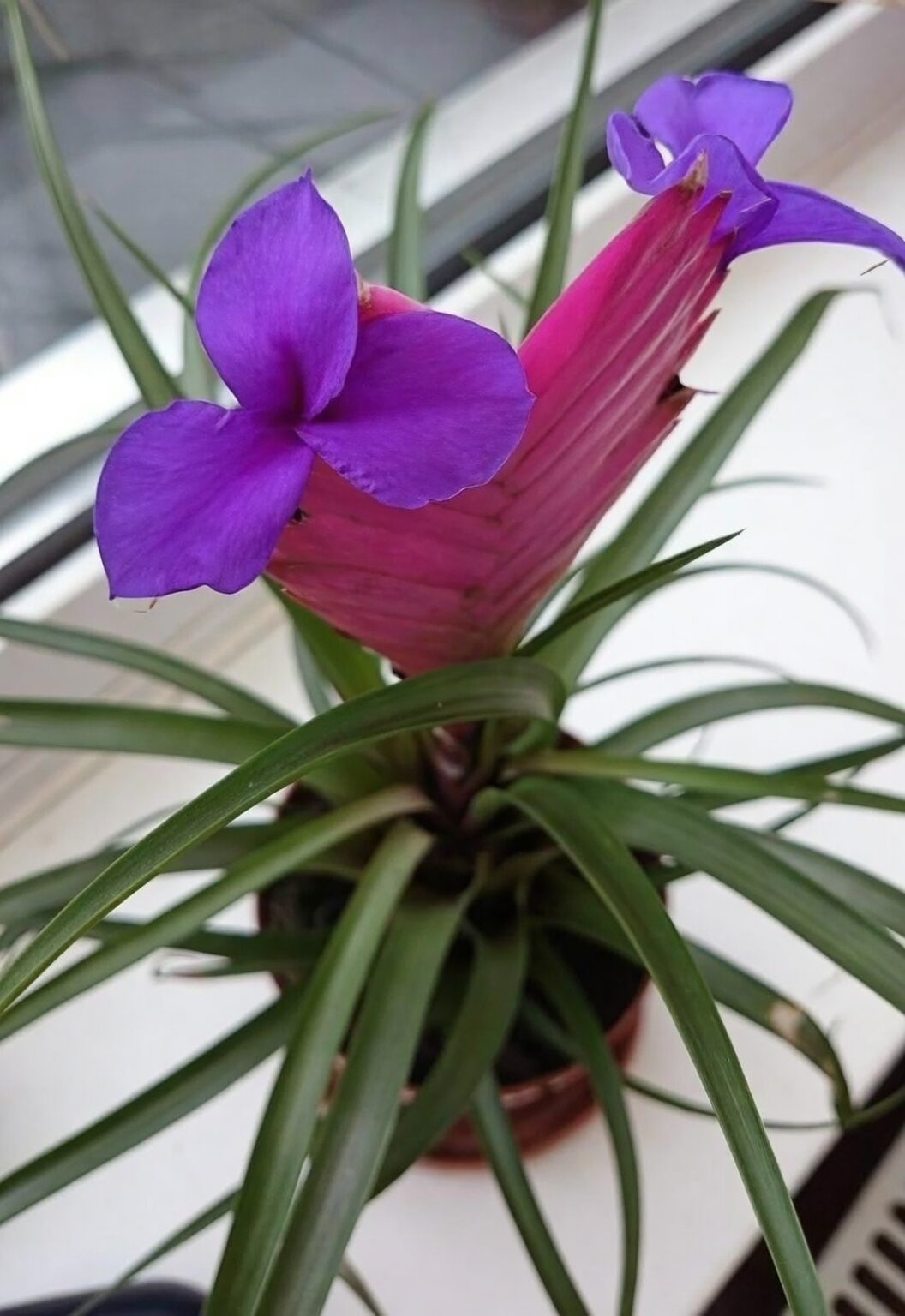
- Bloom cycle: Many Tillandsia bloom once per rosette, often with vivid bracts and tubular flowers. Afterward, the “mother” slowly declines while producing offsets (pups).
- Pups: Leave them attached for a fuller clump, or separate when each is about 1/3–1/2 the size of the mother, ideally with some root/attachment.
- Grooming: Snip spent flower spikes/bracts once they fade, and remove fully dry/yellowed leaves to keep airflow clean. Keep flowers as dry as possible during watering to prolong their show.
Seasonal checklist
- Spring–summer
- Bright, filtered light; strong airflow
- Weekly soak (30–60 minutes); mist as needed in heat
- Light, dilute feeding monthly (or very low-strength every 2 weeks)
- Autumn
- Begin tapering watering and feeding as light falls
- Maintain airflow as indoor humidity rises
- Winter
- Keep warm (generally >10°C/50°F)
- Water less often; prioritize rapid drying and ventilation
- Pause or greatly reduce fertilizer
Safety, symbolism, and spirit
- Pet- and people-friendly: Generally considered non-toxic, though nibbling can upset stomachs (and ruin your display).
- Symbolism: Air plants are often linked with freedom, resilience, creativity, and “living lightly.” These meanings are modern cultural interpretations rather than historic “flower language,” but they fit: a plant that floats through life without soil, adapting to trees, rocks, or even a shell on your desk, makes a tidy emblem of resourcefulness and elegant simplicity.
Quick wins to remember
- Bright, indirect light + steady airflow = happy Tillandsia
- Soak weekly for 30–60 minutes, then shake and dry within about 4 hours
- Mist between soaks in hot, dry rooms
- Keep flowers as dry as you can
- Display openly; avoid closed containers and permanent glue
Nail the rhythm—soak, shake, and swiftly dry—and your air plants will reward you with sculptural growth, graceful blooms, and a steady parade of pups.