
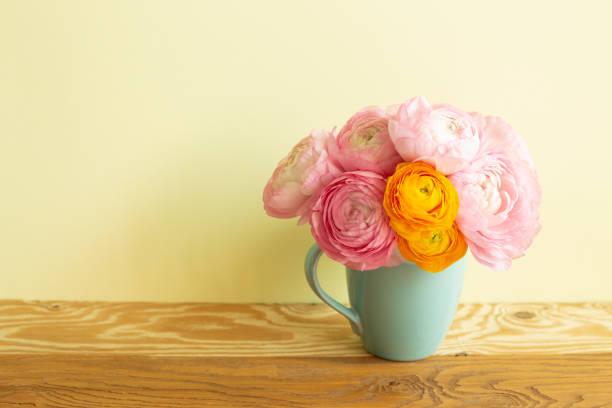
If the rose is a ball gown, Persian buttercup is the tulle—endlessly layered, luminous, and always a little bit magical. Ranunculus asiaticus is spring’s showstopper, unfurling from tight rosettes into plush, peony-like cups that seem to glow. The secret to keeping that magic alive in a vase? It’s all in the harvest stage, hydration, and a few pro habits that let the blooms open slowly and last beautifully.
Here’s your insider guide—whether you’re cutting from your own cool-season patch or pampering a florist’s bundle at home.
Meet the bloom that loves to unfurl
- Scientific name: Ranunculus asiaticus (aka Persian buttercup; family Ranunculaceae)
- Heritage: Mediterranean coastal regions, northeastern Africa, southwestern Asia
- Signature look: Tightly layered, satin-sheened petals in nearly every color, from clean whites and pastels to punchy reds, oranges, and antique tones
- Cool-weather diva: Thrives in bright light and cool air; as heat arrives, foliage naturally yellows and the plant heads into summer dormancy—perfectly normal
- Why florists adore it: Buds open in stages, giving arrangements day-by-day drama
Harvest timing: the make-or-break moment
Cut at the right stage and ranunculus will keep opening in the vase, building that lush, ruffled profile.
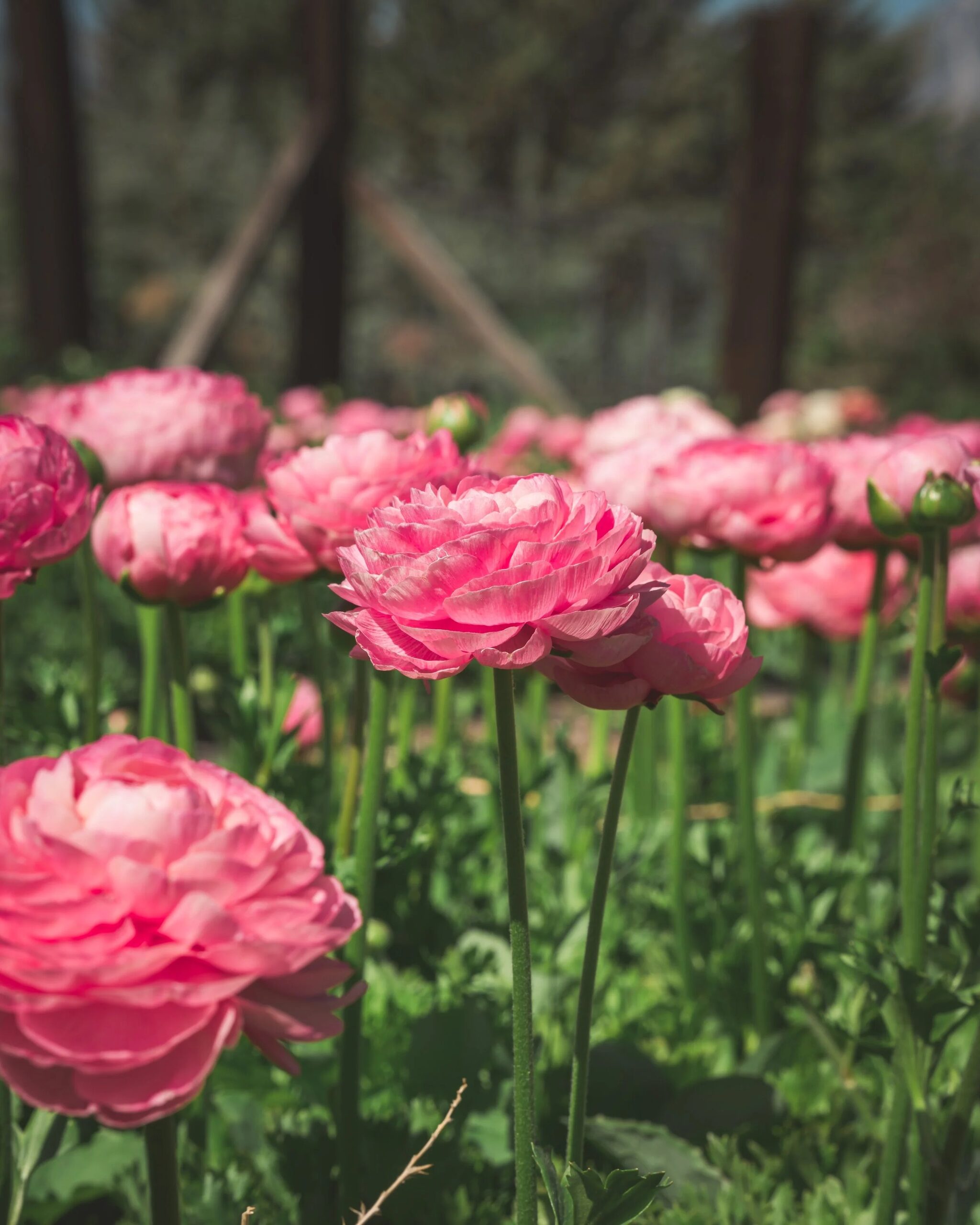
- The sweet spot: Marshmallow stage
- The bud shows good color, feels softly springy—like a marshmallow—and the outer petals are loosening but not yet wide open.
- Stems should be fully elongated and sturdy.
- Too tight: Buds that are still hard, green, or barely showing color may stall and never fully open.
- Too late: Fully open, wide saucers look dreamy for a day or two, but vase life drops dramatically.
- Time of day: Harvest in the cool of morning when stems are turgid and petals are dewy-fresh.
Pro tip by purpose:
- For bouquets you’ll enjoy all week: Cut at classic marshmallow stage.
- For an event in 2–3 days: Cut just past marshmallow—outer petals loosening, centers still tucked.
- For same-day, showy arrangements: Go slightly more open, accepting a shorter vase life.
Cutting right: cleanliness and stem support
- Use sharp, sanitized snips or a florist’s knife; rinse buckets and tools with a mild bleach solution (then rinse well).
- Cut stems long—ranunculus arranges best with length to spare.
- Immediately place stems into cool, clean water. Because stems are hollow, quick hydration prevents air bubbles that can cause droop.
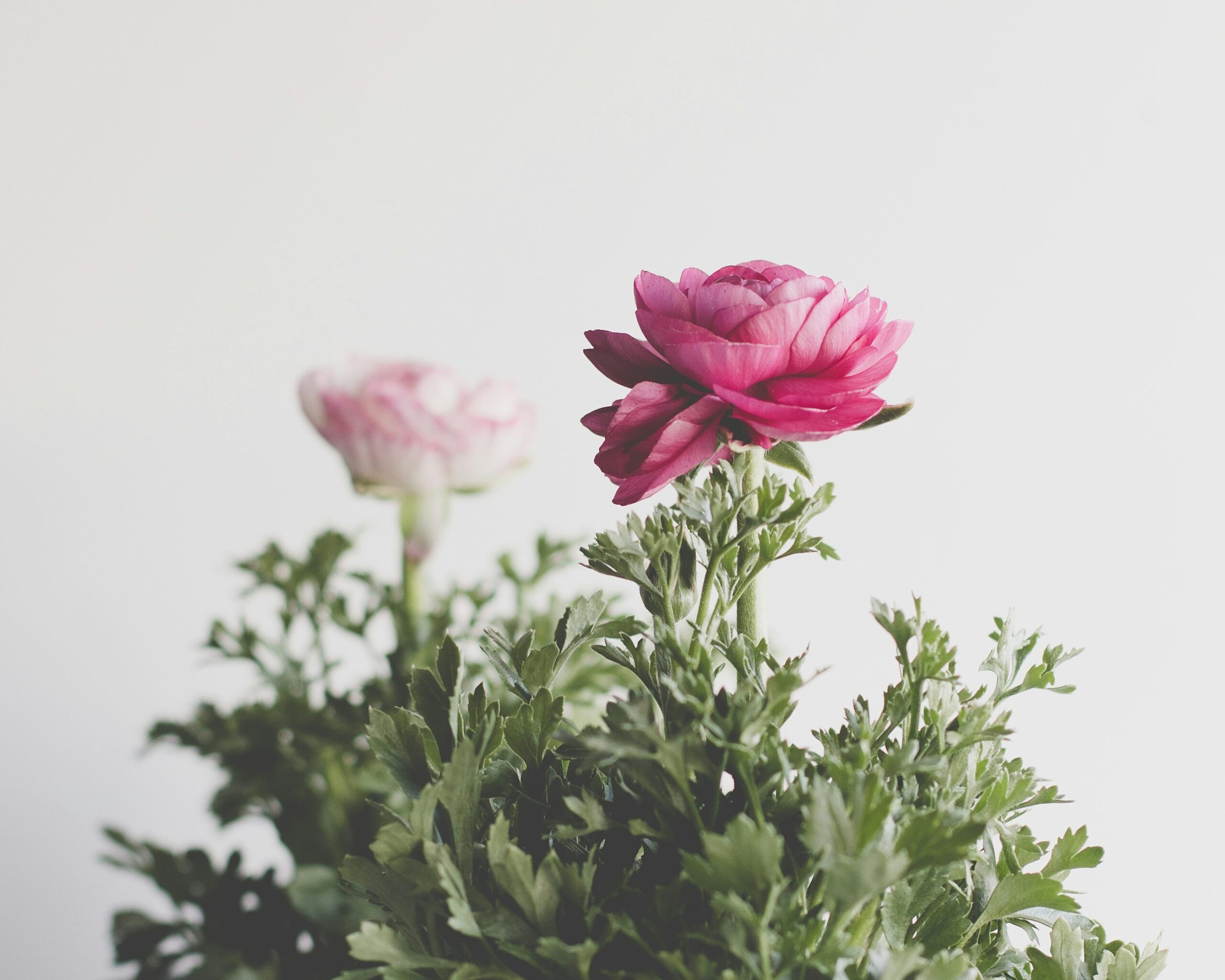
Hydrate and condition like a pro
Ranunculus stems are hollow and benefit from deliberate, gentle conditioning.
1) First drink (2–6 hours)
- Recut stems at an angle—ideally under water—to avoid drawing air into the stem.
- Strip all foliage that would sit below the waterline.
- Place in clean, cool water with commercial flower food (preservative = sugar for energy + acidifier + biocide).
- Keep buckets in a cool, dim room with good airflow. If the flowers arrived sleeved, leave sleeves on or loosely paper-wrap heads to prevent bends while they hydrate.
2) Chill matters
- Cool temperatures extend life. After the first drink, store or rest the bunches cool (refrigerator-like, above freezing), then bring to room temp for arranging. Avoid freezing.
3) What not to do
- No stem-searing. That’s useful for milky-sapped or fragile latex stems (think poppies), not necessary for ranunculus and can reduce longevity.
- Don’t cram buckets—crowding traps moisture and invites Botrytis (gray mold).
Arranging while they unfurl
Ranunculus are dynamic—what you design on day one will look even better on day three.
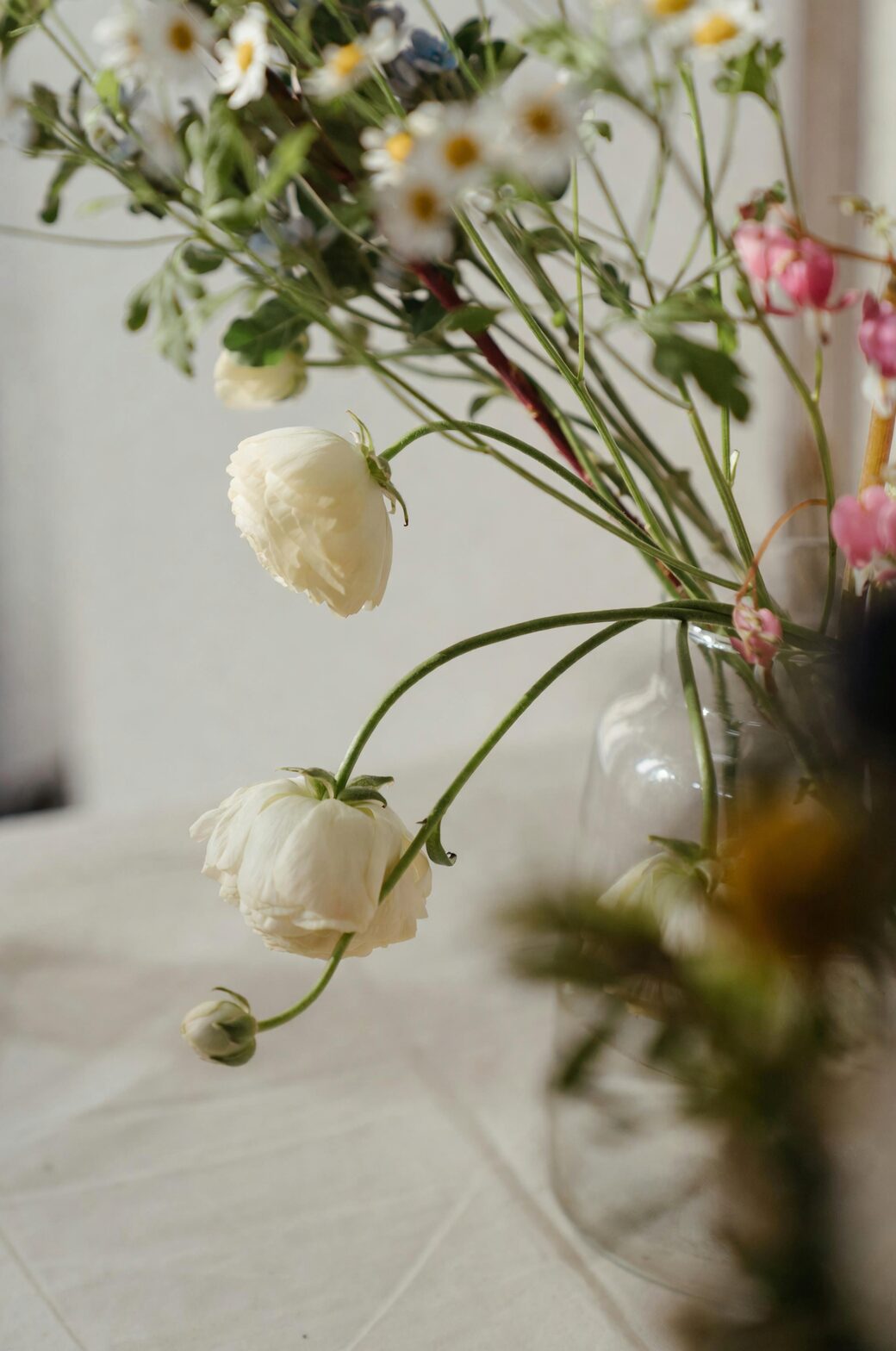
- Layering act: Start with marshmallow-stage flowers deep in the design; place slightly more open blooms near the focal points so the arrangement looks finished now and luxurious later.
- Water depth: A few inches of clean water are enough; too many leaves in the water will foul it fast.
- Gentle handling: The outer “guard” petals may look slightly rumpled after transport—let the flower drink and relax before deciding whether to remove any truly damaged ones.
Everyday vase-life tactics (7–10 days, often more)
- Fresh water, often: Change water every 1–2 days; rinse the vase; add preservative each time.
- Recut stems slightly every other day to boost uptake—especially helpful with hollow stems.
- Keep it cool and bright, not hot: Display in bright, indirect light. Avoid heat sources, direct sun, and drafts.
- Fruit-free zone: Keep away from ripening fruit and exhaust fumes (ethylene speeds aging).
- Night reset: If your space runs warm by day, give arrangements a cool overnight rest to slow metabolism and extend bloom.
Troubleshooting common hiccups
- Bent or drooping necks: Usually air in the stem or dehydration. Recut under water, place in deep, cool water, and rest in a cool, dim spot for several hours. Light head-wrapping with tissue can help support while they rehydrate.
- Cloudy water or slime: Bacteria bloom. Clean the vase, trim stems, refresh with preservative, and improve airflow around the arrangement.
- Gray flecks on petals (Botrytis): Remove affected blooms, increase air movement, avoid misting petals, and keep flowers out of damp, stagnant air.
- Buds stalling tight: Cut was too early or room too cold/dark for opening. Move to bright, cool (not cold) light and ensure fresh preservative is in the water.
Buying better stems (florist or market)
- Choose firm, straight stems with buds showing color and just starting to loosen (not rock-hard green; not wide open).
- Look for clean, bright foliage and petal edges free of browning or fuzzy mold.
- Heavier, well-hydrated bunches last longer than feather-light, wilt-prone ones.
Safety note when handling
Like many buttercups, Persian buttercup is mildly toxic if ingested, and the sap may irritate sensitive skin. Keep away from pets and small children and consider gloves if you’re prone to irritation.
A quick grower’s aside (for home cutters)
Ranunculus is a cool-season, tuber-grown plant that thrives in bright light and crisp air. Keep soil rich but fast-draining and evenly moist during growth and bloom; as heat arrives, foliage will yellow and the plant slips into normal summer dormancy. Deadhead spent flowers to keep plants tidy and channel energy into the tubers.
Event timeline cheat sheet
- 5–7 days out: Harvest at classic marshmallow stage; hydrate and store cool.
- 3–4 days out: Arrange with a mix of marshmallow and slightly open blooms.
- 1–2 days out: Final tweaks; rotate any later bloomers forward for perfect timing on the day.
Flower language: why ranunculus whispers “you dazzle me”
Across modern floriography, ranunculus carries the message of radiant charm and joyful celebration—perfect for spring declarations and weddings. Unlike ancient herbals that tied meanings to medicinal use, ranunculus’ contemporary symbolism grew from its visual effect: those luminous, layered petals that seem to gather and reflect light. Color deepens the nuance—yellow for happiness, pink for gentleness, red for passion, orange for friendly exuberance, purple for uniqueness—but the core idea remains the same: you brighten the room.
The final flourish
Think of ranunculus as a slow-motion firework: harvested at marshmallow stage, it opens day by day, petal by gleaming petal. Keep it clean, cool, and well-fed, and your bouquet will reward you with a full week—often more—of mesmerizing unfurling. That’s the real luxury of Persian buttercups: they don’t just look beautiful; they perform, turning every arrangement into a living time-lapse of spring.