
It begins on breezy, salt-tinged shores. Imagine winter-bright light skimming over the Mediterranean, cool air in the morning, sandy loam that drinks winter rain and sheds the excess. Out of this coast-wise rhythm evolved Ranunculus asiaticus—Persian buttercup—a tuberous sprinter that wakes with the cool, dazzles in spring, and slips into a graceful summer sleep. Today it’s the couture bloom of florists and breeders alike, a premium cut flower that can stop a passerby in their tracks. How did a coastal wildling become a global darling? Let’s trace the journey.
From coastal origins to global passports
- Native range: Mediterranean coastal regions, northeastern Africa, and southwestern Asia.
- Habit: A tuberous perennial with distinctive claw-like storage organs; in gardens it’s often grown as a cool-season annual.
- Survival strategy: Grow fast and brilliantly in the cool season, then yellow and go dormant as heat arrives—textbook Mediterranean timing.
A tuber built for tides
There’s poetry in those “claws.” Like a handful of tiny octopus arms, each tuber stores energy during rest, then surges into leaf and bloom when cool weather returns. The form is no accident: in bright, breezy, well-drained coastal soils, excess moisture is a liability. Ranunculus asiaticus thrives on:
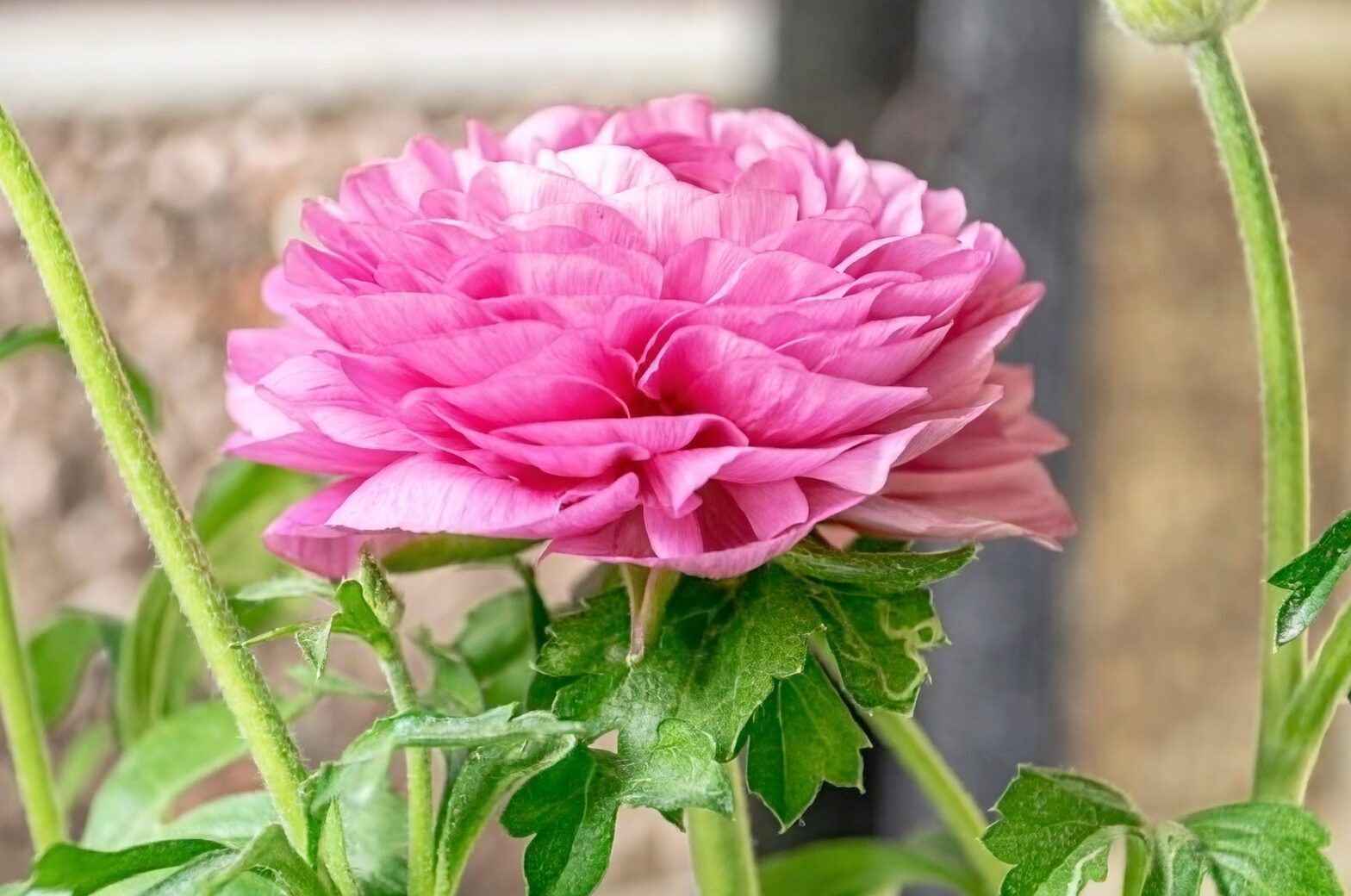
- Bright light and excellent drainage
- Even moisture during growth, never waterlogging
- Cool air, with days around 15–20°C (59–68°F) and nights 7–10°C (45–50°F)
How a coastal wildling became a couture bloom
Step off the shore and onto the trade routes. As gardeners and plant traders moved bulbs and tubers around the Mediterranean, the most lavish forms—tighter petals, richer hues—rose to prominence. Modern breeding then turbocharged the transformation.
The modern breeding constellation
- Breeding powerhouses: France, the Netherlands, Israel, and Japan helped sculpt the rose- and peony-like doubles and striking bicolors we prize today.
- Production hubs: Alongside Northern European greenhouses and Israeli fields, Italy’s San Remo coast has become renowned for cut ranunculus—proof that a coastal climate still suits this species perfectly.
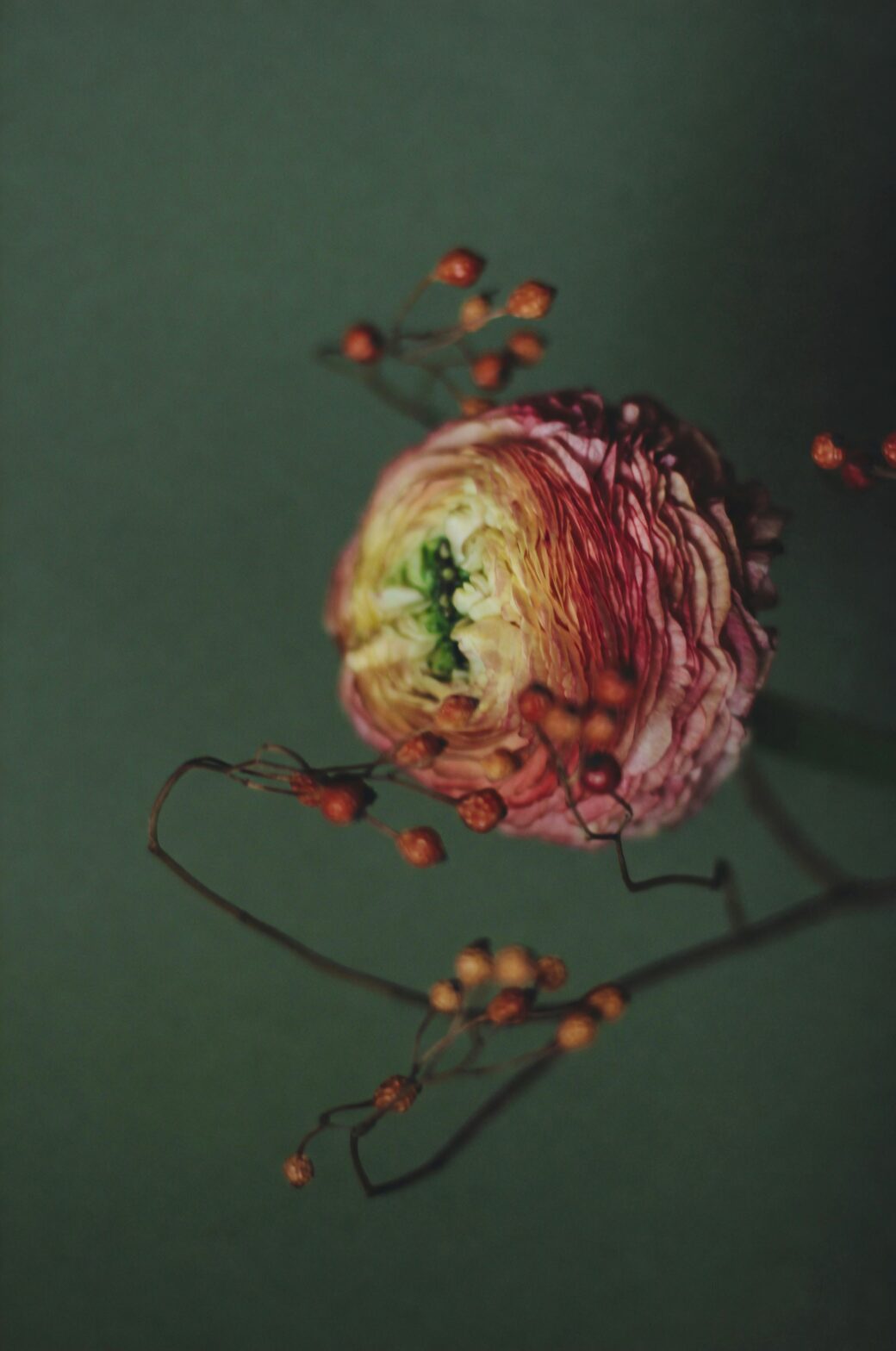
- The result: An astonishing spectrum of form and color—from satin-white cups to sunset oranges, raspberry pinks, papaya tones, sultry reds, antique browns, and painterly bicolors.
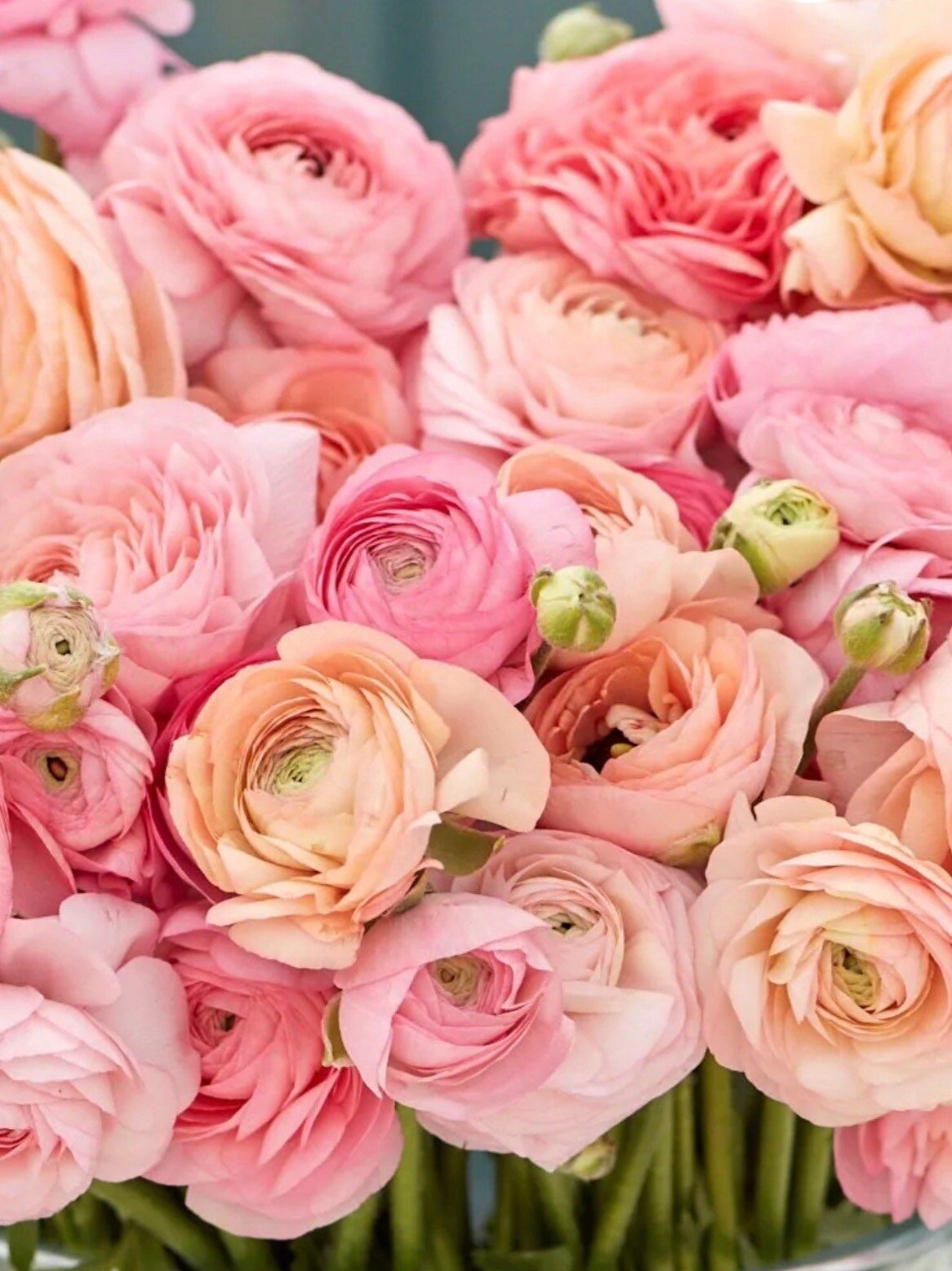
Cultivars florists know by heart
You’ll hear names like Bloomingdale, Tecolote, Picotee, and compact “pot” types—each line tuned for stem length, petal count, color clarity, and season. Whether tight, ruffled spheres or broader, rose-like cups, blooms open in stages, revealing ever more petals day by day.
Anatomy of allure
- Size: Typically 20–45 cm (8–18 in) tall; compact forms under 30 cm (12 in) are perfect for pots.
- Foliage: A basal rosette of bright green, finely divided leaves.
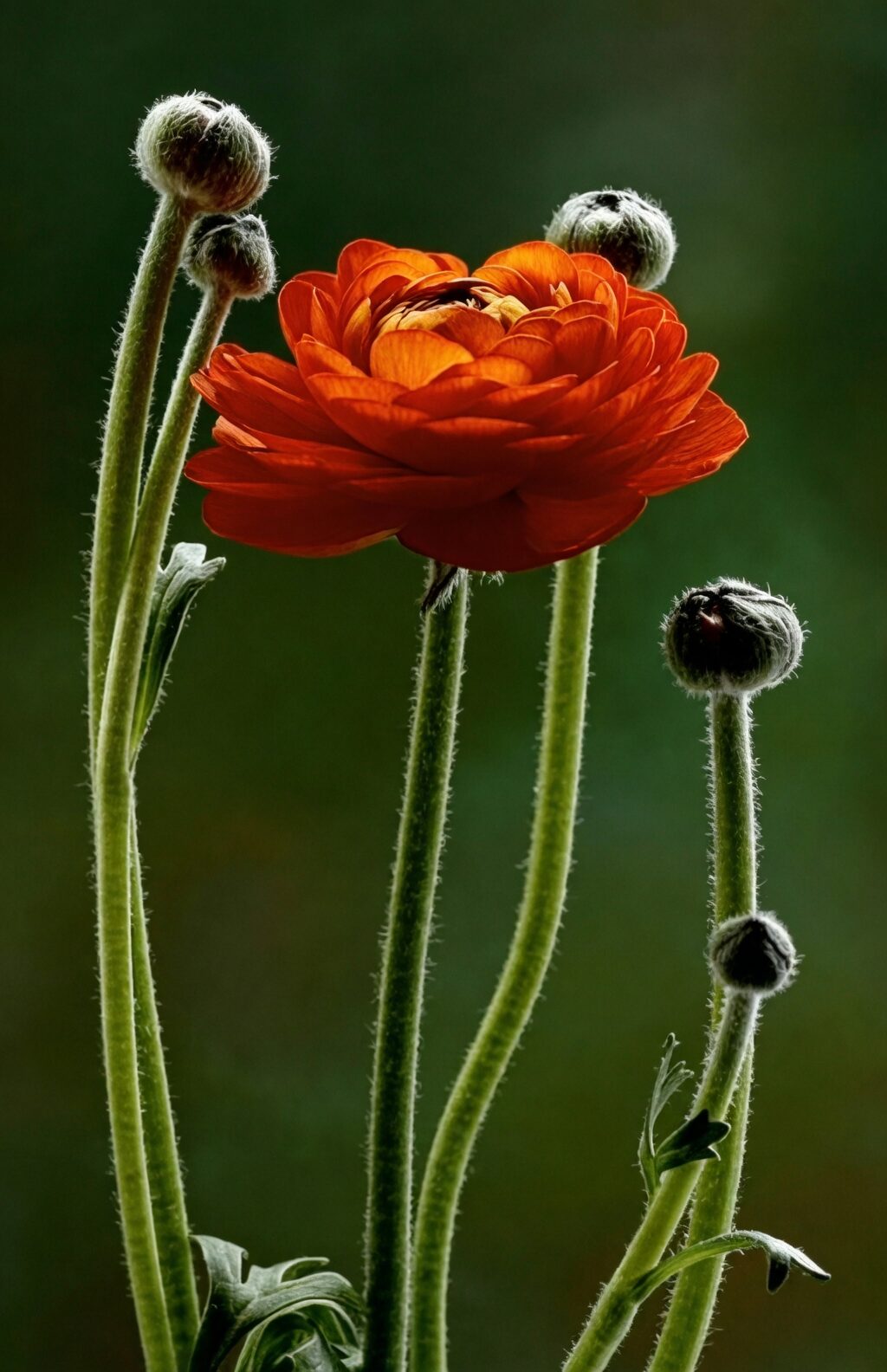
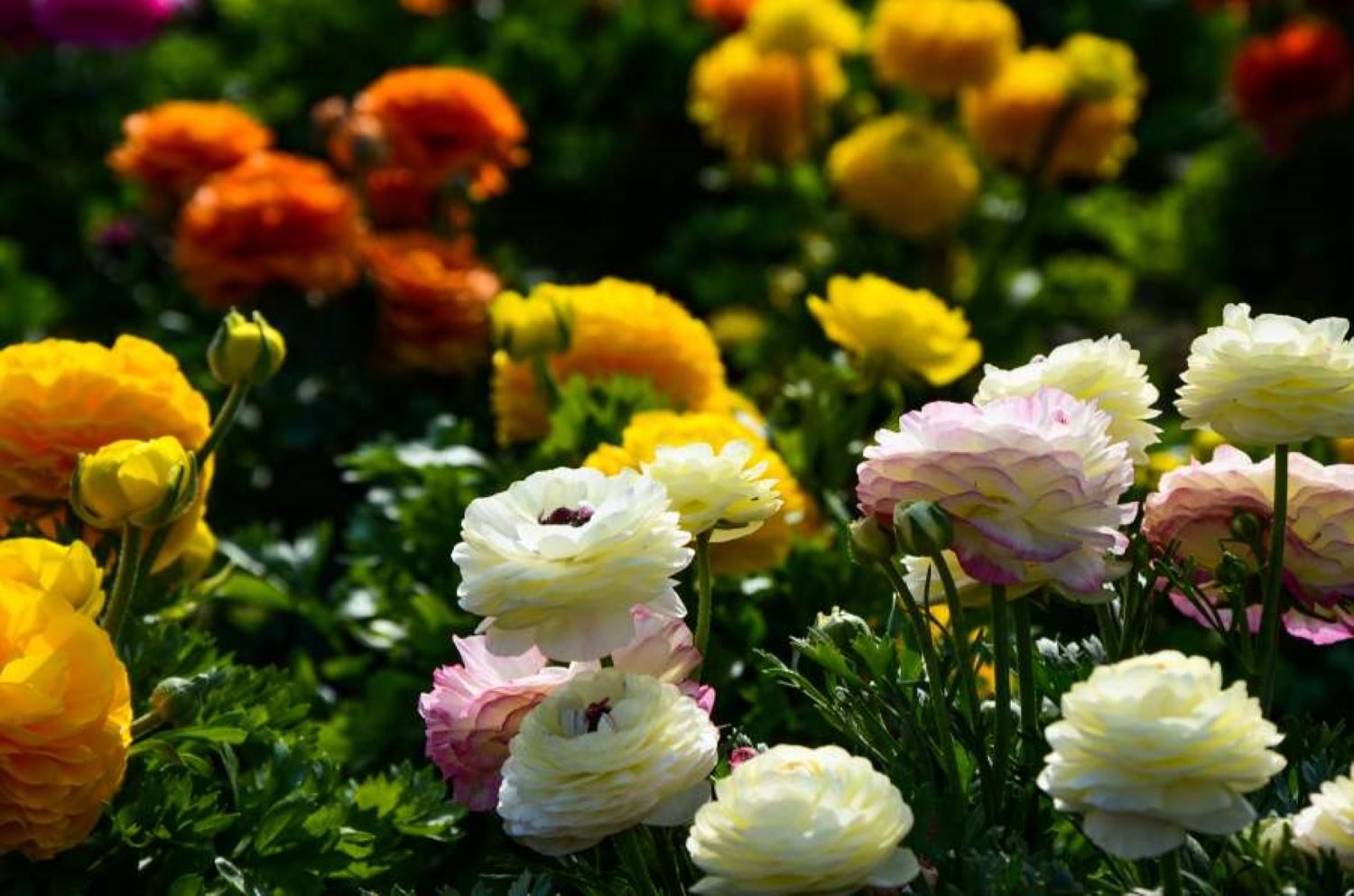
- Flowers: Fully double, densely layered, often with a satin sheen; in white, yellow, pink, red, orange, purple, and many bicolors (including antique, brownish hues).
- Season: Late spring to early summer (earlier in mild-winter climates).
Why florists can’t quit Persian buttercup
- Premium presence: Lush, rose-like doubles at a fraction of rose weight—easy to design with, yet sumptuous on the eye.
- Performance: Strong stems, steady opening, and impressive vase life; in clean water, kept cool, they can hold up to about two weeks.
- Versatility: From romantic, pastel weddings to vivid, modern palettes—and they look phenomenal both solo and in mixed arrangements.
Pro tip for the vase: Recut stems on a diagonal, place immediately in cool, clean water, and keep away from heat sources and direct sun. As blooms unfurl day by day, they deliver a miniature show.
Grow it like a coastal native
Give it bright light, cool air, and a substrate that never sulks in water. Indoors, an east- or south-facing window is ideal; outdoors, aim for full sun to bright light, with a little midday protection in warm climates to stretch the bloom season.
Site and soil
- Light: Bright light to full sun; a touch of midday shade in hot zones keeps flowers going.
- Soil: Rich yet fast-draining—think loam blended with leaf mold/compost plus coarse sand or perlite.
- Hardiness: Best as a cool-season plant outdoors in USDA Zones ~8–10; elsewhere, treat as seasonal or lift tubers after dormancy.
- Temperature: Peak performance around 15–20°C (59–68°F) days, 7–10°C (45–50°F) nights; brief dips to about -5°C (23°F) are tolerable when sheltered and well-drained.
Planting and containers
- Depth: Set tubers just 2–3 cm (0.8–1.2 in) deep—do not bury too deeply.
- Pots: A 12 cm (4.7 in) pot commonly fits about three tubers.
- Orientation: If you can tell, set the “claws” pointing downward.
- Drainage: Non-negotiable—containers must drain freely.
Water and feeding
- Watering: Keep evenly moist during active growth and flowering—never bone-dry, never sodden. As foliage yellows, taper water and allow a dry rest.
- Fertilizer: Light, regular feeding—once or twice before bloom and once after—using a balanced-to-bloom formula (e.g., NPK 15-15-30) or a well-diluted organic feed. A small amount of slow-release flowering fertilizer at planting helps.
A simple grower’s calendar
- Late winter–spring: Cool, bright conditions; keep evenly moist; ensure good airflow.
- Flowering: Maintain moisture, deadhead spent blooms, watch for aphids and gray mold.
- Late spring–summer: As leaves yellow, reduce then stop watering; allow the plant to enter dormancy.
- Autumn (Sep–Oct): Replant or divide tubers; sow seed in cool conditions.
- Winter: In cold regions, protect plants/tubers from severe freezes and winter wet; aim to stay above roughly -5°C (23°F).
Pests and pitfalls
- Gray mold (Botrytis): Thrives in cool, stagnant, damp air. Improve ventilation, avoid late-day overhead watering, remove affected tissues, and use appropriate fungicides if needed.
- Aphids: Congregate on buds and tender growth; rinse off or treat with insecticidal soap or targeted controls.
- Slugs/snails: Protect young leaves and flowers using barriers, traps, or baits; reduce hiding places.
From garden bed to breeding bench to bouquet bar
The journey from coastal origins to premium cut flower runs through the hands of breeders who prized:
- Dense petal counts and satin sheen for “wow” factor
- Strong, straight stems for arranging and shipping
- Consistent, expanded color ranges, including crisp bicolors
- Predictable cool-season performance for greenhouse and field
That fusion of wild resilience and human selection is why Persian buttercups headline spring auctions and bridal mood boards alike.
Symbolism, thoughtfully considered
Across modern floristry, ranunculus is linked with charm, radiant beauty, and joyful celebration—fitting for a flower that seems to glow from within. While “flower language” (花语) traditions vary and much of the codified symbolism bloomed in 18th–19th century Europe, the core association here is visual and visceral: a luminous, many-layered bloom that celebrates the return of light. In other words, its “meaning” is less superstition than shared human response—bright, abundant petals signaling delight and admiration.
Buying smart: plants, tubers, or seed
- Potted plants: Choose compact, sturdy specimens (ideally ≤30 cm/12 in) with thick stems, bright leaves, and buds just showing color.
- Tubers: Select firm, plump “claws”; quality often starts around 7 cm (2.8 in) in circumference. Many growers disinfect tubers before planting to deter rot.
- Seed: Fresh, heavier seed from reliable sources; double and bicolor strains are crowd-pleasers.
After the show: dormancy and reuse
- Let foliage yellow naturally as heat arrives; reduce watering, then stop once fully dry.
- Lift and store tubers in a cool, ventilated place over summer if your climate is hot or wet.
- Divide and replant in early autumn; in containers, refresh the potting mix each season and reset tubers shallowly (2–3 cm deep).
Quick reasons to grow Persian buttercup this season
- Cool-season color that rivals roses and peonies in form
- Container-friendly and spectacular in window boxes and borders
- A premium cut flower with evolving beauty in the vase
- A living link between sea-breezed origins and cutting-edge breeding
From tide-kissed beginnings to couture-level blooms, Ranunculus asiaticus carries its coastline wisdom wherever it goes: shine in the cool, sip—don’t gulp—your water, and leave them wanting more. Give it that, and it will repay you with spring’s most glamorous applause.