
Meet the Arrowhead Vine (Syngonium podophyllum): a shapeshifting beauty with a spicy side. Its crisp arrowhead leaves and fast, forgiving growth make it a home-plant darling—yet its sap can irritate skin and its tissues are toxic if chewed. This safety-first guide shows you how to enjoy its lush look without the worry: where to place it, how to prune it safely, and which pet-friendlier plants to style alongside.
Why this plant is toxic (and what that means at home)
Syngonium podophyllum, also sold as Arrowhead Plant, Goosefoot, or Nephthytis, contains insoluble calcium oxalate crystals in all parts of the plant. Think of them as microscopic needles:
- If chewed or ingested by people or pets, they can cause immediate mouth/throat irritation, drooling, difficulty swallowing, and gastrointestinal upset.
- Sap can irritate skin and eyes.
Safety takeaways:
- Keep out of reach of children and animals.
- Wear gloves when pruning or repotting; avoid touching your face.
- If sap contacts skin/eyes, rinse with plenty of water. If ingested or symptoms are concerning, contact a medical professional or your veterinarian promptly.
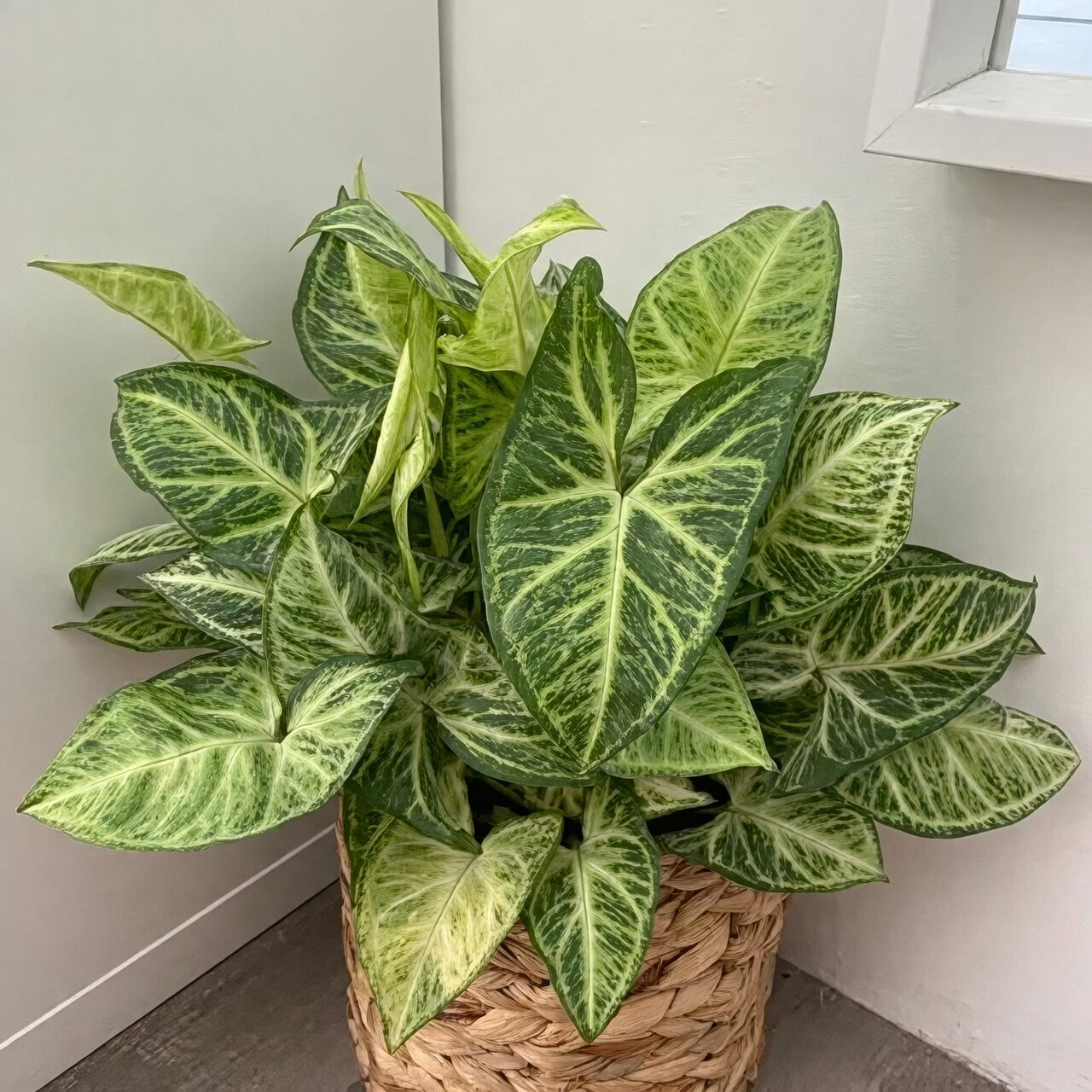
Style it smart: placements that look great and keep mouths away
Arrowhead Vine is wonderfully versatile—compact when young, trailing or climbing with age. Use that flexibility to your advantage.
High shelves with a soft cascade
- Choose sturdy, stable shelving and place the plant toward the back, not the edge.
- Let vines spill for a living curtain effect; rotate the pot every couple of weeks for even growth.
- Light: near an east window, by a bright north window, or set back from strong south/west sun with a sheer curtain.
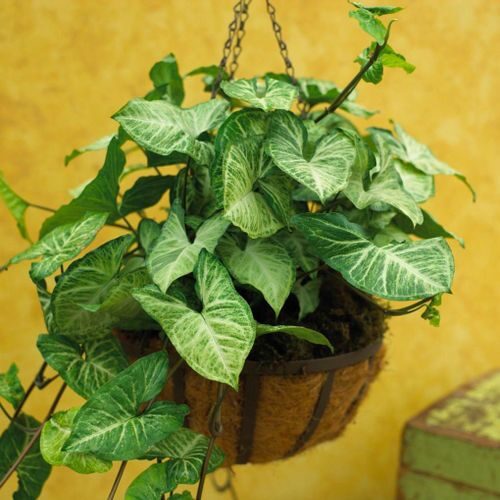
Hanging baskets for drama and distance
- Hang 6–7 inch (15–18 cm) baskets from a strong ceiling hook or wall bracket.
- Fit a deep saucer/liner to prevent drips; never let the pot sit in water.
- Keep foliage out of harsh midday sun to avoid scorch; bright indirect light is ideal.
Trained poles for a tidy, upright statement
- Give a moss pole or stake and tie vines gently as they lengthen; climbing often produces larger, more lobed leaves.
- This “vertical garden” look saves space and puts leaves out of reach on tabletops or sideboards.
- Choose a fuller specimen in a 6–8 inch (15–20 cm) pot if you want instant height.
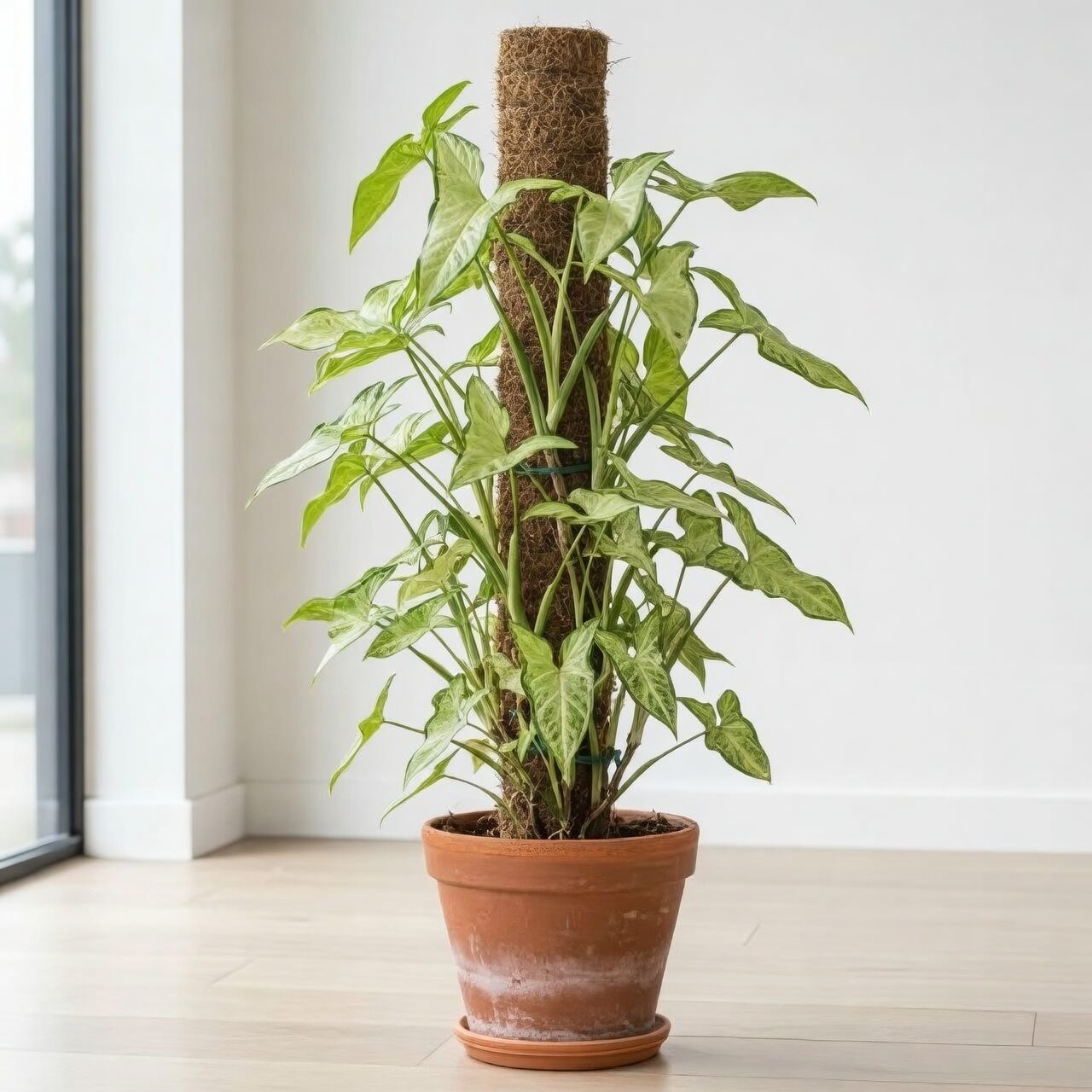
Tip: Variegated forms need brighter indirect light than solid green to maintain patterning. Avoid strong direct sun.
Safe-handling care cheatsheet
Think “humid jungle, filtered light, never soggy.”
- Light: Bright, indirect light; tolerates partial shade. Filter any intense afternoon sun.
- Temperature: Happy around 59–73°F (15–23°C), tolerates 59–84°F (15–29°C). Keep above about 54°F (12°C); below ~41°F (5°C) can trigger yellowing and leaf drop.
- Humidity: Moderate to high. Kitchens and bathrooms are great; otherwise, use a humidifier, pebble tray, or morning misting.
- Soil: A loose, airy aroid mix—peat or coco with perlite and/or bark; lightly acidic and well-draining.
- Watering:
- Spring–autumn: water when the top layer dries (often weekly in warm rooms). Evenly moist, never waterlogged.
- Winter: cut back (often every 2 weeks), allowing the top to dry slightly first.
- Yellowing plus leaf drop often signals low light, overwatering/root stress, or cold—adjust conditions and check roots if the pot stays wet.
- Feeding: From spring into summer (often May–August), feed every 2 weeks with a balanced liquid fertilizer at half strength. Ease off in winter.
- Pruning (gloves on!):
- Pinch tips at 6–8 inches (15–20 cm) to encourage branching and a bushier look.
- In spring, trim leggy stems; remove yellow leaves anytime.
- Wipe tools and wash hands after; avoid sap contact with skin/eyes.
- Repotting: Spring is best, when roots crowd the pot. Typical pot sizes: 4–6 inch (10–15 cm) for small plants; 6–8 inch (15–20 cm) for fuller ones. If you like the size, just refresh the top 1–1.2 inches (2–3 cm) of mix annually.
- Propagation: Very easy from stem cuttings with 2–3 nodes. Root in water or moist mix; in warm conditions, roots often appear in 10–15 days. Handle cuttings with care and keep them out of pet reach.
Size expectations:
- Kept pinched, it stays a compact 6–8 inches (15–20 cm).
- Allowed to mature and climb or trail, it can reach roughly 35 × 24 inches (90 × 60 cm).
Pet-friendlier co-stars: style these safely alongside
Love the layered, indoor-jungle look but share space with curious pets? Mix Arrowhead Vine (safely elevated) with pet-friendlier plants placed lower.
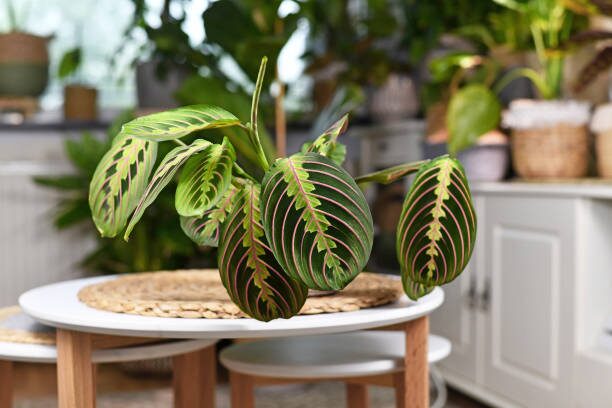
Peperomia
- Why it works: Many Peperomia species are considered non-toxic to pets and have thick, adorable leaves that contrast beautifully with Syngonium’s arrowheads.
- Style pairing: Place Peperomia on coffee tables or low shelves; keep Arrowhead Vine above. Both appreciate bright, indirect light and light, even moisture.
Calathea (prayer plant group)
- Why it works: Pet-friendly and humidity-loving, with dramatic patterns that play well against Syngonium’s greens and creams.
- Style pairing: Group Calathea at mid-levels (plant stands) to increase ambient humidity; hang or pole-train your Arrowhead Vine nearby. Both love warmth, humidity, and filtered light.
Note: Even with friendlier plants, discourage nibbling by providing pet enrichment and keeping tempting foliage out of easy reach.
Troubleshooting and pests (with a safety lens)
- Yellowing/leaves dropping: Most often low light, overwatering/root trouble, or temperature stress. Brighten the spot, check drainage, and keep above 54°F (12°C).
- Crispy edges: Low humidity or underwatering—humidify and water more evenly.
- Pests: Spider mites (especially in dry air), mealybugs, scale, whiteflies, aphids.
- Prevention: Wipe leaves, boost humidity, keep gentle airflow.
- Treatment: Insecticidal soap or horticultural oil, repeating as needed. Wear gloves; avoid eye contact.
Disease notes:
- Leaf spot and gray mold can appear with soggy foliage and poor airflow. Remove affected tissue, improve ventilation, and avoid wet leaves late in the day.
Safety checklist you can run in 60 seconds
- Is the plant out of pet/child reach (not just “high,” but unreachable from furniture launchpads)?
- Are baskets properly anchored and shelves stable?
- Drip trays fitted and emptied—no standing water?
- Gloves and paper towels ready for pruning days?
- Toxic plant label on the pot as a family reminder?
- Household knows not to taste, touch sap, or handle cuttings bare-handed?
What to do if there’s a mishap:
- Skin/eye contact: Rinse with plenty of water.
- Chewing/ingestion: Gently rinse the mouth, offer water, and contact your doctor or veterinarian. Bring the plant name with you. Do not induce vomiting unless advised by a professional.
A note on flowers and “flower language”
Arrowhead Vine rarely blooms indoors; it’s cherished for foliage. In modern houseplant circles, it’s often linked with growth, adaptability, and fresh beginnings—a nod to the way its juvenile arrow leaves morph and its vines climb toward light. Consider this symbolism contemporary rather than rooted in old floral codes; it’s more about how this plant behaves in our homes than ancient lore. If you’re welcoming “new beginnings,” a safely placed, steadily climbing Syngonium is a fitting emblem.
Quick care recap (safety-first)
- Light: Bright, indirect; protect variegates with a brighter spot.
- Water: Evenly moist in growth, lighter in winter; never soggy.
- Heat/humidity: Warm, above 54°F (12°C); medium–high humidity.
- Soil: Airy, well-draining aroid mix.
- Style safely: High shelves, hanging baskets, or moss poles—always out of reach.
- Handle with care: Toxic if chewed; sap irritant. Prune and repot with gloves.
Enjoy your Arrowhead Vine as the elevated star of your display—then round out the scene with pet-friendlier Peperomia and Calathea at ground level. Lush look, low stress.