
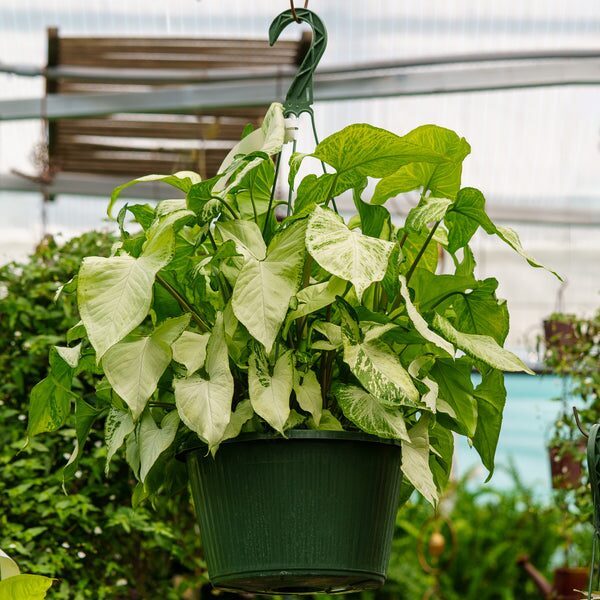
If you’ve ever sworn your plant changed shape overnight, you may have met Syngonium podophyllum—the arrowhead vine that treats foliage like origami in slow motion. It starts with crisp, pointed “arrowheads,” then, as it gains confidence (and height), its leaves broaden and develop lobes. Give it something to climb, keep the light bright and indirect, and maintain a warm, humid microclimate, and you’ll be rewarded with larger, more mature leaves that look delightfully different from the baby ones you brought home.
Meet the arrowhead vine
- Botanical name: Syngonium podophyllum (Araceae)
- Common names: Arrowhead Vine, Arrowhead Plant, Goosefoot Plant, Nephthytis, Silver-Veined Arrowhead Vine
- Origin: Tropical America (Mexico to Bolivia and the West Indies); widely cultivated and naturalized in warm regions
- Habit: An evergreen aroid that begins compact, then trails or climbs with age; fast-growing and forgiving
Indoors, it’s often sold as a small, tidy mound, but with time it stretches into a vine. You can:
- Let it cascade from a shelf or hanging basket
- Keep it bushy by pinching tips
- Train it up a moss pole or stake for a sleek, upright look (and bigger leaves)
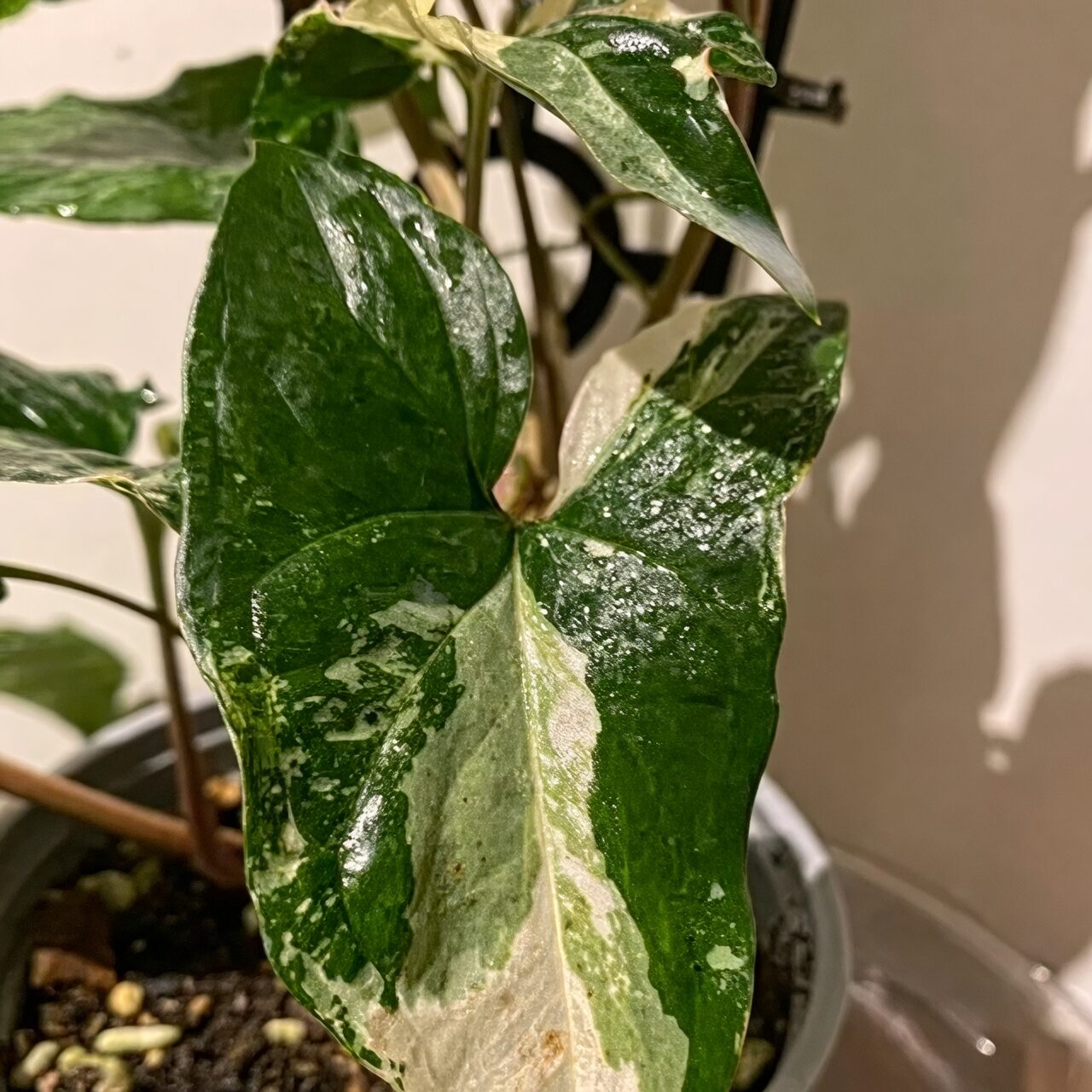
Variegated forms—creamy splashes, silvery veining, even blushy pinks in some cultivars—prefer brighter indirect light to maintain their pattern.
The leaf‑morphing magic
In the wild, arrowhead vines creep along the forest floor and then climb, anchoring themselves with aerial roots. As they ascend toward better light and airflow, their leaf shape shifts: juvenile blades are classic arrowheads; older foliage becomes more lobed and often larger. Indoors, you can coax this same transformation by mimicking that climb and canopy brightness—without the jungle.
Think of maturity as a gentle contract with the plant:
- You provide support, brighter filtered light, and steady warmth and humidity.
- It responds with more substantial, more lobed foliage.
How to coax larger, more mature leaves
1) Give it something to climb
- Best supports: moss poles, coco totems, or textured stakes; install early so stems can lean in naturally.
- Training tips: tie vines loosely with soft ties; guide aerial roots toward the support. Keeping a moss pole lightly moist helps roots grip.
- Result: shorter internodes, sturdier growth, and leaves that graduate from neat arrows to more lobed forms.
2) Turn up the light (but keep it gentle)
- Ideal: bright, indirect light. Great placements include an east window, a luminous north window, or a south/west exposure filtered by sheer curtains.
- Avoid: harsh direct sun that can scorch leaves.
- Note: variegated forms typically need a brighter spot than solid-green plants to hold their markings.

3) Keep it warm and humid
- Temperature sweet spot: 15–23°C (59–73°F); tolerates about 15–29°C (59–84°F).
- Important thresholds: keep above ~12°C (54°F) to avoid chilling; new growth tends to start above ~10°C (50°F). Below ~5°C (41°F), leaf yellowing and drop are likely. Growth may slow above ~30°C (86°F).
- Humidity: prefers moderate to high. Try a humidifier, pebble tray, or place in naturally steamy rooms (kitchen/bath). Mist lightly in the morning so leaves dry by evening.
4) Watering rhythm + airy aroid mix
- Soil: a loose, well-draining blend—peat/coco base with perlite and/or bark; a touch of leaf mold or compost adds richness. Aim for airy and slightly acidic.
- Watering: keep evenly, lightly moist in active growth. A simple rule—water when the top layer dries (often weekly in warm months). Reduce in winter (often every 2 weeks), letting the top dry slightly between sips. Never let the pot sit in water.
5) Feed for steady oomph
- During the main growing season (roughly spring–summer), feed every 2 weeks with a balanced liquid fertilizer at half strength. Ease off in winter. Avoid overdoing nitrogen, which can lead to leggy, weak stems.
6) Prune and prioritize
- Pinch tips around 15–20 cm (6–8 in) to encourage branching and a fuller pot.
- To push maturity, select one or two leaders to climb the pole while keeping side shoots trimmed. Remove yellow leaves anytime.
- A harder spring cut-back every few years rejuvenates congested plants.
7) Right-size the pot
- Repot in spring when roots crowd. Typical pot sizes: 10–15 cm (4–6 in) for small plants; 15–20 cm (6–8 in) for fuller specimens; hanging baskets 15–18 cm (6–7 in).
- Happy with the current size? Refresh the top 2–3 cm (1–1.2 in) of mix instead of upsizing.
Styling choices: trailing charm vs. climbing drama
- Trailing or hanging: beautiful cascades with that tidy arrowhead look. Great for shelves and macramé planters.
- Climbing: a pole-trained syngonium grows taller and typically develops larger, more lobed leaves—sleek, architectural, and space-saving.
Care at a glance
- Light: bright, indirect; tolerates partial shade; protect from strong sun
- Water: lightly moist; let the top layer dry, then water thoroughly with good drainage
- Temperature: best 15–23°C (59–73°F); avoid chills; growth slows in heat waves above ~30°C (86°F)
- Humidity: medium to high; boost if your home is very dry
- Soil: loose aroid mix (peat/coco + perlite/bark; optional compost)
- Difficulty: easy overall (easy to moderate in very dry or cold homes)
Propagation made easy
It roots readily—perfect for sharing.
- Best window: May–October when temps are above 15°C (59°F).
- How-to:
1) Take tip cuttings with 2–3 nodes (or section a longer stem into 2–3-node pieces).
2) Root in water or a moist, airy medium (sand/vermiculite/peat-based mix).
3) In warm conditions, roots often appear in about 10–15 days.
4) Stems with aerial roots can go straight into potting mix.
- Pro tip: Combine multiple rooted cuttings in one pot for instant fullness—or plant around a pole to jump-start that upward maturity.
- Can grow in water: many keep cuttings in water long-term, though potting into mix usually yields sturdier growth.
Your seasonal rhythm
- Spring: prune for shape; repot or refresh topsoil; restart feeding; water more as growth picks up.
- Summer: bright filtered light; steady moisture; boost humidity; propagate while it’s warm.
- Autumn: as days shorten, shift it a touch brighter; ease back watering.
- Winter: keep warm (above 12°C/54°F), water sparingly, and reduce feeding; protect from drafts and dry heat.
Common issues and quick fixes
- Yellowing and leaf drop: usually low light, overwatering/poor drainage, or temperature stress. Move to brighter indirect light, let the top inch dry before watering again, and protect from chills. Check roots if the pot stays wet.
- Crispy edges/smaller, rougher leaves: low humidity or underwatering; increase humidity and maintain light, even moisture.
- Scorched, bleached patches: too much direct sun; filter the light.
- Long internodes, tiny leaves, little lobing: not enough light or no support; increase brightness and train up a pole.
- Leaf spot/gray mold (Botrytis): linked to wet foliage and poor airflow; remove affected tissue, improve ventilation, avoid late-day wetting.
- Pests: spider mites (common in dry air), mealybugs, scale, whiteflies, aphids. Prevent with leaf wiping and consistent humidity; treat early with insecticidal soap or horticultural oil and repeat as needed.
A quick note on flowers
Indoors, flowering is uncommon. When it happens, it’s usually in summer (sometimes into early autumn in warm conditions). The blooms are classic aroids—a pale spathe around a spadix—and they’re small and not especially showy. This plant is all about the foliage.
Safety first
All parts are toxic if chewed or ingested due to insoluble calcium oxalate crystals, and the sap can irritate skin and eyes. Keep away from pets and children; wear gloves if you’re sensitive.
Symbolism and the “flower language” of Syngonium
Arrowhead vine is often associated with growth, adaptability, and fresh beginnings—fitting for a plant that literally changes form as it climbs and quickly bounces back from pruning. In modern houseplant lore, it’s also considered a casual “good luck” greenery for the home. These meanings aren’t rooted in any single historic tradition; they arise from the plant’s easy propagation, vigorous nature, and its graceful progression from crisp arrowheads to confident, lobed leaves—a living reminder that small starts can lead to striking transformations.
—
Growing tip to remember: if you want bigger, more mature leaves, think like the rainforest. Offer a textured climb, bathe it in bright, indirect light, keep the air warm and a bit humid, and let this eager aroid show you what it can do.